| Zakef katan | |||||||
|---|---|---|---|---|---|---|---|
| |||||||
| cantillation | |||||||
| Sof passuk/Sof aliyah | ׃ | Paseq | ׀ | ||||
| Etnakhta/atnakh | ֑ | Segol | ֒ | ||||
| Shalshelet | ֓ | Zakef katan | ֔ | ||||
| Zakef gadol | ֕ | Tifcha/tarkha | ֖ | ||||
| Rivia | ֗ | Zarka | ֘ | ||||
| Pashta | ֙ | Yetiv | ֚ | ||||
| Tevir | ֛ | Geresh | ֜ | ||||
| Geresh muqdam | ֝ | Gershayim | ֞ | ||||
| Karne parah | ֟ | Telisha gedola/talsha | ֠ | ||||
| Pazer | ֡ | Atnah hafukh | ֢ | ||||
| Munakh/shofar holekh | ֣ | Mahpach | ֤ | ||||
| Merkha/ma’arikh | ֥ | Mercha kefula | ֦ | ||||
| Darga | ֧ | Qadma | ֨ | ||||
| Telisha qetana/tarsa | ֩ | Yerah ben yomo | ֪ | ||||
| Ole | ֫ | Illuy | ֬ | ||||
| Dehi | ֭ | Tsinnorit | ֮ | ||||
Zakef Katan (Hebrew: זָקֵף קָטָ֔ן, lit. 'upright small'; various romanizations1), often referred to simply as katan, is a cantillation mark commonly found in the Torah, Haftarah, and other books of the Hebrew Bible. The note is the anchor and final one of the Katon group, which also can include the Mapach, Pashta, Munach, or Yetiv. It is one of the most common cantillation marks. There is no limit to the number of times the Katan group can appear in a verse, and often, multiple Katan groups appear in succession. The most times in succession the group occurs is four.2
The symbol for the Zakef katan is a colon (:). It is placed on the syllable of the word that is accented.3
Zakef katan occurs in the Torah 6992 times.4
If the zakef katan is preceded by no meshares, and have a secondary stress which is not on the first syllable, it will be then replaced by a Munach. See וַיֹּ֣אמְר֔וּ (Exode 5:3)
When there is only one word in the Katan group, and this word does not have any secondary stress, the Zakef katan is then replaced, by a Zakef gadol when there is less than three syllables before the zakef, and by a Mesiga-Zakef katan, when there is more than four syllables. Compare לִרְאוּבֵ֕ן (Numbers 1:5) and לְיִ֨שָּׂשכָ֔ר (Numbers 1:8).
The Katan group
In the Katan group, the trope can appear in the following patterns:
- Mapach Pashta Munach Zakef-Katan
- Mapach Pashta Zakef-Katan
- Pashta Munach Zakef-Katan
- Pashta Zakef-Katan
- Munach Zakef-Katan
- Zakef-Katan
- Yetiv Munach Zakef-Katan
- Yetiv Zakef-Katan
Total occurrences
| Book | Number of appearances |
|---|---|
| Torah | 69924 |
| Genesis | 18794 |
| Exodus | 14744 |
| Leviticus | 9874 |
| Numbers | 13594 |
| Deuteronomy | 12934 |
| Nevi'im | 72035 |
| Ketuvim | 48435 |
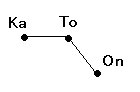
Melody
References
References
- zaqef; qatan, katon
- A compendious grammar of the Hebrew language By G. F. R. Weidemann, page 48
- Chanting the Hebrew Bible By Joshua R. Jacobson, page 51
- Concordance of the Hebrew accents in the Hebrew Bible: Concordance ..., Volume 1 By James D. Price, page 6
- Concordance of the Hebrew accents in the Hebrew Bible: Concordance ..., Volume 1 By James D. Price, page 5