The malvids consist of eight orders of flowering plants: Brassicales, Crossosomatales, Geraniales, Huerteales, Malvales, Myrtales, Picramniales and Sapindales.a This subgroup of the rosids is divided into 59 families of trees, shrubs, vines and herbaceous plants.45
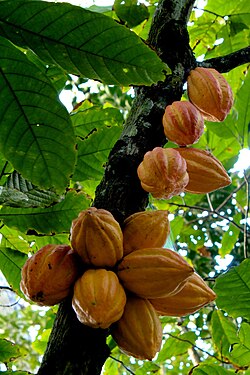
The mustard family includes broccoli, turnips, mustards, and radishes.6 The ornamental geraniums, and their many hybrids and cultivars, come from five species of Pelargonium.7 The mallow family includes the plants that yield cocoa beans, Cola nuts, okra, cotton and jute.8 In the family Lythraceae, Pomegranates were cultivated by Bronze Age cultures, and wild water chestnuts were consumed in large quantities by prehistoric Europeans.9 Eucalyptus trees are the tallest known flowering plants, up to 100 m (330 ft) or more; they are grown for timber and for their oils, used in candy, perfumes and cough medicine.10 Mangos and cashews come from the same plant family as poison ivy, and can sometimes trigger allergic reactions.11 Canada produces most of the world's maple syrup, and the maple leaf is the country's national symbol.12 Citrus agriculture outranks other sweet-fruit industries in warm climates.13
Glossary
From the glossary of botanical terms:
- annual: a plant species that completes its life cycle within a single year or growing season
- basal: attached close to the base (of a plant or an evolutionary tree diagram)
- climber: a vine that leans on, twines around or clings to other plants for vertical support
- deciduous: falling seasonally, as with bark, leaves, or petals
- glandular hair: a hair tipped with a secretory structure
- herbaceous: not woody; usually green and soft in texture
- mangrove: any shrub or small tree growing in brackish or salt water
- perennial: not an annual or biennial
- succulent (adjective): juicy or fleshy
- unisexual: of one sex; bearing only male or only female reproductive organs
- woody: hard and lignified; not herbaceous14
The APG IV system is the fourth in a series of plant taxonomies from the Angiosperm Phylogeny Group.2 In this system, Geraniales and Myrtales are basal within the malvids.15
Families
| Family and a common name16b | Type genus and etymologyc | Total genera; global distribution | Description and uses | Order4 | Type genus images |
|---|---|---|---|---|---|
| Akaniaceae (turnipwood family)18 | Akania, from Greek for "bractless", possibly1819 | 2 genera, in the Himalayas, China, Southeast Asia and Australia20 | Trees with a mustard scent in the bark and flowers18 | Brassicales | |
| Alzateaceae (wantsum family)21 | Alzatea, for José Antonio de Alzate y Ramírez (d. 1795), a cartographer21 | 1 genus, in South America22 | Short evergreen trees and shrubs with four-sided stems2123 | Myrtales | |
| Anacardiaceae (cashew family)24 | Anacardium, from a Greek plant name2425 | 79 genera, mostly in the tropics, with some temperate species2627 | Shrubs, trees and vines, generally with sap that can turn black. Cashews and mangos are commercially important tropical crops.2428 | Sapindales | |
| Aphloiaceae (mountain-peach family)29 | Aphloia, from Greek for "unbarked"29 | 1 genus, in Africa and on islands of the Indian Ocean30 | Evergreen shrubs and small trees29 | Crossosomatales | |
| Bataceae (turtleweed family)31 | Batis, from Greek for "walking"32 | 1 genus, in New Guinea, Australia, and the tropics and subtropics of the Americas33 | Short, succulent viny shrubs with unisexual flowers2331 | Brassicales | |
| Biebersteiniaceae (khardug family)34 | Biebersteinia, for Friedrich August Marschall von Bieberstein (1768–1826)34 | 1 genus, in Eurasia35 | Foul-smelling herbaceous perennials with woody rhizomes34 | Sapindales | —
|
| Bixaceae (annatto family)36 | Bixa, from a Carib plant name363738 | 3 genera, in the Americas and Madagascar39 | Shrubs, trees and herbaceous perennials. Bixa orellana yields annatto, a widely used red food dye.2836 | Malvales | |
| Brassicaceae (cabbage family)6 | Brassica, from a Latin plant name404142 | 344 genera, scattered around the world, especially in the Northern Hemisphere4344 | Shrubs and herbaceous plants, with a few vines and small trees and a few species that grow in water. The cabbage family includes broccoli, cauliflower, turnips, watercress, radishes and horseradish, along with the plants that yield canola oil and the mustards.623 | Brassicales | |
| Burseraceae (frankincense-and-myrrh family)45 | Bursera, for Joachim Burser (1583–1639)4546 | 18 genera, in the tropics2647 | Generally unisexual shrubs and trees, with some climbers and some species that grow on other plants. Most species, especially in the frankincense and myrrh genera, are heavily scented.2345 | Sapindales | |
| Capparaceae (caper family)48 | Capparis, from a Greek plant name4950 | 15 genera, around the world4351 | Shrubs and trees, with up to 250 stamens per flower. Capers (the preserved flower buds of Capparis) are usually harvested in the wild rather than cultivated.4852 | Brassicales | |
| Caricaceae (papaya family)53 | Carica, from a Latin plant name5455 | 6 genera, in West Africa and the tropics of the Americas4356 | Shrubs and trees, usually unisexual and spiny, with a few vines. Papaya fruit was already in cultivation in Central America before 1500.2853 | Brassicales | |
| Cistaceae (rock-rose family)57 | Cistus, from a Greek plant name585960 | 8 genera, mainly in warmer parts of the Northern Hemisphere6162 | Shrubs and herbaceous plants, frequently with volatile oils, with a few tall tree species. Labdanum (from Cistus) is used in perfumes.2357 | Malvales | |
| Cleomaceae (spiderflower family)63 | Cleome, from Greek for "glory"636465 | 2 genera, in the subtropics, the tropics, and North America66 | Shrubs and herbaceous plants. The leaves are consumed in South Africa.2363 | Brassicales | |
| Combretaceae (bushwillow family)67 | Combretum, from a Latin plant name6869 | 10 genera, in the tropics7071 | Shrubs, trees and woody vines, along with a few mangroves5267 | Myrtales | |
| Crossosomataceae (rockflower family)72 | Crossosoma, from Greek for "fringed body" (of the seeds)7273 | 4 genera, in the US and northeastern Mexico74 | Shrubs, often with small leaves, and a few trees72 | Crossosomatales | |
| Crypteroniaceae (bekoi family)75 | Crypteronia, from Greek for "hidden love" (for the small flowers)7576 | 3 genera, in the Asian tropics77 | Evergreen trees with tiny bisexual or unisexual flowers75 | Myrtales | —
|
| Cytinaceae (rockrose-rape family)78 | Cytinus, from Greek for "part of a pomegranate"7879 | 2 genera, in Africa and nearby islands, western Asia, and Mexico to northern South America80 | Parasitic plants without chlorophyll, usually with unisexual flowers78 | Malvales | |
| Dipentodontaceae (shichi family)81 | Dipentodon, from Greek for "two groups of five teeth" (on the sepals and petals)8182 | 2 genera, scattered around the world8183 | Unisexual and bisexual shrubs and trees81 | Huerteales | —
|
| Dipterocarpaceae (maranti family)84 | Dipterocarpus, from Greek for "two-winged fruit"8485 | 16 genera, in South America, Africa and southern parts of Asia6186 | Mostly evergreen trees with scented resins. These rainforest trees were an important source of timber and camphor a century ago, but they have been depleted from overlogging.8487 | Malvales | |
| Emblingiaceae (slippercreeper family)88 | Emblingia, for Thomas Embling (1814–1893)89 | 1 genus, in Australia90 | Herbaceous shrubs with low branches88 | Brassicales | |
| Francoaceae (bridal-wreath family)91 | Francoa, for Francisco Franco (c. 1515 – c. 1569), a Spanish doctor9192 | 6 genera, in South America and Africa9394 | Small trees, large shrubs and herbaceous plants, some used in herbal teas2891 | Geraniales | |
| Geissolomataceae (cape-cups family)95 | Geissoloma, from Greek for "tiled fringe" (on the petals)96 | 1 genus, in South Africa97 | Short, many-branched shrubs that bioaccumulate aluminium95 | Crossosomatales | |
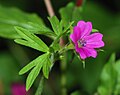
| Geraniaceae (crane's-bill family)7 | Geranium, from a Greek plant name meaning "crane"9899100 | 8 genera, scattered around the world93101 | Shrubs and herbaceous plants, most of them hairy, some succulent723 | Geraniales | |
| Gerrardinaceae (brown-ironwood family)102 | Gerrardina, for William Tyrer Gerrard (c. 1831 – 1866)103 | 1 genus, in southern Africa and Tanzania104 | Shrubs and small trees, frequently with drooping branches102 | Huerteales | |
| Guamatelaceae (Guatemalan-bramble family)105 | Guamatela, an anagram of Guatemala105 | 1 genus, in Mexico and Central America106 | Many-branched shrubs105 | Crossosomatales | —
|
| Gyrostemonaceae (buttoncreeper family)107 | Gyrostemon, from Greek for "round stamens"107108 | 5 genera, in Australia43109 | Annual unisexual shrubs and small trees, frequently succulent107 | Brassicales | |
| Kirkiaceae (white-seringa family)45 | Kirkia, for John Kirk (1832–1922)110 | 1 genus, in Africa111 | Trees and shrubs with essentially unisexual flowers. Timber from Kirkia acuminata is used for construction, furniture and tool-making.45 | Sapindales | |
| Koeberliniaceae (allthorn family)112 | Koeberlinia, for Christoph Ludwig Köberlin (1794–1862), a German botanist and clergyman113 | 1 genus, in the US, Mexico and Bolivia114 | Deciduous, many-branched, thorny-tipped shrubs and small trees23112 | Brassicales | |
| Limnanthaceae (meadowfoam family)115 | Limnanthes, from Greek for "marsh flowers"116117 | 2 genera, in North America118 | Mustard-scented herbaceous annuals. Poached egg plant is grown as an ornamental.115 | Brassicales | |
| Lythraceae (pomegranate family)119 | Lythrum, from Greek for "bloody" (flowers)120121122 | 28 genera, in temperate and tropical Eurasia, Africa and Oceania70123 | Shrubs, trees and herbaceous plants, often with square stems, with some mangroves and aquatic species52119 | Myrtales | |
| Malvaceae (mallow family)8 | Malva, from a Latin plant name124125126 | 245 genera, scattered worldwide61127 | Hairy shrubs, trees and herbaceous plants. Cocoa beans are native to tropical South and Central America, and Cola nuts are native to West Africa. The most commercially valuable genera are Gossypium (for cotton) and Corchorus (for jute).852 | Malvales | |
| Melastomataceae (senduduk family)128 | Melastoma, from Greek for "black mouth" (the result of eating the berries)129130 | 164 genera, mostly in the tropics and subtropics70131 | Trees, shrubs and herbaceous plants, with a few species that grow in water or on other plants52128 | Myrtales | |
| Meliaceae (neem family)132 | Melia, from a Greek plant name129133134 | 58 genera, in the tropics, with some temperate species26135 | Generally unisexual shrublets, shrubs and trees. Neem oil has many uses, including as a pesticide, and the wood is similar to mahogany.28132 | Sapindales | |
| Moringaceae (horseradish-tree family)136 | Moringa, from a Tamil plant name137 | 1 genus, in Africa, Southwest Asia and South Asia138 | Mustard-scented shrubs and trees, with a few herbaceous plants28136 | Brassicales | |
| Muntingiaceae (bajelly-tree family)139 | Muntingia, for Abraham Munting (1626–1683)140141 | 3 genera, from Mexico to South America142 | Hairy shrubs and trees23139 | Malvales | |
| Myrtaceae (myrtle family)143 | Myrtus, from Greek and Latin plant names144145146 | 126 genera, in the tropics and warmer temperate zones70147 | Evergreen shrubs and trees, most with volatile oils, including Eucalyptus and the tree that produces clove spice23143 | Myrtales | |
| Neuradaceae (pietsnot family)148 | Neurada, from Greek and Latin plant names149150 | 3 genera, in Africa and southern Asia151 | Herbaceous plants, usually with hairy stems that hug the ground148 | Malvales | |
| Nitrariaceae (nitrebush family)152 | Nitraria, from Greek for "nitre" (found near the plant)152153 | 4 genera, scattered around the world154 | Shrubs and herbaceous plants, frequently succulent, that bioaccumulate salt152 | Sapindales | |
| Onagraceae (fuchsia family)155 | Oenothera. Onagra, an earlier synonym, is from Greek for (fodder for the) "onager".155156157 | 22 genera, scattered worldwide70158 | Shrubs and a few trees and woody vines, including Fuchsia and evening primrose52155 | Myrtales | |
| Penaeaceae (cape-fellwort family)159 | Penaea, for Pierre Pena (1535–1605), a French doctor and botanist160161 | 3 genera, from South Africa to Ethiopia162 | Small shrubs to tall trees with buttress roots, all with four-sided new stems87159 | Myrtales | |
| Pentadiplandraceae (oubli family)163 | Pentadiplandra, from Greek for "five double male" (stamens)163 | 1 genus, in the African tropics164 | Just one species: a shrub with smooth stems that occasionally sprouts woody vines28163 | Brassicales | |
| Petenaeaceae (Petén-linden family)165 | Petenaea, for Lake Petén Itzá165 | 1 genus, in Mexico and Central America166 | Large shrubs and small trees165 | Huerteales | —
|
| Picramniaceae (bitterbush family)167 | Picramnia, from Greek for "bitter bush"167168 | 4 genera, in South America and southern North America169 | Unisexual shrubs and trees with small flowers23167 | Picramniales | |
| Resedaceae (mignonette family)170 | Reseda, from a Latin plant name171172 | 11 genera, around the world43173 | Shrubs, trees, vines and herbaceous plants. Reseda odorata (a mignonette species) is an ornamental that is also used in perfumes.52170 | Brassicales | |
| Rutaceae (citrus family)174 | Ruta, from a Latin plant name175176 | 153 genera, in tropical and temperate zones26177 | Shrubs, trees and herbaceous perennials, usually scented. Citrus fruits were in cultivation in China 5000 years ago.87174 | Sapindales | |
| Salvadoraceae (toothbrush-tree family)178 | Salvadora, for Jaime Salvador y Pedrol (1649–1740), a Spanish apothecary179180 | 3 genera, in Africa and South Asia43181 | Shrubs and small trees with succulent or leathery leaves52178 | Brassicales | |
| Sapindaceae (maple family)182 | Sapindus, from Latin for "soap of India"183184 | 143 genera, in the tropics, with some temperate species26185 | Shrubs, trees, climbers and herbaceous perennials. Lychee and rambutan fruits are widely cultivated in Asia. The family contains many ornamental species.87182 | Sapindales | |
| Sarcolaenaceae (tunic-bells family)186 | Sarcolaena, from Greek for "flesh cloak"186187 | 10 genera, in Madagascar61188 | Hairy evergreen shrubs and trees186 | Malvales | |
| Setchellanthaceae (azulita family)189 | Setchellanthus, for William Albert Setchell (1864–1943)190 | 1 genus, in Mexico191 | Hairy many-branched shrubs with succulent leaves23189 | Brassicales | —
|
| Simaroubaceae (tree-of-heaven family)192 | Simarouba, from a Carib plant name192193 | 20 genera, in the tropics, with some temperate species194 | Shrubs and trees with bitter bark. Corkwood is lightweight, and used to make floats for fishing nets.52192 | Sapindales | |
| Sphaerosepalaceae (lombiry family)195 | Rhopalocarpus. Sphaerosepalum, an earlier synonym, is from Greek for "spherical sepals".195196197 | 2 genera, in Madagascar198 | Shrubs and trees. Many of the species are threatened.195 | Malvales | —
|
| Stachyuraceae (spiketail family)199 | Stachyurus, from Greek for "spike tail" (on the inflorescences)200201 | 1 genus, in East Asia and mainland Southeast Asia202 | Unisexual and bisexual shrubs and small trees, with a few vines199 | Crossosomatales | |
| Staphyleaceae (bladdernut family)203 | Staphylea, from Greek for "clusters" (of flowers)201204205 | 3 genera, scattered worldwide206 | Shrubs and trees203 | Crossosomatales | |
| Strasburgeriaceae (tawari family)207 | Strasburgeria, for Eduard Strasburger (1844–1912)208209 | 2 genera, in New Caledonia and New Zealand210 | Evergreen trees207 | Crossosomatales | |
| Tapisciaceae (silverpheasant-tree family)211 | Tapiscia, an anagram of the genus Pistacia211212 | 2 genera, in the Americas and in East and mainland Southeast Asia213 | Trees with fluorescent wood23211 | Huerteales | |
| Thymelaeaceae (mezereon family)214 | Thymelaea, from Greek for "poison olive"214215 | 52 genera, scattered worldwide61216 | Generally poisonous shrubs, small trees and herbaceous perennials, with a few vines. The bark of some species has traditionally been used to make strong, fibrous paper.52214 | Malvales | |
| Tovariaceae (stinkbush family)88 | Tovaria, for Simón de Tovar, a Spanish doctor and botanist217 | 1 genus, from Mexico to the tropics of the Americas218 | Foul-smelling erect herbaceous perennials and floppy shrubs2388 | Brassicales | |
| Tropaeolaceae (nasturtium family)219 | Tropaeolum, from Greek for "trophy"220221 | 1 genus, in Mexico and Central and South America222 | Mustard-scented herbaceous annuals and perennials, including garden nasturtium and other ornamentals23219 | Brassicales | |
| Vochysiaceae (quaruba family)223 | Vochysia, from a Carib plant name223224 | 8 genera, mainly in the tropics of the Americas and West Africa70225 | Trees and shrubs that bioaccumulate aluminium23223 | Myrtales |









Notes
Notes
- The taxonomy (classification) in this list follows Plants of the World (2017)1 and the fourth Angiosperm Phylogeny Group system.2 Total counts of genera for each family come from Plants of the World Online (POWO).3 (See the POWO license.) Extinct taxa are not included.
- Each family's formal name ends in the Latin suffix -aceae and is derived from the name of a genus that is or once was part of the family.17
- Some plants were named for naturalists (unless otherwise noted).
Citations
Citations
- Christenhusz, Fay & Chase 2017.
- Angiosperm Phylogeny Group 2016.
- POWO.
- Stevens 2023, Summary of APG IV.
- Christenhusz, Fay & Chase 2017, pp. 10, 342–419.
- Christenhusz, Fay & Chase 2017, pp. 415–419.
- Christenhusz, Fay & Chase 2017, pp. 342–343.
- Christenhusz, Fay & Chase 2017, pp. 388–393.
- Christenhusz, Fay & Chase 2017, p. 347.
- Christenhusz, Fay & Chase 2017, pp. 352–353.
- Christenhusz, Fay & Chase 2017, p. 370–371.
- Christenhusz, Fay & Chase 2017, p. 374.
- Christenhusz, Fay & Chase 2017, p. 375.
- Christenhusz, Fay & Chase 2017, pp. 638–670.
- Christenhusz, Fay & Chase 2017, pp. 10, 342–345.
- Christenhusz, Fay & Chase 2017, pp. 342–400.
- ICN, art. 18.
- Christenhusz, Fay & Chase 2017, pp. 401–402.
- IPNI, Akaniaceae, Type.
- POWO, Akaniaceae.
- Christenhusz, Fay & Chase 2017, pp. 356–357.
- POWO, Alzateaceae.
- POWO, Neotropikey.
- Christenhusz, Fay & Chase 2017, pp. 369–371.
- IPNI, Anacardiaceae, Type.
- Kubitzki 2011, pp. 1–2.
- POWO, Anacardiaceae.
- POWO, Flora of West Tropical Africa.
- Christenhusz, Fay & Chase 2017, pp. 358–359.
- POWO, Aphloiaceae.
- Christenhusz, Fay & Chase 2017, pp. 407–408.
- Christenhusz, Fay & Chase 2017, pp. 408.
- POWO, Bataceae.
- Christenhusz, Fay & Chase 2017, p. 365.
- POWO, Biebersteiniaceae.
- Christenhusz, Fay & Chase 2017, pp. 396–397.
- Stearn 2002, p. 66.
- IPNI, Bixaceae, Type.
- POWO, Bixaceae.
- Stearn 2002, p. 71.
- Coombes 2012, p. 70.
- IPNI, Brassicaceae, Type.
- Kubitzki 2003, p. 11.
- POWO, Brassicaceae.
- Christenhusz, Fay & Chase 2017, pp. 367–368.
- IPNI, Burseraceae, Type.
- POWO, Burseraceae.
- Christenhusz, Fay & Chase 2017, pp. 412–413.
- Stearn 2002, p. 81.
- IPNI, Capparaceae, Type.
- POWO, Capparaceae.
- POWO, Flora of Tropical East Africa.
- Christenhusz, Fay & Chase 2017, pp. 404–405.
- Stearn 2002, p. 82.
- IPNI, Caricaceae, Type.
- POWO, Caricaceae.
- Christenhusz, Fay & Chase 2017, pp. 397–398.
- Stearn 2002, p. 95.
- Coombes 2012, p. 95.
- IPNI, Cistaceae, Type.
- Kubitzki 2003, p. 17.
- POWO, Cistaceae.
- Christenhusz, Fay & Chase 2017, pp. 413–414.
- Stearn 2002, p. 96.
- IPNI, Cleomaceae, Type.
- POWO, Cleomaceae.
- Christenhusz, Fay & Chase 2017, pp. 345–346.
- Stearn 2002, p. 100.
- IPNI, Combretaceae, Type.
- Kubitzki 2007, pp. 8–9.
- POWO, Combretaceae.
- Christenhusz, Fay & Chase 2017, pp. 362–363.
- IPNI, Crossosomataceae, Type.
- POWO, Crossosomataceae.
- Christenhusz, Fay & Chase 2017, p. 356.
- IPNI, Crypteroniaceae, Type.
- POWO, Crypteroniaceae.
- Christenhusz, Fay & Chase 2017, pp. 385–386.
- IPNI, Cytinaceae, Type.
- POWO, Cytinaceae.
- Christenhusz, Fay & Chase 2017, p. 384.
- IPNI, Dipentodontaceae, Type.
- POWO, Dipentodontaceae.
- Christenhusz, Fay & Chase 2017, pp. 399–400.
- IPNI, Dipterocarpaceae, Type.
- POWO, Dipterocarpaceae.
- POWO, Flora of Zambesiaca.
- Christenhusz, Fay & Chase 2017, p. 409.
- Burkhardt 2018, p. E-13.
- POWO, Emblingiaceae.
- Christenhusz, Fay & Chase 2017, pp. 343–344.
- IPNI, Francoaceae, Type.
- Kubitzki 2007, p. 5.
- POWO, Francoaceae.
- Christenhusz, Fay & Chase 2017, p. 359.
- Quattrocchi 2000, p. 1061.
- POWO, Geissolomataceae.
- Stearn 2002, p. 150.
- Coombes 2012, p. 153.
- IPNI, Geraniaceae, Type.
- POWO, Geraniaceae.
- Christenhusz, Fay & Chase 2017, p. 383.
- Burkhardt 2018, p. G-19.
- POWO, Gerrardinaceae.
- Christenhusz, Fay & Chase 2017, p. 361.
- POWO, Guamatelaceae.
- Christenhusz, Fay & Chase 2017, pp. 410–411.
- IPNI, Gyrostemonaceae, Type.
- POWO, Gyrostemonaceae.
- Burkhardt 2018, p. K-15.
- POWO, Kirkiaceae.
- Christenhusz, Fay & Chase 2017, pp. 406–407.
- Burkhardt 2018, p. K-22.
- POWO, Koeberliniaceae.
- Christenhusz, Fay & Chase 2017, pp. 405–406.
- Stearn 2002, p. 190.
- IPNI, Limnanthaceae, Type.
- POWO, Limnanthaceae.
- Christenhusz, Fay & Chase 2017, pp. 346–347.
- Stearn 2002, p. 197.
- Coombes 2012, p. 199.
- IPNI, Lythraceae, Type.
- POWO, Lythraceae.
- Stearn 2002, p. 200.
- Coombes 2012, p. 203.
- IPNI, Malvaceae, Type.
- POWO, Malvaceae.
- Christenhusz, Fay & Chase 2017, pp. 354–355.
- Stearn 2002, p. 204.
- IPNI, Melastomataceae, Type.
- POWO, Melastomataceae.
- Christenhusz, Fay & Chase 2017, pp. 380–381.
- Coombes 2012, p. 205.
- IPNI, Meliaceae, Type.
- POWO, Meliaceae.
- Christenhusz, Fay & Chase 2017, pp. 403–404.
- Stearn 2002, p. 211.
- POWO, Moringaceae.
- Christenhusz, Fay & Chase 2017, pp. 386–387.
- Burkhardt 2018, p. M-80.
- IPNI, Muntingiaceae, Type.
- POWO, Muntingiaceae.
- Christenhusz, Fay & Chase 2017, pp. 350–353.
- Stearn 2002, p. 215.
- Coombes 2012, p. 211.
- IPNI, Myrtaceae, Type.
- POWO, Myrtaceae.
- Christenhusz, Fay & Chase 2017, pp. 387–388.
- Quattrocchi 2019, p. 1816.
- IPNI, Neuradaceae, Type.
- POWO, Neuradaceae.
- Christenhusz, Fay & Chase 2017, pp. 365–366.
- USDA, Nitrariaceae, Type.
- POWO, Nitrariaceae.
- Christenhusz, Fay & Chase 2017, pp. 348–349.
- POWO, Onagra.
- IPNI, Onagraceae, Type.
- POWO, Onagraceae.
- Christenhusz, Fay & Chase 2017, pp. 357–358.
- Burkhardt 2018, p. P-22.
- IPNI, Penaeaceae, Type.
- POWO, Penaeaceae.
- Christenhusz, Fay & Chase 2017, p. 410.
- POWO, Pentadiplandraceae.
- Christenhusz, Fay & Chase 2017, p. 382.
- POWO, Petenaeaceae.
- Christenhusz, Fay & Chase 2017, pp. 363–364.
- IPNI, Picramniaceae, Type.
- POWO, Picramniaceae.
- Christenhusz, Fay & Chase 2017, pp. 411–412.
- Stearn 2002, p. 257.
- IPNI, Resedaceae, Type.
- POWO, Resedaceae.
- Christenhusz, Fay & Chase 2017, pp. 374–378.
- Stearn 2002, p. 263.
- IPNI, Rutaceae, Type.
- POWO, Rutaceae.
- Christenhusz, Fay & Chase 2017, pp. 408–409.
- Burkhardt 2018, p. S-9.
- IPNI, Salvadoraceae, Type.
- POWO, Salvadoraceae.
- Christenhusz, Fay & Chase 2017, pp. 371–374.
- Stearn 2002, p. 266.
- IPNI, Sapindaceae, Type.
- POWO, Sapindaceae.
- Christenhusz, Fay & Chase 2017, pp. 398–399.
- IPNI, Sarcolaenaceae, Type.
- POWO, Sarcolaenaceae.
- Christenhusz, Fay & Chase 2017, p. 406.
- Burkhardt 2018, p. S-57.
- POWO, Setchellanthaceae.
- Christenhusz, Fay & Chase 2017, pp. 378–380.
- IPNI, Simaroubaceae, Type.
- POWO, Simaroubaceae.
- Christenhusz, Fay & Chase 2017, p. 394.
- POWO, Sphaerosepalum.
- USDA, Sphaerosepalaceae, Type.
- POWO, Sphaerosepalaceae.
- Christenhusz, Fay & Chase 2017, pp. 361–362.
- Stearn 2002, p. 282.
- Coombes 2012, p. 280.
- POWO, Stachyuraceae.
- Christenhusz, Fay & Chase 2017, pp. 360–361.
- Stearn 2002, p. 283.
- IPNI, Staphyleaceae, Type.
- POWO, Staphyleaceae.
- Christenhusz, Fay & Chase 2017, pp. 359–360.
- Burkhardt 2018, p. S-103.
- IPNI, Strasburgeriaceae, Type.
- POWO, Strasburgeriaceae.
- Christenhusz, Fay & Chase 2017, pp. 383–384.
- USDA, Tapisciaceae, Type.
- POWO, Tapisciaceae.
- Christenhusz, Fay & Chase 2017, pp. 394–396.
- IPNI, Thymelaeaceae, Type.
- POWO, Thymelaeaceae.
- Burkhardt 2018, p. T-31.
- POWO, Tovariaceae.
- Christenhusz, Fay & Chase 2017, pp. 402–403.
- Stearn 2002, p. 300.
- Coombes 2012, p. 293.
- POWO, Tropaeolaceae.
- Christenhusz, Fay & Chase 2017, pp. 349–350.
- IPNI, Vochysiaceae, Type.
- POWO, Vochysiaceae.
References
References
- Angiosperm Phylogeny Group (2016). "An update of the Angiosperm Phylogeny Group classification for the orders and families of flowering plants: APG IV". Botanical Journal of the Linnean Society. 181 (1): 1–20. doi:10.1111/boj.12385.
- Burkhardt, Lotte (2018). Verzeichnis eponymischer Pflanzennamen – Erweiterte Edition [Index of Eponymic Plant Names – Extended Edition] (pdf) (in German). Berlin: Botanic Garden and Botanical Museum, Freie Universität Berlin. doi:10.3372/epolist2018. ISBN 978-3-946292-26-5. S2CID 187926901. Retrieved January 1, 2021. See the Creative Commons license.
- Christenhusz, Maarten; Fay, Michael Francis; Chase, Mark Wayne (2017). Plants of the World: An Illustrated Encyclopedia of Vascular Plants. Chicago, Illinois: Kew Publishing and The University of Chicago Press. doi:10.7208/chicago/9780226536705.001.0001. ISBN 978-0-226-52292-0.
- Coombes, Allen J. (2012). The A to Z of Plant Names: A Quick Reference Guide to 4000 Garden Plants. Portland, Oregon: Timber Press. ISBN 978-1-60469-196-2.
- IPNI (2022). "International Plant Names Index". London, Boston and Canberra: Royal Botanic Gardens, Kew; Harvard University Herbaria & Libraries; and the Australian National Botanic Gardens. Retrieved December 20, 2022.
- Kubitzki, K. (2003). "Conspectus on the Families of [Brassicales and] Malvales". In Kubitzki, Klaus; Bayer, Clemens (eds.). Flowering plants. Dicotyledons: Malvales, Capparales and Non-betalain Caryophyllales. The families and genera of vascular plants. Vol. V. Berlin: Springer Science+Business Media. pp. 11, 17. doi:10.1007/978-3-662-07255-4_6. ISBN 978-3-662-07255-4.
- Kubitzki, K. (2007). "Introduction to the Groups Treated in This Volume". In Kubitzki, K. (ed.). Berberidopsidales, Buxales, Crossosomatales, Fabales p.p., Geraniales, Gunnerales, Myrtales p.p., Proteales, Saxifragales, Vitales, Zygophyllales, Clusiaceae Alliance, Passifloraceae Alliance, Dilleniaceae, Huaceae, Picramniaceae, Sabiaceae. The Families and Genera of Vascular Plants. Vol. IX. Berlin: Springer Science+Business Media. pp. 1–20. doi:10.1007/978-3-540-32219-1_1. ISBN 978-3-540-32214-6.
- Kubitzki, K. (2011). "Introduction to Sapindales". In Kubitzki, K. (ed.). Flowering Plants. Eudicots: Sapindales, Cucurbitales, Myrtaceae. The families and genera of vascular plants. Vol. X. Berlin: Springer Science+Business Media. pp. 1–3. doi:10.1007/978-3-642-14397-7_1. ISBN 978-3-642-14397-7.
- POWO (2019). "Plants of the World Online". London: Royal Botanic Gardens, Kew. Retrieved January 1, 2023. See their terms-of-use license.
- Quattrocchi, Umberto (2000). CRC World Dictionary of Plant Names, Volume II, D–L. Boca Raton, Florida: CRC Press. ISBN 978-0-8493-2676-9.
- Quattrocchi, Umberto (2019) [2000]. CRC World Dictionary of Plant Names, Volume III, M–Q. Boca Raton, Florida: CRC Press. ISBN 978-0-367-44751-9.
- Stearn, William (2002). Stearn's Dictionary of Plant Names for Gardeners. London: Cassell. ISBN 978-0-304-36469-5.
- Stevens, P.F. (2023) [2001]. "Angiosperm Phylogeny Website". Missouri Botanical Garden. Retrieved January 2, 2023.
- Turland, N. J.; et al. (eds.). International Code of Nomenclature for algae, fungi, and plants (Shenzhen Code) adopted by the Nineteenth International Botanical Congress Shenzhen, China, July 2017 (electronic ed.). Glashütten: International Association for Plant Taxonomy. Retrieved February 25, 2022.
- "USDA, Agricultural Research Service, National Plant Germplasm System". Germplasm Resources Information Network (GRIN Taxonomy). Beltsville, Maryland: National Germplasm Resources Laboratory. 2022. Retrieved October 29, 2022.