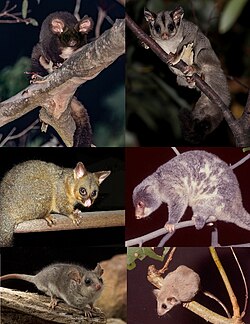
Phalangeriformes is a suborder of Australian marsupial mammals. Members of this suborder are called phalangeriformes, and include possums, gliders, and cuscus. Phalangeriformes is one of three suborders that form the order Diprotodontia, the largest extant order of marsupials. They are found in Australia, New Guinea, and Indonesia, generally in forests, though some species can also be found in shrublands and grasslands. They range in size from the Tasmanian pygmy possum, at 5 cm (2 in) plus a 6 cm (2 in) tail, to the cuscus of the genus Spilocuscus, at 64 cm (25 in) plus a 59 cm (23 in) tail. Phalangeriformes primarily eat leaves, fruit, and insects, though many are omnivorous and will eat small vertebrates or other plant material.
Many phalangeriformes do not have population estimates, but the ones that do range from 50 mature individuals to 75,000. No species have gone extinct in modern times, but five are categorized as endangered: the southern greater glider, Tate's triok, mahogany glider, Gebe cuscus, and Woodlark cuscus. A further eight species are categorized as critically endangered: Leadbeater's possum, northern glider, western ringtail possum, mountain pygmy possum, Talaud bear cuscus, Telefomin cuscus, black-spotted cuscus, and blue-eyed spotted cuscus.
The sixty-four extant species of Phalangeriformes are divided into six families grouped into two superfamilies: Petauroidea, containing two species in two genera in the family Acrobatidae, eleven in three genera in the family Petauridae, eighteen in six genera in the family Pseudocheiridae, and a single species in the family Tarsipedidae; and Phalangeroidea, containing five species in two genera in the family Burramyidae and twenty-seven in five genera in the family Phalangeridae. Several extinct Phalangeriformes species have been discovered, though due to ongoing research and discoveries the exact number and categorization is not fixed.1
Conventions
| Conservation status | |
|---|---|
| EX | Extinct (0 species) |
| EW | Extinct in the wild (0 species) |
| CR | Critically endangered (8 species) |
| EN | Endangered (5 species) |
| VU | Vulnerable (6 species) |
| NT | Near threatened (8 species) |
| LC | Least concern (36 species) |
| Other categories | |
| DD | Data deficient (0 species) |
| NE | Not evaluated (1 species) |
The author citation for the species or genus is given after the scientific name; parentheses around the author citation indicate that this was not the original taxonomic placement. Conservation status codes listed follow the International Union for Conservation of Nature (IUCN) Red List of Threatened Species. Range maps are provided wherever possible; if a range map is not available, a description of the phalangeriformes's range is provided. Ranges are based on the IUCN Red List for that species unless otherwise noted.
Classification
The suborder Phalangeriformes consists of six extant families grouped into two superfamilies: Acrobatidae, Petauridae, Pseudocheiridae, and Tarsipedidae in the superfamily Petauroidea, and Burramyidae and Phalangeridae in the superfamily Phalangeroidea. Acrobatidae contains two species in two genera, Petauridae contains eleven species in three genera, Pseudocheiridae contains eighteen species in six genera, Tarsipedidae contains a single species, Burramyidae contains five species in two genera, and Phalangeridae contains twenty-seven species in five genera.
Superfamily Petauroidea
- Family Acrobatidae
- Genus Acrobates (feathertail glider): one species
- Genus Distoechurus (feather-tailed possum): one species
- Family Petauridae
- Genus Dactylopsila (trioks): four species
- Genus Gymnobelideus (Leadbeater's possum): one species
- Genus Petaurus (gliders): six species
- Family Pseudocheiridae
- Subfamily Hemibelideinae
- Genus Hemibelideus (lemuroid ringtail possum): one species
- Genus Petauroides (southern greater glider): one species
- Subfamily Pseudocheirinae
- Genus Petropseudes (rock-haunting ringtail possum): one species
- Genus Pseudocheirus (ringtail possums): two species
- Genus Pseudochirulus (ringtail possums): eight species
- Subfamily Pseudochiropsinae
- Genus Pseudochirops (ringtail possums): five species
- Subfamily Hemibelideinae
- Family Tarsipedidae
- Genus Tarsipes (honey possum): one species
Superfamily Phalangeroidea
- Family Burramyidae
- Genus Burramys (mountain pygmy possum): one species
- Genus Cercartetus (pygmy possums): four species
- Family Phalangeridae
- Subfamily Ailuropinae
- Genus Ailurops (bear cuscus): two species
- Subfamily Phalangerinae
- Genus Phalanger (cuscus): thirteen species
- Genus Spilocuscus (spotted cuscus): five species
- Genus Strigocuscus (cuscus): two species
- Genus Trichosurus (brushtail possums): four species
- Genus Wyulda (scaly-tailed possum): one species
- Subfamily Ailuropinae
Phalangeriformes
The following classification is based on the taxonomy described by the reference work Mammal Species of the World (2005), with augmentation by generally accepted proposals made since using molecular phylogenetic analysis, as supported by both the IUCN and the American Society of Mammalogists.4
Superfamily Petauroidea
Acrobatidae
| Common name | Scientific name and subspecies | Range | Size and ecology | IUCN status and estimated population |
|---|---|---|---|---|
| Feathertail glider
|
A. pygmaeus (Shaw, 1793) |
Eastern Australia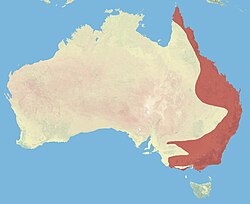
|
Size: 6–8 cm (2–3 in) long, plus 7–8 cm (3 in) tail5 Habitat: Forest6 Diet: Honeydew and arthropods5 |
LC
|

| Common name | Scientific name and subspecies | Range | Size and ecology | IUCN status and estimated population |
|---|---|---|---|---|
| Feather-tailed possum
|
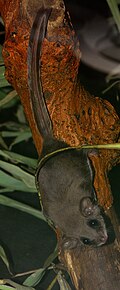
D. pennatus (Peters, 1874) |
New Guinea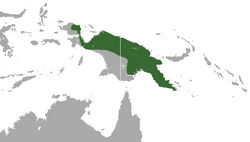
|
Size: 10–12 cm (4–5 in) long, plus 6–12 cm (2–5 in) tail7 Habitat: Forest8 Diet: Nectar, pollen, insects, and soft fruit7 |
LC
|
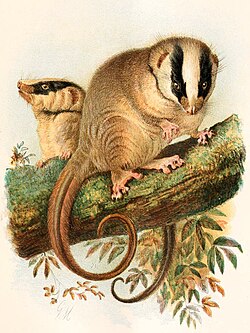
Petauridae
| Common name | Scientific name and subspecies | Range | Size and ecology | IUCN status and estimated population |
|---|---|---|---|---|
| Great-tailed triok
|
D. megalura Rothschild & Dollman, 1932 |
Central New Guinea
|
Size: 17–32 cm (7–13 in) long, plus 16–40 cm (6–16 in) tail9 Habitat: Forest10 Diet: Insects, fruit, and leaves9 |
LC
|
| Long-fingered triok | D. palpator H. Milne-Edwards, 1888 |
Central New Guinea
|
Size: 17–32 cm (7–13 in) long, plus 16–40 cm (6–16 in) tail9 Habitat: Forest11 Diet: Insects, fruit, and leaves9 |
LC
|
| Striped possum
|
D. trivirgata Gray, 1858 Four subspecies
|
New Guinea and northeastern Australia
|
Size: 17–32 cm (7–13 in) long, plus 16–40 cm (6–16 in) tail9 Habitat: Forest12 Diet: Ants, termites, and larvae13 |
LC
|
| Tate's triok
|
D. tatei Laurie, 1952 |
Eastern New Guinea
|
Size: 17–32 cm (7–13 in) long, plus 16–40 cm (6–16 in) tail9 Habitat: Forest14 Diet: Insects, fruit, and leaves14 |
EN
|


| Common name | Scientific name and subspecies | Range | Size and ecology | IUCN status and estimated population |
|---|---|---|---|---|
| Leadbeater's possum
|
G. leadbeateri McCoy, 1867 |
Southern Australia
|
Size: 15–17 cm (6–7 in) long, plus 14–18 cm (6–7 in) tail15 Habitat: Forest16 Diet: Insects, spiders, and sap17 |
CR
|

| Common name | Scientific name and subspecies | Range | Size and ecology | IUCN status and estimated population |
|---|---|---|---|---|
| Biak glider | P. biacensis Ulmer, 1940 |
Northwestern New Guinea
|
Size: 12–32 cm (5–13 in) long, plus 15–48 cm (6–19 in) tail18 Habitat: Forest19 Diet: Sap, flowers, nectar, pollen, insects, arachnids, and small vertebrates18 |
LC
|
| Mahogany glider
|
P. gracilis (Vis, 1883) |
Northeastern Australia
|
Size: 12–32 cm (5–13 in) long, plus 15–48 cm (6–19 in) tail18 Habitat: Forest20 Diet: Nectar and pollen, as well as insects21 |
EN
|
| Northern glider | P. abidi Ziegler, 1981 |
Northern New Guinea
|
Size: 12–32 cm (5–13 in) long, plus 15–48 cm (6–19 in) tail18 Habitat: Forest22 Diet: Sap, flowers, nectar, pollen, insects, arachnids, and small vertebrates18 |
CR
|
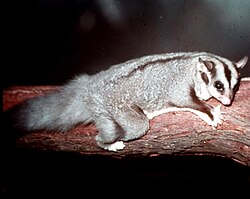
| Squirrel glider
|
P. norfolcensis (Kerr, 1792) |
Eastern Australia
|
Size: 12–32 cm (5–13 in) long, plus 15–48 cm (6–19 in) tail18 Habitat: Forest23 Diet: Insects, gum, sap, nectar, pollen, and seeds24 |
LC
|
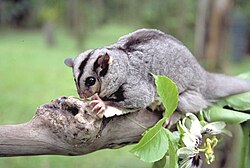
| Sugar glider
|
P. breviceps Waterhouse, 1839 Four subspecies
|
New Guinea and northern, eastern, and southern Australia (introduced in pink)
|
Size: 12–32 cm (5–13 in) long, plus 15–48 cm (6–19 in) tail25 Habitat: Forest and savanna26 Diet: Sap, pollen, nectar, insects, arachnids, and small vertebrates25 |
LC
|
| Yellow-bellied glider
|
P. australis Shaw, 1791 Two subspecies
|
Eastern Australia
|
Size: 27–30 cm (11–12 in) long, plus 42–48 cm (17–19 in) tail27 Habitat: Forest28 Diet: Nectar, pollen, and sap, as well as insects, arachnids, grubs, and small vertebrates27 |
VU
|


Pseudocheiridae
Subfamily Hemibelideinae
| Common name | Scientific name and subspecies | Range | Size and ecology | IUCN status and estimated population |
|---|---|---|---|---|
| Lemuroid ringtail possum
|
H. lemuroides (Collett, 1884) |
Northeastern Australia
|
Size: 30–38 cm (12–15 in) long, plus 30–35 cm (12–14 in) tail29 Habitat: Forest30 Diet: Leaves29 |
NT
|

| Common name | Scientific name and subspecies | Range | Size and ecology | IUCN status and estimated population |
|---|---|---|---|---|
| Southern greater glider
|
P. volans (Kerr, 1792) Two subspecies
|
Southeastern Australia | Size: 30–48 cm (12–19 in) long, plus 45–55 cm (18–22 in) tail31 Habitat: Forest32 Diet: Eucalyptus leaves31 |
EN
|

Subfamily Pseudocheirinae
| Common name | Scientific name and subspecies | Range | Size and ecology | IUCN status and estimated population |
|---|---|---|---|---|
| Rock-haunting ringtail possum
|
P. dahli (Collett, 1895) |
Northern Australia
|
Size: 33–38 cm (13–15 in) long, plus 20–27 cm (8–11 in) tail33 Habitat: Rocky areas34 Diet: Leaves, fruit, and flowers, as well as termites35 |
LC
|

| Common name | Scientific name and subspecies | Range | Size and ecology | IUCN status and estimated population |
|---|---|---|---|---|
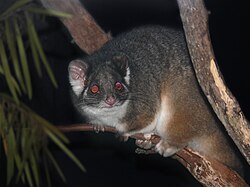
| Common ringtail possum
|
P. peregrinus (Boddaert, 1785) Three subspecies
|
Eastern and southern Australia
|
Size: 30–35 cm (12–14 in) long, plus 30–35 cm (12–14 in) tail36 Habitat: Forest and savanna37 Diet: Eucalyptus leaves, as well as flowers, buds, nectar, and fruit36 |
LC
|
| Western ringtail possum
|
P. occidentalis (Thomas, 1888) |
Southwestern Australia
|
Size: 28–40 cm (11–16 in) long, plus 28–36 cm (11–14 in) tail38 Habitat: Forest and savanna39 Diet: Leaves, as well as fruit, flowers, bark, and sap38 |
CR
|

| Common name | Scientific name and subspecies | Range | Size and ecology | IUCN status and estimated population |
|---|---|---|---|---|
| Daintree River ringtail possum
|
P. cinereus Tate, 1945 |
Northeastern Australia
|
Size: 16–40 cm (6–16 in) long, plus 15–47 cm (6–19 in) tail40 Habitat: Forest41 Diet: Leaves and fruit40 |
NT
|
| Herbert River ringtail possum
|
P. herbertensis (Collett, 1884) |
Northeastern Australia
|
Size: 30–40 cm (12–16 in) long, plus 29–47 cm (11–19 in) tail42 Habitat: Forest43 Diet: Leaves42 |
LC
|
| Lowland ringtail possum | P. canescens (Waterhouse, 1846) Five subspecies
|
New Guinea
|
Size: 16–40 cm (6–16 in) long, plus 15–47 cm (6–19 in) tail40 Habitat: Forest44 Diet: Leaves and fruit40 |
LC
|
| Masked ringtail possum | P. larvatus (Rothschild, 1911) |
Eastern New Guinea
|
Size: 16–40 cm (6–16 in) long, plus 15–47 cm (6–19 in) tail40 Habitat: Forest45 Diet: Leaves and fruit40 |
LC
|
| Painted ringtail possum
|
P. forbesi (Thomas, 1887) |
Eastern New Guinea
|
Size: 16–40 cm (6–16 in) long, plus 15–47 cm (6–19 in) tail40 Habitat: Forest46 Diet: Leaves and fruit40 |
LC
|
| Pygmy ringtail possum | P. mayeri (Rothschild & Dollman, 1932) |
Central New Guinea
|
Size: 16–40 cm (6–16 in) long, plus 15–47 cm (6–19 in) tail40 Habitat: Forest47 Diet: Leaves, ferns, pollen, fungus, moss, and lichens48 |
LC
|
| Vogelkop ringtail possum | P. schlegeli (Jentink, 1884) |
Western New Guinea
|
Size: 16–40 cm (6–16 in) long, plus 15–47 cm (6–19 in) tail40 Habitat: Forest49 Diet: Leaves and fruit40 |
VU
|
| Weyland ringtail possum | P. caroli Thomas, 1921 Two subspecies
|
Western New Guinea
|
Size: 16–40 cm (6–16 in) long, plus 15–47 cm (6–19 in) tail40 Habitat: Forest50 Diet: Leaves and fruit40 |
LC
|


Subfamily Pseudochiropsinae
| Common name | Scientific name and subspecies | Range | Size and ecology | IUCN status and estimated population |
|---|---|---|---|---|
| Coppery ringtail possum | P. cupreus (Thomas, 1897) |
Central New Guinea
|
Size: 28–41 cm (11–16 in) long, plus 25–38 cm (10–15 in) tail33 Habitat: Forest and grassland51 Diet: Leaves as well as fruit33 |
LC
|
| D'Albertis's ringtail possum
|
P. albertisii (Peters, 1874) Three subspecies
|
Western and northern New Guinea
|
Size: 28–41 cm (11–16 in) long, plus 25–38 cm (10–15 in) tail33 Habitat: Forest52 Diet: Leaves as well as fruit33 |
NT
|
| Green ringtail possum
|
P. archeri (Collett, 1884) |
Northeastern Australia
|
Size: 28–41 cm (11–16 in) long, plus 25–38 cm (10–15 in) tail33 Habitat: Forest53 Diet: Leaves, as well as figs54 |
NT
|
| Plush-coated ringtail possum
|
P. corinnae (Thomas, 1897) Three subspecies
|
Central New Guinea
|
Size: 28–41 cm (11–16 in) long, plus 25–38 cm (10–15 in) tail33 Habitat: Forest55 Diet: Leaves as well as fruit33 |
NT
|
| Reclusive ringtail possum | P. coronatus (Thomas, 1897) |
Western New Guinea
|
Size: 28–41 cm (11–16 in) long, plus 25–38 cm (10–15 in) tail33 Habitat: Forest56 Diet: Leaves as well as fruit33 |
VU
|


Tarsipedidae
| Common name | Scientific name and subspecies | Range | Size and ecology | IUCN status and estimated population |
|---|---|---|---|---|
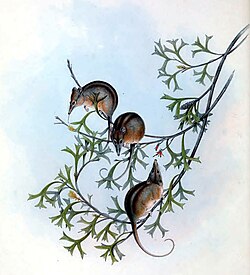
| Honey possum
|
T. rostratus Gervais & Verreaux, 1842 |
Southwestern Australia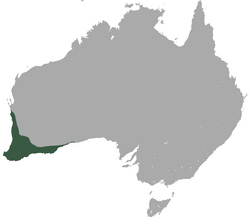
|
Size: 6–9 cm (2–4 in) long, plus 7–11 cm (3–4 in) tail57 Habitat: Shrubland58 Diet: Pollen and nectar57 |
LC
|
Superfamily Phalangeroidea
Burramyidae
| Common name | Scientific name and subspecies | Range | Size and ecology | IUCN status and estimated population |
|---|---|---|---|---|
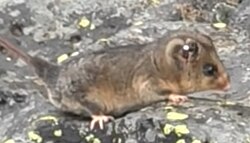
| Mountain pygmy possum
|
B. parvus Broom, 1896 |
Southeastern Australia
|
Size: 10–12 cm (4–5 in) long, plus 13–16 cm (5–6 in) tail59 Habitat: Shrubland60 Diet: Insects, spiders, seeds, and berries61 |
CR
|
| Common name | Scientific name and subspecies | Range | Size and ecology | IUCN status and estimated population |
|---|---|---|---|---|
| Eastern pygmy possum
|
C. nanus (Desmarest, 1818) Two subspecies
|
Southeastern Australia
|
Size: 7–10 cm (3–4 in) long, plus 7–11 cm (3–4 in) tail62 Habitat: Forest and shrubland63 Diet: Nectar, pollen, and insects62 |
LC
|
| Long-tailed pygmy possum
|
C. caudatus (H. Milne-Edwards, 1877) Two subspecies
|
New Guinea and northeastern Australia
|
Size: 8–11 cm (3–4 in) long, plus 12–16 cm (5–6 in) tail64 Habitat: Forest and shrubland65 Diet: Nectar, insects, and pollen66 |
LC
|
| Tasmanian pygmy possum
|
C. lepidus Thomas, 1888 |
Southern Australia
|
Size: 5–7 cm (2–3 in) long, plus 6–8 cm (2–3 in) tail67 Habitat: Forest and shrubland68 Diet: Nectar, pollen, invertebrates, and small lizards67 |
LC
|
| Western pygmy possum
|
C. concinnus (Gould, 1845) Two subspecies
|
Southern and southwestern Australia
|
Size: 6–11 cm (2–4 in) long, plus 5–11 cm (2–4 in) tail64 Habitat: Forest and shrubland69 Diet: Nectar, insects, and small lizards70 |
LC
|


Phalangeridae
Subfamily Ailuropinae
| Common name | Scientific name and subspecies | Range | Size and ecology | IUCN status and estimated population |
|---|---|---|---|---|
| Sulawesi bear cuscus
|
A. ursinus (Temminck, 1824) Four subspecies
|
Sulawesi island in Indonesia
|
Size: 56–54 cm (22–21 in) long, plus 61–58 cm (24–23 in) tail71 Habitat: Forest72 Diet: Leaves, flowers, and fruit73 |
VU
|
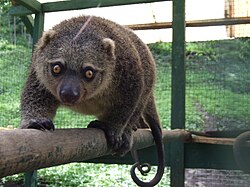
| Talaud bear cuscus
|
A. melanotis (Thomas, 1898) |
Salibabu Island in Indonesia
|
Size: 56–54 cm (22–21 in) long, plus 61–58 cm (24–23 in) tail71 Habitat: Forest74 Diet: Leaves as well as fruit71 |
CR
|

Subfamily Phalangerinae
| Common name | Scientific name and subspecies | Range | Size and ecology | IUCN status and estimated population |
|---|---|---|---|---|
| Blue-eyed cuscus | P. matabiru Flannery & Boeadi, 1995 |
Ternate and Tidore islands in eastern Indonesia
|
Size: 32–60 cm (13–24 in) long, plus 24–61 cm (9–24 in) tail75 Habitat: Forest76 Diet: Fruit and leaves, as well as insects, small vertebrates, and eggs75 |
VU
|
| Eastern common cuscus | P. intercastellanus Thomas, 1895 |
Eastern New Guinea
|
Size: 32–60 cm (13–24 in) long, plus 24–61 cm (9–24 in) tail75 Habitat: Forest77 Diet: Fruit and leaves, as well as insects, small vertebrates, and eggs75 |
LC
|
| Gebe cuscus | P. alexandrae Flannery & Boeadi, 1995 |
Gebe island in eastern Indonesia
|
Size: 32–60 cm (13–24 in) long, plus 24–61 cm (9–24 in) tail75 Habitat: Forest78 Diet: Fruit and leaves, as well as insects, small vertebrates, and eggs75 |
EN
|
| Ground cuscus
|
P. gymnotis (Peters & Doria, 1875) Two subspecies
|
New Guinea
|
Size: 32–60 cm (13–24 in) long, plus 24–61 cm (9–24 in) tail75 Habitat: Forest79 Diet: Fruit, eggs, seeds, and leaves80 |
LC
|
| Mountain cuscus | P. carmelitae Thomas, 1898 Two subspecies
|
Central and eastern New Guinea
|
Size: 32–60 cm (13–24 in) long, plus 24–61 cm (9–24 in) tail75 Habitat: Forest81 Diet: Fruit and leaves, as well as insects, small vertebrates, and eggs75 |
LC
|
| Northern common cuscus
|
P. orientalis (Pallas, 1766) Two subspecies
|
New Guinea and nearby islands (introduced in red)
|
Size: 32–60 cm (13–24 in) long, plus 24–61 cm (9–24 in) tail75 Habitat: Forest82 Diet: Leaves, tree seeds, fruit, buds and flowers83 |
LC
|
| Ornate cuscus
|
P. ornatus (Gray, 1860) |
North Maluku islands in eastern Indonesia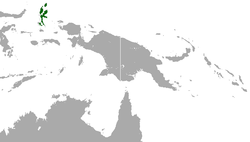
|
Size: 32–60 cm (13–24 in) long, plus 24–61 cm (9–24 in) tail75 Habitat: Forest84 Diet: Fruit and leaves, as well as insects, small vertebrates, and eggs75 |
LC
|
| Rothschild's cuscus | P. rothschildi Thomas, 1898 |
Obi Islands in eastern Indonesia
|
Size: 32–60 cm (13–24 in) long, plus 24–61 cm (9–24 in) tail75 Habitat: Forest85 Diet: Fruit and leaves, as well as insects, small vertebrates, and eggs75 |
LC
|
| Silky cuscus | P. sericeus Thomas, 1907 Two subspecies
|
Central and eastern New Guinea
|
Size: 32–60 cm (13–24 in) long, plus 24–61 cm (9–24 in) tail75 Habitat: Forest86 Diet: Fruit and leaves, as well as insects, small vertebrates, and eggs75 |
LC
|
| Southern common cuscus
|
P. mimicus Pallas, 1766 Two subspecies
|
Southern New Guinea and northeastern Australia
|
Size: 32–60 cm (13–24 in) long, plus 24–61 cm (9–24 in) tail75 Habitat: Forest and savanna87 Diet: Fruit and leaves, as well as insects, small vertebrates, and eggs75 |
LC
|
| Stein's cuscus
|
P. vestitus (H. Milne-Edwards, 1877) |
Scattered New Guinea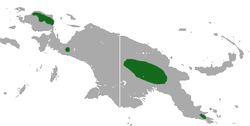
|
Size: 32–60 cm (13–24 in) long, plus 24–61 cm (9–24 in) tail75 Habitat: Forest88 Diet: Fruit and leaves, as well as insects, small vertebrates, and eggs75 |
LC
|
| Telefomin cuscus | P. matanim Flannery, 1987 |
Central New Guinea
|
Size: 32–60 cm (13–24 in) long, plus 24–61 cm (9–24 in) tail75 Habitat: Forest89 Diet: Fruit and leaves, as well as insects, small vertebrates, and eggs75 |
CR
|
| Woodlark cuscus | P. lullulae Thomas, 1896 |
Madau and Woodlark Island east of New Guinea
|
Size: 32–60 cm (13–24 in) long, plus 24–61 cm (9–24 in) tail75 Habitat: Forest90 Diet: Vines91 |
EN
|


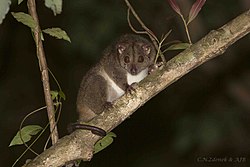
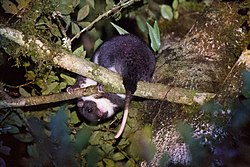
| Common name | Scientific name and subspecies | Range | Size and ecology | IUCN status and estimated population |
|---|---|---|---|---|
| Admiralty Island cuscus | S. kraemeri (Schwarz, 1910) |
Admiralty Islands north of New Guinea
|
Size: 33–64 cm (13–25 in) long, plus 31–59 cm (12–23 in) tail92 Habitat: Forest93 Diet: Leaves, coconuts, and other fruit92 |
NT
|
| Black-spotted cuscus
|
S. rufoniger (Zimara, 1937) |
Northern New Guinea
|
Size: 33–64 cm (13–25 in) long, plus 31–59 cm (12–23 in) tail92 Habitat: Forest94 Diet: Believed to be omnivorous95 |
CR
|
| Blue-eyed spotted cuscus | S. wilsoni Helgen & Flannery, 2004 |
Islands northwest of New Guinea
|
Size: 33–64 cm (13–25 in) long, plus 31–59 cm (12–23 in) tail92 Habitat: Forest96 Diet: Leaves, coconuts, and other fruit92 |
CR
|
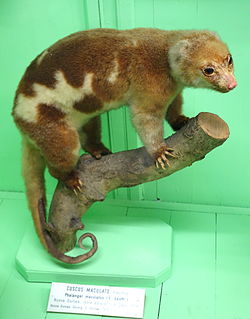
| Common spotted cuscus
|
S. maculatus (Geoffroy, 1803) Four subspecies
|
New Guinea and northeastern Australia
|
Size: 48–56 cm (19–22 in) long, plus 31–33 cm (12–13 in) tail97 Habitat: Forest98 Diet: Leaves, fruit, insects, and small vertebrates97 |
LC
|
| Waigeou cuscus
|
S. papuensis (Desmarest, 1822) |
Waigeo in eastern Indonesia
|
Size: 33–64 cm (13–25 in) long, plus 31–59 cm (12–23 in) tail92 Habitat: Forest99 Diet: Leaves, coconuts, and other fruit92 |
VU
|


| Common name | Scientific name and subspecies | Range | Size and ecology | IUCN status and estimated population |
|---|---|---|---|---|
| Banggai cuscus
|
S. pelengensis (Tate, 1945) Two subspecies
|
Peleng and Sula Islands in eastern Indonesia
|
Size: 35–37 cm (14–15 in) long, plus 24–30 cm (9–12 in) tail100 Habitat: Forest101 Diet: Fruit100 |
LC
|
| Sulawesi dwarf cuscus
|
S. celebensis (Gray, 1858) Three subspecies
|
Sulawesi in Indonesia
|
Size: 29–38 cm (11–15 in) long, plus 27–38 cm (11–15 in) tail102 Habitat: Forest103 Diet: Fruit, flowers, and leaves103 |
NT
|


| Common name | Scientific name and subspecies | Range | Size and ecology | IUCN status and estimated population |
|---|---|---|---|---|
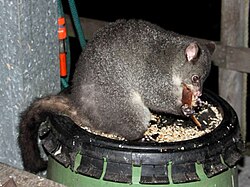
| Common brushtail possum
|
T. vulpecula (Kerr, 1792) |
Scattered Australia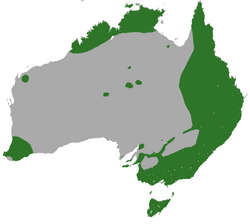
|
Size: 32–58 cm (13–23 in) long, plus 24–35 cm (9–14 in) tail104 Habitat: Forest and savanna105 Diet: Leaves, shoots, and flowers104 |
LC
|
| Coppery brushtail possum
|
T. johnstonii (Ramsay, 1888) |
Northeastern Australia | Size: 40–49 cm (16–19 in) long, plus 30–40 cm (12–16 in) tail106 Habitat: Forest106 Diet: Leaves and fruit106 |
NE
|
| Mountain brushtail possum
|
T. cunninghami Lindenmayer, Dubach & Viggers, 2002 |
Southeastern Australia
|
Size: 32–58 cm (13–23 in) long, plus 24–40 cm (9–16 in) tail107 Habitat: Forest108 Diet: Leaves, fungi, lichen, buds, and fruit, as well as bark109 |
LC
|
| Short-eared possum
|
T. caninus (Ogilby, 1836) |
Eastern Australia
|
Size: 32–58 cm (13–23 in) long, plus 24–40 cm (9–16 in) tail107 Habitat: Forest110 Diet: Leaves, fruit, buds, fungi, bark, and insects111 |
LC
|

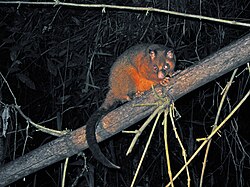

| Common name | Scientific name and subspecies | Range | Size and ecology | IUCN status and estimated population |
|---|---|---|---|---|
| Scaly-tailed possum
|
W. squamicaudata Alexander, 1918 |
Northwestern Australia
|
Size: 29–47 cm (11–19 in) long, plus 25–33 cm (10–13 in) tail112 Habitat: Forest, savanna, and rocky areas113 Diet: Leaves114 |
NT
|

References
References
- "Fossilworks: Phalangeriformes". Paleobiology Database. University of Wisconsin–Madison. Retrieved March 4, 2023.
- Meredith, R. W.; Westerman, M.; Springer, M. S. (2009). "A phylogeny and timescale for the living genera of kangaroos and kin (Macropodiformes: Marsupialia) based on nuclear DNA sequences". Australian Journal of Zoology. 56 (6): 395. Bibcode:2009AuJZ...56..395M. doi:10.1071/ZO08044.
- May-Collado, L. J.; Kilpatrick, C. W.; Agnarsson, I. (2015). "Mammals from 'down under': a multi-gene species-level phylogeny of marsupial mammals (Mammalia, Metatheria)". PeerJ. 3 e805. Bibcode:2015PeerJ...3.e805M. doi:10.7717/peerj.805. PMC 4349131. PMID 25755933.
- Wilson, Reeder, pp. 44–56
- Shiroff, Adam (2023). "Acrobates pygmaeus". Animal Diversity Web. University of Michigan. Retrieved March 4, 2023.
- Dickman, C.; McKenzie, N.; Menkhorst, P. (2016). "Acrobates pygmaeus". IUCN Red List of Threatened Species. 2016 e.T40584A21963834. doi:10.2305/IUCN.UK.2016-2.RLTS.T40584A21963834.en.
- krentz, denise (2007). "Distoechurus pennatus". Animal Diversity Web. University of Michigan. Retrieved March 4, 2023.
- Leary, T.; Seri, L.; Wright, D.; Hamilton, S.; Helgen, K.; Singadan, R.; Menzies, J.; Allison, A.; James, R.; Aplin, K.; Dickman, C.; Salas, L.; Flannery, T. (2016). "Distoechurus pennatus". IUCN Red List of Threatened Species. 2016 e.T6765A21963930. doi:10.2305/IUCN.UK.2016-2.RLTS.T6765A21963930.en.
- Nowak 2018, pp. 283–284
- Leary, T.; Wright, D.; Hamilton, S.; Singadan, R.; Menzies, J.; Bonaccorso, F.; Helgen, K.; Seri, L.; Allison, A.; Salas, L.; Dickman, C. (2016). "Dactylopsila megalura". IUCN Red List of Threatened Species. 2016 e.T6223A21960272. doi:10.2305/IUCN.UK.2016-2.RLTS.T6223A21960272.en.
- Leary, T.; Wright, D.; Hamilton, S.; Singadan, R.; Menzies, J.; Bonaccorso, F.; Helgen, K.; Seri, L.; Allison, A.; Salas, L.; Dickman, C. (2016). "Dactylonax palpator". IUCN Red List of Threatened Species. 2016 e.T6225A21959892. doi:10.2305/IUCN.UK.2016-2.RLTS.T6225A21959892.en.
- Salas, L.; Dickman, C.; Helgen, K.; Burnett, S.; Martin, R. (2016). "Dactylopsila trivirgata". IUCN Red List of Threatened Species. 2016 e.T6226A21960093. doi:10.2305/IUCN.UK.2016-2.RLTS.T6226A21960093.en.
- Langstaff, Lucas (2004). "Dactylopsila trivirgata". Animal Diversity Web. University of Michigan. Retrieved March 4, 2023.
- Leary, T.; Wright, D.; Hamilton, S.; Singadan, R.; Menzies, J.; Bonaccorso, F.; Helgen, K.; Seri, L.; Allison, A. (2016). "Dactylopsila tatei". IUCN Red List of Threatened Species. 2016 e.T6224A21960180. doi:10.2305/IUCN.UK.2016-2.RLTS.T6224A21960180.en.
- Nowak 2018, p. 281
- Woinarski, J.; Burbidge, A. A. (2016). "Gymnobelideus leadbeateri". IUCN Red List of Threatened Species. 2016 e.T9564A21959976. doi:10.2305/IUCN.UK.2016-1.RLTS.T9564A21959976.en.
- Eckhart, Rodgers (2002). "Gymnobelideus leadbeateri". Animal Diversity Web. University of Michigan. Retrieved March 4, 2023.
- Nowak 2018, pp. 275–276
- Leary, T.; Wright, D.; Hamilton, S.; Singadan, R.; Menzies, J.; Bonaccorso, F.; Salas, L.; Dickman, C.; Helgen, K. (2016). "Petaurus biacensis". IUCN Red List of Threatened Species. 2016 e.T16732A21959734. doi:10.2305/IUCN.UK.2016-2.RLTS.T16732A21959734.en.
- Burnett, S.; Winter, J.; Martin, R. (2016). "Petaurus gracilis". IUCN Red List of Threatened Species. 2016 e.T16727A21959531. doi:10.2305/IUCN.UK.2016-2.RLTS.T16727A21959531.en.
- Goff, Breah (2011). "Petaurus gracilis". Animal Diversity Web. University of Michigan. Retrieved March 4, 2023.
- Leary, T.; Wright, D.; Hamilton, S.; Singadan, R.; Menzies, J.; Bonaccorso, F.; Salas, L.; Dickman, C.; Helgen, K. (2016). "Petaurus abidi". IUCN Red List of Threatened Species. 2016 e.T16726A21959298. doi:10.2305/IUCN.UK.2016-2.RLTS.T16726A21959298.en.
- Winter, J.; Lunney, D.; Denny, M.; Burnett, S.; Menkhorst, P. (2016). "Petaurus norfolcensis". IUCN Red List of Threatened Species. 2016 e.T16728A21959402. doi:10.2305/IUCN.UK.2016-2.RLTS.T16728A21959402.en.
- Lundrigan, Barbara; Girvin, Melinda (2000). "Petaurus norfolcensis". Animal Diversity Web. University of Michigan. Retrieved March 4, 2023.
- Pasatta, Jason (2023). "Petaurus breviceps". Animal Diversity Web. University of Michigan. Retrieved March 6, 2023.
- Salas, L.; Dickman, C.; Helgen, K.; Winter, J.; Ellis, M.; Denny, M.; Woinarski, J.; Lunney, D.; Oakwood, M.; Menkhorst, P.; Strahan, R. (2016). "Petaurus breviceps". IUCN Red List of Threatened Species. 2016 e.T16731A21959798. doi:10.2305/IUCN.UK.2016-2.RLTS.T16731A21959798.en.
- Secord, Ross (2000). "Petaurus australis". Animal Diversity Web. University of Michigan. Retrieved March 6, 2023.
- Woinarski, J.; Burbidge, A. A.; Johnson, C. N. (2016). "Petaurus australis". IUCN Red List of Threatened Species. 2016 e.T16730A21959641. doi:10.2305/IUCN.UK.2016-1.RLTS.T16730A21959641.en.
- Humfleet, Jennifer (2006). "Hemibelideus lemuroides". Animal Diversity Web. University of Michigan. Retrieved March 4, 2023.
- Burnett, S.; Winter, J. (2019). "Hemibelideus lemuroides". IUCN Red List of Threatened Species. 2019 e.T9869A21962427. doi:10.2305/IUCN.UK.2019-1.RLTS.T9869A21962427.en.
- Nagel, Juliet (2003). "Petauroides volans". Animal Diversity Web. University of Michigan. Retrieved March 4, 2023.
- Johnson, C.; Burbidge, A. A. (2025). "Petauroides volans". IUCN Red List of Threatened Species. 2025 e.T40579A217036853.
- Nowak 2018, pp. 262–263
- Burbidge, A.; Woinarski, J.; Winter, J.; Runcie, M. (2016). "Petropseudes dahli". IUCN Red List of Threatened Species. 2016 e.T40580A21962333. doi:10.2305/IUCN.UK.2016-2.RLTS.T40580A21962333.en.
- Stroede, Robert (2007). "Petropseudes dahli". Animal Diversity Web. University of Michigan. Retrieved March 6, 2023.
- Welsh, Paul (2002). "Pseudocheirus peregrinus". Animal Diversity Web. University of Michigan. Retrieved March 4, 2023.
- Winter, J.; Menkhorst, P.; Lunney, D.; van Weenen, J. (2016). "Pseudocheirus peregrinus". IUCN Red List of Threatened Species. 2016 e.T40581A21963019. doi:10.2305/IUCN.UK.2016-2.RLTS.T40581A21963019.en.
- Nowak 2018, pp. 264–265
- Burbidge, A. A.; Zichy-Woinarski, J. (2017). "Pseudocheirus occidentalis". IUCN Red List of Threatened Species. 2017 e.T18492A21963100. doi:10.2305/IUCN.UK.2017-3.RLTS.T18492A21963100.en.
- Nowak 2018, pp. 267–268
- Woinarski, J.; Burbidge, A. A. (2016). "Pseudochirulus cinereus". IUCN Red List of Threatened Species. 2016 e.T18508A21962025. doi:10.2305/IUCN.UK.2016-2.RLTS.T18508A21962025.en.
- Berger, Alison (2006). "Pseudochirulus herbertensis". Animal Diversity Web. University of Michigan. Retrieved March 4, 2023.
- Burnett, S.; Winter, J. (2016). "Pseudochirulus herbertensis". IUCN Red List of Threatened Species. 2016 e.T18509A21962231. doi:10.2305/IUCN.UK.2016-2.RLTS.T18509A21962231.en.
- Helgen, K.; Dickman, C.; Aplin, K. (2016). "Pseudochirulus canescens". IUCN Red List of Threatened Species. 2016 e.T40638A21961626. doi:10.2305/IUCN.UK.2016-2.RLTS.T40638A21961626.en.
- McKnight, M. (2016). "Pseudochirulus larvatus". IUCN Red List of Threatened Species. 2016 e.T136699A21961712. doi:10.2305/IUCN.UK.2016-2.RLTS.T136699A21961712.en.
- Helgen, K.; Dickman, C.; Salas, L. (2016). "Pseudochirulus forbesi". IUCN Red List of Threatened Species. 2016 e.T40639A21961873. doi:10.2305/IUCN.UK.2016-2.RLTS.T40639A21961873.en.
- Helgen, K.; Dickman, C.; Salas, L. (2016). "Pseudochirulus mayeri". IUCN Red List of Threatened Species. 2016 e.T40640A21961792. doi:10.2305/IUCN.UK.2016-2.RLTS.T40640A21961792.en.
- Hatfield, Lucy (2011). "Pseudochirulus mayeri". Animal Diversity Web. University of Michigan. Retrieved March 4, 2023.
- Helgen, K.; Dickman, C.; Salas, L. (2016). "Pseudochirulus schlegeli". IUCN Red List of Threatened Species. 2016 e.T40641A21962129. doi:10.2305/IUCN.UK.2016-2.RLTS.T40641A21962129.en.
- Helgen, K.; Leary, T.; Singadan, R.; Menzies, J.; Wright, D. (2016). "Pseudochirulus caroli". IUCN Red List of Threatened Species. 2016 e.T18507A21961944. doi:10.2305/IUCN.UK.2016-2.RLTS.T18507A21961944.en.
- Helgen, K.; Dickman, C.; Salas, L. (2016). "Pseudochirops cupreus". IUCN Red List of Threatened Species. 2016 e.T18505A21962805. doi:10.2305/IUCN.UK.2016-2.RLTS.T18505A21962805.en.
- Helgen, K.; Dickman, C.; Salas, L. (2019). "Pseudochirops albertisii". IUCN Red List of Threatened Species. 2019 e.T18503A21962540. doi:10.2305/IUCN.UK.2019-1.RLTS.T18503A21962540.en.
- Woinarski, J.; Burbidge, A. A. (2019). "Pseudochirops archeri". IUCN Red List of Threatened Species. 2019 e.T18502A21962719. doi:10.2305/IUCN.UK.2019-1.RLTS.T18502A21962719.en.
- Davis, Sarah (2002). "Pseudochirops archeri". Animal Diversity Web. University of Michigan. Retrieved March 4, 2023.
- Leary, T.; Singadan, R.; Menzies, J.; Wright, D.; Helgen, K.; Dickman, C.; Salas, L. (2019). "Pseudochirops corinnae". IUCN Red List of Threatened Species. 2019 e.T18504A21962636. doi:10.2305/IUCN.UK.2019-1.RLTS.T18504A21962636.en.
- Flannery, T.; Leary, T.; Singadan, R.; Menzies, J.; Wright, D.; Helgen, K.; Dickman, C.; Salas, L. (2016). "Pseudochirops coronatus". IUCN Red List of Threatened Species. 2016 e.T40582A21962888. doi:10.2305/IUCN.UK.2016-2.RLTS.T40582A21962888.en.
- Loay, Yengin (2011). "Tarsipes rostratus". Animal Diversity Web. University of Michigan. Retrieved March 6, 2023.
- Friend, T.; Morris, K.; Burbidge, A.; McKenzie, N. (2016). "Tarsipes rostratus". IUCN Red List of Threatened Species. 2016 e.T40583A21958924. doi:10.2305/IUCN.UK.2016-2.RLTS.T40583A21958924.en.
- Nowak 2018, p. 239
- Menkhorst, P.; Broome, L.; Driessen, M. (2008). "Burramys parvus". IUCN Red List of Threatened Species. 2008 e.T3339A9775825. doi:10.2305/IUCN.UK.2008.RLTS.T3339A9775825.en.
- Bender, Jamie (2023). "Burramys parvus". Animal Diversity Web. University of Michigan. Retrieved March 6, 2023.
- Sides, Corey (2003). "Cercartetus nanus". Animal Diversity Web. University of Michigan. Retrieved March 6, 2023.
- Dickman, C.; Lunney, D.; Menkhorst, P. (2016). "Cercartetus nanus". IUCN Red List of Threatened Species. 2016 e.T40578A21963504. doi:10.2305/IUCN.UK.2016-2.RLTS.T40578A21963504.en.
- Nowak 2018, p. 234
- Aplin, K.; Dickman, C.; Salas, L.; Burnett, S.; Winter, J. (2016). "Cercartetus caudatus". IUCN Red List of Threatened Species. 2016 e.T4192A21963339. doi:10.2305/IUCN.UK.2016-2.RLTS.T4192A21963339.en.
- Schweighoefer, Kristen (2023). "Cercartetus caudatus". Animal Diversity Web. University of Michigan. Retrieved March 4, 2023.
- Hendricks, Colette (2023). "Cercartetus lepidus". Animal Diversity Web. University of Michigan. Retrieved March 4, 2023.
- Menkhorst, P. (2016). "Cercartetus lepidus". IUCN Red List of Threatened Species. 2016 e.T40577A21963428. doi:10.2305/IUCN.UK.2016-2.RLTS.T40577A21963428.en.
- Burbidge, A.; Morris, K.; Ellis, M.; van Weenen, J.; Menkhorst, P. (2016). "Cercartetus concinnus". IUCN Red List of Threatened Species. 2016 e.T40576A21963278. doi:10.2305/IUCN.UK.2016-2.RLTS.T40576A21963278.en.
- Pollen, Ryan (2007). "Cercartetus concinnus". Animal Diversity Web. University of Michigan. Retrieved March 6, 2023.
- Nowak 2018, pp. 244–245
- Salas, L.; Dickman, C.; Helgen, K.; Flannery, T. (2019). "Ailurops ursinus". IUCN Red List of Threatened Species. 2019 e.T40637A21949654. doi:10.2305/IUCN.UK.2019-1.RLTS.T40637A21949654.en.
- Seaton, Tawny (2002). "Ailurops ursinus". Animal Diversity Web. University of Michigan. Retrieved March 6, 2023.
- Flannery, T.; Helgen, K. (2016). "Ailurops melanotis". IUCN Red List of Threatened Species. 2016 e.T136218A21949526. doi:10.2305/IUCN.UK.2016-2.RLTS.T136218A21949526.en.
- Nowak 2018, pp. 258–259
- Leary, T.; Singadan, R.; Menzies, J.; Helgen, K.; Wright, D.; Allison, A.; Flannery, T.; Salas, L.; Dickman, C. (2019). "Phalanger matabiru". IUCN Red List of Threatened Species. 2019 e.T136200A21951146. doi:10.2305/IUCN.UK.2019-1.RLTS.T136200A21951146.en.
- Leary, T.; Singadan, R.; Menzies, J.; Helgen, K.; Wright, D.; Allison, A.; Hamilton, S.; Salas, L.; Dickman, C. (2016). "Phalanger intercastellanus". IUCN Red List of Threatened Species. 2016 e.T16857A21950491. doi:10.2305/IUCN.UK.2016-2.RLTS.T16857A21950491.en.
- Leary, T.; Singadan, R.; Menzies, J.; Helgen, K.; Wright, D.; Allison, A.; Flannery, T.; Salas, L.; Dickman, C. (2016). "Phalanger alexandrae". IUCN Red List of Threatened Species. 2016 e.T16858A21950608. doi:10.2305/IUCN.UK.2016-2.RLTS.T16858A21950608.en.
- Leary, T.; Singadan, R.; Menzies, J.; Helgen, K.; Wright, D.; Allison, A.; Salas, L.; Dickman, C. (2016). "Phalanger gymnotis". IUCN Red List of Threatened Species. 2016 e.T16856A21951309. doi:10.2305/IUCN.UK.2016-2.RLTS.T16856A21951309.en.
- Macke, Colleen (2011). "Phalanger gymnotis". Animal Diversity Web. University of Michigan. Retrieved March 4, 2023.
- Leary, T.; Singadan, R.; Menzies, J.; Helgen, K.; Wright, D.; Allison, A.; Salas, L.; Dickman, C. (2016). "Phalanger carmelitae". IUCN Red List of Threatened Species. 2016 e.T16853A21950989. doi:10.2305/IUCN.UK.2016-2.RLTS.T16853A21950989.en.
- Leary, T.; Singadan, R.; Menzies, J.; Helgen, K.; Wright, D.; Allison, A.; Hamilton, S.; Salas, L.; Dickman, C. (2016). "Phalanger orientalis". IUCN Red List of Threatened Species. 2016 e.T16847A21951519. doi:10.2305/IUCN.UK.2016-2.RLTS.T16847A21951519.en.
- Merlo, Laura (2002). "Phalanger orientalis". Animal Diversity Web. University of Michigan. Retrieved March 4, 2023.
- Leary, T.; Singadan, R.; Menzies, J.; Helgen, K.; Wright, D.; Allison, A.; Flannery, T. (2016). "Phalanger ornatus". IUCN Red List of Threatened Species. 2016 e.T16854A21951066. doi:10.2305/IUCN.UK.2016-2.RLTS.T16854A21951066.en.
- Leary, T.; Singadan, R.; Menzies, J.; Helgen, K.; Wright, D.; Allison, A.; Flannery, T. (2016). "Phalanger rothschildi". IUCN Red List of Threatened Species. 2016 e.T16852A21950924. doi:10.2305/IUCN.UK.2016-2.RLTS.T16852A21950924.en.
- Leary, T.; Singadan, R.; Menzies, J.; Helgen, K.; Wright, D.; Allison, A.; Hamilton, S.; Aplin, K.; Salas, L.; Dickman, C. (2016). "Phalanger sericeus". IUCN Red List of Threatened Species. 2016 e.T16855A21951235. doi:10.2305/IUCN.UK.2016-2.RLTS.T16855A21951235.en.
- Salas, L.; Dickman, C.; Helgen, K. (2016). "Phalanger mimicus". IUCN Red List of Threatened Species. 2016 e.T136450A21951638. doi:10.2305/IUCN.UK.2016-2.RLTS.T136450A21951638.en.
- Leary, T.; Singadan, R.; Menzies, J.; Helgen, K.; Wright, D.; Allison, A.; Aplin, K.; Salas, L.; Dickman, C. (2016). "Phalanger vestitus". IUCN Red List of Threatened Species. 2016 e.T16850A21950723. doi:10.2305/IUCN.UK.2016-2.RLTS.T16850A21950723.en.
- Leary, T.; Seri, L.; Flannery, T.; Wright, D.; Hamilton, S.; Helgen, K.; Singadan, R.; Menzies, J.; Allison, A.; James, R.; Salas, L.; Dickman, C. (2016). "Phalanger matanim". IUCN Red List of Threatened Species. 2016 e.T16851A21950802. doi:10.2305/IUCN.UK.2016-2.RLTS.T16851A21950802.en.
- Leary, T.; Singadan, R.; Menzies, J.; Helgen, K.; Wright, D.; Allison, A.; Hamilton, S. (2016). "Phalanger lullulae". IUCN Red List of Threatened Species. 2016 e.T16846A21951419. doi:10.2305/IUCN.UK.2016-2.RLTS.T16846A21951419.en.
- Hanna, Corie (2002). "Phalanger lullulae". Animal Diversity Web. University of Michigan. Retrieved March 4, 2023.
- Nowak 2018, pp. 256–257
- Helgen, K.; Leary, T.; Singadan, R.; Menzies, J.; Wright, D. (2019). "Spilocuscus kraemeri". IUCN Red List of Threatened Species. 2019 e.T20637A21950199. doi:10.2305/IUCN.UK.2019-2.RLTS.T20637A21950199.en.
- Leary, T.; Singadan, R.; Menzies, J.; Helgen, K.; Allison, A.; James, R.; Flannery, T.; Aplin, K.; Dickman, C.; Salas, L. (2016). "Spilocuscus rufoniger". IUCN Red List of Threatened Species. 2016 e.T20639A21949788. doi:10.2305/IUCN.UK.2016-2.RLTS.T20639A21949788.en.
- Bey, Lisa (2003). "Spilocuscus rufoniger". Animal Diversity Web. University of Michigan. Retrieved March 6, 2023.
- Aplin, K.; Helgen, K. (2016). "Spilocuscus wilsoni". IUCN Red List of Threatened Species. 2016 e.T136443A21950078. doi:10.2305/IUCN.UK.2016-2.RLTS.T136443A21950078.en.
- Eby, Alyssa (2018). "Spilocuscus maculatus". Animal Diversity Web. University of Michigan. Retrieved March 4, 2023.
- Leary, T.; Singadan, R.; Menzies, J.; Helgen, K.; Wright, D.; Allison, A.; Aplin, K.; Dickman, C. (2016). "Spilocuscus maculatus". IUCN Red List of Threatened Species. 2016 e.T20636A21950307. doi:10.2305/IUCN.UK.2016-2.RLTS.T20636A21950307.en.
- Helgen, K.; Aplin, K.; Dickman, C. (2016). "Spilocuscus papuensis". IUCN Red List of Threatened Species. 2016 e.T20638A21949972. doi:10.2305/IUCN.UK.2016-2.RLTS.T20638A21949972.en.
- Nowak 2018, p. 246
- Leary, T.; Singadan, R.; Menzies, J.; Helgen, K.; Allison, A.; James, R.; Flannery, T.; Aplin, K.; Dickman, C.; Salas, L. (2016). "Strigocuscus pelengensis". IUCN Red List of Threatened Species. 2016 e.T20892A21951846. doi:10.2305/IUCN.UK.2016-2.RLTS.T20892A21951846.en.
- Moe, Brittany (2007). "Strigocuscus celebensis". Animal Diversity Web. University of Michigan. Retrieved March 4, 2023.
- Helgen, K.; Aplin, K.; Dickman, C.; Salas, L. (2020). "Strigocuscus celebensis". IUCN Red List of Threatened Species. 2020 e.T20890A21951742. doi:10.2305/IUCN.UK.2020-2.RLTS.T20890A21951742.en.
- Meyer, Grace (2000). "Trichosurus vulpecula". Animal Diversity Web. University of Michigan. Retrieved March 4, 2023.
- Morris, K.; Woinarski, J.; Friend, T.; Foulkes, J.; Kerle, A.; Ellis, M. (2016). "Trichosurus vulpecula". IUCN Red List of Threatened Species. 2016 e.T40585A21952080. doi:10.2305/IUCN.UK.2016-2.RLTS.T40585A21952080.en.
- Meyer, Trisha (2012). "Trichosurus johnstonii". Animal Diversity Web. University of Michigan. Retrieved March 4, 2023.
- Nowak 2018, p. 246
- Menkhorst, P.; Taggart, D.; Ellis, M.; Martin, R. (2016). "Trichosurus cunninghami". IUCN Red List of Threatened Species. 2016 e.T136256A21952015. doi:10.2305/IUCN.UK.2016-2.RLTS.T136256A21952015.en.
- McCreary, Helen (2012). "Trichosurus cunninghami". Animal Diversity Web. University of Michigan. Retrieved March 6, 2023.
- Menkhorst, P.; Denny, M.; Winter, J.; Ellis, M. (2016). "Trichosurus caninus". IUCN Red List of Threatened Species. 2016 e.T40557A21951945. doi:10.2305/IUCN.UK.2016-2.RLTS.T40557A21951945.en.
- Afflerbaugh, Kevin (2002). "Trichosurus caninus". Animal Diversity Web. University of Michigan. Retrieved March 6, 2023.
- Nowak 2018, p. 253
- Burbidge, A. A.; Woinarski, J. (2016). "Wyulda squamicaudata". IUCN Red List of Threatened Species. 2016 e.T23091A21950421. doi:10.2305/IUCN.UK.2016-1.RLTS.T23091A21950421.en.
- Berkhouse, Hudson (2015). "Wyulda squamicaudata". Animal Diversity Web. University of Michigan. Retrieved March 4, 2023.
Sources
Sources
- Groves, Colin P. (2005). Wilson, Don E.; Reeder, DeeAnn M. (eds.). Mammal Species of the World. Vol. 1 (3rd ed.). Johns Hopkins University Press. ISBN 978-0-8018-8221-0.
- Nowak, Ronald M. (2018). Walker's Mammals of the World. Vol. Monotremes, Marsupials, Afrotherians, Xenarthrans, and Sundatherians. Johns Hopkins University Press. ISBN 978-1-4214-2468-2.