| Gomphurus modestus | |
|---|---|
Scientific classification 
| |
| Kingdom: | Animalia |
| Phylum: | Arthropoda |
| Clade: | Pancrustacea |
| Class: | Insecta |
| Order: | Odonata |
| Infraorder: | Anisoptera |
| Family: | Gomphidae |
| Genus: | Gomphurus |
| Species: | G. modestus
|
| Binomial name | |
| Gomphurus modestus (Needham, 1942)
| |
| Synonyms | |
|
Gomphus modestus Needham, 1942 | |
Gomphurus modestus, the Gulf Coast clubtail,2 is a species of dragonfly in the family Gomphidae. It is endemic to the southeastern United States, and is found in medium to large, slow-flowing rivers over rock, mud and sand substrates.13
This species was formerly a member of the genus Gomphus. It is now considered to be a member of the genus Gomphurus, after that name was elevated in rank from subgenus in 2017.3456
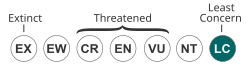
The IUCN conservation status of Gomphurus modestus is "LC", least concern, with no immediate threat to the species' survival. The population is stable. The IUCN status was reviewed on 5 May 2016.1
References
References
- Abbott, J.C.; Paulson, D.R. (2018) [amended version of 2017 assessment]. "Gomphurus modestus". IUCN Red List of Threatened Species. 2018 e.T42687A125525503. doi:10.2305/IUCN.UK.2017-3.RLTS.T42687A125525503.en. Retrieved 11 November 2021.
- "Gomphurus modestus". Global Biodiversity Information Facility. Retrieved 2024-01-06.
- "Gomphurus modestus Species Information". BugGuide.net. Retrieved 2018-08-18.
- Ware, Jessica L.; Pilgrim, Erik; May, Michael L.; Donnelly, Thomas W.; et al. (2017). "Phylogenetic relationships of North American Gomphidae and their close relatives". Systematic Entomology. 42 (2): 347–358. Bibcode:2017SysEn..42..347W. doi:10.1111/syen.12218. PMC 6104399. PMID 30147221.
- "Odonata Central". Retrieved 2018-08-18.
- "World Odonata List". Slater Museum of Natural History, University of Puget Sound. 2018. Retrieved 2018-08-18.