| Kaili Formation | |
|---|---|
| Stratigraphic range: Cambrian | |
| Type | Geological formation |
| Thickness | ~200 m (660 ft) |
| Lithology | |
| Primary | Claystone, mudstone, shale |
| Other | Siltstone, marl, limestone |
| Location | |
| Coordinates | 24°54′N 102°30′E / 24.9°N 102.5°E / 24.9; 102.5 |
| Approximate paleocoordinates | 35°06′N 161°18′E / 35.1°N 161.3°E / 35.1; 161.3 |
| Region | Guizhou |
| Country | China |
| Type section | |
| Named for | Kaili |
Kaili Formation (China) Show map of ChinaKaili Formation (Guizhou) Show map of Guizhou | |
The Kaili Formation (simplified Chinese: 凯里组; traditional Chinese: 凱里組; pinyin: Kǎilǐ zǔ) is a stratigraphic formation which was deposited during the Lower and Middle Cambrian (~513 to 506 million years ago). The formation is approximately 200 metres (660 ft) thick and was named after the city Kaili in the Guizhou province of southwest China.
The depositional environment of the Kaili Formation is not entirely known, and there are two hypotheses for its formation. It may have been a nearshore marine environment with 'normal' levels of oxygenation; or it may have been a deeper water environment further from the shore, on the open continental shelf; in this setting oxygen would not be available below the surface layers of the deposited sediment.1 The trace fossil assemblages in the formation suggest that it was below the wave base and was reasonably well-oxygenated.1
Fossils
The faunal assemblage is highly diverse, comprising some 110 genera among 11 phyla; of these, some 40 genera are also found in the Burgess Shale, and some 30 are also found in the Maotianshan Shale. Trilobites and eocrinoids with hard parts that are easily preserved are the most common fossils, but many animals with only soft tissues are also preserved. For example, the arthropod Skania similar to the Ediacaran Parvancorina of the Neoproterozoic age Ediacara Hills of South Australia has been found at the Kaili site.2
The middle part of the Kaili Formation, the Oryctocephalus indicus Zone, contains a Burgess Shale-type Lagerstätte with many well-preserved fossils known collectively as the Kaili Biota. In terms of age, this biota is located between the two most important and famous Cambrian Lagerstätten: the middle Lower Cambrian Maotianshan Shale (containing the Chengjiang Biota), also from China: and the Middle Cambrian Burgess Shale, known from Canada.34
Some other notable fossils discovered at Kaili are putative invertebrate eggs and embryos,5 trace fossils of the genus Gordia (not to be confused with the Gordian worms),1 as well as Naraoia, chancellorids, Microdictyon, Wiwaxia, and Marrella.4 Furthermore, the possible moss Parafunaria is also known, marking the earliest likely fossil of land plants.6 However this fossil has been disputed, as its Cambrian age means more conclusive proof is needed to determine whether it truly is a moss.7
The Kaili Formation is subdivided into three trilobite zones:
- Bathynotus holopygous–Ovatoryctocara granulata Zone
- Oryctocephalus indicus Zone
- Olenoides jialaoensis Zone8
Paleobiota
Animals
Color key
|
Notes Uncertain or tentative taxa are in small text; |
| Animals | |||||
|---|---|---|---|---|---|
| Genus | Species | Higher taxon | Notes | Images | |
| Skania? | "S." sundbergi2 | Acercostraca | Likely does not belong to the genus9 | 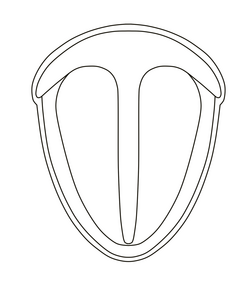 | |
| Olenoides | O. paraptus | Dorypygidae | Preserved with gut contents10 | 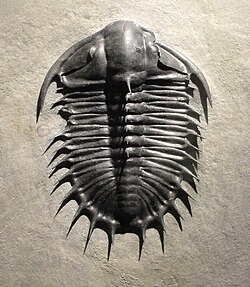 | |
| Alicaris | A. kailiensis11 | Arthropoda | |||
| Pseudoarctolepis | P. semicircularis | Hymenocarina | Differs from the type species in having smaller semicircular "wings"11 | 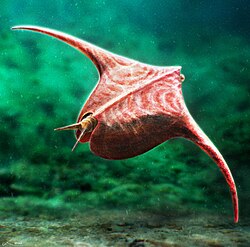 | |
| Tuzoia | T. bispinosa | Tuzoiidae | Preserves ontogeny12 | 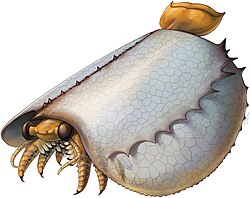 | |
| Forfexicaris | F. reticulata | Megacheira? | Relatively similar to the type species11 |  | |
| Leanchoilia | L. sp | Megacheira | Preserves neuroanatomy13 | ||
| Fuxianhuiida indet? | Unapplicable | Deuteropoda | Known from a poorly preserved specimen with trilobite fragments inside its gut14 | ||
| Mollisonia | M. sinica | Mollisoniida | Differs from Burgess Shale specimens in the shape of the tail and head shields15 |  | |
| Ursulinacaris | U. cf. grallae | Hurdiidae | One of the first hurdiids from Miaolingian China16 | 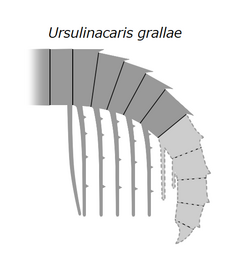 | |
| Ottoia | O. guizhouensis17 | Archaeopriapulida | May not actually belong to Ottoia?18 |  | |
| Haplophrentis | H. carinatus | Hyolithida | One specimen found with several eocrinoids growing on its shell in life19 |  | |
| Nisusia | N. guizhouensis, N. granosa | Kutorginida | One of the few rhynchonelliforms known from the Cambrian20 |  | |
| Kailidiscus | K. chinensis | Edrioasteroidea | Strongly resembles other echinoderm clades in several features21 | ||
| Globeocrinus | G. globulus | Eocrinoidea | Short-stalked, over three times as abundant as Sinoeocrinus22 | ||
| Sinoeocrinus | S. lui | Eocrinoidea | Synonymous with a wide range of other proposed eocrinoids, has a complex ontogeny8 |  | |
| Turbanicystis | T. inflata | Eocrinoidea | Has a very short but broad stalk, which likely secreted a "glue" to cement it to substrate23 | ||
| Pararotadiscus | P. guizhouensis | Eldoniidae | Small brachiopods and echinoderms likely grew on some specimens in life24 |  | |
| Dinomischus | D. isolatus? | Dinomischidae (stem-Ctenophora) | Only known from one specimen25 |  | |
| Angulosuspongia | A. sinensis | Vauxiidae (Demospongiae) | First non-Laurentian vauxiid,26 bears silliceous spicules27 | ||
| Allonnia | A. phrixothrix, A. erjiensis | Chancelloriidae | Latter species has especially dense sclerites28 |  | |
| Archiasterella | A. anchoriformis | Chancelloriidae | One of the two species in the genus known from complete fossils28 | ||
| Chancelloria | C. zhaoi, C. eros | Chancelloriidae | One specimen of the latter species has a smaller C. eros growing on top of it28 |  | |
Other taxa
Color key
|
Notes Uncertain or tentative taxa are in small text; |
| Other taxa | |||||
|---|---|---|---|---|---|
| Genus | Species | Higher taxon | Notes | Images | |
| Parafunaria | P. sinensis | Bryophyta? | Possibly the earliest embryophyte fossil,6 but this has been doubted due to insufficient evidence7 | ||
| Parallelphyton | P. tipica | Viridiplantae? | Bears differentiation similar to "proto-plants" and the extant Fritschiella29 | ||
| Walcottophycus | W. gyges | Bryopsidales? | Formerly placed within Bosworthia30 |  | |
GSSP for the Cambrian Series 3
An outcrop of the Kaili Formation, the Wuliu-Zengjiayan section, was a candidate for the GSSP for the beginning of the 5th stage of the Cambrian. The FAD of two trilobites from the formation are proposed to be the official stage boundary, Oryctocephalus indicus and Ovatoryctocara granulata. Both can be correlated with formations of similar age in Siberia and China.31 In 2018, GSSP for the Miaolingian series (Cambrian Series 3, "Middle" Cambrian32) as well as the Wuliuan stage was finally defined in this formation.33
References
References
- Wang, Y.; Lin, J. P.; Zhao, Y. L.; Orr, P. J. (2009). "Palaeoecology of the trace fossil Gordia and its interaction with nonmineralizing taxa from the early Middle Cambrian Kaili Biota, Guizhou Province, South China". Palaeogeography, Palaeoclimatology, Palaeoecology. 277 (1–2): 141–148. Bibcode:2009PPP...277..141W. doi:10.1016/j.palaeo.2009.02.017.
- Lin, J. P.; Gon, S. M.; Gehling, J. G.; Babcock, L. E.; Zhao, Y. L.; Zhang, X. L.; Hu, S. X.; Yuan, J. L.; Yu, M. Y.; Peng, J. (2006). "A Parvancorina-like arthropod from the Cambrian of South China". Historical Biology. 18 (1): 33–45. Bibcode:2006HBio...18...33L. doi:10.1080/08912960500508689. S2CID 85821717.
- Zhang, Xingliang; Wei Liu; Yuanlong Zhao (2008). "Cambrian Burgess Shale-type Lagerstätten in South China: Distribution and significance" (PDF). Gondwana Research. 14 (1–2): 255–262. Bibcode:2008GondR..14..255Z. doi:10.1016/j.gr.2007.06.008. Archived from the original (PDF) on 2014-07-14.
- ZHAO Yuanlong; YUAN Jinliang; ZHU Maoyan; YANG Ruidong; GUO Qingjun; PENG Jin; YANG Xinglian (2002). "Progress and significance in research on the early Middle Cambrian Kaili Biota, Guizhou Province, China". Progress in Natural Science. 12 (9): 649–654.
- Lin, J.; et al. (2006). "Silicified egg clusters from a Middle Cambrian Burgess Shale–type deposit, Guizhou, south China". Geology. 34 (12): 1037–1040. Bibcode:2006Geo....34.1037L. doi:10.1130/G23006A.1.
- Yang, Rui-Dong; Mao, Jia-Ren; Zhang, Wei-Hua; Jiang, Li-Jun; Gao, Hui (2004). "Bryophyte-like Fossil (Parafunaria sinensis) from Early-Middle Cambrian Kaili Formation in Guizhou Province, China". Acta Botanica Sinica. 46 (2): 180–185.
- Vanderpoorten, Alain; Goffinet, Bernard (2010). Introduction to Bryophyes (Repr ed.). Cambridge: Cambridge Univ. Pr. ISBN 978-0-521-70073-3.
- Parsley, Ronald L.; Zhao Yuanlong (2006). "Long stalked eocriuoids in basal Middle Cambrian Kaili Biota, Taijiang County, Guizhou Province, China". Journal of Paleontology. 80 (6): 1058–1071. doi:10.1666/0022-3360(2006)80[1058:LSEITB]2.0.CO;2. ISSN 0022-3360. S2CID 128645059.
- Legg, D.A. (30 September 2015). "The morphology and affinities of Skania fragilis (Arthropoda) from the middle Cambrian Burgess Shale". Bulletin of Geosciences: 509–518. doi:10.3140/bull.geosci.1532.
- Lin, Jih-Pai (1 January 2007). "Preservation of the Gastrointestinal System in Olenoides (Trilobita) from the Kaili Biota (Cambrian) of Guizhou, China". Memoirs of the Association of Australasian Palaeontologists (33): 179–189. doi:10.3316/informit.252092135956343.
- Yuan, Jinliang; Peng, Jin; Zhao, Yuanlong (August 2011). "New Bivalved Arthropods from Mid‐Cambrian Kaili Biota of Southeastern Guizhou, Southwest China". Acta Geologica Sinica - English Edition. 85 (4): 758–764. doi:10.1111/j.1755-6724.2011.00481.x.
- Wen, Rong-Qin; Zhao, Yuan-Long; Peng, Jin (March 2015). "Morphology and ontogeny of Tuzoia bispinosa from the Kaili Biota (Cambrian Stage 5) of eastern Guizhou, China". Palaeoworld. 24 (1–2): 61–70. doi:10.1016/j.palwor.2014.12.005.
- Lan, Tian; Zhao, Yuanlong; Zhao, Fangchen; He, You; Martinez, Pedro; Strausfeld, Nicholas J. (October 2021). "Leanchoiliidae reveals the ancestral organization of the stem euarthropod brain". Current Biology. 31 (19): 4397–4404.e2. doi:10.1016/j.cub.2021.07.048.
- Zhu, M. -Y.; Vannier, J.; Iten, H. Van; Zhao, Y. -L. (2004). "Direct Evidence for Predation on Trilobites in the Cambrian" (PDF). Proceedings: Biological Sciences. 271: S277–S280. ISSN 0962-8452.
- Zhang, Xingliang; Zhao, Yuanlong; Yang, Ruidong; Shu, Degan (2002). "The Burgess Shale Arthropod Mollisonia (M. sinica New Species): New Occurrence from the Middle Cambrian Kaili Fauna of Southwest China" (PDF). Journal of Paleontology. 76 (6): 1106–1108. ISSN 0022-3360.
- Luo, Xiuchun; Yang, XingLian; Esteve, Jorge; Wang, Dezhi (September 2025). "First report of the hurdiid radiodont Ursulinacaris from the Cambrian Kaili Biota, South China". Palaeogeography, Palaeoclimatology, Palaeoecology. 674 113036. doi:10.1016/j.palaeo.2025.113036. ISSN 0031-0182.
- Yang, Yuning; Zhao, Yuanlong; Zhang, Xingliang (2 June 2016). "Fossil priapulid Ottoia from the Kaili biota (Cambrian Series 3) of South China". Journal of Systematic Palaeontology. 14 (6): 527–543. doi:10.1080/14772019.2015.1077900.
- Smith, Martin R.; Harvey, Thomas H. P.; Butterfield, Nicholas J. (July 2015). "The macro‐ and microfossil record of the Cambrian priapulid Ottoia". Palaeontology. 58 (4): 705–721. doi:10.1111/pala.12168.
- Liu, Xiong; Zhao, Yuanlong; Yang, Xinglian; Chen, Zhengpeng; Chen, Shengguang; Luo, Xue (January 2023). "Stalked eocrinoids attached onto hyolithids with helens from Cambrian Kaili Formation in Jianhe, Guizhou, South China". Palaeogeography, Palaeoclimatology, Palaeoecology. 610 111330. doi:10.1016/j.palaeo.2022.111330.
- Mao, Yong-Qin; Zhao, Yuan-Long; Wang, Cheng-Wen; Topper, Timothy (February 2017). "A fresh look at Nisusia Walcott, 1905 from the Cambrian Kaili Formation in Guizhou". Palaeoworld. 26 (1): 12–24. doi:10.1016/j.palwor.2016.03.001.
- Zhao, Yuanlong; Sumrall, Colin D.; Parsley, Ronald L.; Peng, Jin (July 2010). "Kailidiscus, a new plesiomorphic edrioasteroid from the basal Middle Cambrian Kaili biota of Guizhou Province, China". Journal of Paleontology. 84 (4): 668–680. doi:10.1666/09-159.1.
- Zhao, Yuanlong; Parsley, Ronald L.; Peng, Jin (March 2008). "Basal Middle Cambrian short-stalked eocrinoids from the Kaili biota: Guizhou province, China". Journal of Paleontology. 82 (2): 415–422. doi:10.1666/06-041.1.
- Parsley, Ronald L.; Zhao, Yuanlong (2010). "A New Turban-Shaped Gogiid Eocrinoid from the Kaili Formation (kaili Biota), Balang, Jianhe County, Guizhou Province, China" (PDF). Journal of Paleontology. 84 (3): 549–553. ISSN 0022-3360.
- Zhao, Yuanlong; Wang, Mingkun; LoDuca, Steven T.; Yang, Xinglian; Yang, Yuning; Liu, Yujuan; Cheng, Xin (2018). "Paleoecological Significance of Complex Fossil Associations of the Eldonioid Pararotadiscus guizhouensis with other Faunal Members of the Kaili Biota (Stage 5, Cambrian, South China)" (PDF). Journal of Paleontology. 92 (6): 972–981. ISSN 0022-3360.
- Jin, Peng; Yuanlong, Zhao; Jih-Pai, Lin (7 September 2010). "Dinomischus from the Middle Cambrian Kaili Biota, Guizhou, China". Acta Geologica Sinica - English Edition. 80 (4): 498–501. doi:10.1111/j.1755-6724.2006.tb00269.x.
- Yang, Xinglian; Zhao, Yuanlong; Babcock, Loren E.; Peng, Jin (November 2017). "A new vauxiid sponge from the Kaili Biota (Cambrian Stage 5), Guizhou, South China". Geological Magazine. 154 (6): 1334–1343. doi:10.1017/S0016756816001229.
- Yang, X.-L.; Zhao, Y.-L.; Babcock, L. E.; Peng, J. (21 February 2017). "Siliceous spicules in a vauxiid sponge (Demospongia) from the Kaili Biota(Cambrian Stage 5), Guizhou, South China". Scientific Reports. 7 (1). doi:10.1038/srep42945.
- Peng, Tingzu; Yang, Yuning; Yun, Hao; Yang, Xinglian; Zhang, Qianqian; He, Min; Chi, Xiangri; Liu, Jing; Liu, Xi (2 July 2024). "Flourishing chancelloriids from the Cambrian Kaili Biota of South China". Historical Biology. 36 (7): 1302–1320. doi:10.1080/08912963.2023.2212382.
- Wu, MengYin; Zhao, YuanLong; Tong, JinNan; Yang, RuiDong (January 2011). "New macroalgal fossils of the Kaili Biota in Guizhou Province, China". Science China Earth Sciences. 54 (1): 93–100. doi:10.1007/s11430-010-4063-3.
- Wu, Mengyin; LoDuca, Steven T.; Zhao, Yuanlong; Xiao, Shuhai (July 2016). "The macroalga Bosworthia from the Cambrian Burgess Shale and Kaili biotas of North America and China". Review of Palaeobotany and Palynology. 230: 47–55. doi:10.1016/j.revpalbo.2016.04.001.
- Rozanov, A. Yu.; Maoyan Zhu; K. L. Pak; P. Yu. Parkhaev (2008). "The 2nd Sino-Russian Symposium on the Lower Cambrian Subdivision". Paleontological Journal. 42 (4): 441–446. Bibcode:2008PalJ...42..441R. doi:10.1134/S0031030108040151. S2CID 129626166.
- Arne Thorshøj Nielsen, Per Ahlberg (2019). "The Miaolingian, a new name for the 'Middle' Cambrian (Cambrian Series 3): identification of lower and upper boundaries in Baltoscandia". GFF. 141 (2): 162–173. Bibcode:2019GFF...141..162N. doi:10.1080/11035897.2019.1621374.
- Yuanlong Zhao; Jinliang Yuan; Loren E. Babcock; Qingjun Guo; Jin Peng; Leiming Yin; Xinglian Yang; Shanchi Peng; Chunjiang Wang; Robert R. Gaines; Jorge Esteve; Tongsu Tai; Ruidong Yang; Yue Wang; Haijing Sun; Yuning Yang (June 2019). "Global Standard Stratotype-Section and Point (GSSP) for the conterminous base of the Miaolingian Series and Wuliuan Stage (Cambrian) at Balang, Jianhe, Guizhou, China" (PDF). Episodes. 42 (2): 165–184. doi:10.18814/epiiugs/2019/019013. Archived (PDF) from the original on 2022-03-04. Retrieved 19 March 2024.