
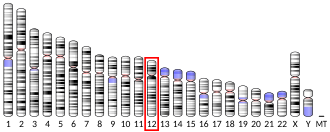



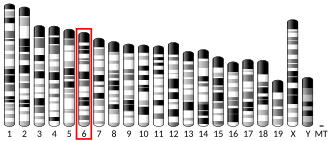



WNK (lysine deficient protein kinase 1), also known as WNK1, is an enzyme that is encoded by the WNK1 gene.56789 WNK1 is serine-threonine protein kinase and part of the "with no lysine/K" kinase WNK family.5679 The predominant role of WNK1 is the regulation of cation-Cl− cotransporters (CCCs) such as the sodium chloride cotransporter (NCC), basolateral Na-K-Cl symporter (NKCC1), and potassium chloride cotransporter (KCC1) located within the kidney.569 CCCs mediate ion homeostasis and modulate blood pressure by transporting ions in and out of the cell.5 WNK1 mutations as a result have been implicated in blood pressure disorders/diseases; a prime example being familial hyperkalemic hypertension (FHHt).56789
Structure
The WNK1 protein is composed of 2382 amino acids (molecular weight 230 kDa).8 The protein contains a kinase domain located within its short N-terminaldomain and a long C-terminal tail.8 The kinase domain has some similarity to the MEKK protein kinase family.8 As a member of the WNK family, the kinase's catalytic lysine residue is uniquely located in beta strand 2 of the glycine loop.8 In order to have kinase activity, WNK1 must autophosphorylate the serine 382 residue found in its activation loop.85 Further, phosphorylation at another site (Ser378) increases WNK1 activity.5 An autoinhibitory domain is located within the C-terminal domain along with a HQ domain that is needed for WNK1 interactions with other WNKs.5678 The interactions between WNKs play an important role in function; WNK1 mutants that lack an HQ domain also lack kinase activity.
Function
The WNK1 gene encodes a cytoplasmic serine-threonine kinase expressed in the distal nephron.568 Studies have shown that WNK1 can activate multiple CCCs.56 WNK1 however, does not directly phosphorylate the CCCs themselves rather it phosphorylates other serine-threonine kinases: Sterile20 related proline-alanine-rich kinase (SPAK) and oxidative stress response kinase 1 (OXSR1).657 Phosphorylation of SPAK's T loop located in its catalytic domain will activate SPAK, which will go on to phosphorylation the CCC's N-terminaldomain.56 Hence, WNK1 activates CCCs indirectly as an upstream regulator of SPAK/OSR1.567
Sodium reabsorption


In the distal convoluted tubule (DCT), WNK1 is a potent activator of the NCC that results in an increase in sodium re absorption that drives an increase in blood pressure.567 The WNK1 mutant found in FHHt harbors a large deletion within intron 1 that causes an increase in the expression of full length WNK1.5678 The boost in WNK1 leads to increases in NCC activation that promotes the high blood pressure/hypertension associated with FHHt.5678 WNK1 activates the serum-and glucocorticoid-inducible protein kinase SGK1, leading to increased expression of the epithelial sodium channel (ENaC), which also promotes sodium re absorption.6
Potassium secretion
WNK1 regulates potassium channels found in the cortical collecting duct (CCD) and connecting tubule (CNT).6 Renal outer medullar potassium 1 (ROMK1) and large conductance calcium-activated potassium channel (BKCa) are the two primary channels for potassium secretion.6 WNK1 indirectly stimulates clathrin-dependent endocytosis of ROMK1 by a potential interaction with intersectin (ITSN1); thus, kinase activity is not needed.6 Another possible mechanism of ROMK1 regulation is via autosomal recessive hypercholesterolemia (ACH), which is a clathrin adaptor molecule.6 ACH phosphorylation by WNK1 promotes the translocation of ROMK1 to clathrin coated pits triggering endocytosis.6 WNK1 may indirectly activate BKCa by inhibiting the actions of extracellular signal–regulated kinases (ERK1 and ERK2) that lead to lysomal degradation.6
Cell volume regulation
The NKCC1/2 cotransporters are regulated by intracellular Cl− concentration.9 Studies point to WNK1 as key effector that couples Cl− concentration to NKCC1/2 function.59 In hypertonic (high extracellular Cl− ) conditions that trigger cell shrinkage, an unknown mechanism upregulates WNK1 expression to counteract the volume loss.5 The increased WNK1 leads to activation of SPAK/OSR1 that activate NKCC1/2 via subsequent phosphorylation.59 NKCC1/2 will promote the influx of Na+, K+, and Cl− ions into the cell thereby causing the flow of water into the cell.5 In the reverse circumstances, where hypotonic (low extracellular Cl− ) conditions induce cell swelling, WNK1 is inhibited.5 Another cotransporter, KCC is inactive when phosphorylated; without activated WNK1, KCC does not undergo phosphorylation and can activate.5 The cotransporter will promote the efflux of K+ and Cl− ions and cause the flow of water out of the cell to combat swelling.5
WNK1 in the brain
In the mature brain, the GABA neurotransmitter represents the major inhibitory signal used in neuronal signaling.5 GABA activates the GABAA receptor which is a Cl− ion channel.5 Cl− ions will enter the neuron causing hyperpolarization and inhibition of signaling.5 During brain development however, GABAA activation will allow Cl− ions to leave the neuron causing the neuron to depolarize.5 Thus, GABA is an excitatory neurotransmitter during development.5 WNK1 has been implicated in the developmental switch from excitatory to inhibitory GABA signaling via interaction with NKCC1 and KCCs.5 WNK1 phosphorylates SPAK/OSR1 which then phosphorylates KCC2 inhibiting the flow of Cl− ions out of the cell during development.5

Regulation of WNK1
The concentrations of Cl− ions and K+ ion play a major role in regulating WNK1 activity.59 In the DCT, the plasma concentration of K+ ion is thought to impact the concentration Cl− ions within the nephron.59 High plasma K+ concentration down regulates WNK1 activity and prevents Cl− ion from entering the nephron via the NCC.59 The opposite occurs when plasma K+ concentration is low; increased WNK1 activity boosts NCC activity promoting reabsorption of Cl− ions.59 When there is an abundance of Cl− ions within the nephron, WNK1 activity is inhibited by the binding of a Cl− ion to WNK1's catalytic domain.59
Furthermore, WNK1 and WNK4 may interact to form heterodimers that inhibit WNK1 function.76 WNK4 release from the heterodimer allows WNK1 monomer to bind another WNK1 monomer to promote activation.67 WNK1 function can also be inhibited if WNK1 is degraded. There are two enzymes responsible for WNK1 ubiquitination, kelch like 3 (KLHL3) and cullin 3 (CUL3).7610 KLHL3 serves as an adaptor protein that promotes the interaction between WNK1 and Cullin3, which is in a complex containing an E3 ubiquitin ligase that attaches the ubiquitin molecules to WNK1.7 The ubiquitinated WNK1 will subsequently undergo proteasomal degradation.7610
Clinical significance
WNK1 has mutations associated with Gordon hyperkalemia-hypertension syndrome (pseudohypoaldosteronism Type II, featuring hypertension also called familial hyperkalemic hypertension (FHHt) )578 and congenital sensory neuropathy (HSAN Type II, featuring loss of perception to pain, touch, and heat due to a loss of peripheral sensory nerves).511
Comparative genomics
The gene belongs to a group of four related protein kinases (WNK1, WNK2, WNK3, WNK4).578
Homologs of this protein have been found in Arabidopsis thaliana, C. elegans, Chlamydomonas reinhardtii and Vitis viniferaas well as in vertebrates including Danio rerio and Taeniopygia guttata.7
References
References
- GRCh38: Ensembl release 89: ENSG00000060237 – Ensembl, May 2017
- GRCm38: Ensembl release 89: ENSMUSG00000045962 – Ensembl, May 2017
- "Human PubMed Reference:". National Center for Biotechnology Information, U.S. National Library of Medicine.
- "Mouse PubMed Reference:". National Center for Biotechnology Information, U.S. National Library of Medicine.
- Shekarabi M, Zhang J, Khanna AR, Ellison DH, Delpire E, Kahle KT (February 2017). "WNK Kinase Signaling in Ion Homeostasis and Human Disease". Cell Metabolism. 25 (2): 285–299. doi:10.1016/j.cmet.2017.01.007. hdl:10871/33390. PMID 28178566.
- Hadchouel J, Ellison DH, Gamba G (2016). "Regulation of Renal Electrolyte Transport by WNK and SPAK-OSR1 Kinases". Annual Review of Physiology. 78: 367–89. doi:10.1146/annurev-physiol-021115-105431. PMID 26863326.
- Bazúa-Valenti S, Gamba G (May 2015). "Revisiting the NaCl cotransporter regulation by with-no-lysine kinases". American Journal of Physiology. Cell Physiology. 308 (10): C779-91. doi:10.1152/ajpcell.00065.2015. PMC 4436992. PMID 25788573.
- Xu BE, Lee BH, Min X, Lenertz L, Heise CJ, Stippec S, Goldsmith EJ, Cobb MH (January 2005). "WNK1: analysis of protein kinase structure, downstream targets, and potential roles in hypertension". Cell Research. 15 (1): 6–10. doi:10.1038/sj.cr.7290256. PMID 15686619. S2CID 22087578.
- Huang CL, Cheng CJ (November 2015). "A unifying mechanism for WNK kinase regulation of sodium-chloride cotransporter". Pflügers Archiv. 467 (11): 2235–41. doi:10.1007/s00424-015-1708-2. PMC 4601926. PMID 25904388.
- Alessi DR, Zhang J, Khanna A, Hochdörfer T, Shang Y, Kahle KT (July 2014). "The WNK-SPAK/OSR1 pathway: master regulator of cation-chloride cotransporters". Science Signaling. 7 (334): re3. doi:10.1126/scisignal.2005365. hdl:10871/33417. PMID 25028718. S2CID 206672635.
- Tang BL (July 2016). "(WNK)ing at death: With-no-lysine (Wnk) kinases in neuropathies and neuronal survival". Brain Research Bulletin. 125: 92–8. doi:10.1016/j.brainresbull.2016.04.017. PMID 27131446. S2CID 3938880.