| Vev | |
|---|---|
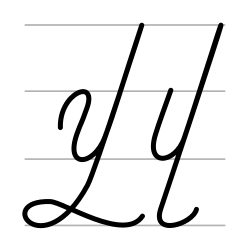
| Վ վ | |
 | |
| Usage | |
| Writing system | Armenian script |
| Type | Alphabetic |
| Language of origin | Armenian language |
| Sound values | [v] |
| In Unicode | U+054E, U+057E |
| Alphabetical position | 30 |
| History | |
| Time period | 405 to present |
| Other | |
| Associated numbers | 3000 |
| Writing direction | Left-to-Right |
Vev or Vew (majuscule: Վ; minuscule: վ; Armenian: վեվ; Classical Armenian: վեւ) is the 30th letter of the Armenian alphabet. It represents the voiced labiodental fricative (/v/), similar to the English v sound as in village. It is typically romanized with the letter V.1 It was part of the alphabet created by Mesrop Mashtots in the 5th century CE.
In the Armenian numeral system, it has a value of 3000.2
Use in Wikipedia logo
The logo of Wikipedia features the uppercase letter Vev, alongside several other characters from different alphabets.3 The letter is visible near the upper left corner of the globe on the Wikipedia logo.
Gallery

-
 Rounded Erkat'agir
 -
 Angular Erkat'agir
 -

-

-

-
 Typographic form
 -
 Handwritten form
Character codes
| Preview | Վ | վ | ||
|---|---|---|---|---|
| Unicode name | ARMENIAN CAPITAL LETTER VEW | ARMENIAN SMALL LETTER VEW | ||
| Encodings | decimal | hex | dec | hex |
| Unicode | 1358 | U+054E | 1406 | U+057E |
| UTF-8 | 213 142 | D5 8E | 213 190 | D5 BE |
| Numeric character reference | Վ |
Վ |
վ |
վ |
See also
See also
- Armenian alphabet
- Se, the letter preceding Vev in the Armenian alphabet
- Tyun, the letter following Vev in the Armenian alphabet
References
References
- "Transliteration of Armenian" (PDF). Retrieved 1 Feb 2023.
- "Numbers in Eastern Armenian". Omniglot.com. Retrieved 1 Feb 2023.
- "Wikipedia/Logo - MetaWiki". MetaWiki. Retrieved 1 Feb 2023.