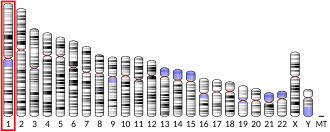
Uroporphyrinogen III decarboxylase (uroporphyrinogen decarboxylase, or UROD) is an enzyme (EC4.1.1.37) that in humans is encoded by the URODgene.5
Function
Uroporphyrinogen III decarboxylase is a homodimeric enzyme (PDB: 1URO) that catalyzes the fifth step in heme biosynthesis, which corresponds to the elimination of carboxyl groups from the four acetate side chains of uroporphyrinogen III to yield coproporphyrinogen III:6
At low substrate concentrations, the reaction is believed to follow an ordered route, with the sequential removal of CO2 from the D, A, B, and C rings, whereas at higher substrate/enzyme levels a random route seems to be operative. The enzyme functions as a dimer in solution, and both the enzymes from human and tobacco have been crystallized and solved at good resolutions.
UroD is regarded as an unusual decarboxylase, since it performs decarboxylations without the intervention of any cofactors, unlike the vast majority of decarboxylases. Its mechanism has been proposed to proceed through substrate protonation by an arginine residue.8 A 2008 report demonstrated that the uncatalyzed rate for UroD's reaction is 10−19 s−1, so at pH 10 the rate acceleration of UroD relative to the uncatalyzed rate, i.e. catalytic proficiency, is the largest for any enzyme known, 6 × 1024 M−1.6
Proposed reaction mechanism of uroporphyrinogen III decarboxylase source ↗References
Silva PJ, Ramos MJ (2005). "Density-functional study of mechanisms for the cofactor-free decarboxylation performed by uroporphyrinogen III decarboxylase". J Phys Chem B. 109 (38): 18195–200. doi:10.1021/jp051792s. PMID16853337.
Further reading
Further reading
Elder GH, Lee GB, Tovey JA (1978). "Decreased activity of hepatic uroporphyrinogen decarboxylase in sporadic porphyria cutanea tarda". N. Engl. J. Med. 299 (6): 274–8. doi:10.1056/NEJM197808102990603. PMID661926.
Dubart A, Mattei MG, Raich N, et al. (1986). "Assignment of human uroporphyrinogen decarboxylase (URO-D) to the p34 band of chromosome 1". Hum. Genet. 73 (3): 277–9. doi:10.1007/BF00401245. PMID3460962. S2CID34478515.
Maruyama K, Sugano S (1994). "Oligo-capping: a simple method to replace the cap structure of eukaryotic mRNAs with oligoribonucleotides". Gene. 138 (1–2): 171–4. doi:10.1016/0378-1119(94)90802-8. PMID8125298.
Suzuki Y, Yoshitomo-Nakagawa K, Maruyama K, et al. (1997). "Construction and characterization of a full length-enriched and a 5'-end-enriched cDNA library". Gene. 200 (1–2): 149–56. doi:10.1016/S0378-1119(97)00411-3. PMID9373149.
Wang H, Long Q, Marty SD, et al. (1998). "A zebrafish model for hepatoerythropoietic porphyria". Nat. Genet. 20 (3): 239–43. doi:10.1038/3041. PMID9806541. S2CID28379777.