| Umê scripts དབུ་མེད་ | |
|---|---|
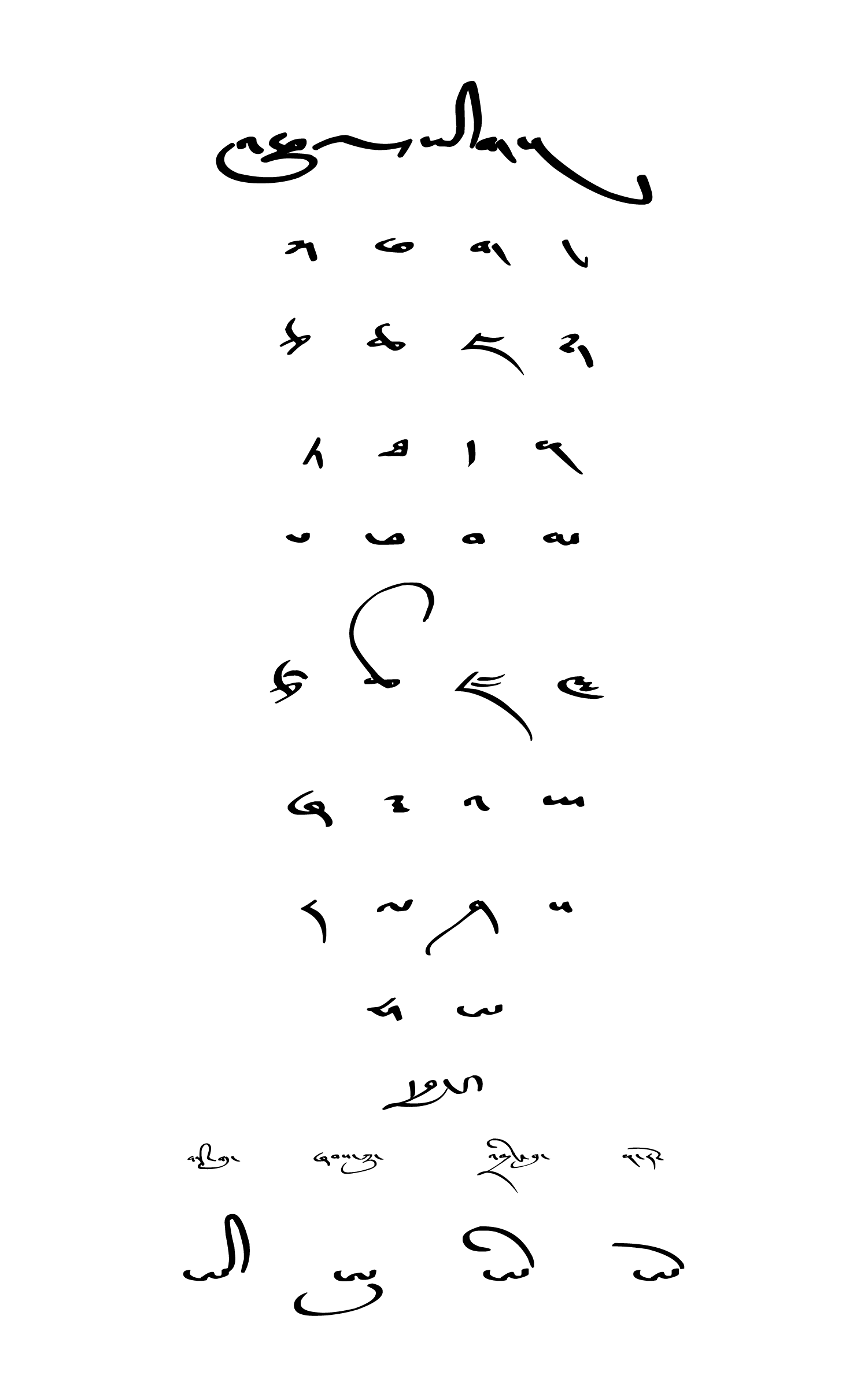 Kyu-yig (Chuyig) Umê style
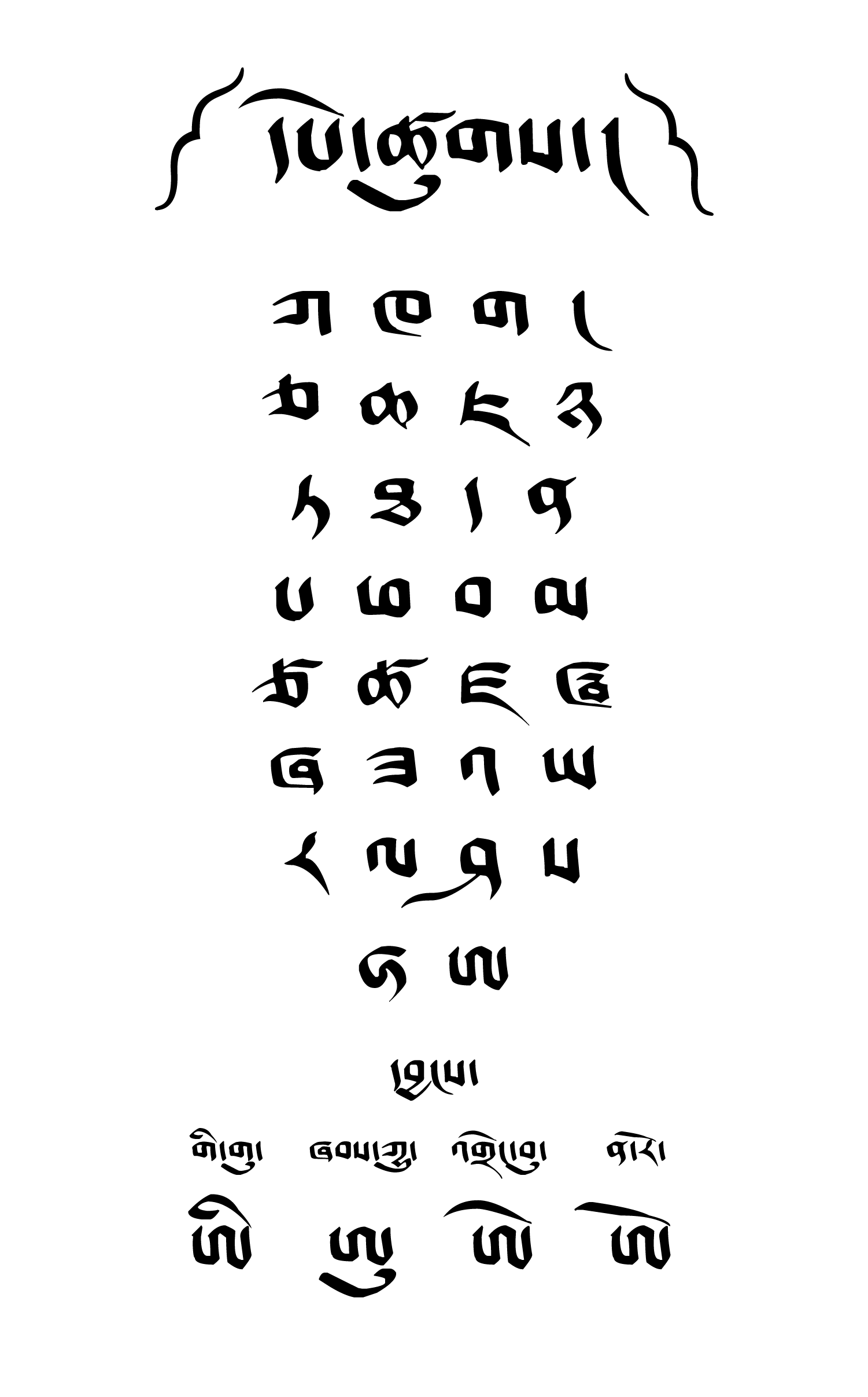 Bêtsug Umê style
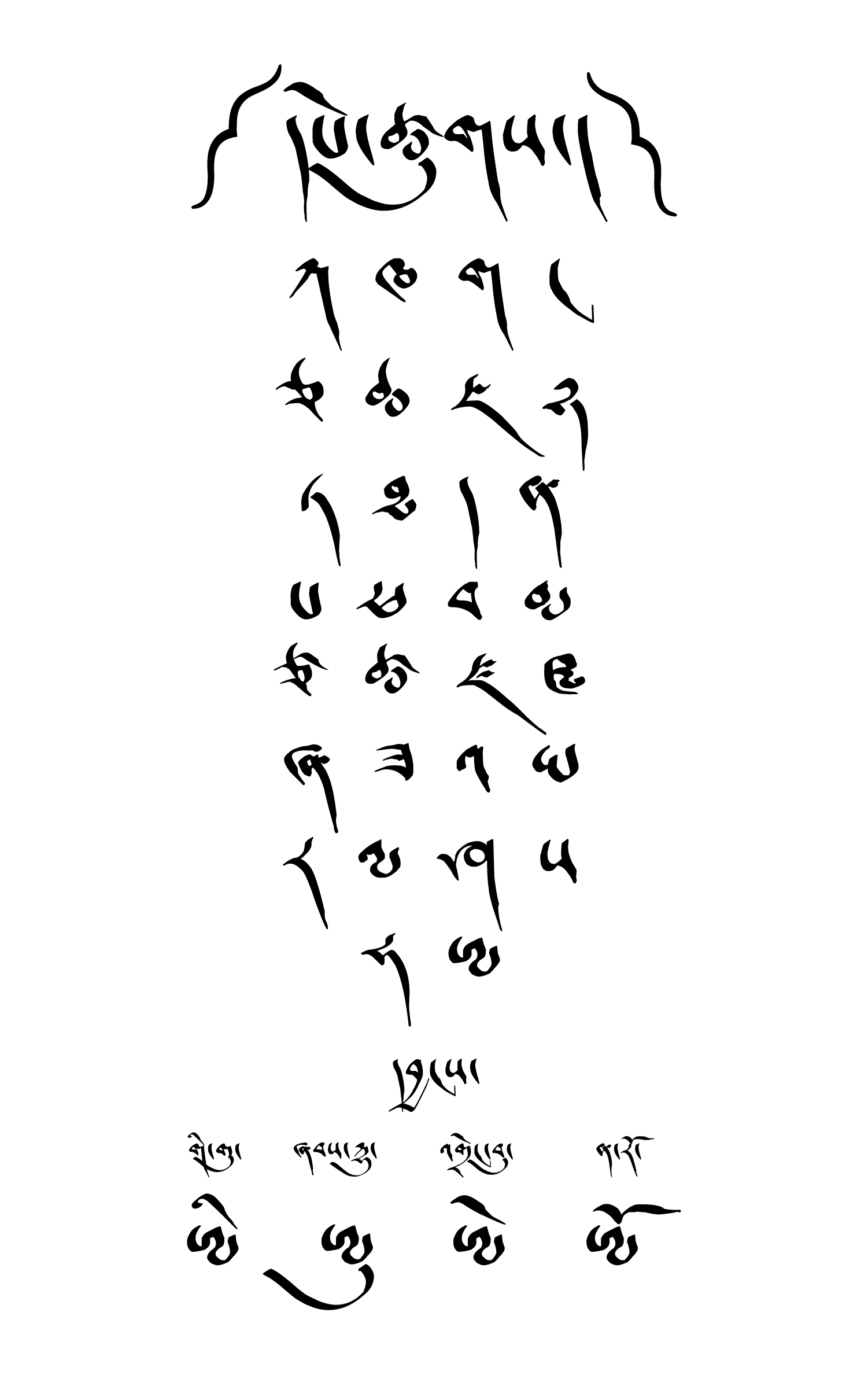 Drutsa Umê style
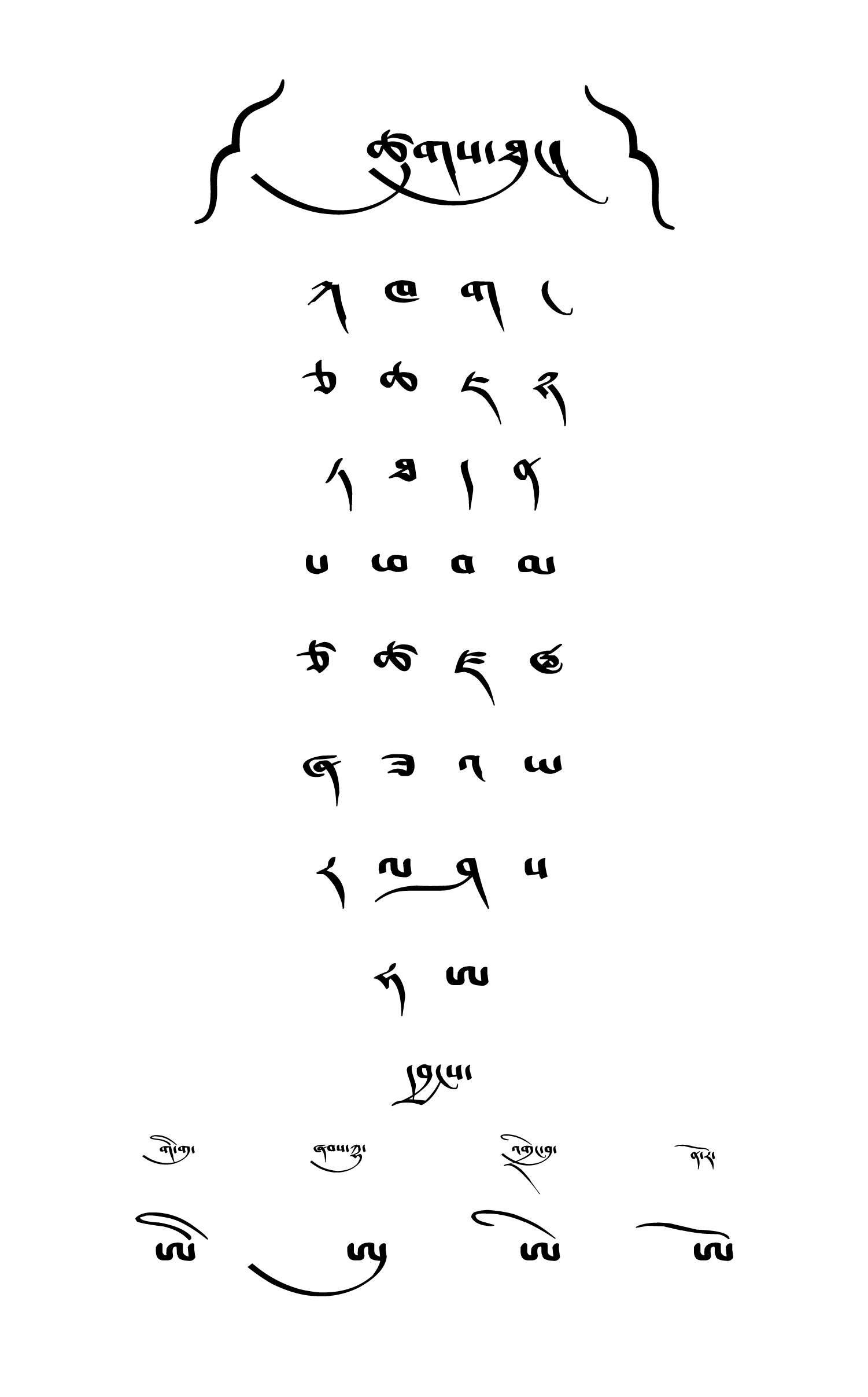 Tsugtung Umê style
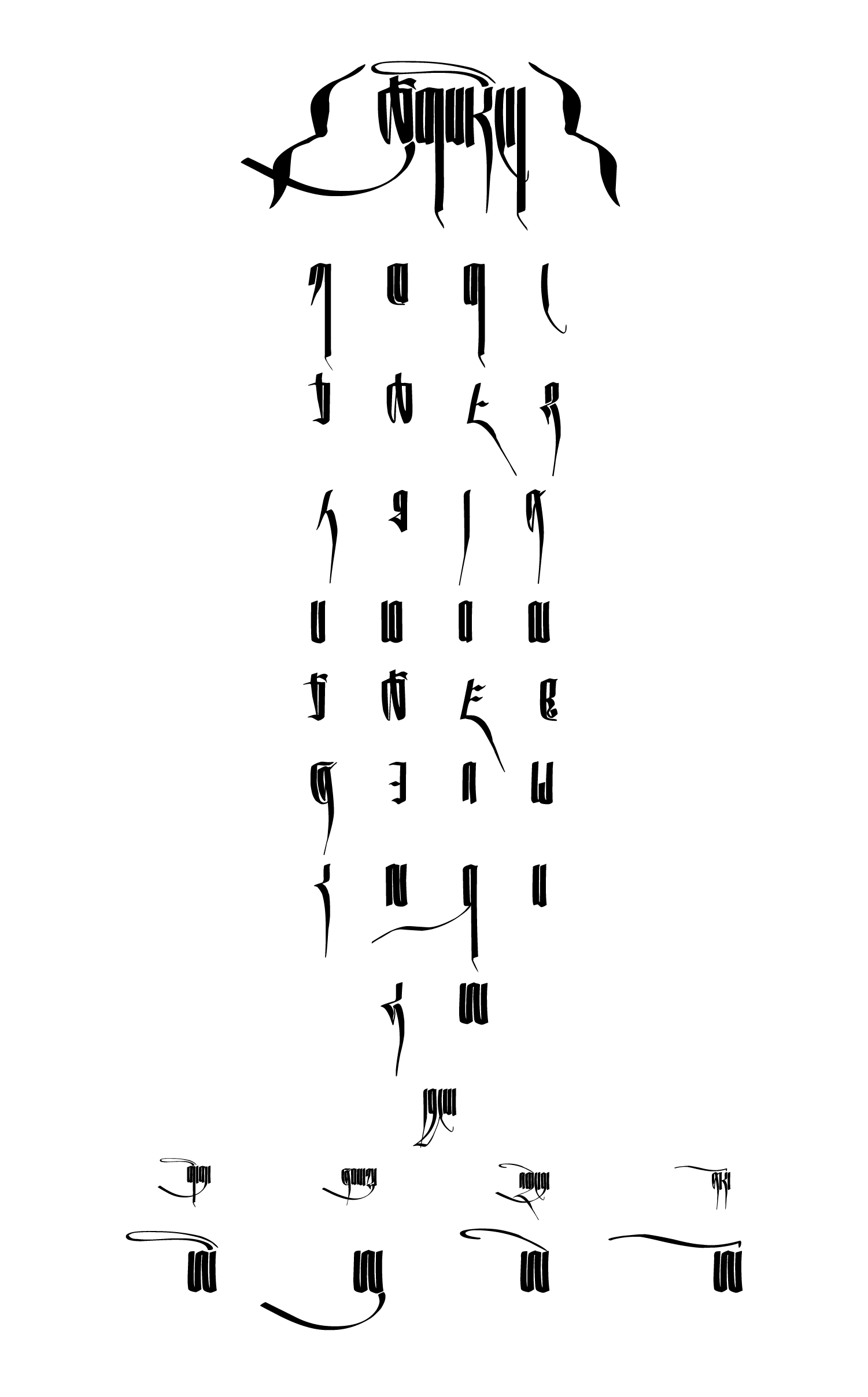 Tsugring Umê style
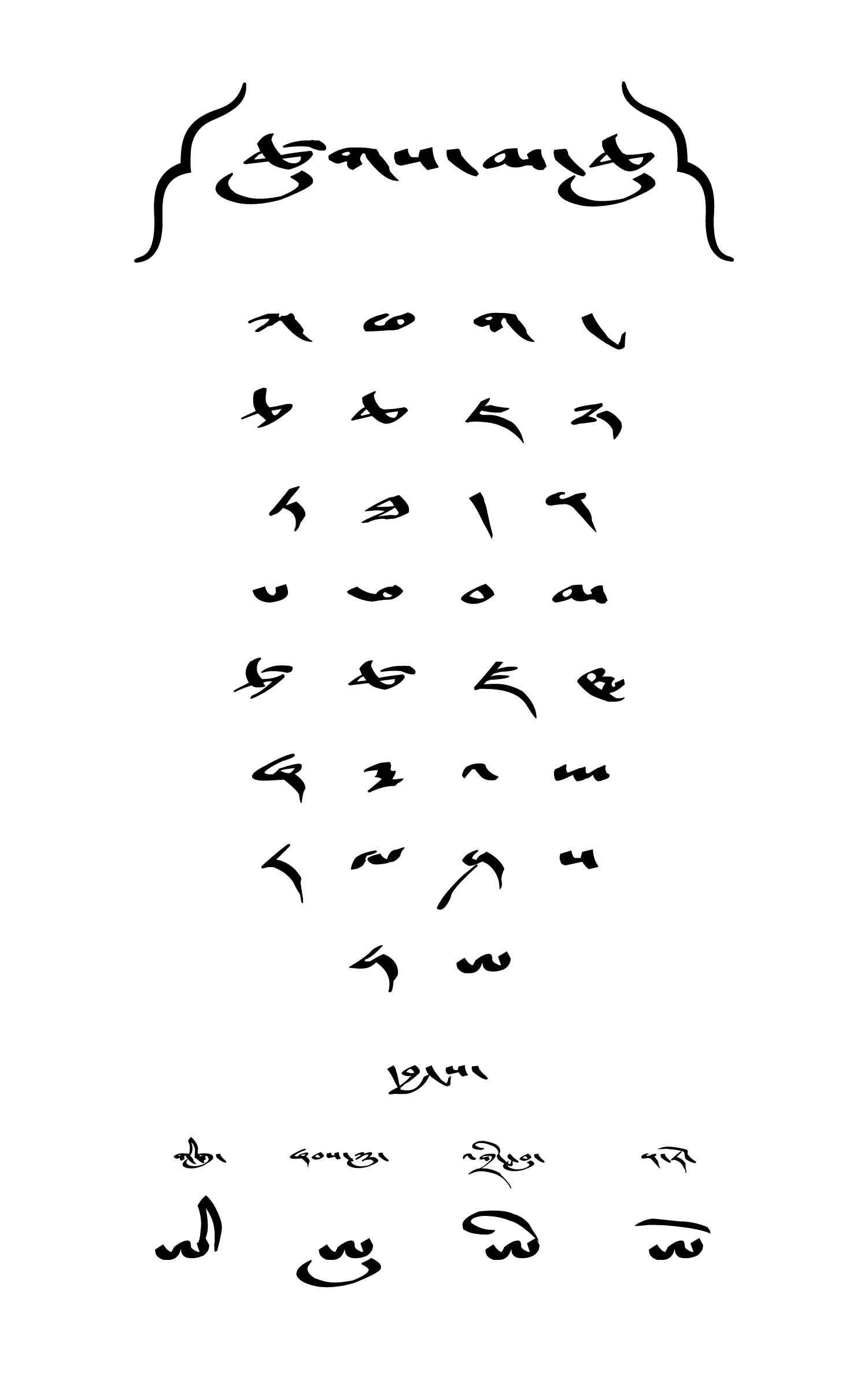 Tsugma-chu Umê style
 | |
| Script type | Abugida
(Informal cursive forms of the Tibetan script) |
| Created | c. 620 |
Period | c. 620–present |
| Languages | |
| Related scripts | |
Parent systems | |
Child systems | |
| ISO 15924 | |
| ISO 15924 | Tibt (330), Tibetan |
| Unicode | |
Unicode alias | Tibetan |
| U+0F00–U+0FFF | |

Umê (Tibetan: དབུ་མེད་, Wylie: dbu-med, IPA: [ume]; variant spellings include umé, u-me) is a family of stylistic variants of the Tibetan alphabet used for both calligraphy and shorthand.3 The name umê means "headless" and refers to its distinctive feature: the absence of the horizontal guide line ('head') across the top of the letters. Between syllables, the tsheg mark (་) often appears as a vertical stroke, rather than the shorter 'dot'-like mark in some other scripts.4
Kyuyig (Tibetan: འཁྱུག་ཡིག།་, Wylie: kyug-yig) or Gyu-yig (Tibetan: རྒྱུག་ཡིག།, Wylie: gyug-yig), is the most common form of Umê that people in the Tibetan region use as an informal shorthand for notes and personal correspondence. It is extremely cursive, with free-flowing, distorted glyph forms. It remains unstandardised and is difficult to decipher because of its divergent shapes. 5
The other main style of the Tibetan script is the upright block form, uchen (དབུ་ཅན་ dbu-can; IPA: [utɕɛ̃]). The name of the block form, uchen means "with a head", corresponding to the presence of the horizontal guide line. This script is the standard formal variant of the script, used for official and religious purposes.
Styles
Umê scripts span from formal calligraphy to highly informal shorthand with context-specific styles. Besides Kyuyig, there are (broadly) five main styles of umê writing:6
- Drutsa (Tibetan: འབྲུ་ཚ་, Wylie: 'bru-tsa), used for writing documents.
- Bêtsug (Tibetan: དཔེ་ཚུགས་, Wylie: dpe-tshugs), used for writing scriptures.
- Tsugtung (Tibetan: ཚུགས་ཐུང༌།, Wylie: tsug-tung) shortened, abbreviated variant traditionally used for commentaries.
- Tsugring (Tibetan: ཚུགས་རིང་།, Wylie: tsug-ring) used for novice scribes to improve handwriting and familiarity with the script. It is elegant with vertically elongated glyphs.7
- Tsugma-chu (Tibetan: ཚུགས་ཆུ་ཡིག་, Wylie: tsug-ma-kyug) a hybrid style designed to be written quickly without losing the uchen form.
References
References
- Daniels, Peter T. (January 2008). "Writing systems of major and minor languages". In Kachru, Braj B.; Kachru, Yamuna; Sridhar, S. N. (eds.). Language in South Asia. pp. 285–308. doi:10.1017/CBO9780511619069.017. ISBN 978-0-521-78653-9.
- Masica, Colin (1993). The Indo-Aryan languages. p. 143.
- Chen, Jinhua (2024-02-08). Esoteric Buddhism and Texts: Volume I, Manuscript Culture and Transborder Transmission. Taylor & Francis. ISBN 978-1-003-85355-8.
- Gyatso, Ribur Ngawang (1984). "A Short History of Tibetan Script". The Tibet Journal. 9 (2). Library of Tibetan Works and Archives: 28–30. JSTOR 43300125.
- Phuntsok, Kelsang; Wang, Hao; Jia, Yaming; Li, Yalong (2024). "Digital preservation and generation of Tibetan Umê script calligraphy: A review". Digital Governance and Innovation. 1 (4): 312–325. doi:10.3724/2096-7004.di.2024.0048.
- Quenzer, Jörg; Bondarev, Dmitry; Sobisch, Jan-Ulrich (2014). "Towards a Tibetan Palaeography: Developing a Typography of writing styles in early Tibet". Manuscript Cultures: Mapping the Field: 299–441.
- Chakrishar, Jamyang Dorjee (2020). Tibetan Handwriting Workbook - I: Tsugring-Thung. Diverse Voices. ISBN 978-1734914405.