This article is a list of biological species, subspecies, and evolutionary significant units that are known to have become extinct during the Holocene, the current geologic epoch, ordered by their known or approximate date of disappearance from oldest to most recent.
The Holocene is considered to have started with the Holocene glacial retreat around 11650 years Before Present (c. 9700 BC). It is characterized by a general trend towards global warming, the expansion of anatomically modern humans (Homo sapiens) to all emerged land masses, the appearance of agriculture and animal husbandry, and a reduction in global biodiversity. The latter, dubbed the sixth mass extinction in Earth history, is largely attributed to increased human population and activity, and may have started already during the preceding Pleistocene epoch with the demise of the Pleistocene megafauna.
The following list is incomplete by necessity, since the majority of extinctions are thought to be undocumented, and for many others there isn't a definitive, widely accepted last, or most recent record. According to the species-area theory, the present rate of extinction may be up to 140,000 species per year.1
10th millennium BC
| Last record | Common name | Binomial name | Former range | Picture |
|---|---|---|---|---|
| 10050-9550 BC2 | Giant beaver | Castoroides ohioensis | North America | 
|
| 100010-9907 BC | Morenelaphus brachyceros | Temperate South America | ||
| 9948-9306 BC3 | North American glyptodont | Glyptotherium cylindricum | Florida and Texas to northeastern Brazil | 
|
| 9880-8280 BC4 | Harlan's ground sloth | Paramylodon harlani | Southwestern United States and Mexico | 
|
| 9830-9530 BC4 | Shrub-ox | Euceratherium collinum | Southwestern North America | 
|
| 9700-6200 BC5 | Dire wolf | Aenocyon dirus | North America and western South America | 
|
| Fraternal horse | Equus fraternus | Eastern North America | ||
| Large-headed llama | Hemiauchenia macrocephala | North and Central America |  | |
| Long-nosed peccary | Mylohyus fossilis6 | Eastern United States | 
| |
| 9600 BC7 | Cèdres tahr | Hemitragus cedrensis | France and the Iberian Peninsula | 
|
| 9540-9420 BC4 | Jefferson's ground sloth | Megalonyx jeffersonii | North America | 
|
| 9531-9196 BC8 | Sardinian dhole | Cynotherium sardous | Corsica and Sardinia | 
|
| c. 9515 BC9 | Southeastern giant tortoise | Hesperotestudo crassiscutata | Southern United States |  |
| 9405 BC10 | American lion | Panthera atrox | British Columbia to Central America | 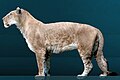
|
| 9381-9281 BC11 | Macrauchenia patachonica | Southwestern South America | 
| |
| 9350 BC | Eurasian cave lion7 | Panthera spelaea | Northern Eurasia and Beringia | 
|
| Toronto subway deer12 | Torontoceros hypogaeus | Toronto, Canada | 
| |
| 9230-8930 BC4 | Stag-moose | Cervalces scotti | Eastern United States | 
|
| 9130-9030 BC4 | Pygmy mammoth | Mammuthus exilis | Channel Islands of California, United States | 
|
| 9117-8793 BC3 | Cuvier's gomphothere | Cuvieronius hyodon | Central America, northern and central Andes13 | 
|
| 9110-9030 BC14 | Valgipes bucklandi | Brazil | 
| |
| 9110-8950 BC4 | Woodland muskox | Bootherium bombifrons | North America | 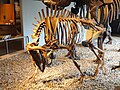
|
| c. 9050 BC9 | Wilson's tortoise | Hesperotestudo wilsoni | Southwestern United States | |
| Ryukyu tortoise | Manouria oyamai | Ryukyu, Japan | ||
| 9050 BC15 | Cypriot genet | Genetta plesictoides | Cyprus | |
| 9050-8050 BC15 | Miyako roe deer | Capreolus tokunagai | Miyako Island, Ryukyu, Japan | |
| Miyako long-tailed rat | Diplothrix miyakoensis |
9th millennium BC
| Last record | Common name | Binomial name | Former range | Causes | Picture |
|---|---|---|---|---|---|
| 8995-8845 BC4 | Giant short-faced bear | Arctodus simus | North America | Competition with the grizzly bear.16 | 
|
| 8990-8690 BC4 | Flat-headed peccary | Platygonus compressus | North America | Possibly vegetation changes induced by climate change and competition with the American black bear.16 | 
|
| 8965-8875 BC4 | Mexican horse | Equus conversidens | Western North America | Hunting.17 | 
|
| 8902-8638 BC18 | Damaliscus hypsodon | Kenya and Tanzania | Undetermined. | ||
| 8725-8175 BC4 | Shasta ground sloth | Nothrotheriops shastensis | Southwestern United States | Hunting.19 | 
|
| 8697-8355 BC | Xibalbaonyx oviceps | Quintana Roo, Mexico | Hunting.3 | ||
| 8640-8500 BC4 | Ancient bison | Bison antiquus | North America | Possibly hybridisation with western bison resulting in modern American bison.20 | 
|
| 8301-7190 BC21 | Giant pika | Ochotona whartoni | Northern North America; Eastern Siberia? |
Undetermined. | |
| 8170-7840 BC4 | American camel | Camelops hesternus | Western North America | Hunting.16 | 
|
| 8120-7980 BC | Giant Cape zebra | Equus capensis | Southern Africa | Reduction of grasslands after the end of the Last Glacial Period.18A | 
|
| 8080-7700 BC4 | Columbian mammoth | Mammuthus columbi | Northern Mexico, western and southern United States | Hunting.16 | 
|
| 8050-7650 BC23 | Woolly rhinoceros | Coelodonta antiquitatis | Northern Eurasia | Shrinking of the mammoth steppe due to warmer and wetter climate conditions.24 | 
|
| 8050 BC or less25 | Hipposideros besaoka | Northern coast of Madagascar | Undetermined. | 
| |
| Triaenops goodmani | 
|
8th millennium BC
| Last record | Common name | Binomial name | Former range | Causes | Picture |
|---|---|---|---|---|---|
| c. 7950 BC26 | Antifer ultra | River Plate and central Chile | Undetermined. | ||
| 7830-7430 BC21 | Catonyx cuvieri | Eastern South America |  | ||
| 7615-7305 BC4 | North American sabertooth cat | Smilodon fatalis | Southern North America and northern South America | Prey loss.16 | 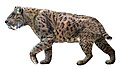
|
| 7600-6245 BC27B | East Asian ostrich | Pachystruthio anderssoni29 | Tuva, Transbaikalia, Mongolia, and northern China30 to the Yellow River31 | Undetermined. | 
|
| 7330-6250 BC C | Asian straight-tusked elephant | Palaeoloxodon namadicus | South and east Asia | 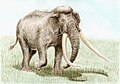
| |
| 7160-6760 BC21 | Scelidodon chiliensis | Western South America33 | 
| ||
| 7129-6239 BC34 | South American sabertooth cat | Smilodon populator | Eastern South America | Competition with human hunters.35 | 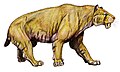
|
| 7110-6810 BC4 | American mastodon | Mammut americanum | North America | Undetermined. | 
|
| 7050-6550 BC36 | European dhole | Cuon alpinus europaeus | Central and southern Europe, and the Caucasus | Undetermined. | 
|
| 7043-6507 BC21 | Cuban pauraque | Siphonorhis daiquiri | Cuba | Undetermined. | |
| 7043-6503 BC21 | Giant ghost-faced bat | Mormoops magna | Cuba and Hispaniola37 |
7th millennium BC
| Last record | Common name | Binomial name | Former range | Causes | Picture |
|---|---|---|---|---|---|
| 6810-6650 BC21 | Notiomastodon platensisD | South America39 | Undetermined. | 
| |
| Glossotherium robustum | 
| ||||
| 6660-4880 BC21 | Equus neogeus | 
| |||
| Glyptodon clavipes | Eastern South America | 
| |||
| Hoplophorus euphractus | Eastern Brazil | 
| |||
| Propraopus sulcatus | Eastern South America40 | ||||
| 6442-6210 BC18 | Giant hartebeest | Megalotragus priscus | Southern Africa; Eastern Africa? |
Reduction of grasslands after the end of the Last Glacial Period.18 | 
|
| 6389-6060 BC41 | Eutatus seguini | Northern Argentina and Uruguay42 | Undetermined. |  |
6th millennium BC
| Last record | Common name | Binomial name | Former range | Causes | Picture |
|---|---|---|---|---|---|
| 5740-5500 BC | Bond's springbok | Antidorcas bondi | Southern Africa | Reduction of grasslands after the end of the Last Glacial Period.18 | |
| 5660-5540 BC43 | Scelidotherium leptocephalum | Southern South America | Hunting?16 | 
| |
| 5641–5075 BC8 | Praemegaceros cazioti | Corsica and Sardinia | Undetermined. | 
| |
| 5477-4170 BC34 | Panamerican ground sloth | Eremotherium laurillardi44 | Southern United States to Brazil | 
| |
| 5474-5339 BC45 | Haitian cave rail | Nesotrochis steganinos | Hispaniola | ||
| 5295-4848 BC | Ibiza rail | Rallus eivissensis | Ibiza, Spain | Undetermined, but presumably a result of human colonization.46 | |
| Ibiza dwarf viper | Vipera latastei ebusitana | ||||
| 5270-4310 BC47 | Giant ground sloth | Megatherium americanum | Temperate South America and the Andes | Hunting.35 | 
|
| 5226-5156 BC4 | Haitian pine forest sloth | Neocnus dousman | Hispaniola | Undetermined. | |
| 5120 BC48 | Neosclerocalyptus paskoensis | Southern South America | 
| ||
| 5050-4050 BC49 | Cuban cursorial owl | Ornimegalonyx oteroi | Cuba |  | |
| Cuban titan-hawk | Buteogallus borrasi | ||||
| Cuban giant tortoise | Chelonoidis cubensis | ||||
| Cuban sloth | Acratocnus antillensis | 
| |||
| 5030 BC50 | Cave hyena | Crocuta spelaea | Europe, Central and Western Asia | 
|
5th millennium BC
| Last record | Common name | Binomial name | Former range | Causes | Picture |
|---|---|---|---|---|---|
| 4855-4733 BC | North African horse | Equus algericus | Maghreb | Aridification.18 | 
|
| 4840-4690 BC | Majorcan giant dormouse | Hypnomys morpheus | Mallorca, Spain | Possibly disease spread by introduced rodents.51 | 
|
| 4765-4445 BC47E | Club-tailed glyptodont41 | Doedicurus clavicaudatus | South American Pampas | Hunting and habitat loss. | 
|
| 4691-4059 BC | Megaceroides algericus | Northern Maghreb | Possibly habitat fragmentation.53 | 
| |
| 4650-1450 BC21 | Toxodont | Toxodon platensis | South America | Undetermined. | 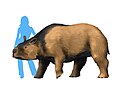
|
| 4570 BC - 130 CE54 | Jamaican caracara | Caracara tellustris | Jamaica | ||
| 4514-4244 BC21 | Muridae indet. sp. 1 | Morotai, Indonesia | |||
| Muridae indet. sp. 2 | |||||
| 4360-4280 BCE | Unnamed South African caprine | ?Makapania sp. | South African mountains | Reduction of grasslands after the end of the Last Glacial Period.18 | 
|
| 4240-1529 BC21 | Halmahera bandicoot | Peramelidae indet. | Halmahera, Indonesia | Undetermined.21 | |
| c. 4000 BC | North African zebra | Equus mauritanicus | North Africa | Aridification.18 | 
|
| Equus melkiensisF | Northern Algeria and Morocco18 |
4th millennium BC
| Last record | Common name | Binomial name | Former range | Causes | Picture |
|---|---|---|---|---|---|
| 3979-2640 BC56 | Yukon horse | Equus lambei | Northwestern North America | Undetermined. | 
|
| 3628-3377 BCG | Steppe bison | Bison priscus | Northern Eurasia and North America | 
| |
| 3570-3630 BC62 | Malagasy crowned eagle | Stephanoaetus mahery | Central and southern Madagascar | Possibly natural aridification or habitat degradation and prey loss caused by human activity.63 | |
| 3540-3355 BC64 | Kauaʻi mole duck | Talpanas lippa | Kauaʻi, Hawaii, United States | Undetermined. | |
| 3500-775 BC21 | Flores cave rat | Spelaeomys florensis | Flores, Indonesia | ||
| 3340-2890 BC65 | Babakotia radofilai | Northern coast of Madagascar |  | ||
| 3290-2730 BC66 | Matthew's ground sloth | Parocnus brownii | Cuba | Hunting.67 | |
| 3060-2470 BC | Giant African buffalo | Syncerus antiquus | Africa and the Arabian Peninsula68 | Aridification and competition with domestic cattle for water and pastures.21 | 
|
| 3050 BC15 | Buka Island mosaic-tailed rat | Melomys spechti | Buka Island, Papua New Guinea | Undetermined. | |
| Buka Island solomys | Solomys spriggsarum | ||||
| 3050-550 BC | Don hare | Lepus timidus tanaiticus | Russia | Replacement by the mountain hare.69 | |
| 3040-1840 BCH | Tilos dwarf elephant | Palaeoloxodon tiliensis | Tilos, Greece | Undetermined. | 
|
| 3030-2690 BC | Balearic giant shrew | Nesiotites hidalgo | Gymnesian Islands, Spain | Possibly disease spread by introduced rodents.51 |  |
3rd millennium BC
| Last record | Common name | Binomial name | Former range | Causes | Picture |
|---|---|---|---|---|---|
| 2830-2470 BC | Balearic cave goat | Myotragus balearicus | Gymnesian Islands, Spain | Likely vegetation changes related to aridification or human activity.7172 | 
|
| 2550 BC | Bennu heron | Ardea bennuides | Arabian Peninsula | Wetland degradation.21 | 
|
| 2550-1550 BC21 | Niue night heron | Nycticorax kalavikai | Niue | Undetermined. | |
| 2480-2400 BC73 | Lesser Haitian ground sloth | Neocnus comes | Hispaniola | 
| |
| 2320 BC7 | Irish elk | Megaloceros giganteus | Europe and southern Siberia |  | |
| 2281-1402 BC34 | Palaeolama major | North and east South America | Hunting.35 | 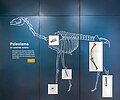
| |
| 2280-2240 BC74 | Cuban giant sloth | Megalocnus rodens | Cuba | Undetermined. | 
|
| 2267-1543 BC34 | Xenorhinotherium bahiense | Northeastern South America | 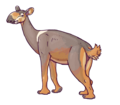
| ||
| 2200 BC | Indian aurochs | Bos primigenius namadicus | Indian subcontinent | Undetermined.I | 
|
| 2134-1408 BC21J | Chatham raven | Corvus moriorum | Chatham Islands, New Zealand | Undetermined. | 
|
| 2050-50 BC | Sierra Madre giant cloud rat76 | Carpomys dakal | Luzon, Philippines | ||
| Sierra Madre bushy-tailed cloud rat76 | Crateromys ballik | ||||
| Niviventer sp.15 | Ishigaki Island, Japan | ||||
| 2035-1735 BC66 | Hispaniola monkey | Antillothrix bernensis | Hispaniola |
2nd millennium BC
| Last record | Common name | Binomial name | Former range | Causes | Picture |
|---|---|---|---|---|---|
| 1935-1700 BC | Raksasamys tikusbesar | Sumba Island, Indonesia | Undetermined.15 | ||
| 1900-1600 BC | Noel's barn owl | Tyto noeli | Cuba, Jamaica, and Bermuda | Undetermined.77 | |
| 1795-1675 BC78 | Woolly mammoth | Mammuthus primigenius | Northern Eurasia and North America | Hunting79 and habitat loss due to climate change.24 | 
|
| 1750-1650 BC80 | Short-horned water buffalo | Bubalus mephistopheles | South to northeastern China81 | Undetermined. | 
|
| 1738-1500 BC21 | Puerto Rican ground sloth | Acratocnus odontrigonus | Puerto Rico | ||
| 1738-1385 BC21 | Christensen's pademelon | Thylogale christenseni | New Guinea | Predation by introduced dingoes.82 | |
| 1666-1506 BC | Ovodov horse | Equus ovodovi | North and East Asia | Undetermined.83 | 
|
| c. 1640 BC | East Asian aurochs | Bos primigenius sinensis | Southern Siberia to northeastern China | Hunting, habitat loss, and capture of females to supplement domestic taurine cattle herds introduced from the west.K | 
|
| c. 1500 BC | Puerto Rican flower bat | Phyllonycteris major | Puerto Rico and Antigua | Undetermined.87 | |
| Leeward Islands curlytail | Leiocephalus cuneus | Antigua and Barbuda | |||
| 1400-1190 BC | Greater Azores bullfinch | Pyrrhula crassa | Graciosa Island, Azores, Portugal | Human settlement.88 | 
|
| 1159-790 BC | Dune shearwater | Puffinus holeae | Canary Islands, Spain; mainland Portugal (Pleistocene) |
Predation by introduced house mice.89 | 
|
| 1120-840 BC | New Caledonian giant scrubfowl | Sylviornis neocaledoniae | Grande Terre and Isle of Pines, New Caledonia | Hunting.90 | 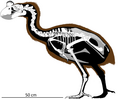
|
| c. 1050 BC9 | Mona tortoise | Chelonoidis monensis | Mona Island of Puerto Rico | Undetermined. | |
| 1050 BC15 | Hooijer's giant rat | Hooijeromys nusantenggara | Lesser Sunda Islands, Indonesia | ||
| Mekosuchus kalpokasi | Efate, Vanuatu | Hunting.91 | |||
| Verhoeven's giant tree rat | Papagomys theodorverhoeveni | Flores, Indonesia | Undetermined. | ||
| 1050-850 BC92 | Lini's megapode | Mwalau walterlinii | Efate, Vanuatu | ||
| 1021-806 BCE93 | Madeiran quail | Coturnix lignorum | Madeira, Portugal |
1st millennium BC
10th-6th century BC
| Last record | Common name | Binomial name | Former range | Causes | Picture |
|---|---|---|---|---|---|
| c. 950 BC | Noble scrubfowl | Megavitiornis altirostris | Fiji | Hunting.94 | |
| Fiji giant iguana | Lapitiguana impensa |  | |||
| Volia athollandersoni | 
| ||||
| 900-750 BC | Tongan tooth-billed pigeon | Didunculus placopedetes | Tonga | Undetermined.21 | |
| 855-730 BC | Shutler's fruit pigeon | Ducula shutleri | |||
| c. 850 BC | Lakeba pigeon | Ducula lakeba | Lakeba and Aiwa, Fiji | ||
| 850-600 BC | Tongan giant pigeon | Tongoenas burleyi | Tonga | Hunting.95 |  |
| 840-740 BC96 | Consumed scrubfowl | Megapodius alimentum | Tonga and Fiji | Hunting, egg harvesting, and predation by introduced animals.63 | |
| 821-171 BC | Balsam shrew | Crocidura balsamifera | Nile gallery forests, Egypt | Habitat destruction.21 | |
| c. 810 BC9 | ?Meiolania damelipi | Vanuatu and Viti Levu, Fiji | Hunting.97 | ||
| 800-700 BC | Syrian elephant | Elephas maximus asurus | Mesopotamia | Hunting and habitat loss due to agriculture and aridification.L |  |
| 790-410 BC | MacPhee's shrew tenrec | Microgale macpheei | Southeastern Madagascar | Aridification.99 | |
| 787-320 BC | Jamaican ibis | Xenicibis xympithecus | Jamaica | Undetermined.21 |  |
| 770-400 BC | Law's diving-goose | Chendytes lawi | Coastal California and Oregon, United States | Hunting.100 |  |
| 748-406 BC101 | European wild ass | Equus hydruntinus | Southern Europe and Southwest Asia; Northern Europe (Pleistocene) | Hunting and habitat fragmentation after the end of the Last Glacial Period.102 | 
|
| 744-202 BC | Kauaʻi stilt-owl | Grallistrix auceps | Kauaʻi, Hawaii, United States | Undetermined.21 | |
| 701-119 BCM | Chatham coot | Fulica chathamensis | Chatham Islands, New Zealand | Probably hunting and predation by introduced mammals.63 |  |
| 550-50 BC21 | David's imperial pigeon | Ducula david | Ouvéa Island, New Caledonia | Hunting.63 | |
| 511-407 BC | Plate-toothed giant hutia | Elasmodontomys obliquus | Puerto Rico | Undetermined.103 |
5th-1st century BC
| Last record | Common name | Binomial name | Former range | Causes | Picture |
|---|---|---|---|---|---|
| 450 BC | Mesocapromys kraglievichi | Cuba | Undetermined.103 | ||
| 412-199 BC65 | Archaeoindris fontoynontii | Central Madagascar | Hunting.104 | 
| |
| 404 BC105 | Wild dromedary camel | Camelus dromedarius | Arabian Peninsula | Desertification, hunting, and capture to replenish domestic herds. Domestic and feral descendants survive.106 | 
|
| 400-231 BC | Tenerife giant rat | Canariomys bravoi | Tenerife, Canary Islands, Spain | Habitat alteration by introduced goats, sheep, pigs, and house mice.107 | 
|
| c. 350 BC | Tongan giant iguana | Brachylophus gibbonsi | Tonga and Fiji | Hunting.96108 |  |
| 348 BC - 283 BC | Sardinian giant shrew | Asoriculus similisN | Corsica and Sardinia109 | Introduced black rats and human-induced habitat loss.110 | 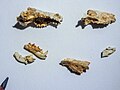
|
| Sardinian pika | Prolagus sardus | Hunting, predation and competition with introduced mammals.111O | 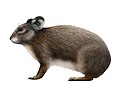
| ||
| Hensel's field mouse | Rhagamys orthodon | Introduced black rats and human-induced habitat loss.110 | 
| ||
| Tyrrhenian vole | Tyrrhenicola henseli | ||||
| 320-220 BCP | Lena horse | Equus lenensis | Northern Siberia | Hunting.112 | |
| c. 240 BCQ | Imperial gibbon | Nomascus imperialis | Chongqing114 and possibly Shaanxi, China | Possibly capture as pets and deforestation.115 |  |
| 170 BC - 370 CE116 | Maui flightless ibis | Apteribis brevis | Maui, Hawaii, United States | Undetermined. | 
|
| 130 BC | Gran Canaria giant rat | Canariomys tamarani | Gran Canaria, Canary Islands | Hunting or predation by introduced dogs?117 | 
|
| 110 BC - 130 BC65 | Ancient coua | Coua primaeva | Madagascar | Undetermined. | |
| 62 BC - 87 CE | Alor Island giant rat | Alormys aplini | Alor Island, Indonesia | Aridification and deforestation.118 | |
| 50 BC15 | Buhler's coryphomys | Coryphomys buehleri | Timor | Undetermined. | |
| Timor giant rat | Coryphomys musseri |  | |||
| 49 BC - 125 CE | São Miguel scops owl | Otus frutuosoi | São Miguel Island, Azores, Portugal | Introduced predators?119 | |
| after 30 BC120 | North African aurochs | Bos primigenius africanus | North Africa | Aridification. Domestic descendants survive in captivity.18 | 
|
| 10 BC121 | Greater Cuban nesophontes | Nesophontes major | Cuba | Undetermined. | 
|
| Lesser falcate-winged bat | Phyllops vetus | Cuba and Juventud |
1st millennium CE
1st–5th centuries
| Last record | Common name | Binomial name | Former range | Causes | Picture |
|---|---|---|---|---|---|
| 1-1000122 | Eyles's harrier | Circus teauteensis | New Zealand | Prey loss and habitat alteration.63123 | 
|
| North Island goose124 | Cnemiornis gracilis | North Island, New Zealand | Probably hunting.63 | ||
| 54-68 | Silphium | Ferula or Thapsia sp. | Cyrenaica coast, Libya | Aridification, overgrazing, and overharvesting.125 | 
|
| 54-222 | Milimonggamys juliae | Sumba Island, Indonesia | Undetermined. | ||
| 80126 | Halmahera wallaby | Dorcopsis sp. | Halmahera, Indonesia | Predation by introduced dogs.82 | |
| 86-42821 | Powerful goshawk | Accipiter efficax | New Caledonia | Undetermined. | |
| Gracile goshawk | Accipiter quartus | ||||
| Kanaka pigeon | Caloenas canacorum | New Caledonia and Tonga; Vanuatu and Fiji? | Probably hunting.63 | ||
| Pile-builder megapode127 | Megapodius molistructor | New Caledonia and Tonga | Undetermined. | ||
| New Caledonian ground dove | Pampusana longitarsus | New Caledonia | |||
| New Caledonian gallinule128 | Porphyrio kukwiedei | ||||
| 140-180R | Mekosuchus inexpectatus | Grande Terre and Isle of Pines, New Caledonia | Hunting.91 |  | |
| 210129 | Giant fossa | Cryptoprocta spelaea | Madagascar | Undetermined. | 
|
| 220130 | Western bison | Bison occidentalis | Alaska and Yukon | 
| |
| 220-320 | Waitomo frog | Leiopelma waitomoensis | North Island, New Zealand | Predation by polynesian rats.131 | |
| 245-42965 | Mesopropithecus globiceps | Southwestern Madagascar | Hunting and aridification.104 | 
| |
| 290-430 | Bahaman caracara | Caracara creightoni | Cuba and Bahamas | Undetermined.77 | |
| c. 300 | Atlas wild ass | Equus africanus atlanticus | North Africa | Undetermined. Domestic descendants survive in captivity.132 | 
|
| 300-120021 | Marquesas cuckoo-dove | Macropygia heana | Nuku Hiva and Ua Huka, Marquesas Islands | Undetermined. | |
| 347-53521 | New Ireland forest rat | Rattus sanila | New Ireland, Papua New Guinea | ||
| before 370133 | North African elephant | Loxodonta africana pharaoensis | Northwest Africa | Hunting and aridification.134S | 
|
| 428-61865 | Hypogeomys australis | Central and southern Madagascar | Undetermined. | 
| |
| 439-473136 | Jamaican monkey | Xenothrix mcgregori | Jamaica | ||
| 440-63921 | Oʻahu moa-nalo | Thambetochen xanion | Oahu, Hawaii, United States |  | |
| 448-657T | Chatham duck | Anas chathamica | Chatham Islands, New Zealand | Hunting?21 | 
|
6th–10th centuries
| Last record | Common name | Binomial name | Former range | Causes | Picture |
|---|---|---|---|---|---|
| 530-590 | Cuban spectacled owl | Pulsatrix arredondoi | Cuba | Undetermined.77 | |
| 530-86065 | Malagasy shelduck | Alopochen sirabensis | Madagascar | Possibly hunting and aridification.63 |  |
| c. 531 | Meiolania mackayi | New Caledonia | Hunting.137 | 
| |
| 535-87641 | Hadropithecus stenognathus | Central and southern Madagascar | Hunting and aridification.104 | 
| |
| 586-670 | Voay robustus | Madagascar | Possibly overexploitation of eggs for consumption, environmental changes (natural or caused by human activity), and competition with the Nile crocodile.138 | 
| |
| c. 600 | Ua Huka rail | Gallirallus gracilitibia | Ua Huka, Marquesas Islands | Human settlement.139 | |
| 600-76541 | Mesopropithecus pithecoides | Central Madagascar | Hunting and aridification.104 | ||
| 650-78065 | Archaeolemur majori | Madagascar | 
| ||
| 650-869 | Small O'ahu crake | Porzana ziegleri | Oahu, Hawaii, United States | Undetermined.21 | |
| 664-773 | Hildebrandt's elephant bird | Aepyornis hildebrandti | Central Madagascar | Deforestation.140 |  |
| 666-857141 | Geocapromys caymanensis | Cayman Islands | Undetermined. | ||
| Cayman Islands nesophontes | Nesophontes hemicingulus | ||||
| 670-836 | Lemerle's dwarf hippopotamus | Hippopotamus lemerlei | Southwestern Madagascar142 | Deforestation,140 hunting, competition with, and changes to vegetation caused by livestock.104 | 
|
| 680-880140 | Lesser elephant bird | Mullerornis modestus | Central and southern Madagascar | Hunting, aridification,104 and deforestation.140 |  |
| 668-881 | Astrochelys rogerbouri | Central and southern Madagascar | Undetermined.143 | ||
| 687-880 | Madagascar dwarf hippopotamus | Hippopotamus madagascariensis | Northwestern and central Madagascar142 | Deforestation,140 hunting, competition with, and changes to vegetation caused by livestock.104 | 
|
| 700-115021 | Huahine starling | Aplonis diluvialis | Huahine, Society Islands, French Polynesia | Undetermined. | |
| Huahine gull | Chroicocephalus utunui | ||||
| Huahine rail | Gallirallus storrsolsoni | Possibly hunting and predation by introduced animals.63 | |||
| Huahine cuckoo-dove | Macropygia arevarevauupa | Undetermined. | |||
| Huahine swamphen | Porphyrio mcnabi | Possibly hunting and introduced predators.63 | |||
| 772-870 | Insular cave rat | Heteropsomys insulans | Puerto Rico | Undetermined.103 | |
| 810-1025 | Sinoto's lorikeet | Vini sinotoi | Marquesas and Society Islands, French Polynesia | Hunting.144 | |
| 865-965 | Malagasy aardvark | Plesiorycteropus madagascariensis | Central and southern Madagascar | Undetermined.16 |  |
| c. 8849 | Grandidier's giant tortoise | Aldabrachelys grandidieri | Madagascar | Hunting and aridification.104 |  |
| 890-99041 | Giant ruffed lemur | Pachylemur insignis | Southwestern Madagascar |  | |
| c. 900-1000 | Synemporion keana | Kauai, Oahu, Molokai, and Maui, Hawaii, United States | Hunting and predation by introduced rodents.145 | ||
| 900-1150 | Giant aye-aye | Daubentonia robusta | Southern Madagascar | Hunting, expansion of grasses and deforestation caused by domestic cattle and goat grazing.104 | |
| c. 950 | Giant island deer mouse | Peromyscus nesodytes | Channel Islands of California, United States | Possibly habitat loss through overgrazing and erosion.146 | |
| Nuku Hiva rail | Gallirallus epulare | Nuku Hiva, Marquesas Islands | Undetermined.139 | ||
| Tahuata rail | Gallirallus roletti | Tahuata, Marquesas Islands | |||
| 950-1350 | Ducula tihonireasini | Kamaka, Gambier Islands, French Polynesia | |||
| 980-1170 | Megaladapis grandidieri | Madagascar | Hunting and vegetation changes caused by livestock.104 | 
| |
| c. 986-1425 | Mangaia rail | Gallirallus ripleyi | Mangaia, Cook Islands | Hunting, habitat alteration, and predation by introduced rats, dogs, and pigs.147 | |
| Mangaia crake | Porzana rua |
2nd millennium CE
11th-12th century
| Last record | Common name | Binomial name | Former range | Causes | Pictures |
|---|---|---|---|---|---|
| c. 1000 | North Island adzebill | Aptornis otidiformis | North Island, New Zealand | Hunting and predation by introduced Polynesian rats.63 | 
|
| 1000-1200148 | Conquered lorikeet | Vini vidivici | Marquesas, Society, and Cook Islands | Possibly predation by Polynesian rats.63 | 
|
| 1000-160021 | Henderson archaic pigeon | Bountyphaps obsoleta | Henderson Island, Pitcairn | Undetermined. | |
| Henderson imperial pigeon | Ducula harrisoni | Probably hunting and predation by introduced animals.63 | |||
| Henderson ground dove | Pampusana leonpascoi | Undetermined. | |||
| 1015-1147103 | Puerto Rican nesophontes | Nesophontes edithae | Puerto Rico | 
| |
| 1015-115593 | Cape Verde quail | Coturnix centensis | São Vicente, Cape Verde | ||
| 1040-138063U | Giant elephant bird | Aepyornis maximus | Southern Madagascar | Hunting, competition with, and changes to vegetation caused by livestock.104 |  |
| 1046-138021 | Nēnē-nui | Branta hylobadistes | Oahu, Hawaii, United States | Probably hunting or introduced predators.63 | |
| 1047-128065 | Archaeolemur edwardsi | Central Madagascar150 | Hunting and changes to vegetation caused by livestock.104 | 
| |
| 1057-137521 | Maui Nui moa-nalo | Thambetochen chauliodous | Molokai and Maui, Hawaii, United States | Undetermined. |  |
| 1057-144021 | Maui stilt-owl | Grallistrix erdmani | Maui, Hawaii, United States | ||
| 1059-1401 | New Zealand swan | Cygnus sumnerensis | New Zealand | Hunting.21 |  |
| 1104-1672 | Azorean little gadfly petrel | Pterodroma zinorum | Azores Islands, Portugal | Probably human activity and introduced mammals.151 | |
| 1170152 | Bahaman tortoise | Chelonoidis alburyorum | Bahamas | Undetermined. | |
| 1173-138521 | Barbuda giant rice rat | Megalomys audreyae | Barbuda |  | |
| 1175-1295153 | Atalaye nesophontes | Nesophontes hypomicrus | Hispaniola | ||
| 1183 | New Zealand owlet-nightjar | Aegotheles novaezealandiae | New Zealand | Predation by introduced Polynesian rats.154 | 
|
13th-14th century
| Last record | Common name | Binomial name | Former range | Causes | Picture |
|---|---|---|---|---|---|
| c. 1200 | Ua Huka Booby | Papasula abbotti costelloi | Marquesas Islands, French Polynesia | Hunting and possibly also deforestation.63 | |
| 1200-1600 | Chatham kaka | Nestor chathamensis | Chatham Islands, New Zealand | Probably hunting, deforestation, and predation by introduced Polynesian rats.63 | |
| 1206-142741 | Megaladapis madagascariensis | Madagascar | Hunting.104 | 
| |
| 1230-1315155 | Abrupt giant tortoise | Aldabrachelys abrupta | Hunting and aridification.104 | 
| |
| 1234-1445122 | South Island adzebill | Aptornis defossor | South Island, New Zealand | Hunting and predation by introduced Polynesian rats.63 |  |
| 1250-1650 | Rapa Nui Palm | Paschalococos disperta | Easter Island, Chile | Deforestation and predation of nuts by introduced rats.156 | 
|
| 1265-1400 | St. Michel nesophontes | Nesophontes paramicrus | Hispaniola | Undetermined.153 | |
| 1270-1380 | Hispaniola woodcock | Scolopax brachycarpa | Hispaniola | Undetermined.157 | |
| 1270-1395158 | Lava mouse | Malpaisomys insularis | Lanzarote and Fuerteventura, Canary Islands | Possibly disease spread by introduced rats.159 | 
|
| 1270-1475 | Lava shearwater | Puffinus olsoni | Lanzarote and Fuerteventura, Canary Islands | Predation by introduced black rats and cats.160 | 
|
| 1278-1415 | Mantell's moa | Pachyornis geranoides | North Island, New Zealand | Hunting.21161 |  |
| 1286-1390 | North Island giant moa | Dinornis novaezelandiae |  | ||
| 1292-1630 | Chinese gharial | Hanyusuchus sinensis | South China and Hainan | Extermination campaign.162 | 
|
| 1294-1438 | Heavy-footed moa | Pachyornis elephantopus | Eastern South Island, New Zealand | Hunting.163 | 
|
| 1295-143015321 | Haitian nesophontes | Nesophontes zamicrus | Hispaniola | Undetermined. | |
| c. 130063 | Tubuai rail | Hypotaenidia steadmani | Tubuai, Austral Islands, French Polynesia | ||
| 1300-1500 | Malagasy sheldgoose | Centrornis majori | Central Madagascar | Hunting and aridification.164 |  |
| After 1300 | Chatham penguin165 | Eudyptes warhami | New Zealand | Hunting.166163 | 
|
| Dwarf yellow-eyed penguin | Megadyptes antipodes richdalei | Chatham Islands, New Zealand167 | |||
| 1300-1400 | Malagasy lapwing | Vanellus madagascariensis | Southwestern Madagascar | Aridification.63 | |
| 1300-1422 | Upland moa | Megalapteryx didinus | South Island, New Zealand | Hunting.168 |  |
| 1300-1430 | Megaladapis edwardsi | Madagascar | Hunting and vegetation changes caused by livestock.104 |  | |
| 1300-1800 | Eua rail | Hypotaenidia vekamatolu | Eua, Tonga | Undetermined.63 | |
| 1310-141066 | Western Cuban nesophontes | Nesophontes micrus | Cuba | Undetermined. | 
|
| 1310-1420 | Bush moa | Anomalopteryx didiformis | New Zealand | Hunting.163169 |  |
| 1320-1350169 | Eastern moa | Emeus crassus | South Island, New Zealand | 
| |
| Haast's eagle170 | Hieraaetus moorei | Deforestation and loss of prey. Possibly also predation of nests by introduced pigs and rats.63 | 
| ||
| 1320-1630 | Southern sloth lemur | Palaeopropithecus ingens | Southwestern Madagascar | Hunting and vegetation changes caused by livestock.104 |  |
| 1347-1529 | Waitaha penguin | Megadyptes antipodes waitaha | Coastal South Island, New Zealand | Hunting.171 | |
| 1350 | Scarlett's shearwater | Puffinus spelaeus | Western South Island, New Zealand | Predation by Polynesian rats.160 |  |
| 1375-1610 | Kauaʻi palila | Loxioides kikuchi | Kauaʻi, Hawaii, United States | Human settlement and farming.172 | |
| 1380-1500173 | Giant Hawaii goose | Branta rhuax | Hawaiʻi, Hawaii, United States | Probably hunting.63 | 
|
| 1390-1470 | Great ground dove | Pampusana nui | French Polynesia and Cook Islands | Undetermined.21 | |
| 1396-1442 | Crested moa | Pachyornis australis | Subalpine South Island, New Zealand | Hunting.163 |  |
15th-16th century
| Last record | Common name | Binomial name | Former range | Declared extinct | Causes | Picture |
|---|---|---|---|---|---|---|
| 1400-1450 | Pico rail | Rallus montivagorum | Pico Island, Açores, Portugal | Undetermined.63 | 
| |
| 1400-1500 | Tenerife giant lizard | Gallotia goliath | Tenerife and La Palma, Canary Islands | Hunting.174 | 
| |
| 1425-1660 | Kauaʻi finch | Telespiza persecutrix | Kauaʻi and Oahu, Hawaii, United States | Undetermined.21 | ||
| 1451-1952163 (1558–1728)V |
South Island giant moa | Dinornis robustus | South Island, New Zealand | Hunting.163 | 
| |
| 1454-1626W | Dusicyon avus | Argentina and Uruguay | 2015 (IUCN) | Possibly climate change, hunting, and competition with domestic dogs.175 | 
| |
| 1460-1660 | Dwarf thick-knee | Burhinus nanus | Bahamas | Undetermined.176 | ||
| 1464-1637163 (1542–1618)X |
Broad-billed moa | Euryapteryx curtus | North, South, and Stewart Island of New Zealand | Hunting.163 | 
| |
| c. 1500 | Rēkohu shelduck | Tadorna rekohu | Chatham Islands, New Zealand | Human settlement.177 | ||
| 1500-1600 | Finsch's duck | Chenonetta finschi | New Zealand | 2014 (IUCN) | Hunting and predation by introduced Polynesian rats.178 | 
|
| South Island goose63 | Cnemiornis calcitrans | South Island, New Zealand | Probably hunting.179 | 
| ||
| 1503 | Vespucci's giant rat | Noronhomys vespucii | Fernando de Noronha Island, Brazil | 2008 (IUCN) | Undetermined.180 | |
| 1503-157821 | Puerto Rican hutia | Isolobodon portoricensis | Hispaniola and Gonâve; Introduced to Puerto Rico, Mona, and U.S. Virgin Islands |
1994 (IUCN) | Possibly predation by introduced black rats.181 | 
|
| 1520-195021 | Galápagos giant rat | Megaoryzomys curioi | Santa Cruz, Galápagos Islands, Ecuador | 2008 (IUCN) | Possibly introduced predators.182 | 
|
| 1536-1546183 | Samaná hutia | Plagiodontia ipnaeum | Hispaniola | 2021 (IUCN) | Predation by introduced rodents.183 | 
|
| 1550-167066 | Hispaniolan edible rat | Brotomys voratus | Hispaniola | 1994 (IUCN) | Introduced rats.184 | |
| 1555 | Ascension night heron | Nycticorax olsoni | Ascension Island | Probably predation by introduced cats and rats.63 | ||
| 1585185 | Cayman Islands hutia | Capromys pilorides lewisi | Grand Cayman, Cayman Brac, and Little Cayman, Cayman Islands | Possibly hunting, introduced predators, and habitat loss caused by introduced ungulates.141 |
17th century
| Last record | Common name | Binomial name | Former range | Declared extinct | Causes | Picture |
|---|---|---|---|---|---|---|
| 1600-1700 | Hodgens's waterhen | Tribonyx hodgenorum | New Zealand | 2014 (IUCN) | Hunting and predation by Polynesian rats.186 | |
| 1601 | Stout-legged duck | cf. Anas bernieri | Rodrigues | Undetermined.164 | ||
| 1602 | Mauritius white-throated rail | Dryolimnas chekei187 | Mauritius | 1638 | Hunting and predation by introduced mammals.63 | |
| 1603 | Bermuda hawk | Bermuteo avivorus | Bermuda | 2014 (IUCN) | Possibly hunting and predation by introduced feral pigs and other animals.188 |  |
| 1609-1610 | Bermuda saw-whet owl | Aegolius gradyi | 1623 2014 (IUCN) |
Habitat destruction and introduced predators.63 | ||
| Bermuda towhee | Pipilio naufragus | Undetermined.63 | ||||
| 1610 | Bermuda night heron | Nyctanassa carcinocatactes | 2014 (IUCN) | Possibly hunting and introduced predators.189 |  | |
| 1623 | Bermuda flicker | Colaptes oceanicus | 2014 (IUCN) | Probably predation by introduced cats.63 | ||
| 1627Y | Eurasian aurochs | Bos primigenius primigenius | Mid-latitude Eurasia | 2008 (IUCN) | Hunting, competition with, and diseases from domestic cattle. Domestic descendants survive worldwide, including feral populations.192 |
|
| c. 1640193 | Saint Helena rail | Aphanocrex podarces | Saint Helena | 1988 (IUCN) | Probably hunting194 and predation by introduced cats, rats, and other mammals.193 | |
| Olson's petrel | Bulweria bifax | Hunting and introduced predators?195 | ||||
| Saint Helena cuckoo | Nannococcyx psix | Possibly deforestation.193 | ||||
| Saint Helena petrel | Pterodroma rupinarum | Probably deforestation and introduced mammals.63 | ||||
| Saint Helena hoopoe | Upupa antaios | Possibly hunting and introduced predators.196 |  | |||
| Saint Helena crake | Zapornia astrictocarpus | Probably introduced predators.197 | ||||
| Before 1650 | Chatham Islands swan | Cygnus sumnerensis chathamicus | Chatham Islands, New Zealand | Hunting.198 | ||
| c. 1650 | Markham's frog | Leiopelma markhami | South Island, New Zealand | Predation by polynesian rats.131 | 
| |
| 1656 | Ascension crake | Mundia elpenor | Ascension Island | 1988 (IUCN) | Possibly introduction of rats and cats, although it is not attested by the time they arrived in the 18th and 19th centuries.199 | 
|
| 1670-195065Z | Larger Malagasy hippopotamus | Hippopotamus laloumena | Eastern Madagascar | Increased human and cattle pressure after the introduction of prickly pear farming.104 Its specific separation from the common hippopotamus has been questioned.200 | ||
| 1671-1672 | Réunion blue pigeon | Alectroenas sp. | Réunion | 1704 | Probably hunting and predation by introduced cats.63 | |
| Réunion sheldgoose | Alopochen kervazoi | 1710 1988 (IUCN) |
Hunting and habitat destruction.201 | 
| ||
| Réunion kestrel | Falco duboisi | 2004 (IUCN) | Undetermined.202 | |||
| Réunion fody | Foudia delloni | 2016 (IUCN) | Possibly deforestation or predation by introduced rats.63 |  | ||
| Réunion parrot | ?Necropsittacus borbonicus | Undetermined.63 | 
| |||
| 1673-1675 | Broad-billed parrot | Lophopsittacus mauritianus | Mauritius | 1693 1988 (IUCN) |
Hunting.203 | 
|
| 1674 | Réunion rail | Dryolimnas augusti | Réunion | 2014 (IUCN) | Probably hunting and introduced rats and cats.204 | |
| Réunion night heron | Nycticorax duboisi | 1988 (IUCN) | Hunting.205 | |||
| 1675-1755 | Giant vampire bat | Desmodus draculae | Eastern South America; Central America (Pleistocene)206 |
Undetermined.207 | 
| |
| 1688 | Dodo | Raphus cucullatus | Mauritius | 1988 (IUCN) | Hunting.208209 | 
|
| before 1690 | Rodrigues blue pigeon | Alectroenas payandeei | Rodrigues | Undetermined.63 | ||
| 1693 | Mauritius sheldgoose | Alopochen mauritiana | Mauritius | 1698 1988 (IUCN) |
Hunting.208 |
|
| Red rail | Aphanapteryx bonasia | 1988 (IUCN) | Hunting and predation by introduced cats.210 | 
| ||
| Mascarene coot211 | Fulica newtonii | Mauritius and Réunion | Hunting.212 |  | ||
| Mauritius night heron | Nycticorax mauritianus | Mauritius | Probably hunting.213 | 
| ||
| 1696 | Amsterdam wigeon | Mareca marecula | Amsterdam Island, French Southern and Antarctic Lands | 1874 1988 (IUCN) |
Hunting and predation by introduced rats.63 |
18th century
| Last record | Common name | Binomial name | Former range | Declared extinct | Causes | Picture |
|---|---|---|---|---|---|---|
| 1700-1800 | Réunion scops owl | Otus grucheti | Réunion | Deforestation.63 | ||
| 1704 | Réunion pigeon | Nesoenas duboisi | 1988 (IUCN) | Predation by introduced black rats and cats.63 | ||
| 1705 | Mascarene reed cormorant | Phalacrocorax africanus nanus | Mauritius and Réunion | Probably hunting and predation by introduced cats.63 | ||
| 1710 | Mascarene tealAA | Anas theodori | Mauritius and Réunion | Hunting and possibly predation by introduced cats.63 | 
| |
| Réunion pochard | cf. Aythya innotata | Réunion | Undetermined.164 | |||
| 1724 | Guadeloupe parakeet | Psittacara labati | Guadeloupe | 1988 (IUCN) | Probably hunting.214 |  |
| 1725-1726 | Rodrigues petrel | Pterodroma sp. | Rodrigues | Predation by introduced cats and rats.63 | ||
| 1726 | Rodrigues rail | Erythromachus leguati | 1988 (IUCN) | Hunting.215 | 
| |
| Rodrigues owl | Otus murivorus | Probably hunting, deforestation, and predation by introduced animals.216 | 
| |||
| Rodrigues starling | Necropsar rodericanus | 1761 1988 (IUCN) |
Undetermined.217 | 
| ||
| Rodrigues pigeon | Nesoenas rodericanus | 1761 1988 (IUCN) |
Probably predation by introduced black rats.218 | 
| ||
| Rodrigues night heron | Nycticorax megacephalus | 1761 1988 (IUCN) |
Hunting.219 |  | ||
| c. 1730 | Mauritius wood pigeon | Columba thiriouxi | Mauritius | 2014 (IUCN) | Hunting, predation by introduced black rats, and deforestation.63 |  |
| Mauritius turtle dove | Nesoenas cicur | Hunting, predation by introduced mammals, and deforestation.63 | 
| |||
| Réunion swamphen | Porphyrio caerulescens | Réunion | 1988 (IUCN) | Hunting.220 |  | |
| 1732 | Réunion parakeet | Psittacula eques eques | 1732 | Hunting and deforestation.221 | 
| |
| c. 1735-18449AB | Saddle-backed Mauritius giant tortoise | Cylindraspis inepta | Mauritius | 1994 (IUCN) | Possibly hunting and introduced predators and competitors.222223 | 
|
| Domed Mauritius giant tortoise | Cylindraspis triserrata |  | ||||
| 1741-1768 | Steller's sea cow | Hydrodamalis gigas | Bering Sea; Northern Pacific coasts from Japan to Baja California (Pleistocene) | 1768 1986 (IUCN) |
Hunting and reduction of kelp as a result of sea otter hunting, which caused proliferation of kelp-eating sea urchins.224 | 
|
| 1742AC | Lesser Antillean macaw | Ara guadeloupensis | Guadeloupe | Undetermined.63 |  | |
| 1746 | Corynanthe brachythyrsus | Cameroon | 1998 (IUCN) | Undetermined.225 | ||
| 1759 | Mauritius grey parrot | Lophopsittacus bensoni | Mauritius and Réunion | 1988 (IUCN) | Hunting.22663 | 
|
| 1761 | Rodrigues parrot | Necropsittacus rodricanus | Rodrigues | 1988 (IUCN) | Hunting.227 |  |
| Rodrigues solitaire | Pezophaps solitaria | 1778 1988 (IUCN) |
Hunting and predation by introduced cats.228 | 
| ||
| 1762-1790 | Carpathian wisentAD | Bison bonasus hungarorum | Carpathian Mountains, Eastern Europe | |||
| 1763 | Réunion ibis | Threskiornis solitarius | Réunion | 1988 (IUCN) | Hunting.23063 | 
|
| 1770 | Ancient Polydamas swallowtail | Battus polydamas antiquus | Antigua | 2018 | Undetermined.231 | 
|
| 1771 | Saint Helena ebonyAE | Trochetiopsis melanoxylon | Saint Helena lowlands | 1998 (IUCN) | Logging and predation by introduced goats.232 |  |
| 1773-1774 | Raiatea parakeet | Cyanoramphus ulietanus | Raiatea, Society Islands, French Polynesia | 1988 (IUCN) | Possibly deforestation, hunting, and predation by introduced species.233 |  |
| 1774 | Tanna ground dove | Alopecoenas ferrugineus | Tanna, Vanuatu | Hunting?234 | 
| |
| Raiatea starling | ?Aplonis ulietensis | Raiatea, Society Islands, French Polynesia | 1850 2016 (IUCN) |
Possibly predation by introduced rats.235 |  | |
| 1775 | Seychelles purple swamphen | Porphyrio sp. | Mahé, Seychelles | Hunting, deforestation, and predation by introduced mammals.63 | ||
| 1777 | Tongatapu rail | Hypotaenidia hypoleucus | Tongatapu, Tonga | Predation by introduced dogs.63 | 
| |
| Moorea sandpiper | Prosobonia ellisi | Moorea, Society Islands, French Polynesia | 1988 (IUCN) | Predation by introduced rats.236237 | 
| |
| Tahiti sandpiper | Prosobonia leucoptera | Tahiti, Society Islands, French Polynesia | 
| |||
| 1778 | Christmas sandpiper | Prosobonia cancellata | Kiritimati, Kiribati | 2014 (IUCN) | Probably predation by introduced cats.63 |  |
| 1779 | Martinique amazon | Amazona martinicana | Martinique | 1988 (IUCN) | Probably hunting.238 |  |
| Guadeloupe amazon | Amazona violacea | Guadeloupe | Hunting.239 |  | ||
| 1784 | Tahiti crake | Zapornia nigra | Tahiti, Society Islands, French Polynesia | Possibly introduced predators.240 | 
| |
| 1790 | White swamphen | Porphyrio albus | Lord Howe Island, Australia | 1834 1988 (IUCN) |
Hunting.241 |  |
| 1793 | Oceanic eclectus parrot | Eclectus infectus | Tonga and Vanuatu; Fiji? | 2014 (IUCN) | Probably hunting and predation by introduced mammals.242 |  |
| Vava'u rail | Hypotaenidia vavauensis | Vava'u, Tonga | Possibly habitat destruction and introduced predators.63 | 
| ||
| 1799-1800 | Bluebuck | Hippotragus leucophaeus | Overberg; South Africa (Pleistocene) |
1986 (IUCN)243 | Vegetation change and disruption of migration routes after the Last Glacial Period, competition with domestic cattle, overhunting, and further habitat loss due to agriculture.18 | 
|
19th century
20th century
3rd millennium CE
21st century
| Last record | Common name | Binomial name | Former range | Declared extinct | Causes | Picture |
|---|---|---|---|---|---|---|
| 2000 | Pyrenean ibexAF | Capra pyrenaica pyrenaica | Pyrenees;245 Cantabrian Mountains?246 |
2000 (IUCN)247 | Hunting, competition for pastures and diseases from exotic and domestic ungulates.248249 |  |
| Beaver pond marstonia | Marstonia castor | Lake Blackshear, Georgia, United States | 2017 | Pollution and urban development.250 | ||
| White-chested white-eyeAG | Zosterops albogularis | Norfolk Island, Australia | 2024 (IUCN) | Deforestation, competition with the silvereye (introduced in 1904), and predation by rats (introduced in the 1940s).63 |  | |
| 2001 | Glaucous macaw | Anodorhynchus glaucus | Border area of Argentina, Paraguay, Brazil, and Uruguay | Deforestation for agriculture and livestock grazing, particularly of the Yatay palm in which it fed. Possibly also hunting and capture for the exotic pet trade.251 |  | |
| Slender-billed curlew | Numenius tenuirostris | Western Eurasia and northern Africa | 2024 (IUCN) | Hunting and habitat destruction.63 | 
| |
| Pernambuco pygmy owl | Glaucidium mooreorum | Pernambuco, Brazil | Habitat destruction.252 | |||
| Giant Atlas barbel | Labeobarbus reinii | Oued Ksob and Tensift Rivers, Morocco | 2022 (IUCN) | Undetermined.253 | 
| |
| Plectostoma sciaphilum | Bukit Panching, Pahang, Peninsular Malaysia | 2014 (IUCN) | Habitat destruction caused by limestone quarrying.254 | |||
| 2002 | Chinese river dolphinAH | Lipotes vexillifer | Middle and lower Yangtze, China | 2007255 | Fishing, habitat destruction, and vessel strikes.256 | 
|
| Polynesian tree snail | Partula labrusca | Raiatea, Society Islands, French Polynesia | 2007 (IUCN) | Predation by introduced rosy wolfsnails.257 | ||
| 2003 | Osgood's Ethiopian toad | Altiphrynoides osgoodi | South-central Ethiopian mountains | Habitat degradation.258 | ||
| Saint Helena oliveAI | Nesiota elliptica | Saint Helena | 2004 (IUCN) | Deforestation for fuel and timber, and use of the land for plantations of New Zealand flax, leading to inbreeding depression and fungal infections from reduced numbers.259 | 
| |
| Chinese paddlefish | Psephurus gladius | Yangtze and Yellow River basins, China | 2018 (IUCN) | Overfishing and construction of the Gezhouba Dam blocking the anadromous spawning migration260261 | 
| |
| 2004 | Po'ouli | Melamprosops phaeosoma | Eastern Maui, Hawaii, United States | 2017 (IUCN) | Introduced avian malaria and predators.262 | 
|
| Cozumel thrasher | Toxostoma guttatum | Cozumel, Yucatán Peninsula, Mexico | Hurricanes Roxanne, Emily, and Wilma.263 | 
| ||
| 2005 | Cahaba pebblesnail | Clappia cahabensis | Cahaba River, Alabama, United States | 2021 (IUCN) | Water pollution.264 |  |
| Dypsis brittiana | Tsaramain’Andro, Makira Natural Park, Madagascar | Human exploitation.265 | ||||
| before 2006 | Western black rhinoceros | Diceros bicornis longipes | South Sudan to Nigerian-Niger border area | 2011 (IUCN) | Hunting.266 | 
|
| 2007 | South Island kōkakoAJ | Callaeas cinereus | South Island, New Zealand | Habitat destruction from logging and grazing ungulates, and predation by introduced black rats, brush-tailed possums, and stoats.268 |  | |
| Cryptic Treehunter | Cichlocolaptes mazarbarnetti | Northeastern Brazil | 2019 (IUCN) | Extensive habitat loss due to logging and sugar cane production.269 | 
| |
| La Palma giant lizardAK | Gallotia auaritae | La Palma, Canary Islands, Spain | Undetermined.270 | |||
| Mendelson's water frog | Telmatobius mendelsoni | Cusco and Ayacucho, Peru | Chytridiomycosis.271 | |||
| 2008 | Lindog | Barbodes lindog | Lake Lanao, Mindanao, Philippines | Predation by introduced tank goby and ornate sleeper.272 | ||
| Barada spring minnow | Pseudophoxinus syriacus | Barada stream, Lebanon and Syria | Pollution and draining of the river due to water substraction.273 | |||
| 2009 | Bramble Cay melomys | Melomys rubicola | Bramble Cay, Australia | 2015 (IUCN)274 | Sea level rise as a consequence of global warming.275 | 
|
| Christmas Island pipistrelle | Pipistrellus murrayi | Christmas Island, Australia | 2017 (IUCN) | Undetermined.276 | ||
| 2010 | Vietnamese rhinoceros | Rhinoceros sondaicus annamiticus | South China and Indochina | 2011 (IUCN) | Hunting.277 | 
|
| Lake Oku puddle frog | Phrynobatrachus njiomock | Kilum-Ijim forest, Mount Oku, Cameroon | Possibly chytridiomycosis.278 | |||
| 2011 | Alagoas foliage-gleaner | Philydor novaesi | Alagoas and Pernambuco, Brazil | 2019 (IUCN) | Deforestation.63 | |
| 2012 | Pinta Island tortoiseAL | Chelonoidis abingdonii | Pinta, Galápagos Islands, Ecuador | 2012 (IUCN)279 | Hunting and overgrazing by introduced goats. Hybrid descendants exist in other Galapagos islands, as a result of human intervention.280 | 
|
| Parras pupfish | Cyprinodon latifasciatus | Laguna de Mayrán basin, Coahuila, Mexico | Undetermined.281 | |||
| 2014 | Christmas Island forest skinkAM | Emoia nativitatis | Christmas Island, Australia | 2017 (IUCN) | Habitat loss to mining and predation by introduced Indian wolf snake and yellow crazy ant.282 |  |
| Catarina pupfishAN | Megupsilon aporus | El Potosí spring, Galeana, Nuevo León, Mexico | 2018 (IUCN) | Predation by introduced Florida bass and habitat loss from water extraction. The captive population was wiped out by mycobacteriosis.283 | 
| |
| 2015-2018 | Mollinedia myriantha | Macaé de Cima Environmental Protection Area, Nova Friburgo, Rio de Janeiro, Brazil | Habitat fragmentation and degradation caused by construction and other human activity.284 | |||
| 2016 | Captain Cook's bean snail | Partula faba | Raiatea and Tahaʻa, Society Islands, French Polynesia | 2016 | Predation by introduced rosy wolfsnails.285 | |
| Rabbs' fringe-limbed treefrogAO | Ecnomiohyla rabborum | El Valle de Antón, Panama | Chytridiomycosis.287 | 
| ||
| 2019AP | Oahu tree snail | Achatinella apexfulva | Oahu, Hawaii, United States | 2019 | Predation by introduced rosy wolfsnails.288 | 
|
See also
See also
Notes
Notes
- Ancient DNA studies indicate that the giant Cape zebra is not a separate species, but a distinct lineage of the plains zebra (E. quagga).22
- Attributed to Struthio asiaticus in this source, but this name should be limited to remains from Pleistocene India.28
- Date obtained from carbonaceous clay near Palaeoloxodon remains rather than bone.32
- A datation to 4170-4050 BC is uncalibrated and the remains could be older.38
- A datation to 3023-2809 BCE is considered dubious.52
- Possible synonym of Equus africanus atlanticus.55
- In Yukon.57 Remains of either B. priscus or B. bonasus were dated in the Angara River basin to 2550-2440 BC,58 and a small bison persisted in the Baikal region until the 7th to 10th century AD (considered B. priscus by Boeskorov59 and B. bonasus by Sipko60). A date of 1130-1060 BC near the Oyat river is not calibrated and the remains could be older.61
- This dating is regarded as "tentative". Claims of even later survival to 1470-1445 BCE are based on interpretations of a painting from the Egyptian Tomb of Rekhmire apparently depicting an adult dwarf elephant.70
- Domestic descendants survive in captivity and as feral populations.75
- Survival to 1350 CE reported by Turvey is not confirmed.
- Traditionally considered the same as B. p. primigenius on morphological grounds, but revealed to be genetically distinct. Domestic hybrid descendants survive in China, particularly in Tibet, Chamdo, and Yushu.84 It is likely that many remains from northern China that have been identified as bison85 or domestic cattle actually belong to aurochs and that it survived for longer than assumed. The anonymous author of the Classic of Poetry (11th-7th century BCE) seems aware of the aurochs's existence.86
- It was suggested that the Syrian elephant was introduced by humans in Mesopotamia, which would not make it a valid subspecies.98
- Survival to c. 1350 CE mentioned by Turvey not confirmed.
- A. corsicanus was originally applied to remains from Corsica and A. similis to Sardinia. It was later recognized that A. corsicanus existed in the early Pleistocene of both islands, and A. similis in the late Pleistocene-Holocene, as seen in Moncunill-Sole et al. (2016).
- Claimed survival until 1774 CE in Tavolara Island is based on the mention of 'giant burrow-making rats' by Francesco Cetti.
- It is unconfirmed if remains of Equus sp. found in Bolshoy Baranov Cape and dated to 701-900 CE belong to this taxon (Boeskorov, 2006).
- Historical records mention gibbons being caught near Chang'an until the 10th century, and living in Shaanxi province until the 18th century.113
- Indirectly dated (Mead et al., 2002).
- Some experts don't recognize the existence of separate subspecies in Loxodonta africana.135
- Survival until Polynesian arrival c. 1350 not confirmed (Turvey, 2009).
- A commonly cited 1658 account by Étienne de Flacourt could as well be of Mullerornis, or based on second-hand reports of fossil eggs.149
- "307±85 yr BP (95.4% AD 1451-1952)" (Rawlence & Cooper, 2013)
- In Tierra del Fuego. Last dated in the continent in 1232-1397 (Prevosti et al., 2015).
- "370±38yr BP (95.4% AD 1464-1637)" (Rawlence & Cooper, 2013)
- In Poland. Unconfirmed remains and sightings might extend survival in Bulgaria and Russia until the 18th century.190191
- A 1976 sighting is unconfirmed (Burney et al., 2004).
- In Réunion. Last recorded on Mauritius in 1700.164
- Extinct in the main island by 1735, but living tortoises of unknown species were found in Île Ronde, Mauritius in 1844 (Cheke & Hume, 2009).
- A 1779 painting by Louis-Jean-Marie Daubenton could depict this species in captivity (Hume, 2017).
- Dubious subspecies, based on a single neurocranium that was destroyed in the Hungarian Revolution of 1956.229
- Unconfirmed reports in 1816 (IUCN).
- A clone of the last individual was successfully produced in 2003, but died several minutes after birth due to a lung defect.244
- Unconfirmed sighting in 2005 (Hume).
- In captivity. Unconfirmed wild sighting in 2018. https://www.theworldofchinese.com/2019/02/the-search-for-the-river-goddess/
- In captivity. Last wild individual died in 1994 (IUCN).
- An unconfirmed sighting and recorded call took place in 2021.267
- Possible sightings. Otherwise known from subfossil remains (IUCN).
- In captivity. Last individual captured from the wild in 1972 (IUCN).
- In captivity. Last seen in the wild in 2010 (IUCN).
- In captivity. Last recorded in the wild before 1994 (González et al.).
- In captivity.286 Call last heard in the wild in 2008 (IUCN).
- In captivity. Last captured in the wild in 1997 (Bowler, 2019).
References
References
- S.L. Pimm, G.J. Russell, J.L. Gittleman and T.M. Brooks, The Future of Biodiversity, Science 269: 347–350 (1995)
- Feranec, R.S., & Kozlowski, A.L. (2010) "AMS radiocarbon dates from Pleistocene and Holocene mammals housed in the New York state museum, Albany, New York, USA". Radiocarbon, 52 (1), 205-208.
- Stinnesbeck, S.R. (2020) Mexican fossil ground sloths. A case study for Late Pleistocene megafaunal turnover in the Mexican Corridor. Doctoral dissertation.
- de Alvarenga Araujo, B. B. (2013) Pleistocene-Holocene Extinctions: Distinguishing Between Anthropic and Climatic Causes.
- Munson, C. M. (2022). Dire wolves (Canis dirus dirus) from the Cutler Hammock site, Florida: dietary preferences, timing of disappearance, and relationship to changing climatic conditions during the Quaternary (Master's thesis, The Ohio State University).
- https://recentlyextinctspecies.com/artiodactyla-even-toed-ungulates/mylohyus-fossilis-fossil-peccary-long-nosed-peccary
- Puzachenko, A. Y., & Markova, A. K. (2019). Evolution of mammal species composition and species richness during the Late Pleistocene-Holocene transition in Europe: A general view at the regional scale. Quaternary International, 530, 88-106.
- Valenzuela, A., Torres-Roig, E., Zoboli, D., Pillola, G. L., & Alcover, J. A. (2022). Asynchronous ecological upheavals on the Western Mediterranean islands: New insights on the extinction of their autochthonous small mammals. The Holocene, 32(3), 137-146.
- Conservation Biology of Freshwater Turtles and Tortoises: A Compilation Project of the IUCN/SSC Tortoise and Freshwater Turtle Specialist Group. A.G.J. Rhodin, P.C.H. Pritchard, P.P. van Dijk, R.A. Saumure, K.A. Buhlmann, J.B. Iverson, and R.A. Mittermeier, Eds. Chelonian Research Monographs (ISSN 1088-7105) No. 5, doi:10.3854/crm.5.000e.fossil.checklist.v1.2015
- Stuart, A. J., & Lister, A. M. (2011). Extinction chronology of the cave lion Panthera spelaea. Quaternary Science Reviews, 30(17-18), 2329-2340.
- Prado, J. L., Martinez-Maza, C., & Alberdi, M. T. (2015). Megafauna extinction in South America: A new chronology for the Argentine Pampas. Palaeogeography, Palaeoclimatology, Palaeoecology, 425, 41-49.
- Kessler, C., Haddrath, O., Lim, B., & Shafer, A. (2025). Ancient DNA from the Toronto subway deer adds to the extinction list of North America's Ice Age megafauna. bioRxiv, 2025-09.
- Mothé, D. et al. (2017). Sixty years after 'The mastodonts of Brazil': The state of the art of South American proboscideans (Proboscidea, Gomphotheriidae). Quaternary International, 443, 52-64.
- Miño-Boilini, Á. R., & Quiñones, S. I. (2020). "Los perezosos Scelidotheriinae (Xenarthra, Folivora): taxonomía, biocronología y biogeografía". Revista del Museo Argentino de Ciencias Naturales, 22 (2), 201-218.
- Louys, J.; Braje, T. J.; Chang, C.-H.; Cosgrove, R.; Fitzpatrick, S. M.; Fujita, M.; Hawkins, S.; Ingicco, T.; Kawamura, A.; MacPhee, R. D. E.; McDowell, M. C.; Meijer, H. J. M.; Piper, P. J.; Roberts, P.; Simmons, A. H.; van den Bergh, G.; van der Geer, A.; Kealy, S.; O'Connor, S. (2021). "No evidence for widespread island extinctions after Pleistocene hominin arrival". Proceedings of the National Academy of Sciences of the United States of America. 118 (20) e2023005118. Bibcode:2021PNAS..11823005L. doi:10.1073/pnas.2023005118. ISSN 0027-8424. PMC 8157961. PMID 33941645.
- Martin, Paul S.; Klein, Richard G. (1989). Quaternary Extinctions: A Prehistoric Revolution. University of Arizona Press. ISBN 978-0-231-03733-4.
- Haynes, Gary (2009). American megafaunal extinctions at the end of the Pleistocene. Springer. ISBN 978-1-4020-8792-9. Retrieved 28 February 2012.
- Faith, J.T. (2014) Late Pleistocene and Holocene mammal extinctions on continental Africa. Earth-Science Reviews, 128, 105-121.
- Mead, J.I. et al. (1986) Extinction of Harrington's mountain goat. Proceedings of the National Academy of Sciences, 83(4), 836-839.
- Kurtén, Björn; Anderson, Elaine (1980). Pleistocene mammals of North America. Columbia University Press. ISBN 978-0-231-03733-4. Retrieved 29 February 2012.
- Turvey, Sam (2009). Holocene extinctions. Oxford University Press. ISBN 978-0-19-953509-5. Retrieved 29 February 2012.
- Ludovic Orlando; Jessica L. Metcalf; Maria T. Alberdi; Miguel Telles Antunes-Dominique Bonjean; Marcel Otte; Fabiana Martin; et al. (2009). "Revising the recent evolutionary history of equids using ancient DNA". Proceedings of the National Academy of Sciences USA. 106 (51): 21754–21759. Bibcode:2009PNAS..10621754O. doi:10.1073/pnas.0903672106. PMC 2799835. PMID 20007379.
- Wang, Y., Pedersen, M.W., Alsos, I.G. et al. (2021). "Late Quaternary dynamics of Arctic biota from ancient environmental genomics". Nature. doi:10.1038/s41586-021-04016-x
- Wang, Y., Pedersen, M.W., Alsos, I.G. et al. Late Quaternary dynamics of Arctic biota from ancient environmental genomics. Nature (2021). https://doi.org/10.1038/s41586-021-04016-x
- Samonds, K.E. 2007. Late Pleistocene bat fossils from Anjohibe Cave, northwestern Madagascar. Acta Chiropterologica 9(1):39–65.
- Labarca, R., & Alcaraz, M. A. (2011). Presencia de Antifer ultra Ameghino (= Antifer niemeyeri Casamiquela)(Artiodactyla, Cervidae) en el Pleistoceno tardío-Holoceno temprano de Chile central (30-35° S). Andean geology, 38(1), 156-170.
- Routledge, J. (2020). Ostrich Eggshell from the Far Eastern Steppe: Stable Isotopic Exploration of Range, Commodification, and Extirpation (Doctoral dissertation, Trent University (Canada)).
- Buffetaut, E. (2022). The First-Named Fossil Ostrich: A Revision of Struthio asiaticus, from the Siwaliks of India. Diversity, 14(10), 860.
- Buffetaut, E. (2023). The Missing Late Pleistocene Ostrich Femur from Zhoukoudian (China): New Information Provided by a Rediscovered Old Cast. Diversity, 15(2), 265.
- Kurochkin, E. N., Kuzmin, Y. V., Antoshchenko-Olenev, I. V., Zabelin, V. I., Krivonogov, S. K., Nohrina, T. I., ... & Cruz, R. J. (2010). The timing of ostrich existence in Central Asia: AMS 14C age of eggshells from Mongolia and southern Siberia (a pilot study). Nuclear Instruments and Methods in Physics Research Section B: Beam Interactions with Materials and Atoms, 268(7-8), 1091-1093.
- Janz, L. et al. (2009). Dating North Asian surface assemblages with ostrich eggshell: implications for palaeoecology and extirpation. Journal of Archaeological Science, Vol 36 (9), pp. 1982-1989
- Turvey, S.T. et al. (2021). Late Quaternary megafaunal extinctions in India: How much do we know?. Quaternary Science Reviews, 252, p. 106740.
- Miño-Boilini, A. R., Carlini, A. A., Chiesa, J. O., Lucero, N. P., & Zurita, A. E. (2009). First record of Scelidodon chiliense (Lydekker)(Phyllophaga, Scelidotheriinae) from the Lujanian stage (late Pleistocene-early Holocene) of Argentina. Neues Jahrbuch für Geologie und Paläontologie-Abhandlungen, 253, 373-381.
- Cortes, Fábio and Carvalho, Ismar de Souza and de Araújo-Júnior, Hermínio Ismael and Ximenes, Celso Lira and Facincani, Edna M. Facincani, (2024) 3,500 Years BP: The Last Survival of the Mammal Megafauna in the Americas. Available at SSRN: https://ssrn.com/abstract=5047403 or http://dx.doi.org/10.2139/ssrn.5047403
- Tonni, E. P., Cione, A. L., & Soibelzon, L. H. (2003). The broken zig-zag: late Cenozoic large mammal and tortoise extinction in South America. Revista del Museo Argentino de Ciencias Naturales, 5.
- Ripoll, M. P., Perez, J. V. M., Serra, A. S., Tortosa, J. E. A., & Montanana, I. S. (2010). Presence of the genus Cuon in upper Pleistocene and initial Holocene sites of the Iberian Peninsula: new remains identified in archaeological contexts of the Mediterranean region. Journal of Archaeological Science, 37(3), 437-450.
- Velazco, P. M., O'Neill, H., Gunnell, G. F., Cooke, S. B., Rimoli, R., Rosenberger, A. L., & Simmons, N. B. (2013). Quaternary bat diversity in the Dominican Republic. American Museum Novitates, 2013(3779), 1-20.
- Rodríguez-Flórez, C. D., Rodríguez-Flórez, E. L., & Rodríguez, C. A. (2009). Revisión de la fauna pleistocénica Gomphotheriidae en Colombia y reporte de un caso para el Valle del Cauca. Boletín Científico. Centro de Museos. Museo de Historia Natural, 13(2), 78-85
- Machado, H., & Avilla, L. (2019). The diversity of south American Equus: did size really matter?. Frontiers in Ecology and Evolution, 7, 235.
- Cordeiro de Castro, M. (2015). Sistemática y evolución de los armadillos Dasypodini (Xenarthra, Cingulata, Dasypodidae). Revista del Museo de La Plata|Sección Paleontología, 15.
- Stuart, A.J. (2021) Vanished Giants: The Lost World of the Ice Age. University of Chicago Press, 288 pages.
- Krmpotic, C.M., Carlini, A.A., & Scillato-Yané, G.J. (2009) The species of Eutatus (Mammalia, Xenarthra): Assessment, morphology and climate. Quaternary International, 210(1-2), 66-75.
- Cruz, L. E., Bargo, M. S., Tonni, E. P., & Figini, A. J. (2010). Radiocarbon date on megafauna from the late Pleistocene-early Holocene of Córdoba province, Argentina: stratigraphic and paleoclimatic significance. Revista Mexicana de Ciencias Geológicas, 27(3), 470-476.
- Cartelle, C., De Iuliis, G., & Pujos, F. (2015). Eremotherium laurillardi (Lund, 1842) (Xenarthra, Megatheriinae) is the only valid megatheriine sloth species in the Pleistocene of intertropical Brazil: A response to Faure et al., 2014. Comptes Rendus Palevol, 14(1), 15-23.
- Oswald, J. A., Terrill, R. S., Stucky, B. J., LeFebvre, M. J., Steadman, D. W., Guralnick, R. P., & Allen, J. M. (2021). Ancient DNA from the extinct Haitian cave-rail (Nesotrochis steganinos) suggests a biogeographic connection between the Caribbean and Old World. Biology letters, 17(3), 20200760.
- Guerra Rodríguez, Carmen. "Avifauna del pleistoceno superior-holoceno de las Pitiusas: passeriformes y sus depredadores." (2015). Unpublished.
- Gutiérrez, M.A. et al. (2010). Supervivencia diferencial de mamíferos de gran tamaño en la región pampeana en el Holoceno temprano y su relación con aspectos paleobiológicos. Zooarqueología a principios del siglo XXI: Aportes teóricos, metodológicos y casos de estudio. Ediciones del Espinillo, Buenos Aires, 231-242.
- Zurita, A. E. (2007). Sistemática y evolución de los Hoplophorini (Xenarthra: glyptodontidae: hoplophorinae. Mioceno tardío-Holoceno temprano). Importancia bioestratigráfica, paleobiogeográfica y paleoambiental. (Doctoral dissertation, Universidad Nacional de La Plata).
- Orihuela, J., Viñola, L. W., Vázquez, O. J., Mychajliw, A. M., de Lara, O. H., Lorenzo, L., & Soto-Centeno, J. A. (2020). Assessing the role of humans in Greater Antillean land vertebrate extinctions: New insights from Cuba. Quaternary Science Reviews, 249, 106597.
- Ochando, J.; Carrión, J.S.; Rodríguez-Vidal, J.; Jiménez-Arenas, J.M.; Fernández, S.; Amorós, G.; Munuera, M.; Scott, L.; Stewart, J.R.; Knul, M.V.; Toro-Moyano, I.; Ponce de León, M.; Zollikofer, C. (August 2020). "Palynology and chronology of hyaena coprolites from the Piñar karstic Caves Las Ventanas and Carihuela, southern Spain". Palaeogeography, Palaeoclimatology, Palaeoecology. 552: 109771.
- Bover, P. (2011). La paleontologia de vertebrats insulars de les Balears: la contribució de les excavacions recents. Endins: publicació d'espeleologia, 299-316.
- Soibelzon, L.H. et al. (2012) Un Glyptodontidae de gran tamaño en el Holoceno temprano de la región Pampeana, Argentina. Revista Brasileira de Paleontologia, 15(1): 105-112.
- Fernandez, P. et al. (2015). The last occurrence of Megaceroides algericus Lyddekker, 1890 (Mammalia, Cervidae) during the middle Holocene in the cave of Bizmoune (Morocco, Essaouira region). Quaternary International, 374, 154-167.
- Olson, S. L. (2008). A new species of large, terrestrial caracara from Holocene deposits in southern Jamaica (Aves: Falconidae). Journal of Raptor Research, 42(4), 265-272.
- Moehlman, P. D. (2002). Equids--zebras, asses, and horses: status survey and conservation action plan. IUCN.
- Murchie, T.J., et al. (2021) "Collapse of the mammoth-steppe in central Yukon as revealed by ancient environmental DNA". Nature Communications, 12 (1): 1-18.
- Zazula, GD, Hall, E., Hare, PG, Thomas, C., Mathewes, R., La Farge, C., et al. (2017). "A middle holocene steppe bison and paleoenvironments from the versleuce meadows, Whitehorse, Yukon, Canada". Canadian Journal of Earth Sciences, 54 (11): 1138-1152.
- Markova, A. K., Puzachenko, A. Y., Van Kolfschoten, T., Kosintsev, P. A., Kuznetsova, T. V., Tikhonov, A. N., ... & Kuitems, M. (2015). "Changes in the Eurasian distribution of the musk ox (Ovibos moschatus) and the extinct bison (Bison priscus) during the last 50 ka BP". Quaternary International, 378, 99-110.
- Boeskorov, G. G. (2006). Arctic Siberia: refuge of the Mammoth fauna in the Holocene. Quaternary international, 142, 119-123.
- Sipko, T. P. (2009). "European bison in Russia–past, present and future". European Bison Conservation Newsletter, 2, 148-159.
- Plasteeva, N. A., Gasilin, V. V., Devjashin, M. M., & Kosintsev, P. A. (2020). Holocene Distribution and Extinction of Ungulates in Northern Eurasia. Biology Bulletin, 47(8), 981-995.
- Goodman, S. M., & Muldoon, K. M. (2016). A new subfossil locality for the extinct large Malagasy eagle Stephanoaetus mahery (Aves: Falconiformes): implications for time of extinction and ecological specificity. The Holocene, 26(6), 985-989. Claims of survival to 1500-1600 CE are not confirmed.
- Hume, J.P. (2017) Extinct Birds. Bloomsbury Publishing, 560 pages.
- Iwaniuk, A.N., Olson, S.L., & James, H.F. (2009). Extraordinary cranial specialization in a new genus of extinct duck (Aves: Anseriformes) from Kauai, Hawaiian Islands. Zootaxa.
- Burney, David A., et al. "A chronology for late prehistoric Madagascar." Journal of Human Evolution 47.1-2 (2004): 25-63.
- MacPhee, R. D. E. (2009). Insulae infortunatae: establishing a chronology for Late Quaternary mammal extinctions in the West Indies. In American megafaunal extinctions at the end of the Pleistocene (pp. 169–193). Springer, Dordrecht.
- Steadman, David W.; Martin, Paul S.; MacPhee, Ross D. E.; Jull, A. J. T.; McDonald, H. Gregory; Woods, Charles A.; Iturralde-Vinent, Manuel; Hodgins, Gregory W. L. (16 August 2005). "Asynchronous extinction of late Quaternary sloths on continents and islands". Proceedings of the National Academy of Sciences of the United States of America. 102 (33): 11763–8. Bibcode:2005PNAS..10211763S. doi:10.1073/pnas.0502777102. PMC 1187974. PMID 16085711.
- Stewart, M. et al. A taxonomic and taphonomic study of Pleistocene fossil deposits from the western Nefud Desert, Saudi Arabia. Quaternary Research, 2020, vol. 95, p. 1-22.
- Prost, S., Knapp, M., Flemmig, J., Hufthammer, A. K., Kosintsev, P., Stiller, M., & Hofreiter, M. (2010). A phantom extinction? New insights into extinction dynamics of the Don‐hare Lepus tanaiticus. Journal of evolutionary biology, 23(9), 2022-2029.
- Masseti, M. (2008). The most ancient explorations of the Mediterranean. Proc. Calif. Acad. Sci. 4th Ser, 59(Suppl I), 1-18.
- Bover, P., et al. (2016). Closing the gap: new data on the last documented Myotragus and the first human evidence on Mallorca (Balearic Islands, Western Mediterranean Sea). The Holocene, 26(11), 1887-1891.
- Welker, F. et al. (2014). Analysis of coprolites from the extinct mountain goat Myotragus balearicus. Quaternary Research, 81(1), 106-116.
- Borroto-Páez, R., Mancina, C. A., Woods, C. A., & Kilpatrick, C. W. (2012) Updated checklist of endemic terrestrial mammals of the West Indies. In: Borroto-Páez, R., Woods, C.A., Sergile, F.E. (eds) Terrestrial mammals of the West Indies: Contributions. Wacahoota Press/ University of Vermont, Burlington.
- MacPhee, R.D., Iturralde-Vinent, M.A., & Vázquez, O.J. (2007). Prehistoric sloth extinctions in Cuba: Implications of a new "last" appearance date. Caribbean Journal of Science, 43(1), 94-98.
- Chen, S. et al. (2010) Zebu cattle are an exclusive legacy of the South Asia Neolithic. Molecular biology and evolution, 27(1), 1-6.
- Ochoa, Janine; Mijares, Armand S B; Piper, Philip J; Reyes, Marian C; Heaney, Lawrence R (23 April 2021). "Three new extinct species from the endemic Philippine cloud rat radiation (Rodentia, Muridae, Phloeomyini)". Journal of Mammalogy. 102 (gyab023): 909–930. doi:10.1093/jmammal/gyab023. ISSN 0022-2372.
- Orihuela, J. (2019). An annotated list of Late Quaternary extinct birds of Cuba. Ornitología Neotropical, 30, 57-67.
- Stuart, A.J. et al. (2002). The latest woolly mammoths (Mammuthus primigenius Blumenbach) in Europe and Asia: a review of the current evidence. Quaternary Science Reviews, 21(14-15), 1559-1569.
- Nogués-Bravo, D., Rodríguez, J., Hortal, J., Batra, P., & Araújo, M. B. (2008). Climate change, humans, and the extinction of the woolly mammoth. PLoS Biol, 6(4), e79.
- Yang, D.Y. et al. (2008). Wild or domesticated: DNA analysis of ancient water buffalo remains from north China. Journal of Archaeological Science, 35(10), 2778-2785.
- Liang, X. Y., Liu, X. M., Lei, X. L., Hu, Q., Guo, X., Song, S., ... & Yu, H. (2026). Ancient mitogenomes reveal the genetic relationship among extinct and extant water buffaloes. iScience, 29(7).
- Letnic, M., Fillios, M., & Crowther, M. S. (2014). The arrival and impacts of the dingo. In Carnivores of Australia: past, present and future, pgs. 53-67.
- Eisenmann, Véra; Sergej, Vasiliev (September 2011). "Unexpected finding of a new Equus species (Mammalia, Perissodactyla) belonging to a supposedly extinct subgenus in late Pleistocene deposits of Khakassia (Southwestern Siberia)". Geodiversitas. 33 (3): 519–530. Bibcode:2011Geodv..33..519E. doi:10.5252/g2011n3a5. ISSN 1280-9659. S2CID 128625427.
- Hou, J., Guan, X., Xia, X., Lyu, Y., Liu, X., Mazei, Y., ... & Zhang, H. (2024). Evolution and legacy of East Asian aurochs. Science Bulletin, 69(21), 3425-3433.
- Cai, D., Zhang, N., Zhu, S., Chen, Q., Wang, L., Zhao, X., ... & Yang, D. Y. (2018). Ancient DNA reveals evidence of abundant aurochs (Bos primigenius) in Neolithic Northeast China. Journal of Archaeological Science, 98, 72-80.
- Lander, B., & Brunson, K. (2018). Wild mammals of ancient North China. Journal of Chinese History 中國歷史學刊, 2(2), 291-312.
- Steadman, D. W., Pregill, G. K., & Olson, S. L. (1984). Fossil vertebrates from Antigua, Lesser Antilles: evidence for late Holocene human-caused extinctions in the West Indies. Proceedings of the National Academy of Sciences, 81(14), 4448-4451.
- "A new bird which humans drove to extinction discovered in Azores". Phys.org. 27 July 2017. Retrieved 22 October 2018.
- Rando, J. C., & Alcover, J. A. (2010). On the extinction of the Dune Shearwater (Puffinus holeae) from the Canary Islands. Journal of Ornithology, 151(2), 365-369.
- Anderson, A.; Sand, C.; Petchey, F.; Worthy, T. H. (2010). "Faunal extinction and human habitation in New Caledonia: Initial results and implications of new research at the Pindai Caves". Journal of Pacific Archaeology. 1 (1): 89–109. hdl:10289/5404 doi:10.70460/jpa.v1i1.12.
- Mead, J. I. et al. (2002) New extinct mekosuchine crocodile from Vanuatu, South Pacific. Copeia, 2002(3), 632-641.
- Worthy, T. H., Hawkins, S., Bedford, S., & Spriggs, M. (2015). Avifauna from the Teouma Lapita site, Efate Island, Vanuatu, including a new genus and species of Megapode. Pacific Science, 69(2), 205-254.
- Rando, J. C., Alcover, J. A., Pieper, H., Olson, S. L., Hernández, C. N., & López-Jurado, L. F. (2020). Unforeseen diversity of quails (Galliformes: Phasianidae: Coturnix) in oceanic islands provided by the fossil record of Macaronesia. Zoological Journal of the Linnean Society, 188(4), 1296-1317.
- Irwin, G. et al. (2011). Further investigations at the Naigani Lapita site (VL 21/5), Fiji: excavation, radiocarbon dating and palaeofaunal extinction. Journal of Pacific Archaeology, 2(2), 66-78. doi:10.70460/jpa.v2i2.55
- Steadman, D. W., & Takano, O. M. (2020). A new genus and species of pigeon (Aves, Columbidae) from the Kingdom of Tonga, with an evaluation of hindlimb osteology of columbids from Oceania. Zootaxa, 4810(3), zootaxa-4810.
- Steadman, David W.; Pregill, Gregory K.; Burley, David V. (19 March 2002). "Rapid prehistoric extinction of iguanas and birds in Polynesia". Proceedings of the National Academy of Sciences of the United States of America. 99 (6): 3673–7. Bibcode:2002PNAS...99.3673S. doi:10.1073/pnas.072079299. PMC 122582. PMID 11904427.
- Hawkins, S. et al. (2016) Ancient tortoise hunting in the southwest Pacific. Scientific reports, 6(1), 1-6
- Çakırlar, C., & Ikram, S. (2016). 'When elephants battle, the grass suffers.' Power, ivory and the Syrian elephant. Levant, 48(2), 167-183.
- Goodman, S.M., Vasey, N., & Burney, D.A. (2007). Description of a new species of subfossil shrew tenrec (Afrosoricida: Tenrecidae: Microgale) from cave deposits in southeastern Madagascar. Proceedings of the Biological Society of Washington, 120(4), 367-376.
- Jones, T.L. et al. (2008) The protracted Holocene extinction of California's flightless sea duck (Chendytes lawi) and its implications for the Pleistocene overkill hypothesis. Proceedings of the National Academy of Sciences, 105(11), 4105-4108.
- Özkan, M., Gürün, K., Yüncü, E., Vural, K. B., Atağ, G., Akbaba, A., ... & Somel, M. (2024). The first complete genome of the extinct European wild ass (Equus hemionus hydruntinus). Molecular Ecology, 33(14), e17440.
- Crees, Jennifer J.; Turvey, Samuel T. (May 2014). "Holocene extinction dynamics of Equus hydruntinus, a late-surviving European megafaunal mammal". Quaternary Science Reviews. 91: 16–29. Bibcode:2014QSRv...91...16C. doi:10.1016/j.quascirev.2014.03.003. ISSN 0277-3791.
- Turvey, S.T; Oliver, J.R; Storde, Y.M Narganes; Rye, P (22 April 2007). "Late Holocene extinction of Puerto Rican native land mammals". Biology Letters. 3 (2): 193–6. Bibcode:2007BiLet...3..193T. doi:10.1098/rsbl.2006.0585. PMC 2375922. PMID 17251123.
- Crowley, B. E. (2010). A refined chronology of prehistoric Madagascar and the demise of the megafauna. Quaternary Science Reviews, 29(19-20), 2591-2603.
- von den Driesch, A. et al. (2008). The hunt for wild dromedaries at the United Arab Emirates coast during the 3rd and 2nd millennia BC. Camel bones from the excavations at Al Sufouh 2, Dubai, UAE. MOM Éditions, 49(1), 487-497.
- Thomsen, S. B. K. The Mysterious Origins of the Dromedary.
- Rando, J. C., Alcover, J. A., Galván, B., & Navarro, J. F. (2014). Reappraisal of the extinction of Canariomys bravoi, the giant rat from Tenerife (Canary Islands). Quaternary Science Reviews, 94, 22-27.
- Pregill, G. K., & Steadman, D. W. (2014). The prehistory of terrestrial reptiles and birds in the Central Lau Group, Fiji. Bull. Fla. Mus. Nat. Hist., 53, 1-25.
- Moncunill-Sole, B.; Jordana, X.; Köhler, M. (2016). "How common is gigantism in insular fossil shrews? Examining the 'Island Rule' in soricids (Mammalia: Soricomorpha) from Mediterranean Islands using new body mass estimation models". Zoological Journal of the Linnean Society. 178 (1): 163–182. doi:10.1111/zoj.12399.
- Vigne, Jean-Denis, Salvador Bailon, and Jacques Cuisin. "Biostratigraphy of amphibians, reptiles, birds and mammals in Corsica and the role of man in the Holocene faunal turnover." Anthropologica 25.26 (1997): 587-604.
- Smith, A.T. & Johnston, C.H. (2008). "Prolagus sardus". IUCN Red List of Threatened Species. 2008 e.T18338A8103116. doi:10.2305/IUCN.UK.2008.RLTS.T18338A8103116.en.
{{cite journal}}: CS1 maint: multiple names: authors list (link) - Boeskorov, G. G. (2006). Arctic Siberia: refuge of the Mammoth fauna in the Holocene. Quaternary International, 142, 119-123.
- Smith, K. (2018) Extinct gibbon in ancient Chinese tomb hints at other lost primate species.
- Wang, S., Chen, Z., Luo, A., You, X., Kitchener, A. C., Tu, X., ... & Wu, D. D. (2025). Genome sequences of extant and extinct gibbons reveal their phylogeny, demographic history, and conservation status. Cell.
- Samuel T. Turvey; Kristoffer Bruun; Alejandra Ortiz; James Hansford; Songmei Hu; Yan Ding; Tianen Zhang; Helen J. Chatterjee (2018). "New genus of extinct Holocene gibbon associated with humans in Imperial China" (PDF). Science. 360 (6395): 1346–1349. Bibcode:2018Sci...360.1346T. doi:10.1126/science.aao4903. PMID 29930136.
- James, H. F., Stafford, T. W., Steadman, D. W., Olson, S. L., Martin, P. S., Jull, A. J., & McCoy, P. C. (1987). Radiocarbon dates on bones of extinct birds from Hawaii. Proceedings of the National Academy of Sciences, 84(8), 2350-2354.
- López-Jurado, L. F., & López Martínez, N. (1991). Presencia de la rata gigante extinguida de Gran Canaria (Canariomys tamarani) en una cueva de habitación aborigen.
- Louys, J., O'Connor, S., Higgins, P., Hawkins, S., & Maloney, T. (2018). New genus and species of giant rat from Alor Island, Indonesia. Journal of Asia-Pacific Biodiversity, 11(4), 503-510.
- Rando, J.C. et al. (2013) A new species of extinct scops owl (Aves: Strigiformes: Strigidae: Otus) from São Miguel island (Azores archipelago, north Atlantic ocean). Zootaxa, 3647(2), 343-357.
- Linseele, V. (2004). "Size and size change of the African aurochs during the Pleistocene and Holocene". Journal of African Archaeology. 2 (2): 165–185. doi:10.3213/1612-1651-10026.
- Orihuela, J., Orozco, L. P., Licourt, J. L. Á., Muñoz, R. A. V., & Barani, C. S. (2020). Late Holocene land vertebrate fauna from Cueva de los Nesofontes, Western Cuba: stratigraphy, last appearance dates, diversity and paleoecology. bioRxiv.
- Wood, J.R., Scofield, R.P., Hamel, J., Lalas, C., & Wilmshurst, J.M. (2017). Bone stable isotopes indicate a high trophic position for New Zealand's extinct South Island adzebill (Aptornis defossor) (Gruiformes: Aptornithidae). New Zealand Journal of Ecology, 41(2), 240-244.
- Sometimes reported to have survived until Polynesian arrival c. 1280, though there is no direct dating to confirm this (Turvey, 2009); or the 1870s, following dubious reports of observations by Europeans (Hume, 2017).
- Unconfirmed record from 1875.
- Parejko, K. (2003). Pliny the Elder's silphium: first recorded species extinction. Conservation Biology, 17(3), 925-927.
- Flannery, T.; Bellwood, P.; White, P.; Moore, A.; Boeadi & Nitihaminoto, G. (1994). Fossil marsupials (Macropodidae, Peroryctidae) and other mammals of Holocene age from Halmahera, North Moluccas, Indonesia. Alcheringa: An Australasian Journal of Palaeontology , 19(1), 17-25.
- Possibly recorded alive by William Anderson during the third voyage of James Cook in 1776-1780 (Hume).
- Unconfirmed live observation in 1860 (Turvey, 2009).
- Meador, L.R., et al. (2019) Cryptoprocta spelea (Carnivora: Eupleridae): what did it eat and how do we know?. Journal of Mammalian Evolution, 26(2), 237-251.
- Zver, L., Toškan, B., & Bužan, E. (2021). Phylogeny of Late Pleistocene and Holocene Bison species in Europe and North America. Quaternary International, 595, 30-38.
- Worthy, Trevor H. (1 December 1987). "Palaeoecological information concerning members of the frog genus Leiopelma: Leiopelmatidae in New Zealand". Journal of the Royal Society of New Zealand. 17 (4): 409–420. Bibcode:1987JRSNZ..17..409W. doi:10.1080/03036758.1987.10426482. ISSN 0303-6758.
- Youcef, S. A. M. (2020). African origins of modern asses as seen from paleontology and DNA: what about the Atlas wild ass?. Geobios, 58, 73-84.
- BollóK, Á., & Koncz, I. (2020). Sixth- and Seventh-Century Elephant Ivory Finds from the Carpathian Basin. The Sources, Circulation and Value of Ivory in Late Antiquity and the Early Middle Ages. Archaeologiai Értesítő, Vol. 1: 39-68.
- Espérandieu, G. (1996). Éléphant. Encyclopédie berbère, (17), 2596-2606.
- Happold, D.C.D. & Kalina, J., Ed. (2013) Mammals of Africa: Introductory chapters and Afrotheria. Bloomsbury, 352 pages.
- Cooke, S. B., Mychajliw, A. M., Southon, J., & MacPhee, R. D. (2017). The extinction of Xenothrix mcgregori, Jamaica's last monkey. Journal of Mammalogy, 98(4), 937–949.
- MacPhee, R.D. E. (1999). Extinctions in near time: causes, contexts, and consequences. Springer. pp. 19–28, 394. ISBN 978-0-306-46092-0. Retrieved 29 February 2012.
- Hekkala, E., et al. Paleogenomics illuminates the evolutionary history of the extinct Holocene "horned" crocodile of Madagascar, Voay robustus (2021). Communications Biology, vol. 4, no 1, p. 1-11.
- Kirchman, Jeremy J. & Steadman, David. (2007). "New species of extinct rails (Aves: Rallidae) from archaeological sites in the Marquesas Islands, French Polynesia". Pacific Science. 61 (1): 145–163. doi:10.1353/psc.2007.0008. hdl:10125/22605. S2CID 86793953. Archived from the original on 11 June 2014.(subscription required)
- Hansford, J.P. et al. (2021). Simultaneous extinction of Madagascar's megaherbivores correlates with late Holocene human-caused landscape transformation. Quaternary Science Reviews, 263, 106996.
- Morgan, Gary S., et al. "Late Quaternary fossil mammals from the Cayman Islands, West Indies." Bulletin of the American Museum of Natural History 2019.428 (2019): 1-82.
- Williams, E. (2017) Hippopotamus. Reaktion Books, 224 pages.
- Kehlmaier, Christian; Graciá, Eva; Ali, Jason R.; Campbell, Patrick D.; Chapman, Sandra D.; Deepak, V.; Ihlow, Flora; Jalil, Nour-Eddine; Pierre-Huyet, Laure; Samonds, Karen E.; Vences, Miguel; Fritz, Uwe (13 January 2023). "Ancient DNA elucidates the lost world of western Indian Ocean giant tortoises and reveals a new extinct species from Madagascar". Science Advances. 9 (2) eabq2574. Bibcode:2023SciA....9.2574K. doi:10.1126/sciadv.abq2574. ISSN 2375-2548. PMC 9833658. PMID 36630487.
- Steadman, D., & Rolett, B. (1996). A chronostratigraphic analysis of landbird extinction on Tahuata, Marquesas Islands. Journal of Archaeological Science, 23(1), 81-94.
- Ziegler, Alan C.; Howarth, Francis G.; Simmons, Nancy B. (21 March 2016). "A Second Endemic Land Mammal for the Hawaiian Islands: A New Genus and Species of Fossil Bat (Chiroptera: Vespertilionidae)". American Museum Novitates (3854): 1–52. doi:10.1206/3854.1. hdl:2246/6641. ISSN 0003-0082. S2CID 56234957.
- Ainis, A. F., & Vellanoweth, R. L. (2012). Expanding the chronology for the extinct giant island deer mouse (Peromyscus nesodytes) on San Miguel Island, California, USA. The Journal of Island and Coastal Archaeology, 7(1), 146-152.
- Steadman, D. W. (1986). "Two new species of rails (Aves: Rallidae) from Mangaia, Southern Cook Islands". Pacific Science. 40 (1): 27–43.
- "Cook Islands Biodiversity: Vini vidivici - Conquered Lorikeet". cookislands.bishopmuseum.org. Retrieved 5 December 2022.
- Buffetaut, E. (2018). Elephant Birds Under the Sun King? Etienne de Flacourt and the Vouron patra. Boletim do Centro Português de Geo-História e Pré-História, 1, 1.
- Tattersall, I. (1973) Cranial anathomy of the Archaeolemurinae (Lemuridae, Primates). American Museum of Natural History, 110 pages.
- Rando, Juan C; Pieper, Harald; Pereira, Fernando; Torres-Roig, Enric; Alcover, Josep Antoni (25 October 2024). "Petrel extinction in Macaronesia (North-East Atlantic Ocean): the case of the genus Pterodroma (Aves: Procellariiformes: Procellariidae)". Zoological Journal of the Linnean Society. 202 (2) zlae123. doi:10.1093/zoolinnean/zlae123. hdl:10261/379840. ISSN 0024-4082.
- Kehlmaier, C., Barlow, A., Hastings, A. K., Vamberger, M., Paijmans, J. L., Steadman, D. W., ... & Fritz, U. (2017). Tropical ancient DNA reveals relationships of the extinct Bahamian giant tortoise Chelonoidis alburyorum. Proceedings of the Royal Society B: Biological Sciences, 284(1846), 20162235.
- MacPhee, Ross DE, Clare Flemming, and Darrin P. Lunde. ""Last occurrence" of the Antillean insectivoran Nesophontes: new radiometric dates and their interpretation. American Museum novitates; no. 3261." (1999).
- Holdaway, R.N., Jones, M.D., & Athfield, N.R.B. (2002) Late Holocene extinction of the New Zealand owlet‐nightjar Aegotheles novaezealandiae. Journal of The Royal Society of New Zealand, 32(4), 653-667.
- Kehlmaier, Christian; Graciá, Eva; Ali, Jason R.; Campbell, Patrick D.; Chapman, Sandra D.; Deepak, V.; Ihlow, Flora; Jalil, Nour-Eddine; Pierre-Huyet, Laure; Samonds, Karen E.; Vences, Miguel; Fritz, Uwe (13 January 2023). "Ancient DNA elucidates the lost world of western Indian Ocean giant tortoises and reveals a new extinct species from Madagascar". Science Advances. 9 (2) eabq2574. doi:10.1126/sciadv.abq2574. ISSN 2375-2548. PMC 9833658. PMID 36630487.
- Cochrane, E. E., & Hunt, T. L. (Eds.). (2018). The Oxford handbook of prehistoric Oceania. Oxford University Press.
- Steadman, D. W., & Takano, O. M. (2013). A late-Holocene bird community from Hispaniola: refining the chronology of vertebrate extinction in the West Indies. The Holocene, 23(7), 936-944.
- Rando, Juan Carlos, et al. "Chronology and causes of the extinction of the Lava Mouse, Malpaisomys insularis (Rodentia: Muridae) from the Canary Islands." Quaternary Research 70.2 (2008): 141-148.
- Rando, Juan Carlos, et al. "Chronology and causes of the extinction of the Lava Mouse, Malpaisomys insularis (Rodentia: Muridae) from the Canary Islands." Quaternary Research 70.2 (2008): 141-148.
- Rando, J.C., & Alcover, J.A. (2008) Evidence for a second western Palaearctic seabird extinction during the last Millennium: the Lava Shearwater Puffinus olsoni. Ibis, 150(1), 188-192.
- Wood, J. R., and J. M. Wilmshurst. "Age of North Island giant moa (Dinornis novaezealandiae) bones found on the forest floor in the Ruahine Range." Journal of the Royal Society of New Zealand 43.4 (2013): 250-255.
- Iijima, M. et al. (2022) An intermediate crocodylian linking two extant gharials from the Bronze Age of China and its human-induced extinction. The Royal Society Publishing.
- Rawlence, N. J., and A. Cooper. "Youngest reported radiocarbon age of a moa (Aves: Dinornithiformes) dated from a natural site in New Zealand." Journal of the Royal Society of New Zealand 43.2 (2013): 100-107.
- Hume, J. P., Göhlich, U. B., & Kroh, A. (2013). A synopsis of the pre-human avifauna of the Mascarene Islands. In Proceedings of the 8th International Meeting of the Society of Avian Paleontology and Evolution (pp. 195-237). Wien: Naturhistorisches Museum.
- A 1872 report of a pet penguin in the Chathams has been sometimes interpreted as a member of this species, but this is not confirmed (Hume, 2017).
- Cole, Theresa L., et al. "Mitogenomes uncover extinct penguin taxa and reveal island formation as a key driver of speciation." Molecular biology and evolution 36.4 (2019): 784-797.
- Miskelly, Colin & Forsdick, Natalie & Gill, Brian & Palma, Ricardo & Rawlence, Nicolas & Tennyson, Alan. (2022). CHECKLIST OF THE BIRDS OF NEW ZEALAND. https://www.researchgate.net/publication/361824003_CHECKLIST_OF_THE_BIRDS_OF_NEW_ZEALAND
- "Upland moa | New Zealand Birds Online". www.nzbirdsonline.org.nz. Retrieved 18 May 2022.
- Jacomb, Chris, et al. "High-precision dating and ancient DNA profiling of moa (Aves: Dinornithiformes) eggshell documents a complex feature at Wairau Bar and refines the chronology of New Zealand settlement by Polynesians." Journal of Archaeological Science 50 (2014): 24-30
- A dubious observation of giant eagles in the 1870s has been claimed sometimes to be either this, or Eyles's harrier (Hume, 2017).
- Rawlence, Nicolas J., et al. "Radiocarbon-dating and ancient DNA reveal rapid replacement of extinct prehistoric penguins." Quaternary Science Reviews 112 (2015): 59-65.
- James, Helen F, Olson, Storrs L (2006) "A new species of Hawaiian finch (Drepanidini: Loxioides) from Makauwahi Cave. Auk 123(2): 335–344
- Paxinos, Ellen E., et al. mtDNA from fossils reveals a radiation of Hawaiian geese recently derived from the Canada goose (Branta canadensis). Proceedings of the National Academy of Sciences, 2002, vol. 99, no 3, p. 1399-1404.
- Morales, J. et al. (2009) The impact of human activities on the natural environment of the Canary Islands (Spain) during the pre-Hispanic stage (3rd–2nd Century BC to 15th Century AD): an overview. Environmental Archaeology, 14(1), 27-36.
- Prevosti, Francisco J.; Ramírez, Mariano A.; Schiaffini, Mauro; Martin, Fabiana; Udrizar Sauthier, Daniel E.; Carrera, Marcelo; Sillero-Zubiri, Claudio; Pardiñas, Ulyses F. J. (November 2015). "Extinctions in near time: new radiocarbon dates point to a very recent disappearance of the South American fox Dusicyon avus (Carnivora: Canidae)". Biological Journal of the Linnean Society. 116 (3): 704–720. Bibcode:2015BJLS..116..704P. doi:10.1111/bij.12625. hdl:11336/46106.
- Oswald, J. A., & Steadman, D. W. (2018). The late Quaternary bird community of New Providence, Bahamas. The Auk: Ornithological Advances, 135(2), 359-377.
- Rawlence, N. J.; Lubbe, P.; Adams, A. L.; Shepherd, L. D.; Cole, T. L.; Knapp, M.; Llamas, B.; Wood, J. R.; Mitchell, K. J.; Tennyson, A. J. D. (2025). "Ancient DNA and morphometrics reveal a new species of extinct insular shelduck from Rēkohu Chatham Islands". Zoological Journal of the Linnean Society. 204 (3) zlaf069. doi:10.1093/zoolinnean/zlaf069.
- BirdLife International (2017). "Chenonetta finschi". IUCN Red List of Threatened Species. 2017 e.T62239833A119205634. doi:10.2305/IUCN.UK.2017-3.RLTS.T62239833A119205634.en.
- "South Island goose | New Zealand Birds Online". nzbirdsonline.org.nz. Retrieved 18 May 2022.
- Weksler, M.; Costa, L.M. (2019). "Noronhomys vespuccii". IUCN Red List of Threatened Species. 2019 e.T136692A22333193. doi:10.2305/IUCN.UK.2019-1.RLTS.T136692A22333193.en. Retrieved 18 November 2021.
- Turvey, S.T.; Dávalos, L. (2018). "Isolobodon portoricensis". IUCN Red List of Threatened Species. 2018 e.T10860A22186876. doi:10.2305/IUCN.UK.2018-2.RLTS.T10860A22186876.en.
- Weksler, M.; Tirira, D.G. (2019). "Megaoryzomys curioi". IUCN Red List of Threatened Species. 2019 e.T136657A22330270. doi:10.2305/IUCN.UK.2019-1.RLTS.T136657A22330270.en.
- Turvey, S.T.; Helgen, K. (2018). "Plagiodontia ipnaeum". IUCN Red List of Threatened Species. 2018 e.T17462A22187847. doi:10.2305/IUCN.UK.2018-2.RLTS.T17462A22187847.en.
- Turvey, S.; Helgen, K. (2016). "Brotomys voratus". IUCN Red List of Threatened Species. 2016 e.T3121A22205792. doi:10.2305/IUCN.UK.2016-2.RLTS.T3121A22205792.en.
- Morgan, Gary S., et al. "Late Quaternary fossil mammals from the Cayman Islands, West Indies." Bulletin of the American Museum of Natural History 2019.428 (2019): 1–82.
- BirdLife International (2017). "Tribonyx hodgenorum". IUCN Red List of Threatened Species. 2017 e.T62274163A119207810. doi:10.2305/IUCN.UK.2017-3.RLTS.T62274163A119207810.en.
- Cheke, A. S., & Parish, J. C. (2020). The Dodo and the Red Hen, a saga of extinction, misunderstanding, and name transfer: A review. Quaternary, 3(1), 4.
- BirdLife International (2017). "Bermuteo avivorus". IUCN Red List of Threatened Species. 2017 e.T62183030A119208276. doi:10.2305/IUCN.UK.2017-3.RLTS.T62183030A119208276.en.
- BirdLife International (2017). "Nyctanassa carcinocatactes". IUCN Red List of Threatened Species. 2017 e.T62286255A119207935. doi:10.2305/IUCN.UK.2017-3.RLTS.T62286255A119207935.en.
- Boev, Z. (2022) "The last Bos primigenius survived in Bulgaria (Cetartiodactyla: Bovidae)." Lynx, n.s., Vol. 52: 139-142 pgs
- Heptner, V. G. (Ed.). (1989). Mammals of the Soviet Union, Volume 1 Ungulates (Vol. 1). Brill.
- Tikhonov, A. (2008). "Bos primigenius". IUCN Red List of Threatened Species. 2008 e.T136721A4332142. doi:10.2305/IUCN.UK.2008.RLTS.T136721A4332142.en.
- Lewis, C. A. (2008). The Late Glacial and Holocene avifauna of the island of St Helena, South Atlantic Ocean. Transactions of the Royal Society of South Africa, 63(2), 128-144.
- BirdLife International (2024). "Laterallus podarces". IUCN Red List of Threatened Species. 2024 e.T22728754A261986737. doi:10.2305/IUCN.UK.2024-2.RLTS.T22728754A261986737.en.
- BirdLife International (2016). "Bulweria bifax". IUCN Red List of Threatened Species. 2016 e.T22728804A94997177. doi:10.2305/IUCN.UK.2016-3.RLTS.T22728804A94997177.en.
- BirdLife International (2016). "Upupa antaios". IUCN Red List of Threatened Species. 2016 e.T22728670A94993541. doi:10.2305/IUCN.UK.2016-3.RLTS.T22728670A94993541.en.
- BirdLife International (2016). "Zapornia astrictocarpus". IUCN Red List of Threatened Species. 2016 e.T22728760A94995685. doi:10.2305/IUCN.UK.2016-3.RLTS.T22728760A94995685.en.
- Rawlence, Nicolas J.; Kardamaki, Afroditi; Easton, Luke J.; Tennyson, Alan J. D.; Scofield, R. Paul; Waters, Jonathan M. (2017). "Ancient DNA and morphometric analysis reveal extinction and replacement of New Zealand's unique black swans". Proceedings of the Royal Society B: Biological Sciences. 284 (1859) 20170876. doi:10.1098/rspb.2017.0876. ISSN 0962-8452. PMC 5543223. PMID 28747476.
- BirdLife International (2016). "Mundia elpenor". IUCN Red List of Threatened Species. 2016 e.T22728746A94995240. doi:10.2305/IUCN.UK.2016-3.RLTS.T22728746A94995240.en.
- Van der Geer, A. et al. (2011) Evolution of Island Mammals: Adaptation and Extinction of Placental Mammals on Islands. John Wiley & Sons, 496 pages.
- BirdLife International (2016). "Alopochen kervazoi". IUCN Red List of Threatened Species. 2016 e.T22729490A95017764. doi:10.2305/IUCN.UK.2016-3.RLTS.T22729490A95017764.en.
- BirdLife International (2016). "Falco duboisi". IUCN Red List of Threatened Species. 2016 e.T22731930A95038951. doi:10.2305/IUCN.UK.2016-3.RLTS.T22731930A95038951.en. Retrieved 18 November 2021.
- BirdLife International (2016). "Lophopsittacus mauritianus". IUCN Red List of Threatened Species. 2016 e.T22728847A94998733. doi:10.2305/IUCN.UK.2016-3.RLTS.T22728847A94998733.en.
- BirdLife International (2017). "Dryolimnas augusti". IUCN Red List of Threatened Species. 2017 e.T62258591A119207514. doi:10.2305/IUCN.UK.2017-3.RLTS.T62258591A119207514.en.
- BirdLife International (2016). "Nycticorax duboisi". IUCN Red List of Threatened Species. 2016 e.T22728781A94996515. doi:10.2305/IUCN.UK.2016-3.RLTS.T22728781A94996515.en.
- Arroyo-Cabrales, J., & Polaco, O.J. (2008) Fossil bats from Mesoamerica. Arquivos do Museu Nacional, 66(1), 155-160.
- Pardiñas, U.F.J., & Tonni, E.P. (2000) A giant vampire (Mammalia, Chiroptera) in the Late Holocene from the Argentinean pampas: paleoenvironmental significance. Palaeogeography, Palaeoclimatology, Palaeoecology, 160(3-4), 213-221.
- Hume, Julian Pender, David M. Martill, and Christopher Dewdney. "Dutch diaries and the demise of the dodo." Nature 429.6992 (2004): 1-1.
- BirdLife International (2016). "Alopochen mauritiana". IUCN Red List of Threatened Species. 2016 e.T22728658A94993056. doi:10.2305/IUCN.UK.2016-3.RLTS.T22728658A94993056.en.
- BirdLife International (2012). "Aphanapteryx bonasia". IUCN Red List of Threatened Species. 2012 e.T22728884A39099824. doi:10.2305/IUCN.UK.2012-1.RLTS.T22728884A39099824.en.
- In Mauritius. Last recorded in Réunion in 1672. http://datazone.birdlife.org/species/factsheet/mascarene-coot-fulica-newtonii/text
- BirdLife International (2016). "Fulica newtonii". IUCN Red List of Threatened Species. 2016 e.T22728769A94996050. doi:10.2305/IUCN.UK.2016-3.RLTS.T22728769A94996050.en.
- BirdLife International (2016). "Nycticorax mauritianus". IUCN Red List of Threatened Species. 2016 e.T22728777A94996372. doi:10.2305/IUCN.UK.2016-3.RLTS.T22728777A94996372.en.
- BirdLife International (2016). "Psittacara labati". IUCN Red List of Threatened Species. 2016 e.T22728696A94993878. doi:10.2305/IUCN.UK.2016-3.RLTS.T22728696A94993878.en.
- BirdLife International (2016). "Erythromachus leguati". IUCN Red List of Threatened Species. 2016 e.T22728889A94999834. doi:10.2305/IUCN.UK.2016-3.RLTS.T22728889A94999834.en.
- BirdLife International (2016). "Mascarenotus murivorus". IUCN Red List of Threatened Species. 2016 e.T22728856A94999047. doi:10.2305/IUCN.UK.2016-3.RLTS.T22728856A94999047.en.
- BirdLife International (2024). "Necropsar rodericanus". IUCN Red List of Threatened Species. 2024 e.T22710836A262305641. doi:10.2305/IUCN.UK.2024-2.RLTS.T22710836A262305641.en.
- BirdLife International (2017). "Nesoenas rodericanus". IUCN Red List of Threatened Species. 2017 e.T22728722A119206485. doi:10.2305/IUCN.UK.2017-3.RLTS.T22728722A119206485.en.
- BirdLife International (2016). "Nycticorax megacephalus". IUCN Red List of Threatened Species. 2016 e.T22728787A94996659. doi:10.2305/IUCN.UK.2016-3.RLTS.T22728787A94996659.en.
- BirdLife International (2016). "Porphyrio caerulescens". IUCN Red List of Threatened Species. 2016. doi:10.2305/IUCN.UK.2016-3.RLTS.T22728726A94994728.en.
- Cheke, A. S. (1987). "An ecological history of the Mascarene Islands, with particular reference to extinctions and introductions of land vertebrates". In Diamond, A. W. (ed.). Studies of Mascarene Island Birds. Cambridge University Press. pp. 45–46. doi:10.1017/CBO9780511735769.003. ISBN 978-0-521-11331-1.
- World Conservation Monitoring Centre (1996). "Cylindraspis inepta". IUCN Red List of Threatened Species. 1996 e.T6062A12385198. doi:10.2305/IUCN.UK.1996.RLTS.T6062A12385198.en.
- World Conservation Monitoring Centre (1996). "Cylindraspis triserrata". IUCN Red List of Threatened Species. 1996 e.T6064A12390055. doi:10.2305/IUCN.UK.1996.RLTS.T6064A12390055.en.
- Domning, D. (2016). "Hydrodamalis gigas". IUCN Red List of Threatened Species. 2016 e.T10303A43792683. doi:10.2305/IUCN.UK.2016-2.RLTS.T10303A43792683.en.
- World Conservation Monitoring Centre (1998). "Pausinystalia brachythyrsum". IUCN Red List of Threatened Species. 1998 e.T36157A9978900. doi:10.2305/IUCN.UK.1998.RLTS.T36157A9978900.en.
- BirdLife International (2016). "Lophopsittacus bensoni". IUCN Red List of Threatened Species. 2016 e.T22728844A94998578. doi:10.2305/IUCN.UK.2016-3.RLTS.T22728844A94998578.en.
- BirdLife International (2024). "Necropsittacus rodricanus". IUCN Red List of Threatened Species. 2024 e.T22728851A262347522. doi:10.2305/IUCN.UK.2024-2.RLTS.T22728851A262347522.en.
- BirdLife International (2016). "Pezophaps solitaria". IUCN Red List of Threatened Species. 2016 e.T22690062A93259685. doi:10.2305/IUCN.UK.2016-3.RLTS.T22690062A93259685.en.
- Krasińska, M., & Krasiński, Z. (2013). European bison: the nature monograph. Springer Science & Business Media.
- BirdLife International (2017). "Threskiornis solitarius". IUCN Red List of Threatened Species. 2017 e.T22728791A119423949. doi:10.2305/IUCN.UK.2017-3.RLTS.T22728791A119423949.en.
- Grice, H.; Hall, P.; Mega, N.; Nunez-Bustos, E.; Freitas, A.V.L. (2018). "Battus polydamas". IUCN Red List of Threatened Species. 2018 e.T110520503A110520514. doi:10.2305/IUCN.UK.2018-2.RLTS.T110520503A110520514.en.
- https://www.iucnredlist.org/species/30561/67372085
- BirdLife International (2016). "Cyanoramphus ulietanus". IUCN Red List of Threatened Species. 2016 e.T22728673A94993704. doi:10.2305/IUCN.UK.2016-3.RLTS.T22728673A94993704.en.
- BirdLife International (2016). "Alopecoenas ferrugineus". IUCN Red List of Threatened Species. 2016 e.T22691052A93301514. doi:10.2305/IUCN.UK.2016-3.RLTS.T22691052A93301514.en.
- BirdLife International (2017). "Raiatea Starling". IUCN Red List of Threatened Species. 2017 e.T22734867A119212332. doi:10.2305/IUCN.UK.2017-3.RLTS.T22734867A119212332.en.
- BirdLife International (2016). "Prosobonia ellisi". IUCN Red List of Threatened Species. 2016 e.T22728772A94996223. doi:10.2305/IUCN.UK.2016-3.RLTS.T22728772A94996223.en.
- BirdLife International (2016). "Prosobonia leucoptera". IUCN Red List of Threatened Species. 2016 e.T22693330A93396439. doi:10.2305/IUCN.UK.2016-3.RLTS.T22693330A93396439.en.
- BirdLife International (2016). "Amazona martinicana". IUCN Red List of Threatened Species. 2016 e.T22728705A94994181. doi:10.2305/IUCN.UK.2016-3.RLTS.T22728705A94994181.en.
- BirdLife International (2016). "Amazona violacea". IUCN Red List of Threatened Species. 2016 e.T22728701A94994037. doi:10.2305/IUCN.UK.2016-3.RLTS.T22728701A94994037.en.
- BirdLife International (2016). "Zapornia nigra". IUCN Red List of Threatened Species. 2016 e.T22728757A94995544. doi:10.2305/IUCN.UK.2016-3.RLTS.T22728757A94995544.en.
- BirdLife International (2016). "Porphyrio albus". IUCN Red List of Threatened Species. 2016 e.T22692801A93370193. doi:10.2305/IUCN.UK.2016-3.RLTS.T22692801A93370193.en.
- BirdLife International (2017). "Eclectus infectus". IUCN Red List of Threatened Species. 2017 e.T62307504A119208554. doi:10.2305/IUCN.UK.2017-3.RLTS.T62307504A119208554.en.
- Kerley, G.; Child, M.F. (2017). "Hippotragus leucophaeus". IUCN Red List of Threatened Species. 2017 e.T10168A50188573. doi:10.2305/IUCN.UK.2017-2.RLTS.T10168A50188573.en.
- Folch, J.; Cocero, M.J.; Chesné, P.; Alabart, J.L.; Domínguez, V.; Cognié, Y.; Roche, A.; Fernández-Árias, A.; Martí, J.I.; Sánchez, P.; Echegoyen, E.; Beckers, J.F.; Bonastre, A. Sánchez; Vignon, X. (2009). "First birth of an animal from an extinct subspecies (Capra pyrenaica pyrenaica) by cloning". Theriogenology. 71 (6): 1026–1034.
- Acevedo, P., & Cassinello, J. (2009). Biology, ecology and status of Iberian ibex Capra pyrenaica: a critical review and research prospectus. Mammal Review, 39(1), 17-32.
- Ríu, J. U. (1959). El "mueyu", "capra pyrenaica" asturiana extinguida a comienzos del siglo pasado. Archivum: Revista de la Facultad de Filología, (9), 361-375.
- Herrero, J.; Acevedo, P.; Arnal, M.C.; Fernández de Luco, D.; Fonseca, C.; García-González, R.; Pérez, J.M.; Sourp, E. (2021). "Capra pyrenaica". IUCN Red List of Threatened Species. 2021 e.T3798A195855497. doi:10.2305/IUCN.UK.2021-1.RLTS.T3798A195855497.en.
- Fandos, P.; Reig, S. (1992). "Problems associated with mouflon and barbary sheep introductions in Spain". In B. Bobek; K. Pierzanowski; W. Regelin (eds.). Global Trends in Wildlife Management. Krakow & Warsaw: Świat. pp. 139–140. ISBN 83-85597-02-6.
- Perez, Jesus M.; José E. Granados; Ramón C. Soriguer; Paulino Fandos; Francisco J. Márquez; Jean P. Crampe (2002). "Distribution, status and conservation problems of the Spanish Ibex". Mammal Review. 32 (1): 26–39. doi:10.1046/j.1365-2907.2002.00097.x. hdl:10261/62905.
- "Tiny Snail Species Unique to Georgia Declared Extinct". NBC Chicago. Retrieved 7 January 2018.
- BirdLife International (2019). "Anodorhynchus glaucus". IUCN Red List of Threatened Species. 2019 e.T22685527A154380861. doi:10.2305/IUCN.UK.2019-3.RLTS.T22685527A154380861.en.
- Butchart, Stuart H.M.; Lowe, Stephen; Martin, Rob W.; Symes, Andy; Westrip, James R.S.; Wheatley, Hannah (1 November 2018). "Which bird species have gone extinct? A novel quantitative classification approach". Biological Conservation. 227: 9–18. Bibcode:2018BCons.227....9B. doi:10.1016/j.biocon.2018.08.014. ISSN 0006-3207. S2CID 91481736.
- Freyhof, J. & Ford, M. (2022). "Labeobarbus reinii". IUCN Red List of Threatened Species. 2022 e.T60765A137272327. doi:10.2305/IUCN.UK.2022-1.RLTS.T60765A137272327.en. Retrieved 23 July 2022.
- Thorseng, L. (2015). "Plectostoma sciaphilum". IUCN Red List of Threatened Species. 2015 e.T168180A77504770. doi:10.2305/IUCN.UK.2015-1.RLTS.T168180A77504770.en.
- Turvey, Samuel T.; Pitman, Robert L.; Taylor, Barbara L.; Barlow, Jay; Akamatsu, Tomonari; Barrett, Leigh A.; Zhao, Xuijiang; Reeves, Randall R.; Stewert, Brent S.; Wang, Kexiong; Wei, Zhuo; Zhang, Xianfeng; Pusser, L.T.; Richlen, Michael; Brandon, John R. & Wang, Ding (7 August 2007). "First human-caused extinction of a cetacean species?". Biology Letters. 3 (5). Royal Society Publishing: 537–40. doi:10.1098/rsbl.2007.0292. PMC 2391192. PMID 17686754.
- Smith, B.D.; Wang, D.; Braulik, G.T.; Reeves, R.; Zhou, K.; Barlow, J.; Pitman, R.L. (2017). "Lipotes vexillifer". IUCN Red List of Threatened Species. 2017 e.T12119A50362206. doi:10.2305/IUCN.UK.2017-3.RLTS.T12119A50362206.en.
- Coote, T. (2009). "Partula labrusca". IUCN Red List of Threatened Species. 2009 e.T16290A5597584. doi:10.2305/IUCN.UK.2009-2.RLTS.T16290A5597584.en.
- IUCN SSC Amphibian Specialist Group (2020) [amended version of 2014 assessment]. "Altiphrynoides osgoodi". IUCN Red List of Threatened Species. 2020 e.T54886A175788627. doi:10.2305/IUCN.UK.2020-2.RLTS.T54886A175788627.en.
- Lambdon, P.W. & Ellick, S. (2016). "Nesiota elliptica". IUCN Red List of Threatened Species. 2016 e.T37598A67372241. doi:10.2305/IUCN.UK.2016-1.RLTS.T37598A67372241.en.
- Qiwei, W. (2022). "Psephurus gladius". IUCN Red List of Threatened Species. 2022 e.T18428A146104283. doi:10.2305/IUCN.UK.2022-1.RLTS.T18428A146104283.en.
- "The Chinese paddlefish was reevaluated to be extinct". IUCN. 3 February 2016. Archived from the original on 23 August 2020.
- BirdLife International (2019). "Melamprosops phaeosoma". IUCN Red List of Threatened Species. 2019 e.T22720863A153774712. doi:10.2305/IUCN.UK.2019-3.RLTS.T22720863A153774712.en.
- BirdLife International (2020). "Toxostoma guttatum". IUCN Red List of Threatened Species. 2020 e.T22711105A179828104. doi:10.2305/IUCN.UK.2020-3.RLTS.T22711105A179828104.en.
- Mollusc Specialist Group (2000). "Clappia cahabensis". IUCN Red List of Threatened Species. 2000 e.T4955A11102363. doi:10.2305/IUCN.UK.2000.RLTS.T4955A11102363.en.
- https://www.iucnredlist.org/species/195972/2437994
- Emslie, R. (2020). "Diceros bicornis ssp. longipes". IUCN Red List of Threatened Species. 2020 e.T39319A45814470. doi:10.2305/IUCN.UK.2020-1.RLTS.T39319A45814470.en.
- Ridout, Amy (12 January 2022). "Bird call raises hopes of finding the elusive kōkako". Stuff.
- BirdLife International (2019). "Callaeas cinereus". IUCN Red List of Threatened Species. 2019 e.T103730380A156237250. doi:10.2305/IUCN.UK.2019-3.RLTS.T103730380A156237250.en.
- Kirwan, Guy (25 March 2022). "Cryptic Treehunter". Birds of the World.
- Jose Antonio Mateo Miras, Iñigo Martínez-Solano (2009). "Gallotia auaritae". IUCN Red List of Threatened Species. 2009 e.T61501A12492629. doi:10.2305/IUCN.UK.2009.RLTS.T61501A12492629.en. Retrieved 20 November 2021.
- IUCN SSC Amphibian Specialist Group (2017). "Telmatobius mendelsoni". IUCN Red List of Threatened Species. 2017 e.T45536685A45536687. doi:10.2305/IUCN.UK.2017-3.RLTS.T45536685A45536687.en.
- Torres, A.G.; Guerrero, R.D. III; Nacua, S.S.; Gimena, R.V.; Eza, N.D.; Kesner-Reyes, K.; David, E.B.; Bactong, M.A. Jr.; Villanueva, T.R.; Alcantara, A.J.; Rebancos, C.M. (2020). "Barbodes lindog". IUCN Red List of Threatened Species. 2020 e.T18903A192626347. doi:10.2305/IUCN.UK.2020-3.RLTS.T18903A192626347.en.
- Freyhof, J. (2014). "Pseudophoxinus syriacus". IUCN Red List of Threatened Species. 2014 e.T61281A19009764. doi:10.2305/IUCN.UK.2014-1.RLTS.T61281A19009764.en.
- Woinarski, J.; Burbidge, A.A. (2016). "Melomys rubicola". IUCN Red List of Threatened Species. 2016 e.T13132A97448475. doi:10.2305/IUCN.UK.2016-2.RLTS.T13132A97448475.en.
- Purtill, James (20 February 2019). "An Australian rodent has become the first climate change mammal extinction". Triple J Hack. Australian Broadcasting Corporation. Retrieved 21 February 2019.
- Lumsden, L.F.; Racey, P.A.; Hutson, A.M. (2017). "Pipistrellus murrayi". IUCN Red List of Threatened Species. 2017 e.T136769A518894. doi:10.2305/IUCN.UK.2017-2.RLTS.T136769A518894.en.
- Gersmann, Hanna (25 October 2011). "Javan rhino driven to extinction in Vietnam, conservationists say". The Guardian. Retrieved 25 October 2011.
- IUCN SSC Amphibian Specialist Group (2019). "Phrynobatrachus njiomock". IUCN Red List of Threatened Species. 2019 e.T76317553A76317920. doi:10.2305/IUCN.UK.2019-1.RLTS.T76317553A76317920.en.
- Cayot, L.J.; Gibbs, J.P.; Tapia, W.; Caccone, A. (2022) [amended version of 2016 assessment]. "Chelonoidis abingdonii". IUCN Red List of Threatened Species. 2022 e.T9017A217759270. doi:10.2305/IUCN.UK.2022-1.RLTS.T9017A217759270.en.
- "Galápagos experts find a tortoise related to Lonesome George". The Guardian. 2 February 2020. Retrieved 23 November 2020.
- Valdes Gonzales, A. (2019). "Cyprinodon latifasciatus". IUCN Red List of Threatened Species. 2019 e.T6155A3105057. doi:10.2305/IUCN.UK.2019-2.RLTS.T6155A3105057.en.
- Cogger, H; Woinarski, J (2017). "Emoia nativitatis". IUCN Red List of Threatened Species. 2017. doi:10.2305/IUCN.UK.2017-3.RLTS.T178595A101749951.en.
- González, A.V.; L.M. Estévez; Ma.E.A. Villeda; G. Ceballos (2018). "The extinction of the Catarina pupfish Megupsilon aporus and the implications for the conservation of freshwater fish in Mexico". Oryx. 54 (2): 1–7. doi:10.1017/S003060531800056X.
- Fowler, K. (2024). "Mollinedia myriantha". IUCN Red List of Threatened Species. 2024 e.T232868252A232868301. doi:10.2305/IUCN.UK.2024-2.RLTS.T232868252A232868301.en.
- "Captain Cook's bean snail Partula faba".
- https://blogs.scientificamerican.com/extinction-countdown/rabbs-tree-frog-extinct/
- IUCN SSC Amphibian Specialist Group (2019). "Ecnomiohyla rabborum". IUCN Red List of Threatened Species. 2019 e.T85341796A54357363. doi:10.2305/IUCN.UK.2019-1.RLTS.T85341796A54357363.en.
- "Lonely George – A Hawaiian Tree Snail – Has Died, Taking His Species with Him". 9 January 2019.