Taste receptor type 2 member 8 is a protein that in humans is encoded by the TAS2R8 gene.345
Function
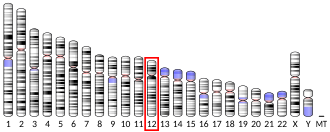
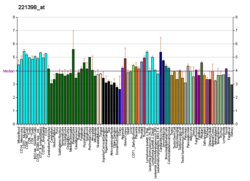
This gene product belongs to the family of candidate taste receptors that are members of the G-protein-coupled receptor superfamily. These proteins are specifically expressed in the taste receptor cells of the tongue and palate epithelia. They are organized in the genome in clusters and are genetically linked to loci that influence bitter perception in mice and humans. In functional expression studies, they respond to bitter tastants. This gene maps to the taste receptor gene cluster on chromosome 12p13.5
Antagonists
See also
See also
References
References
- ENSG00000121314, ENSG00000272712 GRCh38: Ensembl release 89: ENSG00000277316, ENSG00000121314, ENSG00000272712 – Ensembl, May 2017
- "Human PubMed Reference:". National Center for Biotechnology Information, U.S. National Library of Medicine.
- Adler E, Hoon MA, Mueller KL, Chandrashekar J, Ryba NJ, Zuker CS (Apr 2000). "A novel family of mammalian taste receptors". Cell. 100 (6): 693–702. doi:10.1016/S0092-8674(00)80705-9. PMID 10761934. S2CID 14604586.
- Matsunami H, Montmayeur JP, Buck LB (Apr 2000). "A family of candidate taste receptors in human and mouse". Nature. 404 (6778): 601–4. Bibcode:2000Natur.404..601M. doi:10.1038/35007072. PMID 10766242. S2CID 4336913.
- "Entrez Gene: TAS2R8 taste receptor, type 2, member 8".
Further reading
Further reading
- Kinnamon SC (2000). "A plethora of taste receptors". Neuron. 25 (3): 507–10. doi:10.1016/S0896-6273(00)81054-5. PMID 10774719.
- Margolskee RF (2002). "Molecular mechanisms of bitter and sweet taste transduction". J. Biol. Chem. 277 (1): 1–4. doi:10.1074/jbc.R100054200. PMID 11696554.
- Montmayeur JP, Matsunami H (2002). "Receptors for bitter and sweet taste". Curr. Opin. Neurobiol. 12 (4): 366–71. doi:10.1016/S0959-4388(02)00345-8. PMID 12139982. S2CID 37807140.
- Chandrashekar J, Mueller KL, Hoon MA, Adler E, Feng L, Guo W, Zuker CS, Ryba NJ (2000). "T2Rs function as bitter taste receptors". Cell. 100 (6): 703–11. doi:10.1016/S0092-8674(00)80706-0. PMID 10761935. S2CID 7293493.
- Zhang Y, Hoon MA, Chandrashekar J, Mueller KL, Cook B, Wu D, Zuker CS, Ryba NJ (2003). "Coding of sweet, bitter, and umami tastes: different receptor cells sharing similar signaling pathways". Cell. 112 (3): 293–301. doi:10.1016/S0092-8674(03)00071-0. PMID 12581520. S2CID 718601.
- Fischer A, Gilad Y, Man O, Pääbo S (2005). "Evolution of bitter taste receptors in humans and apes". Mol. Biol. Evol. 22 (3): 432–6. doi:10.1093/molbev/msi027. PMID 15496549.
- Go Y, Satta Y, Takenaka O, Takahata N (2006). "Lineage-Specific Loss of Function of Bitter Taste Receptor Genes in Humans and Nonhuman Primates". Genetics. 170 (1): 313–26. doi:10.1534/genetics.104.037523. PMC 1449719. PMID 15744053.
This article incorporates text from the United States National Library of Medicine, which is in the public domain.