| TAS2R1 | |||||||||||||||||||||||||||||||||||||||||||||||||||
|---|---|---|---|---|---|---|---|---|---|---|---|---|---|---|---|---|---|---|---|---|---|---|---|---|---|---|---|---|---|---|---|---|---|---|---|---|---|---|---|---|---|---|---|---|---|---|---|---|---|---|---|
| Identifiers | |||||||||||||||||||||||||||||||||||||||||||||||||||
| Aliases | TAS2R1, T2R1, TRB7, taste 2 receptor member 1 | ||||||||||||||||||||||||||||||||||||||||||||||||||
| External IDs | OMIM: 604796; MGI: 2681253; HomoloGene: 10480; GeneCards: TAS2R1; OMA:TAS2R1 - orthologs | ||||||||||||||||||||||||||||||||||||||||||||||||||
| |||||||||||||||||||||||||||||||||||||||||||||||||||
| |||||||||||||||||||||||||||||||||||||||||||||||||||
| |||||||||||||||||||||||||||||||||||||||||||||||||||
| |||||||||||||||||||||||||||||||||||||||||||||||||||
| |||||||||||||||||||||||||||||||||||||||||||||||||||
| Wikidata | |||||||||||||||||||||||||||||||||||||||||||||||||||
| |||||||||||||||||||||||||||||||||||||||||||||||||||
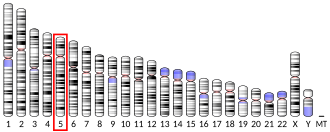



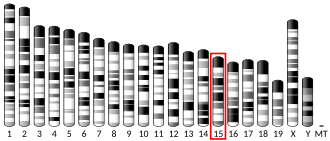

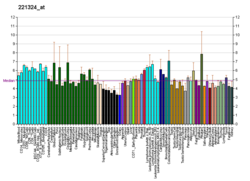
Taste receptor type 2 member 1 (TAS2R1/T2R1) is a protein that in humans is encoded by the TAS2R1 gene.567 It belongs to the G protein-coupled receptor (GPCR) family and is related to class A-like GPCRs, they contain 7 transmembrane helix bundles and short N-terminus loop.8 Furthermore, TAS2R1 is member of the 25 known human bitter taste receptors, which enable the perception of bitter taste in the mouth cavity. Increasing evidence indicates a functional role of TAS2Rs in extra-oral tissues.9
Expression and function
Extra-oral roles of TAS2Rs
Bitter taste receptors are expressed in taste receptor cells, which organized into taste buds on the papillae of the tongue and palate epithelium.
In addition, TAS2Rs were found to be expressed in extra-oral tissues, e.g. brain, lungs, gastrointestinal tract, etc.9 So far, less is known about their function however, for example it was shown that:
- TAS2Rs mediate relaxation of airway smooth muscles.10
- TAS2R43 is involved in secretion of gastric acid in the stomach.11
Extra-oral roles of TAS2R1
- TAS2R1, TAS2R4, TAS2R10, TAS2R38 and TAS2R49 were found to be down-regulated in breast cancer cells12.
- TAS2R1, causes vasoconstrictor responses in the pulmonary circuit and relaxation in the airways13.
Structure of TAS2R1 receptor
Based on a recent homology model from BitterDB1415 several conserved motifs, which are counterparts to Class A GPCRs8 were found:
- Transmembrane helix 1: N1.50xxI1.53
- Transmembrane helix 2: L2.46xxxR2.50
- Transmembrane helix 3: F3.49Y3.50xxK3.53
- Transmembrane helix 5: P5.50
- Transmembrane helix 6: F6.44xxxY6.46
- Transmembrane helix 7: H7.49S7.50xxL7.53
Numbering is according to the Balleros-Weinstein system16
Unlike in Class A GPCRs, in transmembrane helix 4 no DRY17 motif was found as well as position 6.50 is not conserved.
Gene
This gene encodes a member of a family of candidate taste receptors that are members of the G protein-coupled receptor superfamily and that are specifically expressed by taste receptor cells of the tongue and palate epithelia. This intronless taste receptor gene encodes a 7-transmembrane receptor protein, functioning as a bitter taste receptor.
SNPs
In T2R1 two SNPs are known in R111H and R206W (dbSNP).
Transcription factors
So far, AML1a, AP-1, AREB6, FOXL1, IRF-7A, Lmo2, NF-E2, NF-E2 p45 were found as the top transcription factor binding sites by QIAGEN in the TAS2R1 gene promoter.
Mutagenesis data
Several mutations have been shown to influence binding of a ligand to TAS2R1 (based on BitterDB):
| Receptor region | BW number | Residue | Reference |
| TM1 | 1.5 | N24 | 1819 |
| TM1 | 1.53 | I27 | 1819 |
| TM2 | 2.5 | R55 | 1819 |
| TM2 | 2.56 | F61 | 19 |
| TM2 | 2.61 | N66 | 2018819 |
| ECL1 | E74 | 20 | |
| TM3 | 3.32 | L85 | 821 |
| TM3 | 3.33 | L86 | 821 |
| TM3 | 3.36 | N89 | 81918 |
| TM3 | 3.37 | E90 | 821 |
| TM3 | 3.41 | W94 | 1819 |
| TM3 | 3.46 | L99 | 1819 |
| TM5 | 5.46 | E182 | 821 |
| TM5 | 5.61 | L197 | 1819 |
| TM5 | 5.64 | S200 | 1819 |
| TM5 | 5.65 | L201 | 1819 |
| TM7 | 7.39 | I263 | 821 |
| TM7 | 7.49 | H273 | 1819 |
| TM7 | 7.53 | L277 | 1819 |
| TM7 | 7.54 | I278 | 1819 |
Ligands
Up to now, 39 ligands for T2R1 were identified in BitterDB, among them L-amino acids, peptides, humulones, small molecules etc.22
References
References
- GRCh38: Ensembl release 89: ENSG00000169777 – Ensembl, May 2017
- GRCm38: Ensembl release 89: ENSMUSG00000045267 – Ensembl, May 2017
- "Human PubMed Reference:". National Center for Biotechnology Information, U.S. National Library of Medicine.
- "Mouse PubMed Reference:". National Center for Biotechnology Information, U.S. National Library of Medicine.
- Adler E, Hoon MA, Mueller KL, Chandrashekar J, Ryba NJ, Zuker CS (March 2000). "A novel family of mammalian taste receptors". Cell. 100 (6): 693–702. doi:10.1016/S0092-8674(00)80705-9. PMID 10761934. S2CID 14604586.
- Matsunami H, Montmayeur JP, Buck LB (April 2000). "A family of candidate taste receptors in human and mouse". Nature. 404 (6778): 601–604. Bibcode:2000Natur.404..601M. doi:10.1038/35007072. PMID 10766242. S2CID 4336913.
- "Entrez Gene: TAS2R1 taste receptor, type 2, member 1".
- Di Pizio A, Levit A, Slutzki M, Behrens M, Karaman R, Niv MY (2016). "Comparing Class a GPCRS to bitter taste receptors". Comparing Class A GPCRs to bitter taste receptors: Structural motifs, ligand interactions and agonist-to-antagonist ratios. Methods in Cell Biology. Vol. 132. Elsevier. pp. 401–427. doi:10.1016/bs.mcb.2015.10.005. ISBN 978-0-12-803595-5. PMID 26928553.
- Lu P, Zhang CH, Lifshitz LM, ZhuGe R (February 2017). "Extraoral bitter taste receptors in health and disease". The Journal of General Physiology. 149 (2): 181–197. doi:10.1085/jgp.201611637. PMC 5299619. PMID 28053191.
- Deshpande DA, Wang WC, McIlmoyle EL, Robinett KS, Schillinger RM, An SS, et al. (November 2010). "Bitter taste receptors on airway smooth muscle bronchodilate by localized calcium signaling and reverse obstruction". Nature Medicine. 16 (11): 1299–1304. doi:10.1038/nm.2237. PMC 3066567. PMID 20972434.
- Liszt KI, Ley JP, Lieder B, Behrens M, Stöger V, Reiner A, et al. (July 2017). "Caffeine induces gastric acid secretion via bitter taste signaling in gastric parietal cells". Proceedings of the National Academy of Sciences of the United States of America. 114 (30): E6260–E6269. Bibcode:2017PNAS..114E6260L. doi:10.1073/pnas.1703728114. PMC 5544304. PMID 28696284.
- Singh N, Chakraborty R, Bhullar RP, Chelikani P (April 2014). "Differential expression of bitter taste receptors in non-cancerous breast epithelial and breast cancer cells". Biochemical and Biophysical Research Communications. 446 (2): 499–503. doi:10.1016/j.bbrc.2014.02.140. PMID 24613843.
- Upadhyaya JD, Singh N, Sikarwar AS, Chakraborty R, Pydi SP, Bhullar RP, et al. (2014-10-23). "Dextromethorphan mediated bitter taste receptor activation in the pulmonary circuit causes vasoconstriction". PLOS ONE. 9 (10) e110373. Bibcode:2014PLoSO...9k0373U. doi:10.1371/journal.pone.0110373. PMC 4207743. PMID 25340739.
- Wiener A, Shudler M, Levit A, Niv MY (January 2012). "BitterDB: a database of bitter compounds". Nucleic Acids Research. 40 (Database issue): D413–D419. doi:10.1093/nar/gkr755. PMC 3245057. PMID 21940398.
- Dagan-Wiener A, Di Pizio A, Nissim I, Bahia MS, Dubovski N, Margulis E, et al. (January 2019). "BitterDB: taste ligands and receptors database in 2019". Nucleic Acids Research. 47 (D1): D1179–D1185. doi:10.1093/nar/gky974. PMC 6323989. PMID 30357384.
- Ballesteros JA, Weinstein H (1995). "Integrated methods for the construction of three-dimensional models and computational probing of structure-function relations in G protein-coupled receptors". Receptor Molecular Biology. Methods in Neurosciences. Vol. 25. Elsevier. pp. 366–428. doi:10.1016/s1043-9471(05)80049-7. ISBN 978-0-12-185295-5.
- Rovati GE, Capra V, Neubig RR (April 2007). "The highly conserved DRY motif of class A G protein-coupled receptors: beyond the ground state". Molecular Pharmacology. 71 (4): 959–964. doi:10.1124/mol.106.029470. PMID 17192495. S2CID 15536186.
- Sandal M, Behrens M, Brockhoff A, Musiani F, Giorgetti A, Carloni P, et al. (September 2015). "Evidence for a Transient Additional Ligand Binding Site in the TAS2R46 Bitter Taste Receptor". Journal of Chemical Theory and Computation. 11 (9): 4439–4449. doi:10.1021/acs.jctc.5b00472. PMID 26575934.
- Singh N, Pydi SP, Upadhyaya J, Chelikani P (October 2011). "Structural basis of activation of bitter taste receptor T2R1 and comparison with Class A G-protein-coupled receptors (GPCRs)". The Journal of Biological Chemistry. 286 (41): 36032–36041. doi:10.1074/jbc.M111.246983. PMC 3195589. PMID 21852241.
- Fierro F, Suku E, Alfonso-Prieto M, Giorgetti A, Cichon S, Carloni P (2017). "Agonist Binding to Chemosensory Receptors: A Systematic Bioinformatics Analysis". Frontiers in Molecular Biosciences. 4: 63. doi:10.3389/fmolb.2017.00063. PMC 5592726. PMID 28932739.
- Dai W, You Z, Zhou H, Zhang J, Hu Y (June 2011). "Structure-function relationships of the human bitter taste receptor hTAS2R1: insights from molecular modeling studies". Journal of Receptor and Signal Transduction Research. 31 (3): 229–40. doi:10.3109/10799893.2011.578141. PMID 21619450.
- "hTAS2R1". BitterDB. The Hebrew University of Jerusalem.
Further reading
Further reading
- Kinnamon SC (March 2000). "A plethora of taste receptors". Neuron. 25 (3): 507–510. doi:10.1016/S0896-6273(00)81054-5. PMID 10774719.
- Margolskee RF (January 2002). "Molecular mechanisms of bitter and sweet taste transduction". The Journal of Biological Chemistry. 277 (1): 1–4. doi:10.1074/jbc.R100054200. PMID 11696554.
- Montmayeur JP, Matsunami H (August 2002). "Receptors for bitter and sweet taste". Current Opinion in Neurobiology. 12 (4): 366–371. doi:10.1016/S0959-4388(02)00345-8. PMID 12139982. S2CID 37807140.
- Chandrashekar J, Mueller KL, Hoon MA, Adler E, Feng L, Guo W, et al. (March 2000). "T2Rs function as bitter taste receptors". Cell. 100 (6): 703–711. doi:10.1016/S0092-8674(00)80706-0. PMID 10761935. S2CID 7293493.
- Firestein S (April 2000). "The good taste of genomics". Nature. 404 (6778): 552–553. doi:10.1038/35007167. PMID 10766221. S2CID 35741332.
- Zhang Y, Hoon MA, Chandrashekar J, Mueller KL, Cook B, Wu D, et al. (February 2003). "Coding of sweet, bitter, and umami tastes: different receptor cells sharing similar signaling pathways". Cell. 112 (3): 293–301. doi:10.1016/S0092-8674(03)00071-0. PMID 12581520. S2CID 718601.
- Fischer A, Gilad Y, Man O, Pääbo S (March 2005). "Evolution of bitter taste receptors in humans and apes". Molecular Biology and Evolution. 22 (3): 432–436. doi:10.1093/molbev/msi027. PMID 15496549.
- Go Y, Satta Y, Takenaka O, Takahata N (May 2005). "Lineage-specific loss of function of bitter taste receptor genes in humans and nonhuman primates". Genetics. 170 (1): 313–326. doi:10.1534/genetics.104.037523. PMC 1449719. PMID 15744053.
This article incorporates text from the United States National Library of Medicine, which is in the public domain.