| Sunella | |
|---|---|

| |
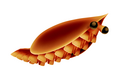
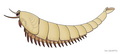
| CT scan of fossil specimen of Sunella dimorphismus | |

| |
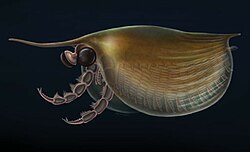
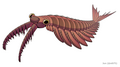
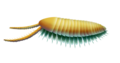
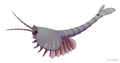
| Life restoration of Sunella dimorphismus | |
Scientific classification 
| |
| Kingdom: | Animalia |
| Clade: | Panarthropoda |
| Phylum: | Arthropoda |
| Clade: | Deuteropoda |
| Family: | †Sunellidae |
| Genus: | †Sunella Huo, 1965 364 |
| Type species | |
| †Sunella grandis | |
| Species | |
| Synonyms | |
Sunella is an extinct genus of bivalved arthropod known from the Cambrian of China. Named after paleontologist and geologist Sun Yunzhu, it was described by Huo Shicheng in 1965. It is the type genus of the family Sunellidae. The type species is S. grandis.6
Classification
In the original description (Huo, 1965), Sunella was considered to be an ostracod.763 Most later studies have identified it as an arthropod of uncertain affinities,3184 though some studies historically considered it a bradoriid during the 1980s.7910111213 Sunella has often been suggested to be closely related to Isoxys, a genus of Cambrian arthropods with a superficially similar bivalved carapace, though true understanding of Sunella's affinities was for a long time hampered by poor knowledge of its soft tissue. A 2026 description of soft tissue remains of Sunellla suggested that Sunella represented one of the earliest diverging members of the arthropod clade Deuteropoda, and that while morphologically similar, Isoxys was more closely related to living arthropods than to Sunella.14
Species
Sunella grandis
Sunella grandis (Huo, 1965) is the type species of Sunella. It is known from the Chengjiang Biota of Yunnan, China.31318 Probable sexual dimorphism has been observed.31
Synonyms
Sunella nanchengensis
Sunella nanchengensis (Huo, 1965) is a probable sexual dimorph of S. grandis and is generally considered a synonym of S. grandis.31 It was named after Nancheng, the previous romanization of Nanzheng, which is the type locality of the species.
Sunella shensiella
Sunella shensiella (Huo,1965) is the only species of Sunella apart from S. grandis that is not considered a synonym of S. grandis or has been reassigned to a different genus.34 Probable sexual dimorphism has been observed.3 It is one of the species where soft anatomy has been preserved. Known from the Helinpu Formation of southwest China.31
Sunella dimorphismus
Sunella dimorphismus (Liu et al, 2026) has preserved anatomy including trunk and appendages. Known from the Chengjiang Biota.14
Tuzoia? (Sunella) parva
One former species is Sunella parva (Melnikova, 1988),1319 which may be the larval form of a new species of Tuzoia,20194 which was rejected from Sunella by Melnikova 19981319 and may need to be assigned to its own genus.1332019 It has also been suggested to be a bradoriid (Melnikova, 1998)13
Synonyms
Sunellidae, which Sunella belongs to originally included two other genera, Chiella (Huo, 1965) and Luella (Huo, 1965),6 but Chiella was later considered a separate species within Sunella,3 but after Huo & Shu, 1985 Chiella was considered a junior synonym of Sunella3 and after Zhang & Shu, 2007 Luella was considered a probable sexual dimorph of Sunella.391
Former species
Caudicaella (Sunella) bispinata
A species that previously belonged to Sunella, S. bispinata,2122 was moved to a new genus, Caudicaella (Sun et al. 2021)4 as Caudicaella bispinata (Cui and Huo, 1990).421 Synonyms include Isoxys bispinata (Zhang et al., 2018) (not to be confused with Isoxys bispinatus)8 Isoxys sp. (Sun et al. 2021) (for the specimens from the Heatherdale shale, not the Shuijingtuo formation)84
Distribution
Sunella fossils have been found in the Chengjiang biota (exact locality cannot be determined;3 dated to no older than 518 Ma),2318 the Shuijingtuo formation (dated to around 526.5 Ma),242119425 the Qingjiang biota (dated to ~518 ma),26 the Niutitang formation ( generally Meishucunian (Cambrian Stage 2) to Nangaoan (Cambrian Stage 3) but may be up to as old as the Fortunian in some sections)25 and the Guojiaba formation (tentatively assigned to Cambrian Stage 3),327 all of which are in China.34 Similar fossils have been found at other formations in China but they are relatively uncommon and poorly studied and therefore cannot be confidently assigned to this genus or even Sunellidae.3 The former species Caudicaella bispinata is also known from the Heatherdale shale in Australia.18
Preservation
Usually the only part of Sunella that is preserved is the carapace, but rarely (only twenty-two times in Sunella cf. shensiella and only six in the related Combinivalvula chenjiangensis) soft tissue is also preserved. When this occurs, the carapace usually adopts a "butterfly" position, possibly due to the decay of the adductor muscles that hold it together.3 Only the soft parts of Sunella cf. shensiella and the related Combinivalvula chenjiangensis (Hou, 1987)282930 have been preserved.31
Morphology
Carapace
Sunella grandis had a bivalved31 elongate roughly semicircular carapace with an anterodorsal (on the upper front part of the carapace) sulcus (groove) and short cardinal spines (spines at the tip of the midline on the front and back edge of the carapace),28 a typical bodyplan for a sunellid,8413 while S. cf. shensiella had a more oval shaped carapace, shorter cardinal spines and an anterodorsal sulcus pointing at a slightly lower angle.34 Both species have shorter cardinal spines than Caudicaella bispinata also Caudicaella bispinata is more similar to Isoxys than other sunellids which led to its assignment to Isoxys in Zhang et al. 2018.132 Jinningella differs from Sunella by the presence of anterodorsal nodes.3 Probable Sexual dimorphism has been recorded in both species.314
The carapace of S. grandis is typically 6.5-8.5 mm.314 The largest specimen is over 15 mm (1.5 cm)(the largest recorded for a sunellid), while Combinivalvula and Jinningella reached roughly 10 mm (1 cm) and Caudicaella typically reached 10–12 mm (1-1.2 cm) due to its long cardinal spines compared to other sunellids.418 In comparison to other bivalved arthropods of the Cambrian, sunellids where medium-sized, larger than the bradoriids, which rarely reached above 10 mm (1 cm) and smaller than the Isoxyida which where often at least a few centimeters long with the exception of the dwarf I. carbonelli which grew to 11 mm (1.1 cm) and Surusicaris which grew to 14 mm (1.4 cm).133
Distinguishing from similar arthropods

Sunella can be distinguished from Isoxys by the possession of an anterodorsal sulcus, shorter cardinal spines and different carapace shapes.31 Sunella be distinguished from the isoxyid Surusicaris by the lack of an anterodorsal sulcus and the lack of cardinal spines. Bradoriids, which share the possession of an anterodorsal sulcus (leading to the former assignment of Sunella to Bradoriida)179101112133 can be distinguished from Sunella by the possession of cardinal spines.31


Soft tissue anatomy


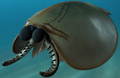
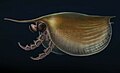
The soft part anatomy of Sunella was previously poorly known, but was thoroughly described for S. dimorphismus in a 2026 study. This study showed that S. dimorphismus had a pair of stalked eyes as well as a central medial eye attached to the head, to which was also attached a pair of upward and inward curling raptorial appendages similar to those of Isoxys. The raptorial appendages were composed of twelve segments, with the 9 segments furthest from the body each bearing a pair of upward-facing (endite) spines with the last segment bearing a terminal spine. Beneath the bivalved carapace was a segmented trunk made up of 8 segments, each of which likely had attached one pair of biramous (two-branched) limbs, composed of a stenopodous (stout) endopod (lower leg-like branch) with at least 7 segments (podomeres) and flap-like exopods (upper branches). This was followed by a posterior abdomen region with three segments each of which bore limbs only composed of the flap-like exopods. The body ended with a terminal paddle-shaped telson.14
Ecology
The grasping raptorial appendages of Sunella have led to suggestions that it was an active and mobile predator of small-bodied prey, using its large eyes to detect prey, with its flap-like exopods serving to propel it through the water, with the endopods possibly sometimes used for walking along the seafloor. Due to its small size, Sunella was likely a relatively low level member of the food chain and predated upon by larger organisms.14
Phylogeny
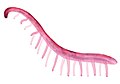
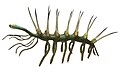
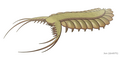
Cladogram after Liu et al; 2026:14
| Panarthropoda |
| ||||||||||||||||||||||||||||||||||||||||||||||||||||||||||||||||||||||||




References
References
- Collantes, Luis; Pates, Stephen (2025). "Isoxys carbonelli and the palaeoenvironmental disparity of Isoxys during Cambrian Stage 3". Historical Biology: 1–9. doi:10.1080/08912963.2025.2529395. ISSN 0891-2963.
- Zhao, M.-S.; Wang, Y.; Tian, J. -C.; Lei, L. -F. (October 2013). "A sedimentary environment analysis of black shales based on fossil assemblage characteristics:A case study of cambrian niutitang formation in Changyang area, western Hubei". Geology in China. 40 (5): 1484–1492 – via Researchgate.
- Zhang, Xingliang; Shu, Degan (2007). "Soft anatomy of sunellid arthropods from the Chengjiang Lagerstutte, Lower Cambrian of southwest China". Journal of Paleontology. 81 (6): 1412–1422. Bibcode:2007JPal...81.1412Z. doi:10.1666/06-031R.1.
- Sun, Ao; Cong, Liu; Ma, Jiaxin; Fu, Dongjing. "Taxonomy and ontogeny of bivalved arthropods from the lower member of the Shuijingtuo Formation, Series 2 and Stage 3, Eastern Three Georges Area, South China". Acta Palaeontologica Sinica. doi:10.19800/j.cnki.aps.2021019.
- "Niutitang Formation". chinalex.geolex.org. Retrieved 2025-09-27.
- Huo, Shicheng (1965). 陕西、云南早寒武世的古介形虫(续志) [Additional notes on Lower Cambrian Archaeostraca from Shensi and Yunnan]. Acta Palaeontologica Sinica (in Chinese (China) and English). 13 (2): 291–307. doi:10.19800/j.cnki.aps.1965.02.005.
- Xian-Guang, Hou (January 1999). "New rare bivalved arthropods from the Lower Cambrian Chengjiang fauna, Yunnan, China". Journal of Paleontology. 73 (1): 102–116. Bibcode:1999JPal...73..102X. doi:10.1017/S002233600002758X. ISSN 0022-3360. JSTOR 1306748 – via JSTOR.
- Chen, Fei-Yang; Betts, Marissa J.; Zhang, Zhi-Liang; Brock, Glenn A. (2025-06-01). "The bivalved arthropod Caudicaella aff. bispinata from the Heatherdale Shale (Cambrian Stage 3), South Australia". Palaeoworld. 34 (3): 100882. Bibcode:2025Palae..3400882C. doi:10.1016/j.palwor.2024.09.006. ISSN 1871-174X.
- Huo, Shicheng; Shu, Degan (January 1985). Cambrian bradoriids of South China (in Chinese). China: Northwest University Press.
- Jones, P.J.; McKenzie, K.G. (1980-01-01). "Queensland Middle Cambrian Bradoriida (Crustacea): new taxa, palaeobiogeography and biological affinities". Alcheringa: An Australasian Journal of Palaeontology. 4 (3): 203–225. Bibcode:1980Alch....4..203J. doi:10.1080/03115518008618932. ISSN 0311-5518.
- Williams, Mark; Siveter, David J.; Popov, Leonid E.; Vannier, Jean M. C. (2007-05-14). "Biogeography and affinities of the bradoriid arthropods: Cosmopolitan microbenthos of the Cambrian seas". Palaeogeography, Palaeoclimatology, Palaeoecology. 248 (1): 202–232. Bibcode:2007PPP...248..202W. doi:10.1016/j.palaeo.2006.12.004. ISSN 0031-0182.
- Melnikova, L. M. (1988). "Some Bradoriids (Crustacea) from the Botomian stage of Eastern Transbaikalia". Paleontologicheskii Zhurnal.
- L.m, Melnikova (1998). "REVISION OF SOME CAMBRIAN BRADORIIDS (CRUSTACEA) FROM THE SIBERIAN PLATFORM". Paleontologicheskii Zhurnal. ISSN 0031-031X.
- Liu, Cong; Pates, Stephen; Zhang, Mingjing; Wu, Yu; Ma, Jiaxin; Fu, Dongjing; Zhang, Xingliang (2026-03-21). "3D morphology of the Cambrian bivalved arthropod Sunella informs about head segmentation, arthrodization, and arthropodization". Communications Biology. doi:10.1038/s42003-026-09909-z. ISSN 2399-3642.
- Paterson, John R.; García-Bellido, Diego C.; Edgecombe, Gregory D. (2012). "New Artiopodan Arthropods from the Early Cambrian Emu Bay Shale Konservat-Lagerstätte of South Australia". Journal of Paleontology. 86 (2): 340–357. Bibcode:2012JPal...86..340P. doi:10.1666/11-077.1. ISSN 0022-3360. JSTOR 41480196.
- "PBDB". paleobiodb.org. Archived from the original on 2022-02-03. Retrieved 2025-10-11.
- "PBDB Taxon". paleobiodb.org. Archived from the original on 2025-02-07. Retrieved 2025-10-11.
- "Chengjiang Maotianshan Shales". www.fossilmuseum.net. Archived from the original on 9 March 2021. Retrieved 24 September 2025.
- Ma, Jiaxin; Lin, Weiliang; Liu, Cong; Sun, Ao; Wu, Yu; Wu, Yuheng; Fu, Dongjing (6 July 2021). "A new bivalved arthropod from the Cambrian (Stage 3) Qingjiang biota expands the palaeogeographical distribution and increases the diversity of Tuzoiidae". Journal of the Geological Society. 179 (1) jgs2020–229. doi:10.1144/jgs2020-229.
- Izquierdo-López, Alejandro; Caron, Jean-Bernard (December 2022). "The problematic Cambrian arthropod Tuzoia and the origin of mandibulates revisited". Royal Society Open Science. 9 (12) 220933. Bibcode:2022RSOS....920933I. doi:10.1098/rsos.220933. ISSN 2054-5703. PMC 9727825. PMID 36483757.
- Cui, Zhilin; Huo, Shicheng (1990). "New discoveries of Lower Cambrian crustacean fossils from western Hubei". Acta Palaeontologica Sinica (in Chinese and English). 29 (3): 321–330.
- Vannier, Jean (2009-03-01). "L'Explosion cambrienne ou l'émergence des écosystèmes modernes". Comptes Rendus Palevol. 8 (2): 133–154. Bibcode:2009CRPal...8..133V. doi:10.1016/j.crpv.2008.10.006. ISSN 1631-0683.
- Yang, Chuan; Li, Xian-Hua; Zhu, Maoyan; Condon, Daniel J.; Chen, Junyuan (2018-03-15). "Geochronological constraint on the Cambrian Chengjiang biota, South China". Journal of the Geological Society. 175 (4): 659–666. Bibcode:2018JGSoc.175..659Y. doi:10.1144/jgs2017-103. ISSN 0016-7649. Archived from the original on 2025-04-07. Retrieved 2025-09-14.
- Yang, Chuan; Bowyer, Fred T.; Condon, Daniel J.; Li, Xian-Hua; Zhu, Maoyan (2023-04-15). "New U-Pb age from the Shuijingtuo Formation (Yangtze Gorges area) and its implications for the Cambrian timescale". Palaeogeography, Palaeoclimatology, Palaeoecology. 616 111477. Bibcode:2023PPP...61611477Y. doi:10.1016/j.palaeo.2023.111477. ISSN 0031-0182.
- Zhao, Bingshuang; Long, Xiaoping; Chang, Chao (2024-03-01). "Early Cambrian sedimentary rocks in South China: A link between oceanic oxygenation and biological explosion". Earth-Science Reviews. 250 104708. Bibcode:2024ESRv..25004708Z. doi:10.1016/j.earscirev.2024.104708. ISSN 0012-8252.
- Fu, Dongjing; Tong, Guanghui; Dai, Tao; Liu, Wei; Yang, Yuning; Zhang, Yuan; Cui, Linhao; Li, Luoyang; Yun, Hao; Wu, Yu; Sun, Ao; Liu, Cong; Pei, Wenrui; Gaines, Robert R.; Zhang, Xingliang (2019-03-22). "The Qingjiang biota—A Burgess Shale–type fossil Lagerstätte from the early Cambrian of South China". Science. 363 (6433): 1338–1342. Bibcode:2019Sci...363.1338F. doi:10.1126/science.aau8800. PMID 30898931.
- Tan, Yineng; Xiao, Xianming; Gao, Ping; Meng, Guangming; Wang, Qiang; Liu, Wei; Feng, Yue (2025-06-15). "Sedimentary Environment and Organic Matter Enrichment Mechanism of the Lower Cambrian Shale in the Northern Margin of the Yangtze Platform". Journal of Marine Science and Engineering. 13 (6): 1175. Bibcode:2025JMSE...13.1175T. doi:10.3390/jmse13061175.
- Hou, Xian-guang (1987). "EARLY CAMBRIAN LARGE BIVALVED ARTHROPODS FROM CHENGJIANG, EASTERN YUNNAN". Acta Palaeontologica Sinica. 26 (3): 272–285. Archived from the original on 2023-03-02. Retrieved 2025-10-10.
- Fu, Dongjing; Zhang, Xingliang (2011). "A New Arthropod Jugatacaris Agilis N. Gen. N. Sp. from the Early Cambrian Chengjiang Biota, South China". Journal of Paleontology. 85 (3): 567–586. Bibcode:2011JPal...85..567F. doi:10.1666/09-173.1. ISSN 0022-3360. JSTOR 23020192.
- Williams, Mark; Siveter, David J.; Peel, John S. (1996). "Isoxys (Arthropoda) from the Early Cambrian Sirius Passet Lagerstätte, North Greenland". Journal of Paleontology. 70 (6): 947–954. Bibcode:1996JPal...70..947W. doi:10.1017/S0022336000038646. ISSN 0022-3360. JSTOR 1306499.
- Castle Jones, Jack; M. Jackquet, Sarah; Chen, Feiyang; J. Betts, Marissa; Zhang, Zhiliang; Anthony Hall, Philip; A. Brock, Glenn; Klaebae, Robert (April 2025). "A new integrated lower Cambrian chronostratigraphy for the Normanville Group, eastern Stansbury Basin, with definition of the oldest small shelly fossil zones in South Australia". Australasian Palaeontological Memoirs. 57: 465–489 – via Researchgate.
- Zhang, Lei; Chang, Shan; Khan, Maliha Zareen; Feng, Qinglai; Danelian, Taniel; Clausen, Sébastien; Tribovillard, Nicolas; Steiner, Michael (2018-04-15). "The link between metazoan diversity and paleo-oxygenation in the early Cambrian: An integrated palaeontological and geochemical record from the eastern Three Gorges Region of South China". Palaeogeography, Palaeoclimatology, Palaeoecology. 495: 24–41. Bibcode:2018PPP...495...24Z. doi:10.1016/j.palaeo.2017.12.007. ISSN 0031-0182.
- Aria, Cédric; Caron, Jean-Bernard (2015). "Cephalic and limb anatomy of a new Isoxyid from the Burgess Shale and the role of "stem bivalved arthropods" in the disparity of the frontalmost appendage". PLOS ONE. 10 (6) e0124979. Bibcode:2015PLoSO..1024979A. doi:10.1371/journal.pone.0124979. ISSN 1932-6203. PMC 4454494. PMID 26038846.