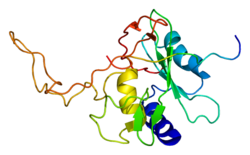
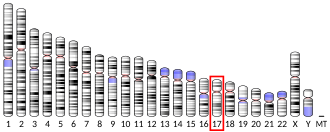






Suppressor of cytokine signaling 3 (SOCS3 or SOCS-3) is a protein that in humans is encoded by the SOCS3 gene.56 This gene encodes a member of the STAT-induced STAT inhibitor (SSI), also known as suppressor of cytokine signaling (SOCS), family. SSI family members are cytokine-inducible negative regulators of cytokine signaling.
SOCS3 is a conserved gene, found in across the animal kingdom, including Drosophila,7 chickens,8 and crocodiles.9
Function
The expression of SOCS3 gene is induced by various cytokines, including IL6, IL10, and interferon (IFN)-gamma.
For signaling of IL-6, Epo, GCSF and Leptin, binding of SOCS3 to the respective cytokine receptor has been found to be crucial for the inhibitory function of SOCS3.
Overexpression of SOCS3 inhibits insulin signaling in adipose tissue and the liver, but not in muscle.10 But deletion of SOCS3 in the skeletal muscle of mice protects against obesity-related insulin resistance.10
SOCS3 contributes to both leptin resistance and insulin resistance as a result of increased ceramide synthesis.11 For that reason, studies have shown that removal of the SOCS gene prevents against insulin resistance in obesity10
Studies of the mouse counterpart of this gene suggested the roles of this gene in the negative regulation of fetal liver hematopoiesis, and placental development.12
The SOCS3 protein can bind to JAK2 kinase, and inhibits the activity of JAK2 kinase.
Interactions
SOCS3 has been shown to interact with:
- Erythropoietin receptor,1314
- Glycoprotein 130,15
- Insulin-like growth factor 1 receptor,16
- Janus kinase 2,61317
- PTPN11,15 and
- RAS p21 protein activator 1.18
Regulation
There is some evidence that the expression of SOCS3 is regulated by the microRNA miR-203,1920 miR-409-3p and miR-1896.21
References
References
- GRCh38: Ensembl release 89: ENSG00000184557 – Ensembl, May 2017
- GRCm38: Ensembl release 89: ENSMUSG00000053113 – Ensembl, May 2017
- "Human PubMed Reference:". National Center for Biotechnology Information, U.S. National Library of Medicine.
- "Mouse PubMed Reference:". National Center for Biotechnology Information, U.S. National Library of Medicine.
- Minamoto S, Ikegame K, Ueno K, Narazaki M, Naka T, Yamamoto H, et al. (September 1997). "Cloning and functional analysis of new members of STAT induced STAT inhibitor (SSI) family: SSI-2 and SSI-3". Biochemical and Biophysical Research Communications. 237 (1): 79–83. doi:10.1006/bbrc.1997.7080. PMID 9266833.
- Masuhara M, Sakamoto H, Matsumoto A, Suzuki R, Yasukawa H, Mitsui K, et al. (November 1997). "Cloning and characterization of novel CIS family genes". Biochemical and Biophysical Research Communications. 239 (2): 439–446. doi:10.1006/bbrc.1997.7484. PMID 9344848.
- Stec W, Vidal O, Zeidler MP (September 2013). "Drosophila SOCS36E negatively regulates JAK/STAT pathway signaling via two separable mechanisms". Molecular Biology of the Cell. 24 (18): 3000–3009. doi:10.1091/mbc.e13-05-0275. PMC 3771960. PMID 23885117.
- Nakanoh S, Agata K (August 2019). "Evolutionary view of pluripotency seen from early development of non-mammalian amniotes". Developmental Biology. 452 (2): 95–103. doi:10.1016/j.ydbio.2019.04.014. PMID 31029690.
- Xia T, Zhang L, Sun G, Yang X, Zhang H (2021). "Genomic evidence of adaptive evolution in the reptilian SOCS gene family". PeerJ. 9 e11677. doi:10.7717/peerj.11677. PMC 8236234. PMID 34221740.
- Jorgensen SB, O'Neill HM, Sylow L, Honeyman J, Hewitt KA, Palanivel R, et al. (2013). "Deletion of skeletal muscle SOCS3 prevents insulin resistance in obesity". Diabetes. 62 (1): 56–64. doi:10.2337/db12-0443. PMC 3526029. PMID 22961088.
- Yang G, Badeanlou L, Bielawski J, Roberts AJ, Hannun YA, Samad F (2009). "Central role of ceramide biosynthesis in body weight regulation, energy metabolism, and the metabolic syndrome". American Journal of Physiology. Endocrinology and Metabolism. 297 (1): E211–E224. doi:10.1152/ajpendo.91014.2008. PMC 2711669. PMID 19435851.
- "Entrez Gene: SOCS3 suppressor of cytokine signaling 3".
- Sasaki A, Yasukawa H, Shouda T, Kitamura T, Dikic I, Yoshimura A (September 2000). "CIS3/SOCS-3 suppresses erythropoietin (EPO) signaling by binding the EPO receptor and JAK2". The Journal of Biological Chemistry. 275 (38): 29338–29347. doi:10.1074/jbc.M003456200. PMID 10882725.
- Hörtner M, Nielsch U, Mayr LM, Heinrich PC, Haan S (May 2002). "A new high affinity binding site for suppressor of cytokine signaling-3 on the erythropoietin receptor". European Journal of Biochemistry. 269 (10): 2516–2526. doi:10.1046/j.1432-1033.2002.02916.x. PMID 12027890.
- Lehmann U, Schmitz J, Weissenbach M, Sobota RM, Hortner M, Friederichs K, et al. (January 2003). "SHP2 and SOCS3 contribute to Tyr-759-dependent attenuation of interleukin-6 signaling through gp130". The Journal of Biological Chemistry. 278 (1): 661–671. doi:10.1074/jbc.M210552200. PMID 12403768.
- Dey BR, Furlanetto RW, Nissley P (November 2000). "Suppressor of cytokine signaling (SOCS)-3 protein interacts with the insulin-like growth factor-I receptor". Biochemical and Biophysical Research Communications. 278 (1): 38–43. doi:10.1006/bbrc.2000.3762. PMID 11071852.
- Sasaki A, Yasukawa H, Suzuki A, Kamizono S, Syoda T, Kinjyo I, et al. (June 1999). "Cytokine-inducible SH2 protein-3 (CIS3/SOCS3) inhibits Janus tyrosine kinase by binding through the N-terminal kinase inhibitory region as well as SH2 domain". Genes to Cells. 4 (6): 339–351. doi:10.1046/j.1365-2443.1999.00263.x. PMID 10421843. S2CID 24871585.
- Cacalano NA, Sanden D, Johnston JA (May 2001). "Tyrosine-phosphorylated SOCS-3 inhibits STAT activation but binds to p120 RasGAP and activates Ras". Nature Cell Biology. 3 (5): 460–465. doi:10.1038/35074525. PMID 11331873. S2CID 19179597.
- Lena AM, Shalom-Feuerstein R, Rivetti di Val Cervo P, Aberdam D, Knight RA, Melino G, et al. (2008). "miR-203 represses 'stemness' by repressing DeltaNp63". Cell Death and Differentiation. 15 (7): 1187–1195. doi:10.1038/cdd.2008.69. PMID 18483491.
- Wei T, Orfanidis K, Xu N, Janson P, Ståhle M, Pivarcsi A, et al. (2010). "The expression of microRNA-203 during human skin morphogenesis". Experimental Dermatology. 19 (9): 854–856. doi:10.1111/j.1600-0625.2010.01118.x. hdl:10616/40436. PMID 20698882. S2CID 30026838.
- Liu X, Zhou F, Yang Y, Wang W, Niu L, Zuo D, et al. (January 2019). "MiR-409-3p and MiR-1896 co-operatively participate in IL-17-induced inflammatory cytokine production in astrocytes and pathogenesis of EAE mice via targeting SOCS3/STAT3 signaling". Glia. 67 (1): 101–112. doi:10.1002/glia.23530. PMID 30294880.
Further reading
Further reading
- Yasukawa H, Sasaki A, Yoshimura A (2000). "Negative regulation of cytokine signaling pathways". Annual Review of Immunology. 18: 143–164. doi:10.1146/annurev.immunol.18.1.143. PMID 10837055.
- Kile BT, Schulman BA, Alexander WS, Nicola NA, Martin HM, Hilton DJ (2002). "The SOCS box: a tale of destruction and degradation". Trends in Biochemical Sciences. 27 (5): 235–241. doi:10.1016/S0968-0004(02)02085-6. PMID 12076535.
- Zhang JG, Farley A, Nicholson SE, Willson TA, Zugaro LM, Simpson RJ, et al. (1999). "The conserved SOCS box motif in suppressors of cytokine signaling binds to elongins B and C and may couple bound proteins to proteasomal degradation". Proceedings of the National Academy of Sciences of the United States of America. 96 (5): 2071–2076. Bibcode:1999PNAS...96.2071Z. doi:10.1073/pnas.96.5.2071. PMC 26738. PMID 10051596.
- Sasaki A, Yasukawa H, Suzuki A, Kamizono S, Syoda T, Kinjyo I, et al. (1999). "Cytokine-inducible SH2 protein-3 (CIS3/SOCS3) inhibits Janus tyrosine kinase by binding through the N-terminal kinase inhibitory region as well as SH2 domain". Genes to Cells. 4 (6): 339–351. doi:10.1046/j.1365-2443.1999.00263.x. PMID 10421843. S2CID 24871585.
- Marine JC, McKay C, Wang D, Topham DJ, Parganas E, Nakajima H, et al. (1999). "SOCS3 is essential in the regulation of fetal liver erythropoiesis". Cell. 98 (5): 617–627. doi:10.1016/S0092-8674(00)80049-5. PMID 10490101. S2CID 15828925.
- Schmitz J, Weissenbach M, Haan S, Heinrich PC, Schaper F (2000). "SOCS3 exerts its inhibitory function on interleukin-6 signal transduction through the SHP2 recruitment site of gp130". The Journal of Biological Chemistry. 275 (17): 12848–12856. doi:10.1074/jbc.275.17.12848. PMID 10777583.
- Ram PA, Waxman DJ (2000). "SOCS/CIS protein inhibition of growth hormone-stimulated STAT5 signaling by multiple mechanisms". The Journal of Biological Chemistry. 274 (50): 35553–35561. doi:10.1074/jbc.274.50.35553. PMID 10585430.
- Sasaki A, Yasukawa H, Shouda T, Kitamura T, Dikic I, Yoshimura A (2000). "CIS3/SOCS-3 suppresses erythropoietin (EPO) signaling by binding the EPO receptor and JAK2". The Journal of Biological Chemistry. 275 (38): 29338–29347. doi:10.1074/jbc.M003456200. PMID 10882725.
- Anhuf D, Weissenbach M, Schmitz J, Sobota R, Hermanns HM, Radtke S, et al. (2000). "Signal transduction of IL-6, leukemia-inhibitory factor, and oncostatin M: structural receptor requirements for signal attenuation". Journal of Immunology. 165 (5): 2535–2543. doi:10.4049/jimmunol.165.5.2535. PMID 10946280.
- Bjorbak C, Lavery HJ, Bates SH, Olson RK, Davis SM, Flier JS, et al. (2001). "SOCS3 mediates feedback inhibition of the leptin receptor via Tyr985". The Journal of Biological Chemistry. 275 (51): 40649–40657. doi:10.1074/jbc.M007577200. PMID 11018044.
- Shen X, Hong F, Nguyen VA, Gao B (2000). "IL-10 attenuates IFN-alpha-activated STAT1 in the liver: involvement of SOCS2 and SOCS3". FEBS Letters. 480 (2–3): 132–136. doi:10.1016/S0014-5793(00)01905-0. PMID 11034314. S2CID 84290049.
- Dey BR, Furlanetto RW, Nissley P (2001). "Suppressor of cytokine signaling (SOCS)-3 protein interacts with the insulin-like growth factor-I receptor". Biochemical and Biophysical Research Communications. 278 (1): 38–43. doi:10.1006/bbrc.2000.3762. PMID 11071852.
- Hartley JL, Temple GF, Brasch MA (2001). "DNA cloning using in vitro site-specific recombination". Genome Research. 10 (11): 1788–1795. doi:10.1101/gr.143000. PMC 310948. PMID 11076863.
- Cookson WO, Ubhi B, Lawrence R, Abecasis GR, Walley AJ, Cox HE, et al. (2001). "Genetic linkage of childhood atopic dermatitis to psoriasis susceptibility loci". Nature Genetics. 27 (4): 372–373. doi:10.1038/86867. PMID 11279517. S2CID 22665448.
- Cacalano NA, Sanden D, Johnston JA (2001). "Tyrosine-phosphorylated SOCS-3 inhibits STAT activation but binds to p120 RasGAP and activates Ras". Nature Cell Biology. 3 (5): 460–465. doi:10.1038/35074525. PMID 11331873. S2CID 19179597.
- Roberts AW, Robb L, Rakar S, Hartley L, Cluse L, Nicola NA, et al. (2001). "Placental defects and embryonic lethality in mice lacking suppressor of cytokine signaling 3". Proceedings of the National Academy of Sciences of the United States of America. 98 (16): 9324–9329. Bibcode:2001PNAS...98.9324R. doi:10.1073/pnas.161271798. PMC 55419. PMID 11481489.
- Dif F, Saunier E, Demeneix B, Kelly PA, Edery M (2001). "Cytokine-inducible SH2-containing protein suppresses PRL signaling by binding the PRL receptor". Endocrinology. 142 (12): 5286–5293. doi:10.1210/endo.142.12.8549. PMID 11713228.
- Bode JG, Ludwig S, Freitas CA, Schaper F, Ruhl M, Melmed S, et al. (2002). "The MKK6/p38 mitogen-activated protein kinase pathway is capable of inducing SOCS3 gene expression and inhibits IL-6-induced transcription". Biological Chemistry. 382 (10): 1447–1453. doi:10.1515/BC.2001.178. PMID 11727828. S2CID 31128727.