| SFTPC | |||||||||||||||||||||||||||||||||||||||||||||||||||
|---|---|---|---|---|---|---|---|---|---|---|---|---|---|---|---|---|---|---|---|---|---|---|---|---|---|---|---|---|---|---|---|---|---|---|---|---|---|---|---|---|---|---|---|---|---|---|---|---|---|---|---|
 | |||||||||||||||||||||||||||||||||||||||||||||||||||
| Identifiers | |||||||||||||||||||||||||||||||||||||||||||||||||||
| Aliases | SFTPC, BRICD6, PSP-C, SFTP2, SMDP2, SP-C, surfactant protein C, SP5 | ||||||||||||||||||||||||||||||||||||||||||||||||||
| External IDs | OMIM: 178620; MGI: 109517; HomoloGene: 2271; GeneCards: SFTPC; OMA:SFTPC - orthologs | ||||||||||||||||||||||||||||||||||||||||||||||||||
| |||||||||||||||||||||||||||||||||||||||||||||||||||
| |||||||||||||||||||||||||||||||||||||||||||||||||||
| |||||||||||||||||||||||||||||||||||||||||||||||||||
| |||||||||||||||||||||||||||||||||||||||||||||||||||
| |||||||||||||||||||||||||||||||||||||||||||||||||||
| Wikidata | |||||||||||||||||||||||||||||||||||||||||||||||||||
| |||||||||||||||||||||||||||||||||||||||||||||||||||
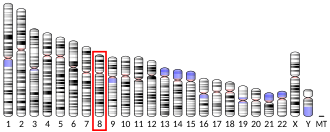



Surfactant protein C (SP-C), is one of the pulmonary surfactant proteins. In humans this is encoded by the SFTPC gene.567
It is a membrane protein.
Structure
| Surfactant protein C, N terminal propeptide | |||||||
|---|---|---|---|---|---|---|---|
 Pig SP-C, corresponds to human mature form | |||||||
| Identifiers | |||||||
| Symbol | SP_C-Propep | ||||||
| Pfam | PF08999 | ||||||
| InterPro | IPR001729 | ||||||
| PROSITE | PDOC00298 | ||||||
| OPM superfamily | 69 | ||||||
| OPM protein | 1spf | ||||||
| |||||||
SFTPC is a 197-residue protein made up of two halves: a unique N-terminal propeptide domain and a C-terminal BRICHOS domain. The around 100-aa long propeptide domain actually contains not only the cleaved part, but also the mature peptide. It can be further broken down into a 23-aa helical transmembrane propeptide proper, the mature secreted SP-C (24-58), and a linker (59-89) that connects to the BRICHOS domain.8
The propeptide of pulmonary surfactant C has an N-terminal alpha-helical segment whose suggested function was stabilization of the protein structure, since the mature peptide can irreversibly transform from its native alpha-helical structure to beta-sheet aggregates and form amyloid fibrils. The correct intracellular trafficking of proSP-C has also been reported to depend on the propeptide.9
The structure of the BRICHOS domain has been solved. Mutations in this domain also lead to amyloid fibrils made up of the mature peptide, suggesting a chaperone activity.8
Clinical significance
Mutations are associated with surfactant metabolism dysfunction type 2.
Humans and animals born lacking SP-C tend to develop progressive interstitial lung disease.
Recombinant SP-C is used in Venticute, an artificial lung surfactant.
A process to mass-produce an analogue called rSP-C33Le by fusion with spidroin has been described.10
References
References
- GRCh38: Ensembl release 89: ENSG00000168484 – Ensembl, May 2017
- GRCm38: Ensembl release 89: ENSMUSG00000022097 – Ensembl, May 2017
- "Human PubMed Reference:". National Center for Biotechnology Information, U.S. National Library of Medicine.
- "Mouse PubMed Reference:". National Center for Biotechnology Information, U.S. National Library of Medicine.
- Keller A, Eistetter HR, Voss T, Schäfer KP (July 1991). "The pulmonary surfactant protein C (SP-C) precursor is a type II transmembrane protein". The Biochemical Journal. 277 ( Pt 2) (Pt 2): 493–9. doi:10.1042/bj2770493. PMC 1151261. PMID 1859376.
- Johansson H, Nordling K, Weaver TE, Johansson J (July 2006). "The Brichos domain-containing C-terminal part of pro-surfactant protein C binds to an unfolded poly-val transmembrane segment". The Journal of Biological Chemistry. 281 (30): 21032–9. doi:10.1074/jbc.M603001200. PMID 16709565.
- "Entrez Gene: SFTPC surfactant, pulmonary-associated protein C".
- Willander H, Askarieh G, Landreh M, Westermark P, Nordling K, Keränen H, et al. (February 2012). "High-resolution structure of a BRICHOS domain and its implications for anti-amyloid chaperone activity on lung surfactant protein C". Proceedings of the National Academy of Sciences of the United States of America. 109 (7): 2325–9. Bibcode:2012PNAS..109.2325W. doi:10.1073/pnas.1114740109. PMC 3289314. PMID 22308375.
- Li J, Liepinsh E, Almlén A, Thyberg J, Curstedt T, Jörnvall H, Johansson J (March 2006). "Structure and influence on stability and activity of the N-terminal propeptide part of lung surfactant protein C". The FEBS Journal. 273 (5): 926–35. doi:10.1111/j.1742-4658.2006.05124.x. PMID 16478467. S2CID 1231483.
- Kronqvist N, Sarr M, Lindqvist A, Nordling K, Otikovs M, Venturi L, et al. (May 2017). "Efficient protein production inspired by how spiders make silk". Nature Communications. 8 (1) 15504. Bibcode:2017NatCo...815504K. doi:10.1038/ncomms15504. PMC 5457526. PMID 28534479.
Further reading
Further reading
- Pérez-Gil J (2002). "Lipid-protein interactions of hydrophobic proteins SP-B and SP-C in lung surfactant assembly and dynamics". Pediatric Pathology & Molecular Medicine. 20 (6): 445–69. doi:10.1080/15227950152625783. PMID 11699574.
- Solarin KO, Wang WJ, Beers MF (2002). "Synthesis and post-translational processing of surfactant protein C". Pediatric Pathology & Molecular Medicine. 20 (6): 471–500. doi:10.1080/15227950152625792. PMID 11699575.
- Johansson J, Curstedt T, Robertson B (2002). "Artificial surfactants based on analogues of SP-B and SP-C". Pediatric Pathology & Molecular Medicine. 20 (6): 501–18. doi:10.1080/15227950152625800. PMID 11699576.
- Nogee LM (2004). "Alterations in SP-B and SP-C expression in neonatal lung disease". Annual Review of Physiology. 66: 601–23. doi:10.1146/annurev.physiol.66.032102.134711. PMID 14977415.
- Brasch F, Griese M, Tredano M, Johnen G, Ochs M, Rieger C, et al. (July 2004). "Interstitial lung disease in a baby with a de novo mutation in the SFTPC gene". The European Respiratory Journal. 24 (1): 30–9. doi:10.1183/09031936.04.00000104. PMID 15293602.
- Curstedt T, Johansson J, Persson P, Eklund A, Robertson B, Löwenadler B, Jörnvall H (April 1990). "Hydrophobic surfactant-associated polypeptides: SP-C is a lipopeptide with two palmitoylated cysteine residues, whereas SP-B lacks covalently linked fatty acyl groups". Proceedings of the National Academy of Sciences of the United States of America. 87 (8): 2985–9. Bibcode:1990PNAS...87.2985C. doi:10.1073/pnas.87.8.2985. PMC 53818. PMID 2326260.
- Simatos GA, Forward KB, Morrow MR, Keough KM (June 1990). "Interaction between perdeuterated dimyristoylphosphatidylcholine and low molecular weight pulmonary surfactant protein SP-C". Biochemistry. 29 (24): 5807–14. doi:10.1021/bi00476a023. PMID 2383558.
- Glasser SW, Korfhagen TR, Perme CM, Pilot-Matias TJ, Kister SE, Whitsett JA (July 1988). "Two SP-C genes encoding human pulmonary surfactant proteolipid". The Journal of Biological Chemistry. 263 (21): 10326–31. doi:10.1016/S0021-9258(19)81519-3. PMID 2839484.
- Glasser SW, Korfhagen TR, Weaver TE, Clark JC, Pilot-Matias T, Meuth J, et al. (January 1988). "cDNA, deduced polypeptide structure and chromosomal assignment of human pulmonary surfactant proteolipid, SPL(pVal)". The Journal of Biological Chemistry. 263 (1): 9–12. doi:10.1016/S0021-9258(19)57347-1. PMID 3335510.
- Johansson J, Jörnvall H, Eklund A, Christensen N, Robertson B, Curstedt T (May 1988). "Hydrophobic 3.7 kDa surfactant polypeptide: structural characterization of the human and bovine forms". FEBS Letters. 232 (1): 61–4. doi:10.1016/0014-5793(88)80386-7. PMID 3366248. S2CID 29388224.
- Warr RG, Hawgood S, Buckley DI, Crisp TM, Schilling J, Benson BJ, et al. (November 1987). "Low molecular weight human pulmonary surfactant protein (SP5): isolation, characterization, and cDNA and amino acid sequences". Proceedings of the National Academy of Sciences of the United States of America. 84 (22): 7915–9. Bibcode:1987PNAS...84.7915W. doi:10.1073/pnas.84.22.7915. PMC 299446. PMID 3479771.
- Young WA (May 1966). "Familial fibrocystic pulmonary dysplasia: a new case in a known affected family". Canadian Medical Association Journal. 94 (20): 1059–61. PMC 1935417. PMID 5942662.
- Wood S, Yaremko ML, Schertzer M, Kelemen PR, Minna J, Westbrook CA (December 1994). "Mapping of the pulmonary surfactant SP5 (SFTP2) locus to 8p21 and characterization of a microsatellite repeat marker that shows frequent loss of heterozygosity in human carcinomas". Genomics. 24 (3): 597–600. doi:10.1006/geno.1994.1673. PMID 7713515.
- Hatzis D, Deiter G, deMello DE, Floros J (1994). "Human surfactant protein-C: genetic homogeneity and expression in RDS; comparison with other species". Experimental Lung Research. 20 (1): 57–72. doi:10.3109/01902149409064373. PMID 8181452.
- Nogee LM, Dunbar AE, Wert SE, Askin F, Hamvas A, Whitsett JA (February 2001). "A mutation in the surfactant protein C gene associated with familial interstitial lung disease". The New England Journal of Medicine. 344 (8): 573–9. doi:10.1056/NEJM200102223440805. PMID 11207353.
- Glasser SW, Burhans MS, Korfhagen TR, Na CL, Sly PD, Ross GF, et al. (May 2001). "Altered stability of pulmonary surfactant in SP-C-deficient mice". Proceedings of the National Academy of Sciences of the United States of America. 98 (11): 6366–71. Bibcode:2001PNAS...98.6366G. doi:10.1073/pnas.101500298. PMC 33474. PMID 11344267.
External links
External links
- GeneReviews/NIH/NCBI/UW entry on Pulmonary Fibrosis, Familial
- Pulmonary+Surfactant-Associated+Protein+B at the U.S. National Library of Medicine Medical Subject Headings (MeSH)