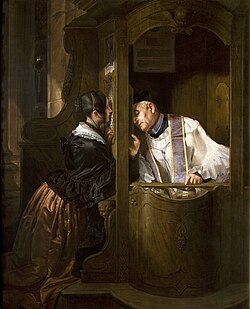
Scrupulosity, also known as religious obsessive–compulsive disorder or scrupulous–compulsive disorder (SCD), is a mental disorder defined by intrusive thoughts about moral or religious ideas, pathological feelings of guilt, and compulsions which attempt to mitigate such thoughts. It is widely understood as a subtype of obsessive–compulsive disorder (OCD).
Common obsessions include fears about having blasphemous thoughts, unwittingly committing immoral actions, being condemned to hell, or improperly performing religious obligations. Compulsions often take the form of excessive prayers, obsessive study of religious doctrine, or avoidance of religious obligations and objects. Individuals with scrupulosity often exhibit paralyzing doubt about whether they fully understand their moral principles, leading to rumination. They often have difficulty acknowledging that their thoughts and behaviors are irrationally motivated and may have difficulty interpreting exaggerated language in religious contexts.
Scrupulosity is generally treated with psychotherapy; cognitive behavioral therapy (CBT) and exposure and response prevention (ERP) are both common approaches in treatment. Psychopharmacological treatments, such as selective serotonin reuptake inhibitors (SSRIs), may be prescribed if symptoms are severe enough. Clinicians often collaborate with appropriate clergy to help bolster patient trust in the process, fortify the patient's understanding that their thoughts are disordered, and prepare clergy to support treatment in ecclesiastical settings. Clergy also help clinicians disentangle normative religious practices from disordered ones. Prognosis for scrupulosity is generally worse than other forms of obsessive–compulsive spectrum disorders, being more resistant to treatment in general. The mental energy cost of obsessions and compulsions can lead to increased comorbidity, especially depressive and other anxiety disorders. People with scrupulosity are at a higher risk of depression, low self-esteem, self-harm, and suicide.
Etymology

The word scrupulosity is derived from the word scruple.1 The latter is derived from the Latin term scrupulum ('small rock, pebble'), such as the kind of small rock that one would get in their shoe while walking which later carried a sense of mental uneasiness.23 A later semantic shift in the jargon used by apothecaries led to scruple meaning 'one twenty-fourth of an ounce', a measure which would only be noticed on extremely sensitive scales.24 This sense developed in vernacular English to mean an inconsequential moral interpretation which could only bother an overly-sensitive mind.2
Classification
Traditionally, scrupulosity has been treated as a subtype of obsessive–compulsive disorder (OCD) and such categorization remains the majority opinion.5 Under a four-prong model of OCD, it is categorized as a subtype manifesting as obsessions of unacceptable thoughts which seek out reassurance-based compulsions.6 In a five-prong model based on factor analysis, it belongs to a category of "religious, sexual, and aggressive obsessions" with no explicit compulsion model.7
Some clinicians have pushed for scrupulosity to have a distinct diagnosis from OCD since at least the early 1990s.78 According to this view, patients with scrupulosity exhibit similar symptoms to those with OCD, but typically have "poorer insight, higher fixity of belief, greater perceptual aberration, and more severe magical ideation".79 The obsessive thoughts of those with scrupulosity differ from diagnostic guidance as the obsessions are about pertinent real-life problems.10 Similarly, compulsions found in OCD are typically irrational and intended to minimize anxiety, whereas many compulsive behaviors associated with scrupulosity are similarly excessive but logically informed and intended to resolve the issue once and for all.11
Critics of this view argue that functional evidence clearly demonstrates overwhelming similarity with OCD, even if there are some noteworthy topographical differences.12 Other kinds of OCD which manifest as unacceptable thoughts show nearly identical neutralization strategies and follow similar cyclical patterns.12 Co-occurrence with other forms of OCD, especially with obsessions about sex and violence, is also a common argument for categorizing scrupulosity as a form of OCD.12
Signs and symptoms
Scrupulosity is a psychological disorder in which an individual experiences distressing and maladaptive obsessions regarding moral or religious issues and performs compulsive behaviors which attempt to mitigate the distress caused by such obsessions.13 Those with scrupulosity exhibit multiple dysfunctional lines of thought, including placing undue emphasis on the role of their thoughts, an excessive need for control, a heightened sense of responsibility, and an impaired ability to estimate threats.14 Though mostly associated with religion, scrupulosity has been found in irreligious people where it manifests as fears of being immoral or bad.15
The disorder is marked by two primary archetypes: obsessions of wrongdoing with compulsions seeking reassurance and obsessions of punishment with compulsions of avoidance and of repentance.1617 In most individuals, some combination of both archetypes are present.18 Coreligionists, including clergy, often view the behaviors that cause these obsessions or avoidances as guiltless, easily pardonable, or otherwise unimportant, but they cause significant distress in patients.17 The disorder is extremely idiosynchratic and heterogeneous, meaning that manifestations vary widely from person to person and may be derived from a variety of etiologies, or origins. For example, religious icons may be sought out by one individual with scrupulosity for comfort and avoided by another for fear of triggering religious obsessions.17
Obsessions

Individuals with scrupulosity have "a habitual state of mind" in which dysfunctional moral or religious thought patterns pervade, and feelings of guilt and personal responsibility are disproportionately amplified.2 These religious obsessions are sometimes known as scruples.7 Being irrationally fearful of sinning, they believe their own licit behavior is sinful or that their sinful behavior is more transgressive than it really is.2 Intrusive thoughts about committing blasphemy, sexual immorality, and other immoral actions in the past or the future are commonly reported, as are thoughts that a religious duty has been performed improperly or the individual will be divinely punished.196 Other common themes include that one is unwittingly committing a sin, feelings that one may lose control and become immoral, doubts about faith, fears that one's worship will not be accepted by God, and fears of going to hell.20 Patients often feel that they are improperly penitent or that they are uncertain if their intrusive thoughts are wanted or not.21 They exhibit more negative ideas about God, envisioning the deity as "punishing, fearsome, jealous, terrifying, angry, [and] vengeful", which scales with disorder severity.2217 The manifestation of obsessions varies based on religion and cultural context.2324 Obsessions generally fall into four categories, which often overlap:17
- Blasphemous intrusive thoughts (egodystonic; e.g., a Christian with intrusive thoughts of Jesus on the Cross with an erection)
- Concerns about orthodoxy (egosyntonic; e.g., a Catholic who cannot reconcile his intellectual thoughts about abortion with his religious conviction and repeatedly asks his priest if he is still in good standing with the Church)
- General intrusive thoughts viewed through a religious lens (generally egodystonic, typically resolved with religious-themed compulsions; e.g., a man who has incestuous intrusive thoughts about his sister, blames the Devil, and prays excessively)
- Doubts about faithfulness or whether religious obligations have been appropriately followed (e.g., a Mormon woman who worries that by wiping after using the restroom, she is masturbating and thus is failing to appropriately follow her religious code)
Ironically, the typical narrowness of obsessions are so rigid and excessive that they often cause the person neglect more important aspects of their faith.17 In an example case, a woman was so preoccupied with her fear of having blasphemous intrusive thoughts during a religious service, that she avoided them altogether.17 Overall, patients with scrupulosity exhibit more obsessive thoughts than other patients with OCD.25
Scrupulosity is associated with moral thought-action fusion, a disordered pattern of thought that equates thoughts with actions, irrespective of if the thoughts are wanted or not.26 For example, an intrusive thought about having illicit sexual intercourse may compel a person with scrupulosity to bring the thought to confession – sometimes repeatedly – as if they had actually committed the sexual act, even though the thought was not willingly generated by the individual and the individual never physically engaged in such an act.227 Religious prohibitions against certain kinds of want may promote the occurrence of thought-action fusion in people with scrupulosity, such as the Tenth Commandment which prohibits coveting and Jesus's admonishment in the Sermon on the Mount that a man who looks at a woman in lust has already committed adultery in his heart.28 Thought-action fusion is more common in Christian patients than patients of other religions.29
Intolerance of uncertainty
Intrusive thoughts, including those about religious topics, are not themselves disordered; healthy individuals will intermittently experience intrusive thoughts, acknowledge them as absurd, and discard them.30 Scrupulosity does not manifest in most religious people because they recognize that thoughts must either be willfully generated or indulged by a conscious mind to be sinful. The thought-action fusion experienced by those with scrupulosity makes differentiating difficult and, even when a patient recognizes that a thought may not be sinful, they are unable to convince themselves that it certainly is not sinful.31 This disparity between the ability to accept concepts based on faith or inference is known as intolerance of uncertainty. While attested in other mental disorders, it is considered most prominent in patients with OCD, particularly in the "unacceptable thoughts" subtype of which scrupulosity is usually considered a part.3233 As a result, individuals with scrupulosity feel that it is both possible and necessary to ascertain with perfect certainty the solutions to their obsessions and become greatly distressed when they discover no such certainty can exist.34
Excessive doubt
Patients exhibit "periods of unusual and disabling confusion or doubt" surrounding their understanding of moral principles and whether an action has violated such principles.35 These are often triggered by experiencing a minor moral dilemma or in situations that remind them of other periods of doubt, leading to a concatenating series of thoughts that impairs rational thinking.36 These feelings of doubt often lead to periods of rumination, where – in an attempt to rationally resolve the anxious feeling – an individual may meticulously interrogate perceived past moral failings and obsessively meditate on philosophical or theological analyses.36 The centrality of this symptom has led to the disorder's nickname as the "doubting disease".36
Cognitive distortion and overburdening
In general, people with scrupulosity have poor insight, meaning that they cannot fully acknowledge that their behavior is irrationally motivated.37 Patients have difficulty interpreting normal moral frameworks and may associate unrelated actions with moral behaviors based on gut feelings.36 This poor awareness may be associated with an overload in mental energy expense, causing a lack of clear mental imagery which disallows for ready interpretation. This in turn leads to an inability to process a large influx of thoughts and leads to chronic worrying.38
Patients also interpret moral precepts with exceptional severity, even when religious language is intentionally exaggerated for effect.36 The misalignment of intent and interpretation by the patient leads to further disorientation.36 Similarly, the vast majority of those with scrupulosity feel that their symptoms interfere with their relationship with God.39
While virtually no religion requires perfection from their adherents, people with scrupulosity feel an excessive need for perfectionism, including outside their religious symptoms.40 Magical thinking is also more prominent among individuals with scrupulosity than other forms of OCD.41
Individuals often experience life through an additional mental "filter" which inserts moral interpretation into otherwise innocuous settings, causing the person to expend so much mental energy that relaxation and even other cognitive functions are impacted severely.3642 This erosion of mental energy is associated with increased comorbidity with other anxiety and depressive disorders.36
Compulsions

To mitigate the associated feelings of guilt and anxiety, individuals compulsively engage in excessive and ritualistic religious behaviors. These may include persistent praying, reading and rereading of religious texts, visits to confession, reassurance seeking, thought suppression, or apologizing.43 Instruction or absolution provided by religious leaders may create temporary relief before obsessions creep back in, but severe cases may be nearly unaffected.44 Family members and friends may also attempt to help by accommodating the symptoms of the disorder, such as providing reassurance, giving doctrinal interpretations, assisting in prayer, or providing cover for avoidant behaviors.45 These provisions, however, are considered to hinder improved outcomes in patients, as it prevents the patient from developing an understanding that the obsessions are unfounded in reality and higher levels of familial accommodation are linked to more severe symptoms in OCD patients.45
Individuals with scrupulosity may sometimes avoid places and contexts they believe will begin a cycle of doubt.720 They may also postpone attending religious services or worshiping, or may avoid them altogether.46 Certain religious texts may also be avoided.4748 Avoidance behaviors may extend to other facets of life. For example, an individual with scrupulosity may feel they may do or say something immoral in company and thereby avoid social gatherings.49
These compulsive behaviors reinforce the individual's obsessions, creating a cycle.50 Counterintuitively, both avoidance and compulsive behaviors – including thought suppression and distraction – increase obsession frequency, leading to obsessional preoccupation.34 It is thought that the behaviors serve as retrieval cues for the obsessive thoughts that led to the behaviors. This amplifies feelings of doubt, which in turn increase the need for neutralizing behaviors.34 For example, a person anxiously uncertain if they are going to hell may obsessively seek out interpretations of their faith's infernological doctrine to alleviate fears, the complexity of which only deepens feelings of doubt.34
Relationships to other kinds of compulsions are not unknown either. In a study among Western Christian OCD patients, those with high religiosity exhibited higher levels of handwashing than other patients and placed increased emphasis on getting hold of one's thoughts, which the researchers related to the Sermon on the Mount and similar passages in the Bible which equate thought with action.51 By contrast, handwashing among Jewish and Muslim patients is readily identifiable with ritual washing associated with prayer and other customs, both in Judaism and in Islam.5224
Causes
What causes scrupulosity as opposed to other manifestations of OCD is uncertain. Terror management theory (TMT) views religion as having a coping role for the inevitability of death; under this framework, scrupulosity emerges as an dysfunctional form.5354 Individuals with scrupulosity may feel that God is present and in control, but that they are totally severed from the divine connection, impairing their ability to cope with the finality of death.54 Another suggestion is that scrupulosity acts as a way of seeking out security in domains where one is unable to facilitate confirmation of success, as one is with the confirmation that sins have been wiped away or that one's relationship with God is positive.53 Intolerance of uncertainty, a typical symptom of OCD, may distinguish typical expressions of religiosity from dysfunctional scrupulosity.22 While religiosity is not correlated with the development of scrupulosity, childhood trauma and "maladaptive guilt induction strategies used by parents" are.55
Diagnosis
As of 2024, there are four diagnostic tools which measure scrupulosity without measuring other OCD symptoms: the Penn Inventory of Scrupulosity (PIOS),a the revised Penn Inventory of Scrupulosity (PIOS-R), the Scrupulous Thoughts and Behaviors Questionnaire (STBQ), and the Scrupulosity Inventory (SI).57 The PIOR-R uses a series of nineteen statements – such as "I worry about heaven and hell", "I worry that God is upset with me", and "Immoral thoughts come into my head and I cannot get rid of them" – and asks patients to rate the frequency they experience such thoughts on a scale of zero (never) to four (constantly).58 The PIOS and the PIOS-R are the most-widely used of these diagnostic scales, though the PIOS has been criticized as ineffective at identifying scrupulosity in non-Christians.59
Other more traditional approaches to diagnostics may be used as well. One example is the use of traditional OCD diagnostic tools – including the Yale–Brown Obsessive–Compulsive Scale (Y-BOCS), Beck Depression Test, and the Beck Anxiety Inventory – with observations of religious qualities in obsessions and compulsions.60 Y-BOCS has been criticized in its use for scrupulosity patients since it only asks one question about religious fears.61 Because of this, clinicians may ask probing questions about religious manifestations of typical OCD symptoms, such as whether they have blasphemous intrusive thoughts or whether they worry excessively about divine punishment.61 Specific questions pertinent to the specific religion of the patient may also facilitate diagnosis.61
It can sometimes be difficult to tell when an action passes from normative religious practice into scrupulosity.6263 The two may be differentiated from other normative religious rituals and avoidance in asking several questions:63
- Is the behavior more extreme than the patient's peers interpret the religious obligation?
- Is the behavior excessively narrow or trivial?
- Is the behavior impairing typical religious, family, and career functions?
- Is the behavior excessively distressing to the patient or limit the patient's ability to practice their religion?
Given the likelihood of religious OCD patients to have scrupulous symptoms and the general paucity of insight in scrupulosity cases, it is recommended that such patients be screened for scrupulosity.64
Treatment
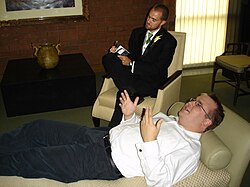
Treatment of scrupulosity includes both psychotherapeutic and psychopharmacological approaches, and best results appear to be from a combination of the two.62 Psychotherapy aims to confront the individual's irrational beliefs, fortify their ability to deal with uncertainty, and manage their compulsions.53 Selective serotonin reuptake inhibitors (SSRIs) are generally used as pharmacological treatment if symptoms are severe enough.62 Treatment overall, however, remains understudied.65
Cognitive behavioral therapy (CBT) and exposure and response prevention (ERP) both have demonstrated success treating OCD, but have had more limited success in patients with scrupulosity.6667 In particular, standard forms of ERP have had limited success based on perceptions that even mere exposure would be morally transgressive and moral fears are difficult to falsify.6668 Moreover, CBT's approach focuses on removing meaningfulness from intrusive thoughts, which is sometimes seen as incompatible with legitimate beliefs that thoughts have moral value.69 Difficulty in proving certain disordered thoughts is also a challenge, as a patient cannot be definitively convinced that they are not condemned to hell, for instance.67
While CBT therapy is generally considered for treating most kinds of OCD, including scrupulosity, in children and adolescents, special care must be taken to avoid "thought challenging", which is often used by minors as a compulsion to combat intrusive thoughts.70 Care must also be taken in CBT when externalizing scrupulosity, as patients may not accept that their issues are necessarily disordered or distinct from normative expectations religious suffering.71 Clinicians are often cautioned against engaging patients in theological debate, as patients are often obsessively engaged in scriptural or dogmatic study and may be more informed than the clinician.71
Aside from standard CBT and ERP, acceptance and commitment therapy (ACT) and other adapted CBT models have been used to treat scrupulosity, though CBT remains the most common.72 ERP remains highly regarded, however, with some proponents citing studies which demonstrate better outcomes and patient reports of lasting effects after sessions have terminated.73
Collaboration with clergy

While variations of ERP exist, they may be at odds with ecclesiastical instructions given to patients. As a result, in order to best facilitate positive outcomes, clinicians must distinguish legitimate religious practice from disordered compulsion, which often requires collaboration with relevant clergy.74 Patients may drop out of therapy entirely if they believe the disorder is not being accurately differentiated from devotion.69 In some instances, clinicians may feel that religion is playing a harmful role, but this view is now discouraged. Instead, clinicians are advised to acclimatize themselves to the patient's religious sensitivities to develop rapport with patients and to better understand normative religious activities from disordered behaviors.24
By contrast, the integration of clergy into therapeutic efforts can fortify a patient's understanding that their condition is disordered.75 It is discouraged to request clergy provide dispensation for certain religious obligations, even in cases where a patient may accept it, because it provides reassurance that a patient may be unhealthily seeking out and may be an outlet for avoidance behaviors. In other cases, it may cause patients feelings of inferiority in relation to people of the same faith.7677
While data is limited, studies show that many clergymen understand scrupulosity as distinct from spirituality, while recognizing that it is not something they are equipped to deal with personally.78 Less recognizant clergy, however, may unwittingly provide advice that is contrary to accepted clinical practice or attribute the patient's scrupulosity to insufficient piety.78 Collaboration between therapists and clergy can help mitigate reassurance behaviors in patients by helping clergymen recognize the behavior in the patient.77
Prognosis
Prognosis for scrupulosity is generally worse than that of other obsessive–compulsive spectrum disorders.7 It is relatively treatment-resistant, responding less successfully overall to behavioral therapy and selective serotonin reuptake inhibitors (SSRIs), both of which are traditionally first-line treatments for OCD.79 Both high levels of scrupulosity and low insight in OCD patients are associated with poor treatment response.80 Difficulty in addressing scrupulosity in treatment is manifold, as a patient may not believe things that are considered orthodox among other coreligionists, and the difference between disorder and legitimate spiritual struggle is often unclear.7067
Long-term severe cases sometimes lead to "surrender", where the patient gives in to "the urge to commit the sin"; this is considered an extreme distress signal.44 Those with scrupulosity have a higher incidence of depression, low self-esteem, self-harm, and suicide.1944 Those with scrupulosity are do not appear to have more severe forms of OCD overall, but they are at a higher risk of depressive and other anxious symptoms, as well as signs of obsessive–compulsive personality disorder.17 Symptoms may worsen with stress.8182
Epidemiology

Scrupulosity is generally considered to be a fairly common subtype of OCD.17 Although obsessive–compulsive disorder represents only about 1% of the general public with a lifetime rate of between 2% and 2.5%, scrupulosity cases may comprise a large subset of that group, with estimates between 5% and 33% of OCD patients exhibiting signs.83 Another study placed the number on a scale from 0% to 93% depending on the place studied, suggesting differences in the prominence of religion culturally may affect rates.19 One study of Saudi Arabia and Egypt, for example, found rates of 50% and 60% of religion-based symptoms in their OCD populations, respectively.8317 Studies in Western cultures have suggested that while 10% and 33% of people with OCD have religious symptoms, somewhere between 5% and 6% primarily exhibit symptoms of scrupulosity, making it the fifth most-common class of OCD symptoms.84 However, accurate quantification of the afflicted population is difficult, as people with the disorder often seek spiritual guidance instead of mental healthcare.85 Overall, about 18% of those with scrupulosity identify as having no religious affiliation.23 There is no evidence that religious people are more likely to have OCD than the general public, but those who are religious are more likely to experience scrupulosity as opposed to other subtypes of OCD.8
Attempts to map religious affiliation to scrupulosity have had with mixed outcomes.2 Several studies suggest Protestants in highly religious cultural contexts have the highest rates of scrupulosity, while a 2019 study places Catholics as having the highest incidence.86 Others suggest Jewish communities tend to have a higher rate of scrupulosity than other groups.87 A 2010 analysis found that the prevalence of religious symptoms in those with OCD varies drastically across different countries, from as low as 2% in the United Kingdom to as high as 62% in Israel.65 Studies of Orthodox and non-Orthodox Jewish populations found that Orthodox Jews were better able to identify scrupulosity and more likely to recommend clinical treatment than their non-Orthodox counterparts.87
It is possible that religions which place particular emphasis on adherence to a behavioral code may influence the categorization of obsessions as contamination-based rather than religious based. For example, Jews following kosher diets and Muslims following halal diets may have obsessions relating to the contamination of food through a religious basis rather than a medical one, which would typically be categorized under contamination OCD.88 Similarly, Catholic individuals with scrupulosity demonstrate marked emphasis on perfectionism than other Christian patients.89
Studies involving ethnic background and national origin suggest that cultural considerations are relevant to the manifestation of symptoms. For example, a 2011 study found that contamination concerns among Turkish Muslims were higher than their Bulgarian-born counterparts, which may be attributable to the higher salience of Islam in everyday life in Turkey.90 In India, male OCD patients report higher levels of religious symptoms.91 Studies of East Asian populations suggests Chinese OCD patients exhibit higher rates of scrupulosity than Japanese patients.92
History
Scrupulosity may be one of the earliest identified mental illnesses.83 The oldest text thought to contain a description of OCD is from a Buddhist text estimated to be around 2,500 years old.93 It describes a monk who was obsessed with sweeping the floor, often to the point of neglecting his monastic duties.94
During the first century AD, the ancient Greeks described scrupulosity-like state of mind they called deisidaimonia (Ancient Greek: δεισιδαιμονία, lit. 'fear of the gods'). The ancient Greek philosopher Plutarch (fl. c. 100 AD), himself a priest at the Temple of Apollo in Delphi, described the condition as a "mental anguish unnecessarily endured" and referred to those with it as "victims".95 Plutarch distinguished the condition from other forms of superstition and atheism, describing it more akin to a phobia.96 He described a person with the condition thus:
[He] turns pale under his crown of flowers, is terrified while he sacrifices, prays with a faltering voice, scatters incense with trembling hands, and all in all proves how mistaken was the saying of Pythagoras that we are at our best when approaching the gods. For that is the time when the superstitious are most miserable and most woebegone.97
The earlier Greek philosopher Theophrastus (c. 371 BC – c. 287 BC) appears to have described OCD as a whole in his Characters, an outline of moral archetypes, under the title of the Deisidaimon (Ancient Greek: Δεισιδαίμων), though this character is generally considered satirical.98
The Talmud, the central text of Rabbinical Judaism compiled around 500 AD, appears to contain examples of the disorder. By the 11th century, Jewish religious texts contain "pretty clear cases".97 In the 13th century, the Catalan rabbi Nachmanides proscribes such thoughts writing that "it is not good for a person to be too strict, looking into doubts to invalidate", addressing a concern about whether an unseen rodent might have unknowingly brought leavened bread into the house, thereby potentially rendering the hosting home unclean during a Passover celebration.97
Religious figures during the Reformation such as Martin Luther and Ignatius of Loyola are each thought to have had scrupulosity.83 Ignatius of Loyola, founder of the Society of Jesus, expresses sentiments in his memoirs about feeling that he had incompletely or ineffectively confessed, despite writing down what he needed to. This caused such distress that his confessor required him "not to confess anything of the past, unless it was quite clear", though the prohibition did not improve the situation.99b
In the early modern period, scrupulosity is addressed further. In 1660, the English cleric Jeremy Taylor took note of people who starved themselves for fear of committing the sin of gluttony. He described such individuals as those who, although married, felt extreme guilt engaging in sex with their spouse because they worried it was "secretly an indulgence to the flesh" but ultimately relented because it was their divinely-assigned duty.3 In 1691, the English Anglican bishop John Moore gave a speech concerning what he called "religious melancholy", which was a major public acknowledgement of scrupulosity as a mental illness.83 Moore in particular felt quite bad for the afflicted, writing that "they are mostly good People" who "fear, that what they do, is so defective and unfit to be presented unto God, that He will not accept it".100 During this same period, the Catholic bishop Alphonsus Liguori is also thought to have had scrupulosity.83 Today, Scrupulous Anonymous, a Catholic Redemptorist newsletter ministering to those with scrupulosity, is published by an organization bearing Liguori's name.83
The French nun and saint Thérèse of Lisieux (1873–1897) is known to have had scrupulosity to such an extent that she experienced debilitating headaches. She compared the disorder to a painful martyrdom.101
In 1994, the American Psychiatric Association officially differentiated religious symptoms from other forms of OCD in the fourth edition of the Diagnostic and Statistical Manual of Mental Disorders (DSM-IV).102 The following publications – DSM-IV-TR and DSM-V – include scrupulous behavior as a criterion for both OCD and obsessive–compulsive personality disorder (OCPD).103
See also
See also
References
References
Notes
- Pronounced /paɪəs/ PY-əs, as in pious.56
- There is disagreement about whether Ignatius experienced scrupulosity per se. Thomas Santa, a Catholic priest and expert in scrupulosity, has characterized Ignatius's symptoms as those of a tender conscience, a normal – if painful – spiritual process, rather than scrupulosity.3
Citations
- "scrupulosity". Merriam-Webster.com Dictionary. Merriam-Webster. OCLC 1032680871.
- Miller & Hedges 2008, p. 1044.
- Summers & Sinnott-Armstrong 2019, p. 20.
- "scruple". Merriam-Webster.com Dictionary. Merriam-Webster. OCLC 1032680871.
-
- Siev, Huppert & Zuckerman 2017, p. 528.
- Abramowitz & Jacoby 2014, p. 142.
- Summers & Sinnott-Armstrong 2019, p. 21.
- Buchholz et al. 2019, p. 479.
- Miller & Hedges 2008, p. 1051.
- Siev, Huppert & Zuckerman 2017, p. 528.
- Abramowitz & Jacoby 2014, pp. 141–142.
- Miller & Hedges 2008, pp. 1051–1052.
- Miller & Hedges 2008, p. 1052.
- Abramowitz & Jacoby 2014, p. 142.
-
- Miller & Hedges 2008, p. 1042.
- Johnson et al. 2024, p. 1.
- Moroń et al. 2025, p. 92.
- Kurth 2018, p. 78.
- Siev & Huppert 2016, p. 39.
- Işık & Toprak 2025, p. 610.
- Clark & Hilchey 2017, p. 426.
-
- Toprak & Özçelik 2024, p. 22362.
- Williams et al. 2017, p. 60.
- Siev, Huppert & Zuckerman 2017, p. 527.
- Kurth 2018, p. 78.
- Abramowitz & Jacoby 2014, p. 141.
- Kurth 2018, p. 79.
- Johnson et al. 2024, p. 1.
- Toprak & Özçelik 2024, p. 22361.
- Abramowitz & Jacoby 2014, p. 146.
- Siev, Huppert & Zuckerman 2017, p. 529.
- Siev, Huppert & Zuckerman 2017, p. 527.
- Stiede et al. 2025, p. 255.
- Williams et al. 2017, p. 59.
-
- Miller & Hedges 2008, p. 1044.
- Buchholz et al. 2019, p. 480.
- Williams et al. 2017, p. 61.
- Clark & Hilchey 2017, p. 431.
- Abramowitz & Jacoby 2014, pp. 142–143.
- Clark & Hilchey 2017, pp. 431–432.
-
- Buchholz et al. 2019, p. 480.
- Abramowitz & Jacoby 2014, p. 143.
- Williams et al. 2017, pp. 59–60.
- Abramowitz & Jacoby 2014, p. 143.
- Abramowitz & Jacoby 2014, pp. 142–143.
- Abramowitz & Jacoby 2014, p. 144.
- Abramowitz & Jacoby 2014, pp. 144–145.
- Tolin et al. 2003, p. 233.
- Abramowitz & Jacoby 2014, p. 145.
- Miller & Hedges 2008, pp. 1044–1045.
- Miller & Hedges 2008, p. 1045.
-
- Miller & Hedges 2008, p. 1045.
- Siev, Huppert & Zuckerman 2017, p. 531
- Abramowitz 2017, § Poor Insight.
- Miller & Hedges 2008, pp. 1045–1046.
- Siev & Huppert 2016, p. 45.
- Fergus & Valentiner 2012, p. 105.
-
- Miller & Hedges 2008, p. 1051.
- Siev, Huppert & Zuckerman 2017, p. 531.
- Abramowitz & Jacoby 2014, p. 141.
- Toprak & Özçelik 2024, p. 22362.
-
- Johnson et al. 2024, p. 1.
- Miller & Hedges 2008, p. 1046.
- Toprak & Özçelik 2024, p. 22361.
- Abramowitz & Jacoby 2014, p. 145.
- Miller & Hedges 2008, p. 1046.
- Abramowitz 2017, § Symptom Accommodation.
-
- Işık & Toprak 2025, p. 615.
- Abramowitz & Jacoby 2014, pp. 140–141.
- Stiede et al. 2025, p. 239.
- Siregar et al. 2025, p. 383.
- Stiede et al. 2025, p. 239.
- Işık & Toprak 2025, pp. 614–615.
- Siev, Huppert & Zuckerman 2017, pp. 529–530.
- Williams et al. 2017, pp. 59–60.
- Williams et al. 2017, pp. 60–61.
- Siev, Huppert & Zuckerman 2017, p. 530.
- Fergus & Valentiner 2012, pp. 104–105.
- Coughtrey, Shafran & Bennett 2017, p. 465.
- Summers & Sinnott-Armstrong 2019, p. 41.
- Johnson et al. 2024, p. 2.
- Summers & Sinnott-Armstrong 2019, p. 42.
-
- For the PIOS and PIOS-R's wideness of use, see Johnson et al. 2024, p. 2.
- For diagnostic criticism, see Siev, Huppert & Zuckerman 2017, p. 533 and Summers & Sinnott-Armstrong 2019, p. 43.
- Işık & Toprak 2025, p. 609.
- Siev, Huppert & Zuckerman 2017, p. 533.
- Siregar et al. 2025, p. 380.
- Siev, Huppert & Zuckerman 2017, pp. 532–533.
- Siev, Huppert & Zuckerman 2017, pp. 533–534.
- Işık & Toprak 2025, p. 610.
- Buchholz et al. 2019, p. 489.
- Siev, Huppert & Zuckerman 2017, p. 531.
- Siev & Huppert 2016, pp. 39–40.
- Işık & Toprak 2025, p. 611.
- Peris & Rozenman 2016, p. 132.
- Siev, Huppert & Zuckerman 2017, p. 534.
- Toprak & Özçelik 2024, pp. 22362–22363.
- Garcia 2008, p. 6.
-
- Siev & Huppert 2016, p. 40.
- Toprak & Özçelik 2024, p. 22362.
- Işık & Toprak 2025, p. 612.
- Siev, Huppert & Zuckerman 2017, p. 534.
- Stiede et al. 2025, p. 255.
- Işık & Toprak 2025, p. 612.
- Siev & Huppert 2016, p. 51.
- Siev, Huppert & Zuckerman 2017, p. 538.
- Siev, Huppert & Zuckerman 2017, p. 537.
-
- For its treatment resistance overall, see Siev & Huppert 2016, p. 39, Peris & Rozenman 2016, p. 132, and Williams et al. 2017, p. 69.
- For specific notions of resistance to therapy and SSRIs, see Miller & Hedges 2008, p. 1051.
- Abramowitz, McKay & Storch 2017, p. 1.
- Işık & Toprak 2025, p. 615.
- Garcia 2008, p. 8.
- Miller & Hedges 2008, p. 1043.
-
- Siev & Huppert 2016, p. 39.
- Peris & Rozenman 2016, p. 131.
- Siev, Huppert & Zuckerman 2017, p. 527.
- Abramowitz & Jacoby 2014, pp. 141–142.
- Miller & Hedges 2008, pp. 1043–1044.
-
- For the studies suggesting Protestants have the highest rates, see Miller & Hedges 2008, p. 1044.
- For the study suggesting Catholics, see Buchholz et al. 2019, p. 479.
- Williams et al. 2017, p. 60.
-
- Buchholz et al. 2019, p. 480.
- Williams et al. 2017, pp. 60, 68–69.
- Siev, Huppert & Zuckerman 2017, pp. 527–528.
- Stiede et al. 2025, p. 255
- Williams et al. 2017, p. 68.
- Williams et al. 2017, p. 61.
- Williams et al. 2017, p. 62.
- Williams et al. 2017, p. 65.
- Friedrich 2015, p. 33.
- Friedrich 2015, pp. 33–34.
- Friedrich 2015, p. 38.
- Friedrich 2015, pp. 38–39.
- Summers & Sinnott-Armstrong 2019, p. 19.
- Friedrich 2015, pp. 36–37.
- Summers & Sinnott-Armstrong 2019, pp. 19–20.
- Summers & Sinnott-Armstrong 2019, pp. 20–21.
- Monahan 2003, p. 45.
- Bourke 2009, p. 581.
- Summers & Sinnott-Armstrong 2019, p. 21.
Sources
- Abramowitz, Jonathan S.; Jacoby, Ryan J. (2014). "Scrupulosity: A cognitive–behavioral analysis and implications for treatment". Journal of Obsessive–Compulsive and Related Disorders. 3 (2): 140–149. doi:10.1016/j.jocrd.2013.12.007.
- Abramowitz, Jonathan S. (2017). "Obsessive–Compulsive Disorder". Oxford Research Encyclopedia of Psychology. Oxford University Press. doi:10.1093/acrefore/9780190236557.013.81. ISBN 978-0-19-023655-7.
- Abramowitz, Jonathan S.; McKay, Dean; Storch, Eric A., eds. (2017). The Wiley Handbook of Obsessive Compulsive Disorders (First ed.). Wiley. doi:10.1002/9781118890233. ISBN 978-1-118-88964-0.
- Williams, M. T.; Chapman, L. K.; Simms, J. V.; Tellawi, G. "4. Cross‐Cultural Phenomenology of Obsessive–Compulsive Disorder". In Abramowitz, McKay & Storch (2017).
- Clark, David A.; Hilchey, Catherine A. "23. Repugnant Obsessions". In Abramowitz, McKay & Storch (2017).
- Coughtrey, Anna E.; Shafran, Roz; Bennett, Sophie. "25. Mental Contamination". In Abramowitz, McKay & Storch (2017).
- Siev, Jedidiah; Huppert, Jonathan D.; Zuckerman, Shelby E. "29. Understanding and Treating Scrupulosity". In Abramowitz, McKay & Storch (2017).
- Bourke, Joanna (2009). "Divine Madness: The Dilemma of Religious Scruples in Twentieth-Century America and Britain". Journal of Social History. 42 (3): 581–603. doi:10.1353/jsh.0.0152. ISSN 1527-1897.
- Buchholz, Jennifer L.; Abramowitz, Jonathan S.; Riemann, Bradley C.; Reuman, Lillian; Blakey, Shannon M.; Leonard, Rachel C.; Thompson, Katherine A. (2019). "Scrupulosity, Religious Affiliation and Symptom Presentation in Obsessive Compulsive Disorder". Behavioural and Cognitive Psychotherapy. 47 (4): 478–492. doi:10.1017/S1352465818000711. ISSN 1352-4658.
- Fergus, Thomas A.; Valentiner, David P. (2012). "Terror management theory and scrupulosity: An experimental investigation". Journal of Obsessive–Compulsive and Related Disorders. 1 (2): 104–111. doi:10.1016/j.jocrd.2012.01.003.
- Friedrich, Patricia (2015). The Literary and Linguistic Construction of Obsessive–Compulsive Disorder. Literary Disability Studies (First ed.). London: Palgrave Macmillan. doi:10.1057/9781137427335. ISBN 978-1-349-57638-8. ISSN 2947-7409.
- Garcia, Hector A. (12 May 2008). "Targeting Catholic Rituals as Symptoms of Obsessive Compulsive Disorder: A Cognitive–Behavioral and Psychodynamic, Assimilative Integrationist Approach". Pragmatic Case Studies in Psychotherapy. 4 (2). Rutgers University
 : 1–38. doi:10.14713/pcsp.v4i2.931. ISSN 1553-0124.
 - Işık, Yakup; Toprak, Taha Burak (2025). ""Worship is Not Merely About Form": Religiously Integrated Cognitive Behavioral Therapy in a Case of Scrupulosity". International Journal of Cognitive Behavioral Therapy. 18 (4): 609–638. doi:10.1007/s41811-025-00262-3. hdl:20.500.12154/3452. ISSN 3059-3042.
- Johnson, David A. L.; Borgogna, Nicholas C.; Ingram, Paul B.; Warlick, Craig; Spencer, Samuel D.; Mims, Callie E.; Bunnell, Kiana L.; Nielsen, Jared A. (2024). "The scrupulosity obsessions and compulsions scale: A measurement of scrupulosity within an OCD framework". Journal of Obsessive–Compulsive and Related Disorders. 43 100918. doi:10.1016/j.jocrd.2024.100918. hdl:2346/99971.
- Kurth, Charlie (2018). The Anxious Mind: An Investigation into the Varieties and Virtues of Anxiety. Cambridge, Massachusetts: MIT Press. ISBN 978-0-262-03765-5.
- Miller, Chris H.; Hedges, Dawson W. (2008). "Scrupulosity disorder: An overview and introductory analysis". Journal of Anxiety Disorders. 22 (6): 1042–1058. doi:10.1016/j.janxdis.2007.11.004.
- Monahan, Joan (2003). Thérèse of Lisieux. Mahwah, New Jersey: Paulist Press. ISBN 0-8091-6710-7.
- Moroń, Marcin; Krok, Dariusz; Niedbała, Dariusz; Biolik-Moroń, Magdalena; Matuszewski, Krzysztof (2025). "Dimensionality of scrupulosity and its associations with obsessive–compulsive symptomatology in a nonclinical sample: A network approach". Psychology of Religion and Spirituality. 17 (2): 92–104. doi:10.1037/rel0000520. ISSN 1943-1562.
- Siregar, Salwa Alfina; Framita, Gusty Syaiim; Savitri, Aulia Tiara; Latifa, Rena (2025). "Understanding scrupulosity in adults: A comprehensive systematic review". In Rahiem, Maila D.H. (ed.). Towards Resilient Societies: The Synergy of Religion, Education, Health, Science, and Technology: Proceedings of the International Conference on Innovative Interdisciplinary Science for Inclusive and Sustainable Future (GreenThink 2024), Jakarta, Indonesia, September 12th—13th, 2024. Vol. 1 (First ed.). London: CRC Press . doi:10.1201/9781003645542. ISBN 978-1-003-64554-2.
- Stiede, Jordan T.; Trent, Erika S.; McInnes, Gwendolyn H.; Storch, Eric A. (2025). "Obsessive–Compulsive and Related Disorders". In Segal, Daniel L. (ed.). Diagnostic Interviewing (Sixth ed.). New York: Springer. doi:10.1007/978-1-0716-4362-4_9. ISBN 978-1-0716-4361-7.
- Storch, Eric A.; Lewin, Adam B., eds. (2016). Clinical Handbook of Obsessive–Compulsive and Related Disorders: A Case-Based Approach to Treating Pediatric and Adult Populations. Cham, Switzerland: Springer International Publishing. doi:10.1007/978-3-319-17139-5. ISBN 978-3-319-17138-8.
- Siev, Jedidiah; Huppert, Jonathan D. "4. Treatment of Scrupulosity-Related Obsessive–Compulsive Disorder". In Storch & Lewin (2016).
- Peris, Tara S.; Rozenman, Michelle. "10. Treatment of Scrupulosity in Childhood Obsessive–Compulsive Disorder". In Storch & Lewin (2016).
- Summers, Jesse S.; Sinnott-Armstrong, Walter (2019). Clean Hands?: Philosophical Lessons from Scrupulosity. Oxford University Press. doi:10.1093/oso/9780190058692.001.0001. ISBN 978-0-19-005869-2.
- Tolin, David F.; Abramowitz, Jonathan S.; Brigidi, Bartholomew D.; Foa, Edna B. (2003). "Intolerance of uncertainty in obsessive–compulsive disorder". Journal of Anxiety Disorders. 17 (2): 233–242. doi:10.1016/S0887-6185(02)00182-2.
- Toprak, Taha Burak; Özçelik, Hanne Nur (2024). "Psychotherapies for the treatment of scrupulosity: a systematic review". Current Psychology. 43 (26). Springer Nature : 22361–22375. doi:10.1007/s12144-024-06040-2. hdl:20.500.12154/2881. ISSN 1046-1310.
Further reading
Further reading
- Avgoustidis, Adamantios G. (2013). "Obsessions from the past: A study of the chapter on 'blasphemous thoughts' in 'The Ladder of Divine Ascent' (7th century AD)". Asian Journal of Psychiatry. 6 (6): 595–598. doi:10.1016/j.ajp.2013.08.072.
- Besiroglu, Lutfullah; Karaca, Sitki; Keskin, Ibrahim (2014). "Scrupulosity and Obsessive Compulsive Disorder: The Cognitive Perspective in Islamic Sources". Journal of Religion and Health. 53 (1). Springer: 3–12. ISSN 0022-4197. JSTOR 24485054.
- Cefalu, Paul (2010). "The Doubting Disease: Religious Scrupulosity and Obsessive–Compulsive Disorder in Historical Context". Journal of Medical Humanities. 31 (2): 111–125. doi:10.1007/s10912-010-9107-3. ISSN 1041-3545.
- Ciarrocchi, Joseph W. (1995). The Doubting Disease. New York: Paulist Press. ISBN 978-0-8091-3553-0.
- Henderson, Leigh C.; Stewart, Kathleen E.; Koerner, Naomi; Rowa, Karen; McCabe, Randi E.; Antony, Martin M. (2022). "Religiosity, spirituality, and obsessive–compulsive disorder–related symptoms in clinical and nonclinical samples". Psychology of Religion and Spirituality. 14 (2): 208–221. doi:10.1037/rel0000397. ISSN 1943-1562.
- Perez, Mayra I.; Limon, Danica L.; Candelari, Abigail E.; Cepeda, Sandra L.; Ramirez, Ana C.; Guzick, Andrew G.; Kook, Minjee; La Buissonniere Ariza, Valerie; Schneider, Sophie C.; Goodman, Wayne K.; Storch, Eric A. (2022). "Obsessive–compulsive disorder misdiagnosis among mental healthcare providers in Latin America". Journal of Obsessive–Compulsive and Related Disorders. 32 100693. doi:10.1016/j.jocrd.2021.100693. PMC 8612600. PMID 34840937.
- Shapiro, Leslie J. (2023). When Religion and Morals Become OCD: Understanding and Treating Scrupulosity. Bloomsbury Publishing. ISBN 978-1-4408-7254-9.