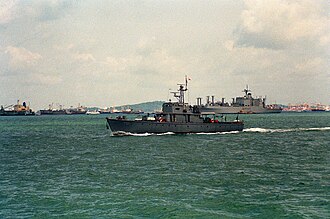
 RSS Panglima underway in the Singapore Strait | |
| History | |
|---|---|
 Malayan RNVR Malayan RNVR | |
| Name | HMS Panglima |
| Builder | United Engineers Ltd |
| Laid down | 1954 |
| Launched | 14 January 1956 |
| Commissioned | See notea |
| Fate | Transferred to Malaysia |
 Malaysia Malaysia | |
| Name | KD Panglima |
| Commissioned | 22 September 1963 |
| Fate | Transferred to Singapore |
 Singapore Singapore | |
| Name | RSS Panglima |
| Commissioned | See noteb |
| Decommissioned | 9 July 1991 |
| Identification | Pennant number: P68 |
| Fate | Sold to New West Coast Pte Ltd |
| General characteristics | |
| Class & type | Ford-class boat |
| Length | 35.7 m (117 ft) |
| Beam | 6.1 m (20 ft) |
| Propulsion | 820 kW |
| Speed | 15 knots (17 mph; 28 km/h) |
| Range | 3,000 miles (4,800 km) |
| Complement | 49 officers and enlisted |
| Armament |
|
RSS Panglima (P68) was the first ship of the Republic of Singapore Navy. The ship was commissioned in 1956 as HMS Panglima and was the third ship to be given the name. She was regarded as a milestone for the Malayan shipbuilding industry. During her service in the Malayan Royal Navy Volunteer Reserve, the ship hosted distinguished guests such as South Vietnamese vice president Nguyễn Ngọc Thơ and Singapore's first native head of state the Yang di-Pertuan Negara Yusof bin Ishak. She also embarked on numerous goodwill visits to nearby ports and conducted naval training for new sailors.
Upon Singapore's merger to form Malaysia, the ship was recommissioned as KD Panglima in September 1962. She engaged in several minor skirmishes with Indonesia during the Indonesia–Malaysia confrontation. Singapore's secession on 9 August 1965 led to the ship's recommissioning as RSS Panglima in 1966.
The ship underwent a major refit prior to being transferred to Midshipman School in 1983 to serve exclusively as a training ship. In 1991, she was decommissioned and sold at auction, after having served in three navies across 35 years of active service. The Naval Military Experts Institute still bears her name today.
Name and predecessors
The word Panglima is derived from a Malay language title commonly translated as warrior or commander.12 The name Panglima was assigned to three ships which operated between 1937 and 1991.
Her first predecessor Panglima was a motor launch built by Messrs Thornycroft (Singapore) built at a cost of $100,000. Panglima and her sister ship Pahlawan was handed over to the Straits Settlements government on 26 January 1937 and incorporated into the Straits Settlements Royal Naval Volunteer Reserve (SSRNVR).34 Panglima could accommodate 7 officers and 12 ratings and had an armament of a 3-pounder gun, one Lewis anti-aircraft gun, minesweeping equipment and four depth charges.3 As of February 1938, she served alongside Pahlawan, Plover, Peningat, King Fisher, Curlew and Lady Clifford in the SSRNVR.5 Panglima participated in the opening ceremony of King George VI Dock in Singapore on 14 February 1938.6 She was bombed and sunk by the Japanese during the Fall of Singapore in February 1942.7
After the war, a second 92 foot (28 m) Panglima was handed over by the Royal Navy to the Malayan Royal Naval Volunteer Reserve (MRNVR).7 She underwent a two-month refit to equip her with radars and radio equipment and was capable of accommodating 8 officers and 24 ratings, undergoing sea trials on 7 September 1948.8 Panglima was part of nightly anti-smuggling and security operations in the Strait of Johor together with Simbang.910 On 28 December 1955, it was announced that Panglima was "not suitable for sea training" and would be replaced by a third ship.7
Construction
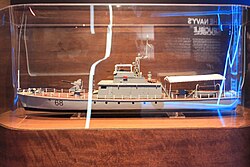
The keel laying for a new ship took place in 1954 at a United Engineers Ltd shipyard.11 On 14 October 1955, it was announced that the new ship would be launched in December of that year.12 It was reported that the ship cost $1 million.7
The ship launching ceremony for HMS Panglima was planned for 11 am, 14 January 1956, at Tanjong Rhu Dockyard.13 Royal Malayan Navy sailors formed a guard of honour welcoming Governor of Singapore Sir Robert Black and his wife Lady Anne Black. Religious leaders of Islam, Buddhism, Hinduism, Zoroastrianism and Christianity blessed the ship. Shortly afterward, Lady Black launched the ship in accordance with naval tradition by shattering a champagne bottle upon the bow, and Panglima slid into the waters to the fanfare of music. During the entire event, about 350 United Engineers workers who had built the ship protested outside the gates demanding for higher wages, though the ceremony was not disrupted.14 Sea trials were planned to commence in March and Panglima was to be commissioned in April 1956.14a
Panglima's hull consisted of teak and hardwood from the Malayan and Thai rainforests, coupled with a steel and light alloy.15 The light alloy superstructure enabled greater ship stability and reduced the overall displacement of the vessel. As aluminum surfaces required less repainting than steel, the cost of maintenance was also reduced. Such innovations were already widely practiced in other countries but Panglima was nevertheless regarded as a milestone of the Malayan shipbuilding industry.16 Lieutenant Commander Fleming called the ship "comparable to the most modern craft of her type in the Royal Navy".17
Panglima was described as a "sub-chaser" and was equipped with anti-submarine equipment, a 40mm Bofors main gun, radar and new navigational aids.714
Operational career
MRNVR service
In November 1956, Panglima escorted the Royal Yacht Britannia as the latter proceeded to Langkawi and Port Swettenham (today Port Klang). As Panglima had departed Singapore hastily to rendezvous the yacht, the crew had forgotten to restock supplies. The Duke of Edinburgh gifted the ships' company six cartons of matchsticks after an officer declined a cigarette during a cocktail party onboard Britannia.18
Under the command of Lieutenant Commander J.S. Macintye, Panglima sailed to Penang on 12 January 1957 as part of a routine cruise.19 In April 1957, Panglima visited Saigon, the capital of South Vietnam as part of a goodwill visit. The visit coincided with Queen Elizabeth II's birthday; Panglima and other Republic of Vietnam Navy ships fired a 21-gun salute at noon in her honour on 23 April. The ship also hosted the South Vietnamese vice president Nguyễn Ngọc Thơ and Navy chief Lê Quang Mỹ.20 She returned to Singapore on 29 April.21
As a training ship, Panglima embarked three recruits from the Women's Auxiliary Naval Service (SWANS) and 14 other ratings from the Malayan and Fijian royal naval reserves in April 1958.22
On 22 February 1959, the Duke of Edinburgh Prince Philip, who was also Admiral of the Fleet, visited Singapore on an official royal tour. Panglima escorted his barge from the Royal Yacht Britannia as it made its way to Clifford Pier, with her crew lining the deck.23 The prince departed Singapore on 25 February and Panglima accompanied astern of Britannia back out to sea.24
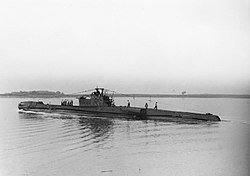
Panglima participated in a mock battle with the Royal Navy submarine HMS Tactician in September 1960, with the former asserting a sea denial stance against its adversary seeking to enter Singapore waters. Tactician repeatedly evaded detection until sunset, when Panglima established contact and fired "depth charges" and "won" the battle. It was the first exercise the ship had conducted with a submarine, lasting three hours.25
On 22 July 1961, Panglima hosted the Yang di-Pertuan Negara Yusof bin Ishak as he reviewed a naval parade put on by the Harbour Division of Singapore Customs. As Panglima sailed past the Customs fleet of speedboats and launches, they saluted the island's first native head of state by sounding their air horns.26
Malaysian service
The State of Singapore merged with Malaya, North Borneo and Sarawak on 16 September 1963 to form Malaysia. On 22 September 1963, the Royal Navy officially handed over the Singapore division of the MRNVR to the Royal Malaysian Navy. HMS Panglima was recommissioned as KD Panglima (KD standing for Kapal Di-Raja, or "His Majesty's Ship"), and assigned to the Singapore Volunteer Force of the Royal Malaysian Navy.11
With the ongoing Indonesia–Malaysia confrontation, Panglima was involved in patrolling the Singapore Strait against intrusions.2 On 1 April 1964, Panglima was on patrol duty off Pedra Branca when the survey ship HMS Dampier operating nearby rescued three Indonesian Chinese sailors from their sinking sampan during a storm. Dampier's crew pumped the water out of the sampan to make it seaworthy again, and Panglima subsequently towed it back to Singapore.27 Under Lieutenant Andy Miller in 1965, she was involved with a minor skirmish with Indonesian custom boats and torpedo boats. Radioing the naval headquarters for assistance, the standoff lasted seven minutes until British and Australian aircraft arrived overhead with a British frigate, resulting in the Indonesians retreating.28
Singapore service
| External image | |
|---|---|
| Panglima flying the new naval ensign on 5 May 1967 National Archives of Singapore |
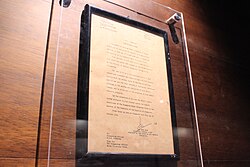
On 9 August 1965, Singapore separated from Malaysia to form a sovereign republic. The following year on 1 February 1966, the Singapore Volunteer Force was transferred to the republic's Ministry of the Interior and Defence.11 In early November, KD Panglima was handed over to Singapore2930 and recommissioned as RSS (Republic of Singapore Ship) Panglima.b
Under the command of Lieutenant Roland Vivian Simon in 1967, Panglima came across a bumboat being shot at by an Indonesian customs boat, off the island of Pulau Seking (today part of Pulau Semakau). Panglima opened fire on the custom boat's wheelhouse and radar, successfully forcing it to retreat.28
With the fall of Saigon in 1975, Vietnamese boat people began entering Singapore waters. Under the command of Captain Ernest H Wickramsingh, Panglima was the first ship to encounter the arrivals and subsequently remained at sea for 23 days during Operation Thunderstorm, past her regular two to three day patrols. Her crew boarded the incoming refugee boats to repair defects and provide supplies.32
Panglima became part of the Support Ship Squadron in August 1976. She subsequently underwent a major refit in November 1981 which included providing her bridge with air-conditioning by enclosing it, with the refit being completed in March 1982. The Midshipman School took over the ship in 1983 and thereafter used it exclusively as a training ship.33 During the 1990 National Day Parade, she participated in Singapore's first post-independence sea review.343536
Retirement
| External image | |
|---|---|
| Panglima on the day prior to her decommissioning National Archives of Singapore |
Panglima was the first RSN ship to be granted a formal decommissioning ceremony. On 9 July 1991, following 35 years of active service across three navies, Panglima was decommissioned in a ceremony officiated by Chief of Navy Commodore Teo Chee Hean held at Brani Naval Base. A minute of silence was observed one minute before sunset, upon which her flags and commissioning pennant were hauled down accompanied by the national anthem. Her final commanding officer, Captain Harry Wee handed the flags to the chief of navy.33
While the Ministry of Defence initially considered preserving her as a museum ship, the cost of restoration was estimated to be S$4 million (US$2.32 million) and thereafter S$300,000 (US$173,656.33) per year. Public opinion was split on whether to preserve Panglima, with some highlighting her historical value and others saying it was not worth the cost.37
The ship was subsequently sold at auction for S$1,300 (US$798.05) to New West Coast Pte Ltd on 3 April 1992.3839 DBS Land considered purchasing and restoring Panglima as a maritime exhibit or entertainment ship as part of its revitalization plans for Clarke Quay. Its representatives toured the ship on 4 May, but the company eventually decided not to move forward with the plans in August.4041
Legacy

The ship's name was transferred to the School of Naval Training and later RSS Panglima-Changi Naval Training Base (CNTB).334243 The CNTB was later renamed the Institute of Maritime Operations & Systems (IMOS) and subsequently the Naval Military Experts Institute (NMI) on 12 July 2013, though it's still referred to as RSS Panglima.4445
The ship's bell, helms, and 40mm Bofors main gun are on display in the Navy museum within Changi Naval Base.46
Notes
Notes
- The date of Panglima’s commissioning into MRNVR service differs between sources:
- A 1955 The Straits Times article dated 28 December states she would be commissioned in March 1956.7
- During her launch event in January 1956, it was stated that she would be commissioned in April 1956.2
- The former website of the Retired Malaysian Naval Officers Association claims she was commissioned in May 1956.11
- The date of Panglima’s commissioning into Singapore service differs between sources:
- The commissioning order, dated 24 October 1966, states that she was due to be commissioned on 31 October 1966.
- A 1966 The Straits Times article dated 2 November states she was commissioned "yesterday", which would be 1 November 1966.31
- A 1992 The New Paper article states she was commissioned on 1 January 1966.2
References
References
- "Yet another Warrior for the Navy". The Straits Times. 5 January 1956. Retrieved 28 August 2021.
- "Panglima's History". The New Paper. 3 April 1992.
- "Patrol Launches for R.N.V.R". Malaya Tribune. 27 January 1937. Retrieved 29 March 2026.
- Taylour, Richard (1 January 1937). "Training Malays to Guard their OWN COASTS". The Straits Times Annual. Retrieved 29 March 2026.
- "Australian Warships and Singapore Manoeuvres". The Singapore Free Press. 3 February 1938. Retrieved 29 March 2026.
- ""King George VI Dock" Opened at Singapore". Pinang Gazette and Straits Chronicle. 15 February 1938. Retrieved 29 March 2026.
- "Volunteers to get $1mil. ship". The Straits Times. 28 December 1955. Retrieved 28 August 2021.
- "Panglima Shows Her Paces". Malaya Tribune. 8 September 1948. Retrieved 29 March 2026.
- "'Ghost Ship' Frighten the Bandits". The Straits Times. 26 November 1950. Retrieved 29 March 2026.
- "MRNVR Commander Calls For Men". Sunday Standard. 14 January 1951. Retrieved 29 March 2026.
- "History of Royal Malaysian Navy". Retired Malaysian Naval Officers Association. Archived from the original on 4 February 2019. Retrieved 28 August 2021.
- "Lady Black to launch $1m. warship". The Singapore Free Press. 14 October 1955. Retrieved 28 August 2021.
- "New vessel for Singapore". Indian Daily Mail. 5 January 1956.
- "Million-dollar sub-chaser launched in Singapore". The Straits Times. 15 January 1956. Retrieved 9 July 2017.
- "From wooden boats to customisable warships: The evolution of Singapore's navy". CNA. 5 May 2017. Archived from the original on 9 July 2017. Retrieved 28 August 2021.
- "Milestone in Shipbuilding". Singapore Standard. 17 January 1956.
- "'Made in Singapore' trip for Navy's new training craft". The Straits Times. 26 January 1956. Retrieved 28 August 2021.
- "With love from the Duke—six cartons of matches for crew". The Straits Times. 3 November 1956. Retrieved 28 August 2021.
- "Training ship for Penang". The Straits Times. 11 January 1957. Retrieved 28 August 2021.
- "Goodwill visit to Saigon..." The Singapore Free Press. 2 May 1957. Retrieved 28 August 2021.
- "Panglima returns on happy note". The Straits Times. 29 April 1957. Retrieved 28 August 2021.
- Baptista, Esme (20 April 1958). "Training to be sailors on board the Panglima". The Straits Times. Retrieved 28 August 2021.
- "Thousands at waterfront to cheer him". The Straits Times. 23 February 1959. Retrieved 28 August 2021.
- "Splendid scene at harbour as Prince Philip ends visit to Singapore and sails for Kuching". The Straits Times. 26 February 1959. Retrieved 28 August 2021.
- Khoo, Alan (1 October 1960). "MRNVR ratings sink 'enemy' submarine". The Singapore Free Press. Retrieved 28 August 2021.
- "Review of Customs..." The Straits Times. No. 23 July 1961. Retrieved 28 August 2021.
- "The Royal Navy to the rescue". Straits Budget. 8 July 1964. Retrieved 5 September 2022.
- "Milestones of the RSN: 1967 to 2017". TODAY. 6 May 2017. Retrieved 30 August 2021.
- "Malaysia returns two ships to Spore". The Straits Times. 3 November 1966. Retrieved 29 March 2026.
- "Malaysia to return two ships to S'pore". The Straits Times. 2 November 1966. Retrieved 26 March 2026.
- Ryan, Jonathan (2015). "SAF50: The RSN through the years". Navy News (1/2015): 11.
- Pereira, Matthew (10 July 1991). "Navy bids farewell to a faithful ship". The Straits Times.
- "Giant National Day sea review". New Paper. 14 July 1990. Retrieved 5 September 2022.
- "Some ships you will see". The Straits Times. 14 July 1990. Retrieved 5 September 2022.
- "The pomp and the pageantry". The Straits Times. 10 August 1990. Retrieved 5 September 2022.
- Lyn, Lee (3 April 1992). "Going, going". New Paper. Retrieved 5 September 2022.
- "Only $1,300 for historic ship". The New Paper. 4 April 1992.
- "Singapore's oldest navy ship auctioned for $1,300". The Straits Times. 5 April 1992. Retrieved 27 March 2026.
- Nathan, Dominic (6 May 1992). "Oldest navy ship may have new life on S'pore River". The Straits Times. Retrieved 5 September 2022.
- "Tongkangs ahoy". New Paper. 20 August 1992. Retrieved 5 September 2022.
- "2004 – Changi Naval Base". Ministry of Defence. Archived from the original on 29 September 2006. Retrieved 23 March 2008.
- Boey, David (28 January 2006). "S'pore navy has new school". The Straits Times.
- "Singapore Navy Marks Another Milestone in Its Training Transformation". Naval Today. 15 July 2013. Retrieved 29 August 2021.
- Loh, Victor (1 May 2017). "PM Lee to commission littoral warship as S'pore Navy marks 50th anniversary". The Straits Times. Retrieved 29 August 2021.
- "Navy Museum". Republic of Singapore Navy. Archived from the original on 16 November 2021. Retrieved 29 August 2021.
Primary sources cited
- Republic of Singapore Navy (2017). A Maritime Force for a Maritime Nation: Celebrating 50 years of the Navy. Straits Times Press. ISBN 9789813035423.