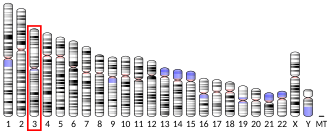
60S ribosomal protein L14 is a protein that in humans is encoded by the RPL14 gene.56
Function
Ribosomes, the organelles that catalyze protein synthesis, consist of a small 40S subunit and a large 60S subunit. Together these subunits are composed of 4 RNA species and approximately 80 structurally distinct proteins. This gene encodes a ribosomal protein that is a component of the 60S subunit. The protein belongs to the L14E family of ribosomal proteins. It contains a basic region-leucine zipper (bZIP)-like domain. The protein is located in the cytoplasm. This gene contains a trinucleotide (GCT) repeat tract whose length is highly polymorphic; these triplet repeats result in a stretch of alanine residues in the encoded protein. Transcript variants utilizing alternative polyA signals and alternative 5'-terminal exons exist but all encode the same protein. As is typical for genes encoding ribosomal proteins, there are multiple processed pseudogenes of this gene dispersed through the genome.6
Interactions
RPL14 has been shown to interact with PHLDA1.7
References
References
- GRCh38: Ensembl release 89: ENSG00000188846 – Ensembl, May 2017
- GRCm38: Ensembl release 89: ENSMUSG00000025794 – Ensembl, May 2017
- "Human PubMed Reference:". National Center for Biotechnology Information, U.S. National Library of Medicine.
- "Mouse PubMed Reference:". National Center for Biotechnology Information, U.S. National Library of Medicine.
- Tanaka M, Tanaka T, Harata M, Suzuki T, Mitsui Y (March 1998). "Triplet repeat-containing ribosomal protein L14 gene in immortalized human endothelial cell line (t-HUE4)". Biochem Biophys Res Commun. 243 (2): 531–7. Bibcode:1998BBRC..243..531T. doi:10.1006/bbrc.1998.8125. PMID 9480843.
- "Entrez Gene: RPL14 ribosomal protein L14".
- Hinz T, Flindt S, Marx A, Janssen O, Kabelitz D (May 2001). "Inhibition of protein synthesis by the T cell receptor-inducible human TDAG51 gene product". Cell. Signal. 13 (5): 345–52. doi:10.1016/S0898-6568(01)00141-3. PMID 11369516.
External links
External links
Further reading
Further reading
- Wool IG, Chan YL, Glück A (1996). "Structure and evolution of mammalian ribosomal proteins". Biochem. Cell Biol. 73 (11–12): 933–47. doi:10.1139/o95-101. PMID 8722009.
- Maruyama K, Sugano S (1994). "Oligo-capping: a simple method to replace the cap structure of eukaryotic mRNAs with oligoribonucleotides". Gene. 138 (1–2): 171–4. doi:10.1016/0378-1119(94)90802-8. PMID 8125298.
- Dave VP, Larché M, Rencher SD, Koop BF, Hurwitz JL (1994). "Restricted usage of T-cell receptor V alpha sequence and variable-joining pairs after normal T-cell development and bone marrow transplantation". Hum. Immunol. 37 (3): 178–84. doi:10.1016/0198-8859(93)90183-2. PMID 8244780.
- Li SH, McInnis MG, Margolis RL, Antonarakis SE, Ross CA (1993). "Novel triplet repeat containing genes in human brain: cloning, expression, and length polymorphisms". Genomics. 16 (3): 572–9. doi:10.1006/geno.1993.1232. PMID 8325628.
- Aoki M, Koranyi L, Riggs AC, Wasson J, Chiu KC, Vaxillaire M, Froguel P, Gough S, Liu L, Donis-Keller H (1996). "Identification of trinucleotide repeat-containing genes in human pancreatic islets". Diabetes. 45 (2): 157–64. doi:10.2337/diabetes.45.2.157. PMID 8549859.
- Suzuki Y, Yoshitomo-Nakagawa K, Maruyama K, Suyama A, Sugano S (1997). "Construction and characterization of a full length-enriched and a 5'-end-enriched cDNA library". Gene. 200 (1–2): 149–56. doi:10.1016/S0378-1119(97)00411-3. PMID 9373149.
- Reddy PH, Stockburger E, Gillevet P, Tagle DA (1998). "Mapping and characterization of novel (CAG)n repeat cDNAs from adult human brain derived by the oligo capture method". Genomics. 46 (2): 174–82. doi:10.1006/geno.1997.5044. PMID 9417904.
- Hinz T, Flindt S, Marx A, Janssen O, Kabelitz D (2001). "Inhibition of protein synthesis by the T cell receptor-inducible human TDAG51 gene product". Cell. Signal. 13 (5): 345–52. doi:10.1016/S0898-6568(01)00141-3. PMID 11369516.
- Uechi T, Tanaka T, Kenmochi N (2001). "A complete map of the human ribosomal protein genes: assignment of 80 genes to the cytogenetic map and implications for human disorders". Genomics. 72 (3): 223–30. doi:10.1006/geno.2000.6470. PMID 11401437.
- Andersen JS, Lyon CE, Fox AH, Leung AK, Lam YW, Steen H, Mann M, Lamond AI (2002). "Directed proteomic analysis of the human nucleolus". Curr. Biol. 12 (1): 1–11. Bibcode:2002CBio...12....1A. doi:10.1016/S0960-9822(01)00650-9. PMID 11790298. S2CID 14132033.
- Yoshihama M, Uechi T, Asakawa S, Kawasaki K, Kato S, Higa S, Maeda N, Minoshima S, Tanaka T, Shimizu N, Kenmochi N (2002). "The human ribosomal protein genes: sequencing and comparative analysis of 73 genes". Genome Res. 12 (3): 379–90. doi:10.1101/gr.214202. PMC 155282. PMID 11875025.
- Odintsova TI, Müller EC, Ivanov AV, Egorov TA, Bienert R, Vladimirov SN, Kostka S, Otto A, Wittmann-Liebold B, Karpova GG (2004). "Characterization and analysis of posttranslational modifications of the human large cytoplasmic ribosomal subunit proteins by mass spectrometry and Edman sequencing". J. Protein Chem. 22 (3): 249–58. doi:10.1023/A:1025068419698. PMID 12962325. S2CID 10710245.
- Andersen JS, Lam YW, Leung AK, Ong SE, Lyon CE, Lamond AI, Mann M (2005). "Nucleolar proteome dynamics". Nature. 433 (7021): 77–83. Bibcode:2005Natur.433...77A. doi:10.1038/nature03207. PMID 15635413. S2CID 4344740.
- Olsen JV, Blagoev B, Gnad F, Macek B, Kumar C, Mortensen P, Mann M (2006). "Global, in vivo, and site-specific phosphorylation dynamics in signaling networks". Cell. 127 (3): 635–48. doi:10.1016/j.cell.2006.09.026. PMID 17081983. S2CID 7827573.