| Rick Mears | |||||||
|---|---|---|---|---|---|---|---|
 Mears in 2021 | |||||||
| Born | Richard Ravon Mears (1951-12-03) December 3, 1951 Wichita, Kansas, U.S. | ||||||
| Championship titles | |||||||
| CART Championship Car (1979, 1981, 1982) Major victories Pikes Peak Hill Climb (1976) Indianapolis 500 (1979, 1984, 1988, 1991) Pocono 500 (1982, 1985, 1987) Michigan 500 (1991) | |||||||
| Champ Car career | |||||||
| 203 races run over 17 years | |||||||
| Best finish | 1st (1979 (CART), 1981, 1982) | ||||||
| First race | 1976 California 500 (Ontario) | ||||||
| Last race | 1992 Michigan 500 (Michigan) | ||||||
| First win | 1978 Rex Mays Classic (Milwaukee) | ||||||
| Last win | 1991 Michigan 500 (Michigan) | ||||||
| |||||||
Richard Ravon Mears1 (born December 3, 1951) is an American former race car driver. He is one of four men to win the Indianapolis 500 four times (1979, 1984, 1988, 1991) and is the current record-holder for pole positions in the race with six (1979, 1982, 1986, 1988, 1989, 1991). Mears is also a three-time Indycar series/World Series champion (1979, 1981 and 1982).
Biography
Early life
Mears was born in Wichita, Kansas and raised in Bakersfield, California.23 He began his racing career in off-road racing. In 1976, he was recommended by a representative of Bill Simpson's helmet company, and Simpson gave him a ride at the USAC Champ Car's California 500 in an old Eagle-Offenhauser, finishing eighth. Simpson then sold the car to Art Sugai, on the condition that Mears would continue driving it. In mid 1977, he switched to Theodore Racing.
Mears' speed attracted the attention of Roger Penske. Although at the time, Penske Racing had the services of Mario Andretti and Tom Sneva, and Andretti was also racing with Lotus in Formula One. Penske wanted another young driver who would focus exclusively on American racing. In 1978, Mears was offered a part-time ride in nine of the 18 championship races, filling in when Andretti was overseas. The arrangement also included a ride at the 1978 Indianapolis 500.
In his rookie appearance at Indianapolis, Mears put his car on the front row and was the first rookie to qualify over 200 mph. When the race began, Mears discovered his helmet was not strapped on tight enough. Unfortunately, he had to make a pit stop where the helmet was safely secured. He did not lead a lap in the race and retired at 104 laps with a blown engine. Nonetheless, Mears ended up sharing "Rookie of the Year" honors with Larry Rice.
Two weeks later, at the Rex Mays Classic at Milwaukee, he won his first race. He added another win a month later at Atlanta and rounded out the year with his first road course win at Brands Hatch. Because of his terrific showing as a rookie, Mears was elevated to full-time status at Penske Racing for 1979 after teammate and series champion Tom Sneva parted company with Penske.
1979
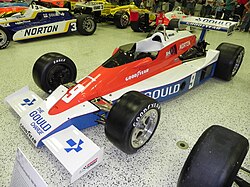
In 1979, the National Championship sanction was changed from the USAC to CART. At Indianapolis, Mears won his first "500", staying at the front of the field and taking full advantage when Bobby Unser fell out of contention with mechanical trouble. Three wins and four second places in the eleven CART-eligible races won Mears his first championship. His worst finish that season was seventh in Trenton's second heat.
1980
In 1980, the ground effect Chaparral was technologically more advanced than the other chassis, and Johnny Rutherford drove it to his third win at Indianapolis, going on to dominate the season. Mears finished fourth in the points with one win, earned at Mexico City.
In 1980, Mears was offered a Formula One test with Team Brabham by then team boss, Bernie Eccelstone. Mears interest in the test was largely because of the ongoing split between CART and USAC and he wanted to keep his options open should CART fall apart. Mears tested with Brabham twice, once at Paul Ricard and once at Riverside. After adjusting his driving style to the Brabham BT49, Mears posted lap times within half a second of future three time Formula One champion and then Brabham driver Nelson Piquet at the first test.
During the second test, Mears posted lap times faster than Piquet's. Piquet was so impressed with Mears' driving, as well as their time spent together, that he endorsed bringing Mears on as a second driver. Eccelstone offered Mears a contract with Brabham, but Mears declined. Mears would later say in his memoir that although he felt that Brabham was a strong team and that he had the skill to compete for wins in Formula One, he was unsure about moving to Europe and was still interested in oval racing.4
1981–1982
The 1981 and 1982 seasons Mears went on to win two more championships. Despite facial burns during a pit fire in the 1981 Indianapolis 500, Mears' ten race victories in the two-year span were enough for two more Indycar championships. At the 1982 Indianapolis 500, he came within 0.16 of a second from securing his second Indianapolis 500 win. With less than 20 laps to go, on his final pit stop, the crew filled up the entire tank rather than giving him only the amount he needed to finish. The delay left him more than 11 seconds behind Gordon Johncock.
Nevertheless, Mears made up the difference when Johncock suffered handling problems; however, his valiant effort fell short as he was narrowly beaten out by Johncock. The photo finish stood for ten years as the closest finish at the Indianapolis 500. The photo-finish also quieted the controversy surrounding the pace-lap crash with teammate Kevin Cogan when he appeared to spin out of control for no apparent reason; fellow drivers Gordon Johncock, Johnny Rutherford, and Bobby Unser, said that Mears was to blame for the crash as he brought the field down too slowly at the start of the race.
1983–1984
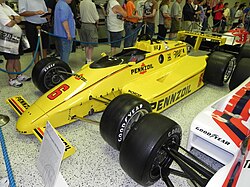
For 1983, Penske acquired the Pennzoil sponsorship with its yellow paint scheme. Teammate Al Unser took that year's title. The team switched to the March chassis for the 1984 Indianapolis 500 after the Penske chassis proved unsuccessful in the first two races of the year.
Mears scored his second Indianapolis 500 win that May, but suffered severe leg injuries later in the year in a crash at the Sanair Super Speedway. The March chassis, like most contemporary open-wheel racing cars, sat the driver far forward in the nose, with little protection for the legs and feet.
1985–1987
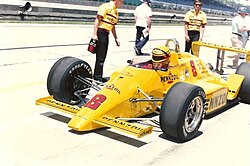
After the Sanair crash, Mears was slowed down by the injuries to his right foot and that affected him throughout the remainder of his career. Over the next three seasons, he won only two races. Notwithstanding his injuries, he did make a comeback by winning the 1985 Pocono 500. In 1986, he went on to win he pole position for the Indianapolis 500, but finished third in the race. He also went on to win the 1987 Pocono 500.
1988–1990

In 1988, after several years using the March chassis, the Penske team utilized a new car, the PC-17, with a Chevrolet engine. Mears made good use of this new car by winning the Indianapolis 500. A year later in 1989, he took a record-setting fifth pole at Indy, but retired from the race with mechanical problems. Emerson Fittipaldi won the Indianapolis 500 that year and also beat out Mears for the Championship in the last race at Laguna Seca Raceway, despite Mears winning that last race.
Also, that last race of 1989, set Mears apart from all other Indycar racers as he broke a tie with Bobby Rahal for race wins and became the most successful Indycar racer of the 1980s. In the winner's circle interview, when asked about breaking his road course dry spell when his specialty had been ovals throughout the years, he replied to Jack Arute, "Well, I guess there is hope for us old circle track drivers after all."
Fittipaldi joined Mears at Team Penske for 1990, but the year belonged to Al Unser Jr., who registered six wins. 1990 was also Mears' last in the Pennzoil paint scheme as Marlboro took over as sponsor of the team, and Jim Hall re-entered Indycar.
1991–1992

In 1991, during a practice session, Mears hit the wall in Indianapolis for the first time in his career. The next day, he climbed into his backup car, and claimed his record 6th career pole position.
Twenty laps from the end of the Indianapolis 500, it looked like Mears was set to be the runner-up behind Michael Andretti. However, when a subsequent yellow flag erased Andretti's 15-second lead, Mears gained the lead as Andretti opted to pit for fuel. It was a short-lived lead, as Andretti passed Mears around the outside of the first turn. A lap later Mears regained the lead, using the same move Andretti had used. Turning up his turbocharger, he then pulled away to win a fourth Indy 500, becoming the third driver to win four times at Indianapolis. Then, in August of 1991, he won his last race at the Michigan 500.
At the 1992 Indianapolis 500, Mears broke a wrist in a crash during practice and then crashed out of the race for the first time in his career while trying to avoid Jim Crawford's spinning car in turn 1. He raced only four more times in 1992 and then announced his retirement from racing at the Team Penske's Christmas party. No one except Penske and Rick's wife, Chris, knew of his plans to retire. He had just turned 41 years old.

As of 2026, Mears continues to work as a consultant and driver-mentor for Team Penske, the team where he won all of his IndyCar races. He currently acts as driver-mentor for Scott McLaughlin, Josef Newgarden, and David Malukas.
Personal life
Mears is the brother of Roger Mears, father of off-road and open-wheel racer Clint Mears, and the uncle of part-time NASCAR Cup Series driver Casey Mears. His marriage to his first wife Dina ended in divorce in 1983. He married Chris Bowen in 19865whom he divorced in 2002.
Awards
- In 1997, he was inducted into the International Motorsports Hall of Fame.
- Mears was inducted into the Indianapolis Motor Speedway Hall of Fame in 1998.
- He was inducted in the Motorsports Hall of Fame of America in 1998.6
- Inducted into Team Penske Hall of Fame on May 25, 2017
Motorsports career results
American Open-Wheel racing
USAC
(key) (Races in bold indicate pole position)
| Year | Team | Chassis | Engine | 1 | 2 | 3 | 4 | 5 | 6 | 7 | 8 | 9 | 10 | 11 | 12 | 13 | 14 | 15 | 16 | 17 | 18 | Rank | Points |
|---|---|---|---|---|---|---|---|---|---|---|---|---|---|---|---|---|---|---|---|---|---|---|---|
| 1976 | Bill Simpson | Eagle 72 | Offenhauser L4t | PHX | TRE | INDY | MIL | POC | MCH | TWS | TRE | MIL | ONT 8 |
MCH | 16th | 390 | |||||||
| Art Sugai | TWS 9 |
PHX 9 |
|||||||||||||||||||||
| 1977 | Art Sugai | Eagle 72 | Offenhauser L4t | ONT 24 |
PHX DNQ |
TWS 15 |
TRE | INDY DNQ |
MIL | 19th | 555 | ||||||||||||
| Theodore Racing | McLaren M16C/D | POC 30 |
MOS | MCH 6 |
TWS 7 |
MIL 5 |
ONT 26 |
MCH 8 |
PHX | ||||||||||||||
| 1978 | Team Penske | Penske PC-6 | Cosworth DFX V8t | PHX 5 |
ONT | TWS | TRE | INDY 23 |
MOS 2 |
MIL 1 |
POC | MCH 22 |
ATL 1 |
TWS 9 |
MIL 2 |
ONT 9 |
MCH | TRE | SIL 2 |
BRH 1 |
PHX | 9th | 2171 |
| 1979 | ONT |
TWS |
INDY 1 |
MIL |
POC |
TWS |
MIL |
- | 0 | ||||||||||||||
| 1980 | ONT 21 |
INDY 5 |
MIL 5 |
POC 12 |
MOH 9 |
7th | 766 | ||||||||||||||||
| 1981-82 | INDY 30 |
POC |
ILL |
DUQ |
ISF |
INDY 2 |
7th | 800 | |||||||||||||||
| 1982-83 | SPR | DUQ | NAZ | INDY 3 |
3rd | 700 | |||||||||||||||||
| 1983-84 | DUQ |
INDY 1 |
1st | 1,000 | |||||||||||||||||||
CART Series
(key) (Races in bold indicate pole position)
Indianapolis 500 results
Indy 500 qualifying results
| Year | Att # | Date | Time | Qual Day |
Car # | Laps | Qual Time |
Qual Speed |
Rank | Start | Comment |
| 1977 | 85 | 05-22 | 16:02 | 4 | 90 | 1 | — | — | — | — | Incomplete run; pulled off |
| 96 | 05-22 | 17:21 | 4 | 90 | 2 | — | — | — | — | Incomplete run; waved off | |
| 1978 | 10 | 05-20 | 12:13 | 1 | 71 | 4 | 2:59.93 | 200.078 | 4 | 3 | |
| 1979 | 34 | 05-13 | 16:39 | 1 | 9 | 4 | 3:05.82 | 193.736 | 1 | 1 | |
| 1980 | 1 | 05-10 | 11:05 | 1 | 1 | 4 | 3:12.01 | 187.490 | 7 | 6 | |
| 1981 | 34 | 05-16 | 13:41 | 1 | 6 | 2 | — | — | — | — | Incomplete run; pulled off |
| 53 | 05-16 | 15:52 | 2 | 68 | 4 | 3:05.55 | 194.018 | 10 | 22 | ||
| 1982 | 2 | 05-15 | 11:09 | 1 | 1 | 4 | 2:53.91 | 207.004 | 1 | 1 | 1 and 4 lap track records |
| 1983 | 7 | 05-21 | 11:39 | 1 | 2 | 4 | 2:56.211 | 204.301 | 3 | 3 | |
| 1984 | 2 | 05-12 | 12:25 | 1 | 6 | 4 | 2:53.204 | 207.847 | 3 | 3 | |
| 1985 | 29 | 05-11 | 17:10 | 1 | 1 | 4 | 2:51.595 | 209.796 | 10 | 10 | |
| 1986 | 9 | 05-10 | 12:40 | 1 | 4 | 4 | 2:46.030 | 216.828 | 1 | 1 | 1 and 4 lap track records |
| 1987 | 3 | 05-09 | 11:19 | 1 | 8T | 4 | 2:50.239 | 211.467 | 3 | 3 | |
| 1988 | 23 | 05-14 | 13:58 | 1 | 5 | 4 | 2:44.235 | 219.198 | 1 | 1 | 1 and 4 lap track records |
| 1989 | 20 | 05-14 | 14:09 | 1 | 4 | 4 | 2:40.797 | 223.885 | 1 | 1 | 1 and 4 lap track records |
| 1990 | 6 | 05-13 | 16:57 | 1 | 2 | 4 | 2:40.560 | 224.215 | 2 | 2 | |
| 1991 | 16 | 05-11 | 12:51 | 1 | 3T | 4 | 2:40.633 | 224.113 | 2 | 1 | |
| 1992 | 21 | 05-09 | 17:48 | 1 | 4 | 4 | 2:40.289 | 224.594 | 10 | 9 |
International Race of Champions
(key) (Bold – Pole position. * – Most laps led.)
| International Race of Champions results | |||||||||||
|---|---|---|---|---|---|---|---|---|---|---|---|
| Season | Make | Q1 | Q2 | Q3 | 1 | 2 | 3 | 4 | Pos. | Points | Ref |
| 1978–79 | Chevy | MCH | MCH 7 |
RSD | RSD | ATL | NA | - | 21 | ||
| 1979–80 | MCH | MCH 3 |
RSD | RSD 4 |
ATL 2 |
3rd | 31 | 22 | |||
| 1986 | Chevy | DAY 9 |
MOH 12 |
TAL 8 |
GLN 9 |
12th | 25 | 23 | |||
| 1989 | Chevy | DAY 8 |
NZH 10 |
MCH 9 |
GLN 9 |
11th | 24 | 24 | |||
Books
- Tremayne, David (1991). Racers Apart: Memories of motorsport heroes. UK: Motor Racing Publications Ltd. p. 293. ISBN 0-947981-58-6.
- Kirby, Gordon (2008). Rick Mears * Thanks: The Story of Rick Mears and the Mears Gang. US: Crash Media Group. p. 264. ISBN 978-1-905334-30-8.
References
References
- "Rick Mears". www.champcarstats.com. Retrieved 2023-06-07.
- mgriffith@bakersfield.com, MiKE GRIFFITH Californian staff writer (2011-09-14). "Bakersfield native Rick Mears has remained true to IndyCar racing". The Bakersfield Californian. Retrieved 2025-02-23.
- Pridgen, Andrew. "The Calif. racing star who crashed his car and disappeared". SFGATE. Archived from the original on 2024-12-05. Retrieved 2025-02-23.
- Kirby, Gordon (21 December 2015). "Rick Mears's 1980 F1 tests with Brabham". Motorsport.com. Motorsport Network. Retrieved 19 July 2021.
- "ESPN Classic - Mears used high pass to beat Andretti".
- Rick Mears at the Motorsports Hall of Fame of America
- "Rick Mears – 1979 CART Results". Racing-Reference. NASCAR Digital Media, LLC. Retrieved August 16, 2023.
- "Rick Mears – 1980 CART Results". Racing-Reference. NASCAR Digital Media, LLC. Retrieved August 16, 2023.
- "Rick Mears – 1981 CART Results". Racing-Reference. NASCAR Digital Media, LLC. Retrieved August 16, 2023.
- "Rick Mears – 1982 CART Results". Racing-Reference. NASCAR Digital Media, LLC. Retrieved August 16, 2023.
- "Rick Mears – 1983 CART Results". Racing-Reference. NASCAR Digital Media, LLC. Retrieved August 16, 2023.
- "Rick Mears – 1984 CART Results". Racing-Reference. NASCAR Digital Media, LLC. Retrieved August 16, 2023.
- "Rick Mears – 1985 CART Results". Racing-Reference. NASCAR Digital Media, LLC. Retrieved August 16, 2023.
- "Rick Mears – 1986 CART Results". Racing-Reference. NASCAR Digital Media, LLC. Retrieved August 16, 2023.
- "Rick Mears – 1987 CART Results". Racing-Reference. NASCAR Digital Media, LLC. Retrieved August 16, 2023.
- "Rick Mears – 1988 CART Results". Racing-Reference. NASCAR Digital Media, LLC. Retrieved August 16, 2023.
- "Rick Mears – 1989 CART Results". Racing-Reference. NASCAR Digital Media, LLC. Retrieved August 16, 2023.
- "Rick Mears – 1990 CART Results". Racing-Reference. NASCAR Digital Media, LLC. Retrieved August 16, 2023.
- "Rick Mears – 1991 CART Results". Racing-Reference. NASCAR Digital Media, LLC. Retrieved August 16, 2023.
- "Rick Mears – 1992 CART Results". Racing-Reference. NASCAR Digital Media, LLC. Retrieved August 16, 2023.
- "Rick Mears – 1979 IROC Results". Racing-Reference. NASCAR Digital Media, LLC. Retrieved August 4, 2023.
- "Rick Mears – 1980 IROC Results". Racing-Reference. NASCAR Digital Media, LLC. Retrieved August 4, 2023.
- "Rick Mears – 1986 IROC Results". Racing-Reference. NASCAR Digital Media, LLC. Retrieved August 4, 2023.
- "Rick Mears – 1989 IROC Results". Racing-Reference. NASCAR Digital Media, LLC. Retrieved August 4, 2023.