Rewa State | |||||||
|---|---|---|---|---|---|---|---|
| 1140–1947 | |||||||
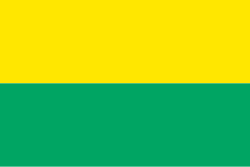 Flag
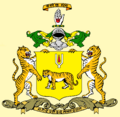 Coat of arms
| |||||||
| Capital | |||||||
| History | |||||||
• Established | 1140 | ||||||
| 1947 | |||||||
| Area | |||||||
| 1901 | 33,670 km2 (13,000 sq mi) | ||||||
| Population | |||||||
• 1901 | 1,327,385 | ||||||
| |||||||
| Today part of | India | ||||||
Columbia-Lippincott Gazetteer. (New York: Columbia University Press, 1952) p. 369 | |||||||


Rewa State, formally the Kingdom of Baghelkhand, and later princely state of India, surrounding its eponymous capital, the town of Rewa.
Rewa was the largest princely states in the Baghelkhand Agency and Central India Agency, with an area of 33,670 km². Rewa was also the third-wealthiest principality in Central India, with an average revenue of 2.9 million rupees in 1901.1 The Baghelkhand Agency was dissolved in 1933, following which Rewa was placed under the authority of the Indore Residency.

History
According to legend, the kingdom of Rewa was founded around 1140 CE. On 5 October 1812, it became a British protectorate. Between 1 April 1875 and 15 October 1895, Rewa remained under the direct colonial administration of British India.2
The ruler of Rewa ruled from Bandhavgarh during the founding reign of Raja Vyaghra Dev, who was a direct descendant of Gujarati warrior king Vir Dhawal of Vaghela dynasty (as spelled Baghel). In 1617, Maharaja Vikramaditya Singh Baghel moved his capital to Rewa. Maharaja Martand Singh was the last ruler of Rewa who acceded to the Union of India after the independence of India.
Akbar was given refuge at Rewa at age 10, when his father Humayun fled India following a defeat in war. Prince Ramchandra Singh and Akbar grew up together as royal heirs. Maharaja Ramchandra Singh and Akbar remained friends. In the mid-1550s, Raja Ramachandra Singh Baghela maintained a musically talented court, including the legendary Tansen. Two of the Navratnas of Akbar, Tansen and Birbal (originally named Mahesh Das) were sent from Rewa by Maharaja Ramchandra Singh once Akbar became Emperor of India. In 1580, Akbar reorganized his empire into 12 Subahs and combined the provinces of Jaunpur Sultanate, Kara-Manikpur and territory of Bandhogarh into the Subah of Ilahabad.
Raja Vishwanath Singh abolished Sati in the state under British pressure in 1847. During the Indian Rebellion of 1857, Rewa State sided with the British East India Company.3 Rewa State was important for the British Raj from perspective of logistics as roads and railway lines connecting Gangetic plains to Deccan passed through the state.3
Rewa was the first princely state in India to declare Hindi the national language, in the times of Maharaja Gulab Singh. He is also credited for declaring the first responsive government in modern India, providing citizens of Rewa state a right to question their monarch's decisions.
The state came under British paramountcy in 1812 and remained a princely state within the British Raj until India's independence in 1947.
During the long minority of Raja Venkat Raman Singh (b.1876, r.1880–1918), the administration of the state was reformed. In 1901, the town boasted a high school, a "model jail" and two hospitals: the Victoria hospital and the Zenana hospital. However, Lord Irwin criticized the lagging of state in terms of development and he spoke of Rewa's need to end its aloofness with the world and it was still adjudged among the most backward areas of the country by V.P. Menon, after he visited the state in 1947.
During Gulab Singh's reign, the state turned more towards autocracy and regional autonomy with tahsildars needing His Highness' permission for petty decisions.
Post-independence period
Upon India's independence in 1947, the maharaja of Rewa acceded unto the Dominion of India. Rewa later merged with the Union of India and became part of Vindhya Pradesh, which was formed by the merger of the former princely states of the Baghelkhand and Bundelkhand agencies. Rewa served as the capital of the new state.4
In 1956, Vindhya Pradesh was merged with other nearby political entities to form the Indian constitutive state of Madhya Pradesh. The Maharaja's palace was converted into a museum.
In February 2007, an extensive book on the history of Rewa, Baghelkhand, or the Tigers' Lair by Dr D.E.U Baker, was published by Oxford University Press.
Revolt of 1857
Rewa played a controversial role in the Revolt of 1857. Thakur Ranmat Singh Baghel, a Sardar (commander) in the Maharaja of Rewa's service, became increasingly discontented with British interference, particularly by the British Resident Political Agent, Willoughby Osborne.
Ranmat Singh led a group of 2,000 rebels, besieging Osborne's bungalow. After Osborne escaped, the rebels continued their struggle, engaging in multiple battles across areas like Nagod, Bhilsain, Chitrakoot, Nowgong, Keoti, and defeated the British army.56
His letters and the secret messages sent to Tatya Tope through his associate Lal Punjab Singh reveal that he remained in contact with Tatya Tope and awaited his instructions.
In May 1858, Thakur Ranmat Singh Baghel joined forces with other rebel leaders at Kalpi to assist Rani Laxmibai of Jhansi. Following her defeat and retreat to Gwalior, he returned to the forests of Bundelkhand and Baghelkhand to continue a localized campaign.
During the Revolt of 1857 in Baghelkhand, the Kothi State (Kothi princely state, Satna) is noted for helping Thakur Ranmat Singh Baghel. Historical accounts mention that Raja Bahadur Avdhoot Singh Baghel of Kothi State provided rebels with shelter, ammunition, food, money, and support for recruiting fighters.
However, the Maharaja of Rewa, under British pressure, eventually turned against Ranmat Singh. The Maharaja of Rewa wanted Thakur Ranmat Singh Baghel to surrender to the British authorities with the assurance that he would not be killed. However his Diwan Dinbandhu Pandey of Rewa acted as an informant for the British, which led to the capture of Ranmat Singh by the British authorities, was arrested, charged with the murder of Europeans, and hanged in August 1860.78
According to David E.U. Baker in his book "Baghelkhand, or the Tigers’ Lair", Thakur Shyam Shah Baghel led a 300-strong resistance force in the Rewa–Shahdol–Katni region, utilizing guerrilla tactics to disrupt British supply lines during the 1857 Revolt and defeated the British authorities.
According to A.U. Siddiqui in his book "Indian freedom movement in princely states of Vindhya Pradesh", following betrayal by Thakur of Burwa along with Randhir Singh of Bhamarha, Devi Singh & Gurupat Singh , Thakur Shyam Shah Baghel was killed by them from behind through deceit and betrayal, serving as a key example of the suppression of local independence movements by the regional loyalist of British authorities.
Thakur Ranmat Singh Baghel (from Mankhari village, Satna) and his uncle, Thakur Shyam Shah Baghel, were both Sardars (commanders) in the army of Maharaj of Rewa and later were both prominent leaders of the 1857 revolt in Baghelkhand, and they both were descendants of the Kothi royal family of Kothi State, Satna.
Rulers

The predecessor state, Bandhogarh, was founded c. 1140. Vyaghra Deo, a brother of a ruler of Gujarat, is said to have made his way into northern India around the middle of the 13th century and gained the fort of Marpha, 29 km (18 mi) north-east of Kalinjar. His son Karan deo, married a Kalchuri (Haihaya) princess of Mandla, and received in dowry the fort of Bandhogarh which, until its destruction in 1597 by Akbar, was the Baghela capital. Until the 15th century, the Baghela's of Bandhogarh were engaged in extending their possessions and escaped the attention of the Delhi Sultans, in 1498–1499, Sikandar Lodi failed in his attempt to take the fort of Bandhogarh.
List of rulers
The following is a list of known rulers of Rewa (or its predecessor state, Bandhogarh), in chronological order by their reign. They took the title of Maharaja.
- Maharaja Vyaghra Deo
- Maharaja Karan Deo
- Maharaja Sohag Deo, established the town of Sohagpur
- Maharaja Sarang Deo
- Maharaja Vilas Deo, established the Bilaspur city.
- Maharaja Bhimal Deo
- Maharaja Anik Deo [Ranik Deo]
- Maharaja Valan Deo
- Maharaja Dalkeshwar Deo
- Maharaja Malkeshwar Deo
- Maharaja Variyar Deo
- Maharaja Bullar Deo
- Maharaja Singh Deo
- Maharaja Bhairam Deo
- Maharaja Narhari Deo
- Maharaja Bheer Deo
- Maharaja Shalivahan Deo, r.1495–1500, Raja of Bandhogarh
- Maharaja Veer Singh Deo, r. 1500–1540, established the town of Birsinghpur.
- Maharaja Virbhan Singh, r. 1540–1555; fought against Sher Shah with Chandela Rajputs during the siege of Kalinjar Fort
- Maharaja Ramchandra Singh, r.1555–1592
- Maharaja Birbhadra Singh Deo, 1592-1602
- Maharaja Duryodhan Singh , 1602-1618,(deposed). His accession gave rise to disturbances. Akbar intervened, captured and dismantled the Bandhogarh fort in 1597, after a siege of eight months.
- Maharaja Vikramaditya Deo, r.1618–1630. He founded the town of Rewa in 1618.
- Maharaja Amar Singh II, r.1630–1643, established the town of Amarpatan.
- Maharaja Anoop Singh Deo, r.1643–1660, established the town of Anuppur.
- Maharaja Bhao Singh Deo, r.1660–1690.
- Maharaja Anirudh Singh Deo, r.1690–1700, a grandson of Maharaja Anoop Singh, he was adopted by and succeeded his childless uncle, Maharaja Bhao Singh.
- Maharaja Avadhut Singh Deo, r.1700–1755, become the Maharaja at the age of only 9 months The state was sacked by Harde Sah of Panna, c.1731, causing the Raja to flee to Pratapgarh in Oudh (Awadh).
- Maharaja Ajit Singh Deo, r.1755–1809.
- Maharaja Jai Singh Deo, b.1765, r.1809–1835. In 1812, a body of Pindaris raided Rewa from Mirzapur territory, for which Jai Singh was called upon to accede to a treaty acknowledging the protection of the British Government, and agreed to refer all disputes with neighbouring chiefs to their arbitration and to allow British troops in his territories.
- Maharaja Vishwanath Singh Deo, b.1789, r.1835–1854.
- Maharaja Raghuraj Singh Ju Deo Bahadur, b.1831, r.1854–1857 as Raja, then as Majaraja 1857–1880. He helped the British quell the uprisings in the neighbouring Mandla and Jabalpur districts in the mutiny of 1857. For this service, the Sohagpur (Shahdol) and Amarkantak parganas were restored to his rule (having been seized by the Marathas in the beginning of the century), and Raghuraj Singh of Rewa was made the first Maharaja of Rewa, ruling until his death on 5 February 1880.
- Maharaja Venkatraman Ramanuj Prasad Singh Ju Deo Bahadur, b.1876, r.1880–1918.
- Maharaja Gulab Singh Deo Bahadur, b.1903, r.1918–1946 (deposed)
- Maharaja Martand Singh Deo Bahadur, b.1923, r.1946–1995.
- Maharaja Pushpraj Singh Deo Bahadur, b. 1960, r. 1995–present.
References
References
- "Imperial Gazeteer of India, Volume 9, page 378 — Imperial Gazetteer of India — Digital South Asia Library".
- Princely States of India. worldstatesmen.org.
- Baker, David E.U. (2007). Baghelkhand or the Tiger's Lair. Oxford University Press. pp. 170–180. ISBN 978-0-19-568321-9.
- Namdeo, Shivam (26 May 2025). "Rewa, Madhya Pradesh: A Comprehensive Socio-Economic And Cultural Overview". Retrieved 26 May 2025.
- (https://testbook.com/mppsc-preparation/revolt-of-1857-in-madhya-pradesh)
- {{Cite(https://ensureias.com/blog/current-affairs/thakur-ranmat-singh)
- (https://ensureias.com/blog/current-affairs/thakur-ranmat-singh (https://cmsadmin.amritmahotsav.nic.in/district-reopsitory-detail.htm?9137{{Cite(https://indianculture.gov.in/node/2816073)
- Kushwaha, Sonelal (17 July 2022). "विंध्य के वीर सपूत...जिन्होंने 1957 की क्रांति में छुड़ाए थे अंगेे्रजों के छक्के" [The brave sons of Vindhya... who freed the sixes of the British in the 1957 revolution]. Patrika (in Hindi).
External links
External links
- Media related to Rewa State at Wikimedia Commons
- . Encyclopædia Britannica. Vol. 23 (11th ed.). 1911. pp. 224–225.
24°31′48″N 81°18′00″E / 24.5300°N 81.3000°E / 24.5300; 81.3000