 | |
| Names | |
|---|---|
| Preferred IUPAC name
Disodium 6-hydroxy-5-[(2-methoxy-5-methyl-4-sulfonatophenyl)diazenyl]naphthalene-2-sulfonate | |
Other names
| |
| Identifiers | |
3D model (JSmol)
|
|
| ChEMBL | |
| ChemSpider |
|
| ECHA InfoCard | 100.043.047 |
| E number | E129 (colours) |
PubChem CID
|
|
| UNII | |
CompTox Dashboard (EPA)
|
|
| |
| |
| Properties | |
| C18H14N2Na2O8S2 | |
| Molar mass | 496.42 g·mol−1 |
| Appearance | Red powder |
| Melting point | > 300 °C (572 °F; 573 K) |
| Hazards | |
| NFPA 704 (fire diamond) | |
Except where otherwise noted, data are given for materials in their standard state (at 25 °C [77 °F], 100 kPa).
| |



Allura Red AC is an organic compound classified as an azo compound and a disulfonate. Also known as FD&C Red 40 or E129, it is a red dye commonly used in food. It is usually supplied as its red sodium salt but can also be used as the calcium and potassium salts. These salts are soluble in water. In solution, its maximum absorbance lies at about 504 nm.1: 921
Allura Red AC was originally created by the Allied Chemical Corporation in 1971. In the European Union, it is approved, but it must carry a warning label. The US Food and Drug Administration considers it safe for use in food, drugs, and cosmetics. It has faced increasing pressure for removal from food in some areas, with California banning it in public schools.
Production
Allura Red AC is manufactured by azo coupling between diazotized cresidinesulfonic acid and 2-naphthol-6-sulfonic acid.2
Allura Red AC is a type of Napthalenseulfonic acid. Allura Red AC came to the United States to be used in place of Amaranth, a Red Azo Dye, due to health concerns.3 An Napthalenesulfonic acid is used for dye production in food products. Allura Red AC is added into food products to make the overall product of the food be more pleasing, attracting people to buy the product. 4
Use as a consumable coloring agent
Allura Red AC is a popular dye used worldwide. Annual production in 1980 was greater than 2.3 million kilograms.5 It was introduced as a replacement for amaranth in the United States.6
The European Union approved Allura Red AC as a food colorant in 1994, but EU countries' local laws banning food colorants were preserved7 until subsequent changes in the 2000s. In the United States, Allura Red AC is approved by the FDA for use in cosmetics, drugs, and food. When prepared as a lake pigment, it is disclosed as Red 40 Lake or Red 40 Aluminum Lake. It is used in some tattoo inks and is used in many products, such as cotton candy, soft drinks, candy, cherry-flavored products, children's medications, and dairy products. It is occasionally used to dye medicinal tablets to help with identification, such as with fexofenadine, an antihistamine.8 It is by far the most commonly used red dye in the United States,9 completely replacing amaranth (Red 2) and also replacing erythrosine (Red 3) in most applications due to the negative health effects of those two dyes.10
History
Allura Red AC was developed in 1971 by the Allied Chemical Corporation.1112 Allura Red AC has had many names. It began as Coal Tar Dye, in the early 1800s. It was made by distilling tar and used as a synthetic dye. Later, it was tested in food products. The first Allura Red AC version of Coal Tar was Napthol Red S, which dissolves quickly in water, producing a red color.13
Coal Tar Dyes opened the door to other types of synthetic dyes: chemists tried diazotization of aniline, which produces a salt. This led to Red Azo Dyes,14 first produced in 1877.15
With more studies coming out on Red Azo Dyes, in 1886 O. Knecht created Amaranth. In 1976, the FDA banned amaranth, suspecting it of being carcinogenous.16 Allura Red AC was introduced as a safer food dye. It allowed for cheaper and faster production and lasted longer in food products.17
Since the 2000s, Allura Red AC is the most commonly used red dye.18 In the United States, it remains one of the most used dyes, despite massive health concerns19. Throughout its history, it has consistently been used in sweets such as candies and jellies20.
Studies on safety
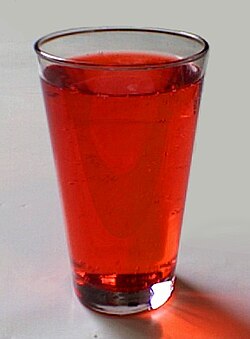
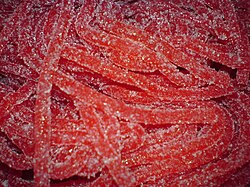
Allura Red has been heavily studied by food safety groups in North America and Europe, and remains in wide use. However, chronic exposure to the dye has been shown to increase susceptibility to bowel disorders in mice.21 The dye has also been shown to damage the DNA of and cause colonic inflammation in mice.22
The UK's Food Standards Agency commissioned a study of six food dyes, dubbed the "Southampton 6" (tartrazine, Allura Red, Ponceau 4R, Quinoline Yellow, sunset yellow, carmoisine), and sodium benzoate (a preservative) on children in the general population, who consumed them in beverages.2324 The study found "a possible link between the consumption of these artificial colours and a sodium benzoate preservative and increased hyperactivity" in the children;2324 the advisory committee to the FSA that evaluated the study also determined that because of study limitations, the results could not be extrapolated to the general population, and further testing was recommended.23
The European Food Safety Authority (EFSA), with a stronger emphasis on the precautionary principle(requiring proof that a substance is safe before allowing it in food), required labelling and temporarily reduced the acceptable daily intake (ADI) for the food colorings; the UK FSA called for voluntary withdrawal of the colorings by food manufacturers.2324 However, in 2009, the EFSA re-evaluated the data at hand and determined that "the available scientific evidence does not substantiate a link between the color additives and behavioral effects",23 and in 2014, after further review of the data, the EFSA restored the prior ADI levels.25 In 2015, the EFSA found that the exposure estimates did not exceed the ADI of 7 mg/kg per day in any population.26 However, the EU now requires that all products containing synthetic food dyes display a label reading "may have an adverse effect on activity and attention in children".2728
In contrast, the US GRAS policy does not include color additives and must be dealt with separately.29 The US FDA did not make changes following the publication of the Southampton study. Following a citizen petition filed by the Center for Science in the Public Interest in 2008, requesting the FDA ban several food additives, the FDA commenced a review of the available evidence but found no evidence to justify changes.23
Allura Red AC has previously been banned in Denmark, Belgium, France, Germany, Austria, Switzerland, and Sweden.30 This changed in 2008, when the EU adopted a common framework for authorizing food additives,31 under which Allura Red AC is not currently banned.26 In Norway and Iceland, it was banned between 1978 and 2001, a period in which azo dyes were only legally used in alcoholic beverages and some fish products.32
In September 2024, California banned the inclusion of Allura Red AC, along with five other artificial dyes, in food served in the state's public schools.33
In April 2025, the US FDA officially announced a plan to phase out Allura Red AC along with other petroleum-based dyes by the end of the year as part of the administration and Health and Human Services Secretary Robert F. Kennedy Jr.'s Make America Healthy Again initiative.34 The plan does not ban the chemical, relying on food producers working with the FDA to voluntarily remove Allura Red AC from their products. The FDA has compiled a spreadsheet of companies who have pledged to remove petroleum based dyes from their products.35
| Country* | Status |
|---|---|
| US | Phasing Out36 |
| EU/UK | Legal(Restricted)37 |
| Japan | Legal38 |
| Canada | Legal39 |
| Australia | Legal40 |
*Countries that have no laws concerning red 40 or have not been added yet
Alternatives
Natural alternatives for red 40 include beet juice/powder, paprika, hibiscus, and red radish. The FDA is revoking authorization for the use of FD&C Red No. 3 in foods and ingested drugs.41 The FDA keeps a database containing the regulatory status of color additives.42
References
References
- Zvi Rappoport, ed. (2004). The Chemistry of Phenols. Chichester: John Wiley & Sons. ISBN 9780470869451.
- PubChem. "Allura Red AC". pubchem.ncbi.nlm.nih.gov. Retrieved 21 October 2021.
- PubChem. "E129". pubchem.ncbi.nlm.nih.gov. Retrieved 27 April 2026.
- Yamjala, Karthik; Nainar, Meyyanathan Subramania; Ramisetti, Nageswara Rao (1 February 2016). "Methods for the analysis of azo dyes employed in food industry – A review". Food Chemistry. 192: 813–824. doi:10.1016/j.foodchem.2015.07.085. ISSN 0308-8146.
- Sharma, Vinita; McKone, Harold T.; Markow, Peter G. (2011). "A Global Perspective on the History, Use, and Identification of Synthetic Food Dyes". Journal of Chemical Education. 88 (1): 24–28. Bibcode:2011JChEd..88...24S. doi:10.1021/ed100545v.
- "Human Metabolome Database: Showing metabocard for Allura red AC (HMDB0032884)". Human Metabolome Database. 11 September 2012. Retrieved 22 November 2022.
- European Parliament and Council Directive 94/36/EC of 30 June 1994 on colours for use in foodstuffs
- "FD&C Red No. 40 (Inactive Ingredient)". drugs.com. Retrieved 12 November 2023.
- Zhang, Qi; Chumanevich, Alexander A.; Nguyen, Ivy; Chumanevich, Anastasiya A.; Sartawi, Nora; Hogan, Jake; Khazan, Minou; Harris, Quinn; Massey, Bryson; Chatzistamou, Ioulia; Buckhaults, Phillip J.; Banister, Carolyn E.; Wirth, Michael; Hebert, James R.; Murphy, E. Angela (2023). "The synthetic food dye, Red 40, causes DNA damage, causes colonic inflammation, and impacts the microbiome in mice". Toxicology Reports. 11: 221–232. Bibcode:2023ToxR...11..221Z. doi:10.1016/j.toxrep.2023.08.006. ISSN 2214-7500. PMC 10502305. PMID 37719200.
- Rovina, Kobun; Siddiquee, Shafiquzzaman; Shaarani, Sharifudin M. (2016). "Extraction, Analytical and Advanced Methods for Detection of Allura Red AC (E129) in Food and Beverages Products". Frontiers in Microbiology. 7: 798. doi:10.3389/fmicb.2016.00798. ISSN 1664-302X. PMC 4882322. PMID 27303385.
- "From Shampoo to Cereal: Seeing to the Safety of Color Additives". Archived from the original on 15 January 2008. Retrieved 4 June 2008. "Food Color Facts". Archived from the original on 1 October 2007. Retrieved 18 August 2006.
- Barrows, Julie N. (2016). Wallin, Harriet (ed.). "Allura Red AC". 82nd Joint FAO/WHO Expert Committee on Food Additives (JECFA) - Chemical and Technical Assessment (CTA) – via Food and Agriculture Organization of the United Nations.
- Leach (1905). The Use of Coal Tar Colors in Food Products, Page 7, Page 148. Food and Drink in History Adam Mathews.
{{cite book}}: CS1 maint: date and year (link) - Dobos, Kelly (15 May 2019). "The Colorful History of Synthetic Organic Pigments Used in Color Cosmetics". Chemists Corner. Retrieved 27 April 2026.
- Kellydobos (15 May 2019). "The Colorful History of Synthetic Organic Pigments Used in Color Cosmetics". Chemists Corner. Retrieved 29 April 2026.
- "Amaranth". www.acs.org. Molecule of the Week. 24 September 2012. Retrieved 27 April 2026.
- "Food and Toxicologic Pathology", Haschek and Rousseaux' s Handbook of Toxicologic Pathology, Academic Press, pp. 33–103, 1 January 2023, retrieved 27 April 2026
- "Allura Red AC - an overview | ScienceDirect Topics". www.sciencedirect.com. Retrieved 29 April 2026.
- "Toxicology and Analytical Methods for the Analysis of Allura Red (E129) in Food and Beverage Products: A Current Perspective", Safety Issues in Beverage Production, Academic Press, pp. 335–357, 1 January 2020, retrieved 5 May 2026
- Leach (1905). "The Use of Coal Tar Colors in Food Products Page 7". Food and Drink in History Adam Mathews.
- Kwon, Yun Han; Banskota, Suhrid; Wang, Huaqing; Rossi, Laura; Grondin, Jensine A.; Syed, Saad A.; Yousefi, Yeganeh; Schertzer, Jonathan D.; Morrison, Katherine M.; Wade, Michael G.; Holloway, Alison C.; Surette, Michael G.; Steinberg, Gregory R.; Khan, Waliul I. (20 December 2022). "Chronic exposure to synthetic food colorant Allura Red AC promotes susceptibility to experimental colitis via intestinal serotonin in mice". Nature Communications. 13 (1): 7617. Bibcode:2022NatCo..13.7617K. doi:10.1038/s41467-022-35309-y. ISSN 2041-1723. PMC 9768151. PMID 36539404.
- Zhang, Qi; Chumanevich, Alexander; Nguyen, Ivy; Chumanevich, Anastasiya; Sartawi, Nora; Hogan, Jake; Khazan, Minou; Harris, Quinn; Massey, Bryson; Chatzistamou, Ioulia; Buckhaults, Phillip; Banister, Carolyn; Wirth, Michael; Herbert, James; Hofsetha, Lorne (19 March 2024). "The synthetic food dye, Red 40, causes DNA damage, causes colonic inflammation, and impacts the microbiome in mice". Toxicology Reports. 11: 221–232. Bibcode:2023ToxR...11..221Z. doi:10.1016/j.toxrep.2023.08.006. ISSN 0195-315X. PMC 10502305. PMID 37719200.
- FDA (30 March 2011). "Background Document for the Food Advisory Committee: Certified Color Additives in Food and Possible Association with Attention Deficit Hyperactivity Disorder in Children:date" (PDF). Food and Drug Administration. Archived from the original (PDF) on 2 May 2017.
- Sarah Chapman of Chapman Technologies on behalf of Food Standards Agency in Scotland. March 2011 [Guidelines on approaches to the replacement of Tartrazine, Allura Red, Ponceau 4R, Quinoline Yellow, Sunset Yellow and Carmoisine in food and beverages]
- EFSA Panel on Food Additives and Nutrient Sources added to food (ANS) Reconsideration of the temporary ADI and refined exposure assessment for Sunset Yellow FCF (E 110) EFSA Journal 2014;12(7):3765 . doi:10.2903/j.efsa.2014.3765
- "Refined exposure assessment for Allura Red AC (E 129) | European Food". Efsa.europa.eu. 13 February 2015. Retrieved 8 September 2018.
- "REGULATION (EC) No 1333/2008 OF THE EUROPEAN PARLIAMENT AND OF THE COUNCIL". EUR-LEX. 16 December 2008.
- Galligan, Thomas. "Why are there no EU-style food dye warning labels in the US?". Center For Science in the Public Interest.
- Program, Human Foods (30 September 2024). "Color Additives in Foods". FDA.
- Esmaeili, Sajjad; Ashrafi-Kooshk, Mohammad Reza; Khaledian, Koestan; Adibi, Hadi; Rouhani, Shohre; Khodarahmi, Reza (2016). "Degradation products of the artificial azo dye, Allura red, inhibit esterase activity of carbonic anhydrase II: A basic in vitro study on the food safety of the colorant in terms of enzyme inhibition". Food Chemistry. 213: 494–504. doi:10.1016/j.foodchem.2016.06.078. PMID 27451209.
- "Food additives - EU Framework". Archived from the original on 6 February 2024. Retrieved 6 March 2024.
- "Norwegian Food Safety Authority". Retrieved 9 July 2007.
{{cite web}}: CS1 maint: deprecated archival service (link) - Chuck, Elizabeth (30 September 2024). "California governor signs landmark legislation prohibiting six artificial dyes from the food served at public schools". NBC News.
- "HHS, FDA to Phase Out Petroleum-Based Synthetic Dyes in Nation's Food Supply". Food and Drug Administration. Retrieved 16 November 2025.
- Program, Human Foods (25 April 2026). "Tracking Food Industry Pledges to Remove Petroleum Based Food Dyes". FDA.
- Commissioner, Office of the (5 February 2026). "FDA Takes New Approach to "No Artificial Colors" Claims". FDA. Retrieved 22 April 2026.
- "Food and Feed Information Portal Database | FIP". ec.europa.eu. Retrieved 22 April 2026.
- "The Japan Food Chemical Research Foundation". www.ffcr.or.jp. Retrieved 22 April 2026.
- Canadian Food Inspection Agency. "Food colours". inspection.canada.ca. Archived from the original on 19 January 2026. Retrieved 22 April 2026.
- "Colours and food additives reported as banned | Food Standards Australia New Zealand". www.foodstandards.gov.au. Retrieved 22 April 2026.
- "FDA to Revoke Authorization for the Use of Red No. 3 in Food and Ingested Drugs". FDA. 15 January 2025. Retrieved 15 May 2026.
- "Regulatory Status of Color Additives". www.hfpappexternal.fda.gov. Retrieved 28 April 2026.