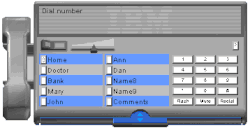
IBM RealThings is a design methodology for software interfaces proposed by IBM in 1998. It proposed that graphical user interfaces should be represented as skeuomorphs (images of physical real-life objects) in order to be "natural and intuitive, allowing users to focus more on their tasks and less on computer artefacts".1
As a demonstration, IBM created interfaces for a softphone, a media player and an e-reader application titled "RealPhone," "RealCD" and "RealBook", respectively. No actual applications using the design language were released.
A lecturer at the University of Liverpool, Floriana Grasso, critiqued this design language for not clearly communicating software functions to the user. A telephone program, for example, forced users to make calls by pressing on a picture of a telephone handset, rather than providing an explicitly labeled button for this function. .2
References
References
- Mullay (April 1998). "IBM RealThings". CHI 98 conference summary on Human factors in computing systems. ACM Press. pp. 13–14. doi:10.1145/286498.286505. ISBN 1-58113-028-7.
- "Metaphor's problems: IBM Real Things series" (PDF). Archived (PDF) from the original on 30 August 2017. Retrieved 25 October 2018.