






| Peroxisomal membrane anchor protein (Pex14p) conserved region | |||||||
|---|---|---|---|---|---|---|---|
| Identifiers | |||||||
| Symbol | Pex14_N | ||||||
| Pfam | PF04695 | ||||||
| InterPro | IPR006785 | ||||||
| |||||||
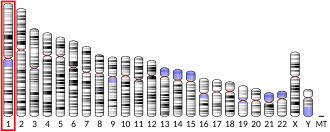
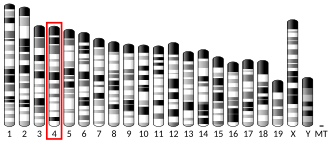
Peroxisomal membrane protein PEX14 is a protein that in humans is encoded by the PEX14 gene.56
Function
This gene encodes an essential component of the peroxisomal import machinery. The protein is integrated into peroxisome membranes with its C-terminus exposed to the cytosol, and interacts with the cytosolic receptor for proteins containing a PTS1 peroxisomal targeting signal. The protein also functions as a transcriptional corepressor and interacts with a histone deacetylase. A mutation in this gene results in one form of Zellweger syndrome.6
Interactions
PEX14 has been shown to interact with
References
References
- GRCh38: Ensembl release 89: ENSG00000142655 – Ensembl, May 2017
- GRCm38: Ensembl release 89: ENSMUSG00000028975 – Ensembl, May 2017
- "Human PubMed Reference:". National Center for Biotechnology Information, U.S. National Library of Medicine.
- "Mouse PubMed Reference:". National Center for Biotechnology Information, U.S. National Library of Medicine.
- Fransen M, Terlecky SR, Subramani S (Jul 1998). "Identification of a human PTS1 receptor docking protein directly required for peroxisomal protein import". Proceedings of the National Academy of Sciences of the United States of America. 95 (14): 8087–92. Bibcode:1998PNAS...95.8087F. doi:10.1073/pnas.95.14.8087. PMC 20933. PMID 9653144.
- "Entrez Gene: PEX14 peroxisomal biogenesis factor 14".
- Otera H, Setoguchi K, Hamasaki M, Kumashiro T, Shimizu N, Fujiki Y (Mar 2002). "Peroxisomal targeting signal receptor Pex5p interacts with cargoes and import machinery components in a spatiotemporally differentiated manner: conserved Pex5p WXXXF/Y motifs are critical for matrix protein import". Molecular and Cellular Biology. 22 (6): 1639–55. doi:10.1128/MCB.22.6.1639-1655.2002. PMC 135613. PMID 11865044.
- Okumoto K, Abe I, Fujiki Y (Aug 2000). "Molecular anatomy of the peroxin Pex12p: ring finger domain is essential for Pex12p function and interacts with the peroxisome-targeting signal type 1-receptor Pex5p and a ring peroxin, Pex10p". The Journal of Biological Chemistry. 275 (33): 25700–10. doi:10.1074/jbc.M003303200. PMID 10837480.
- Shimizu N, Itoh R, Hirono Y, Otera H, Ghaedi K, Tateishi K, Tamura S, Okumoto K, Harano T, Mukai S, Fujiki Y (Apr 1999). "The peroxin Pex14p. cDNA cloning by functional complementation on a Chinese hamster ovary cell mutant, characterization, and functional analysis". The Journal of Biological Chemistry. 274 (18): 12593–604. doi:10.1074/jbc.274.18.12593. PMID 10212238.
- Managadze D, Würtz C, Sichting M, Niehaus G, Veenhuis M, Rottensteiner H (Jun 2007). "The peroxin PEX14 of Neurospora crassa is essential for the biogenesis of both glyoxysomes and Woronin bodies" (PDF). Traffic. 8 (6): 687–701. doi:10.1111/j.1600-0854.2007.00560.x. PMID 17461798. S2CID 221250.
Further reading
Further reading
- Albertini M, Rehling P, Erdmann R, Girzalsky W, Kiel JA, Veenhuis M, Kunau WH (Apr 1997). "Pex14p, a peroxisomal membrane protein binding both receptors of the two PTS-dependent import pathways" (PDF). Cell. 89 (1): 83–92. doi:10.1016/S0092-8674(00)80185-3. PMID 9094717. S2CID 18878596.
- Huhse B, Rehling P, Albertini M, Blank L, Meller K, Kunau WH (Jan 1998). "Pex17p of Saccharomyces cerevisiae is a novel peroxin and component of the peroxisomal protein translocation machinery". The Journal of Cell Biology. 140 (1): 49–60. doi:10.1083/jcb.140.1.49. PMC 2132588. PMID 9425153.
- Will GK, Soukupova M, Hong X, Erdmann KS, Kiel JA, Dodt G, Kunau WH, Erdmann R (Mar 1999). "Identification and characterization of the human orthologue of yeast Pex14p". Molecular and Cellular Biology. 19 (3): 2265–77. doi:10.1128/mcb.19.3.2265. PMC 84019. PMID 10022913.
- Girzalsky W, Rehling P, Stein K, Kipper J, Blank L, Kunau WH, Erdmann R (Mar 1999). "Involvement of Pex13p in Pex14p localization and peroxisomal targeting signal 2-dependent protein import into peroxisomes". The Journal of Cell Biology. 144 (6): 1151–62. doi:10.1083/jcb.144.6.1151. PMC 2150583. PMID 10087260.
- Shimizu N, Itoh R, Hirono Y, Otera H, Ghaedi K, Tateishi K, Tamura S, Okumoto K, Harano T, Mukai S, Fujiki Y (Apr 1999). "The peroxin Pex14p. cDNA cloning by functional complementation on a Chinese hamster ovary cell mutant, characterization, and functional analysis". The Journal of Biological Chemistry. 274 (18): 12593–604. doi:10.1074/jbc.274.18.12593. PMID 10212238.
- Sacksteder KA, Jones JM, South ST, Li X, Liu Y, Gould SJ (Mar 2000). "PEX19 binds multiple peroxisomal membrane proteins, is predominantly cytoplasmic, and is required for peroxisome membrane synthesis". The Journal of Cell Biology. 148 (5): 931–44. doi:10.1083/jcb.148.5.931. PMC 2174547. PMID 10704444.
- Gavva NR, Wen SC, Daftari P, Moniwa M, Yang WM, Yang-Feng LP, Seto E, Davie JR, Shen CK (Mar 2002). "NAPP2, a peroxisomal membrane protein, is also a transcriptional corepressor". Genomics. 79 (3): 423–31. doi:10.1006/geno.2002.6714. PMID 11863372.
- Otera H, Setoguchi K, Hamasaki M, Kumashiro T, Shimizu N, Fujiki Y (Mar 2002). "Peroxisomal targeting signal receptor Pex5p interacts with cargoes and import machinery components in a spatiotemporally differentiated manner: conserved Pex5p WXXXF/Y motifs are critical for matrix protein import". Molecular and Cellular Biology. 22 (6): 1639–55. doi:10.1128/MCB.22.6.1639-1655.2002. PMC 135613. PMID 11865044.
- Alland L, David G, Shen-Li H, Potes J, Muhle R, Lee HC, Hou H, Chen K, DePinho RA (Apr 2002). "Identification of mammalian Sds3 as an integral component of the Sin3/histone deacetylase corepressor complex". Molecular and Cellular Biology. 22 (8): 2743–50. doi:10.1128/MCB.22.8.2743-2750.2002. PMC 133736. PMID 11909966.
- Fransen M, Brees C, Ghys K, Amery L, Mannaerts GP, Ladant D, Van Veldhoven PP (Mar 2002). "Analysis of mammalian peroxin interactions using a non-transcription-based bacterial two-hybrid assay". Molecular & Cellular Proteomics. 1 (3): 243–52. doi:10.1074/mcp.M100025-MCP200. PMID 12096124.
- Oliveira ME, Reguenga C, Gouveia AM, Guimarães CP, Schliebs W, Kunau WH, Silva MT, Sá-Miranda C, Azevedo JE (Dec 2002). "Mammalian Pex14p: membrane topology and characterisation of the Pex14p-Pex14p interaction". Biochimica et Biophysica Acta (BBA) - Biomembranes. 1567 (1–2): 13–22. doi:10.1016/s0005-2736(02)00635-1. PMID 12488033.
- Fransen M, Vastiau I, Brees C, Brys V, Mannaerts GP, Van Veldhoven PP (Mar 2004). "Potential role for Pex19p in assembly of PTS-receptor docking complexes". The Journal of Biological Chemistry. 279 (13): 12615–24. doi:10.1074/jbc.M304941200. PMID 14715663.
- Shimozawa N, Tsukamoto T, Nagase T, Takemoto Y, Koyama N, Suzuki Y, Komori M, Osumi T, Jeannette G, Wanders RJ, Kondo N (Jun 2004). "Identification of a new complementation group of the peroxisome biogenesis disorders and PEX14 as the mutated gene". Human Mutation. 23 (6): 552–8. doi:10.1002/humu.20032. PMID 15146459. S2CID 6324241.
- Rual JF, Venkatesan K, Hao T, Hirozane-Kishikawa T, Dricot A, Li N, Berriz GF, Gibbons FD, Dreze M, Ayivi-Guedehoussou N, Klitgord N, Simon C, Boxem M, Milstein S, Rosenberg J, Goldberg DS, Zhang LV, Wong SL, Franklin G, Li S, Albala JS, Lim J, Fraughton C, Llamosas E, Cevik S, Bex C, Lamesch P, Sikorski RS, Vandenhaute J, Zoghbi HY, Smolyar A, Bosak S, Sequerra R, Doucette-Stamm L, Cusick ME, Hill DE, Roth FP, Vidal M (Oct 2005). "Towards a proteome-scale map of the human protein-protein interaction network". Nature. 437 (7062): 1173–8. Bibcode:2005Natur.437.1173R. doi:10.1038/nature04209. PMID 16189514. S2CID 4427026.
- Kimura K, Wakamatsu A, Suzuki Y, Ota T, Nishikawa T, Yamashita R, Yamamoto J, Sekine M, Tsuritani K, Wakaguri H, Ishii S, Sugiyama T, Saito K, Isono Y, Irie R, Kushida N, Yoneyama T, Otsuka R, Kanda K, Yokoi T, Kondo H, Wagatsuma M, Murakawa K, Ishida S, Ishibashi T, Takahashi-Fujii A, Tanase T, Nagai K, Kikuchi H, Nakai K, Isogai T, Sugano S (Jan 2006). "Diversification of transcriptional modulation: large-scale identification and characterization of putative alternative promoters of human genes". Genome Research. 16 (1): 55–65. doi:10.1101/gr.4039406. PMC 1356129. PMID 16344560.
- Nguyen T, Bjorkman J, Paton BC, Crane DI (Feb 2006). "Failure of microtubule-mediated peroxisome division and trafficking in disorders with reduced peroxisome abundance". Journal of Cell Science. 119 (Pt 4): 636–45. doi:10.1242/jcs.02776. hdl:2440/23242. PMID 16449325.
External links
External links
- GeneReviews/NCBI/NIH/UW entry on Peroxisome Biogenesis Disorders, Zellweger Syndrome Spectrum
- OMIM entries on Peroxisome Biogenesis Disorders, Zellweger Syndrome Spectrum
- Eukaryotic Linear Motif resource motif class TRG_PEX_1
- Eukaryotic Linear Motif resource motif class TRG_PEX_2
- Overview of all the structural information available in the PDB for UniProt: O75381 (Peroxisomal membrane protein PEX14) at the PDBe-KB.