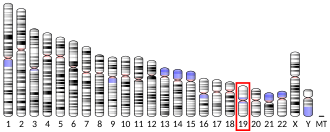
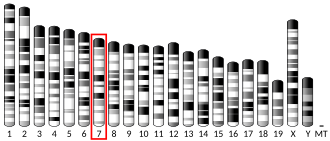
Paternally-expressed gene 3 protein is a protein that in humans is encoded by the PEG3 gene.56 PEG3 is an imprinted gene expressed exclusively from the paternal allele and plays important roles in controlling fetal growth rates and nurturing behaviors as has potential roles in mammalian reproduction.7 PEG3 is a transcription factor that binds to DNA [11-13] via the sequence motif AGTnnCnnnTGGCT, which it binds to using multiple Kruppel-like factors. It also regulate the expression of Pgm2l1 through the binding of the motif.8
Interactions
PEG3 has been shown to interact with SIAH29 and SIAH1.9
kjh-5oil2-*m
jhac-*n.,myr0.
References
References
- GRCh38: Ensembl release 89: ENSG00000198300 – Ensembl, May 2017
- GRCm38: Ensembl release 89: ENSMUSG00000002265 – Ensembl, May 2017
- "Human PubMed Reference:". National Center for Biotechnology Information, U.S. National Library of Medicine.
- "Mouse PubMed Reference:". National Center for Biotechnology Information, U.S. National Library of Medicine.
- Kim J, Ashworth L, Branscomb E, Stubbs L (August 1997). "The human homolog of a mouse-imprinted gene, Peg3, maps to a zinc finger gene-rich region of human chromosome 19q13.4". Genome Res. 7 (5): 532–40. doi:10.1101/gr.7.5.532. PMC 310658. PMID 9149948.
- "Entrez Gene: PEG3 paternally expressed 3".
- Michelle M. Thiaville; Jennifer M. Huang; Hana Kim; Muhammad B. Ekram; Arundhati Bakshi; Tae-Young Roh; Joomyeong Kim (December 31, 2013). "Peg3 Mutational Effects on Reproduction and Placenta-Specific Gene Families". PLOS ONE. 8 (12) e83359. Bibcode:2013PLoSO...883359K. doi:10.1371/journal.pone.0083359. PMC 3877027. PMID 24391757.
- Thiaville MM, Huang JM, Kim H, Ekram MB, Roh TY, Kim J (January 2013). "DNA-binding motif and target genes of the imprinted transcription factor PEG3". Gene. 512 (2): 314–320. doi:10.1016/j.gene.2012.10.005. PMC 3513644. PMID 23078764.
- Relaix, F; Wei X j; Li W; Pan J; Lin Y; Bowtell D D; Sassoon D A; Wu X (February 2000). "Pw1/Peg3 is a potential cell death mediator and cooperates with Siah1a in p53-mediated apoptosis". Proc. Natl. Acad. Sci. U.S.A. 97 (5). UNITED STATES: 2105–10. Bibcode:2000PNAS...97.2105R. doi:10.1073/pnas.040378897. ISSN 0027-8424. PMC 15761. PMID 10681424.
Further reading
Further reading
- Relaix F, Wei XJ, Wu X, Sassoon DA (1998). "Peg3/Pw1 is an imprinted gene involved in the TNF-NFkappaB signal transduction pathway". Nat. Genet. 18 (3): 287–91. doi:10.1038/ng0398-287. PMID 9500555. S2CID 1235332.
- Relaix F, Wei X, Li W, et al. (2000). "Pw1/Peg3 is a potential cell death mediator and cooperates with Siah1a in p53-mediated apoptosis". Proc. Natl. Acad. Sci. U.S.A. 97 (5): 2105–10. Bibcode:2000PNAS...97.2105R. doi:10.1073/pnas.040378897. PMC 15761. PMID 10681424.
- Kim J, Bergmann A, Stubbs L (2000). "Exon sharing of a novel human zinc-finger gene, ZIM2, and paternally expressed gene 3 (PEG3)". Genomics. 64 (1): 114–8. doi:10.1006/geno.1999.6112. PMID 10708526.
- Kohda T, Asai A, Kuroiwa Y, et al. (2001). "Tumour suppressor activity of human imprinted gene PEG3 in a glioma cell line". Genes Cells. 6 (3): 237–47. doi:10.1046/j.1365-2443.2001.00412.x. PMID 11260267. S2CID 43806250.
- Hiby SE, Lough M, Keverne EB, et al. (2001). "Paternal monoallelic expression of PEG3 in the human placenta". Hum. Mol. Genet. 10 (10): 1093–100. doi:10.1093/hmg/10.10.1093. PMID 11331620.
- Yarden RI, Brody LC (2002). "Identification of proteins that interact with BRCA1 by Far-Western library screening". J. Cell. Biochem. 83 (4): 521–31. doi:10.1002/jcb.1257. PMID 11746496. S2CID 29703139.
- Johnson MD, Wu X, Aithmitti N, Morrison RS (2002). "Peg3/Pw1 is a mediator between p53 and Bax in DNA damage-induced neuronal death". J. Biol. Chem. 277 (25): 23000–7. doi:10.1074/jbc.M201907200. PMID 11943780.
- Strausberg RL, Feingold EA, Grouse LH, et al. (2003). "Generation and initial analysis of more than 15,000 full-length human and mouse cDNA sequences". Proc. Natl. Acad. Sci. U.S.A. 99 (26): 16899–903. Bibcode:2002PNAS...9916899M. doi:10.1073/pnas.242603899. PMC 139241. PMID 12477932.
- Gerhard DS, Wagner L, Feingold EA, et al. (2004). "The status, quality, and expansion of the NIH full-length cDNA project: the Mammalian Gene Collection (MGC)". Genome Res. 14 (10B): 2121–7. doi:10.1101/gr.2596504. PMC 528928. PMID 15489334.
- Mirey G, Chartrain I, Froment C, et al. (2006). "CDC25B phosphorylated by pEg3 localizes to the centrosome and the spindle poles at mitosis". Cell Cycle. 4 (6): 806–11. doi:10.4161/cc.4.6.1716. PMID 15908796.
- Dowdy SC, Gostout BS, Shridhar V, et al. (2005). "Biallelic methylation and silencing of paternally expressed gene 3 (PEG3) in gynecologic cancer cell lines". Gynecol. Oncol. 99 (1): 126–34. doi:10.1016/j.ygyno.2005.05.036. PMID 16023706.
- Chartrain I, Couturier A, Tassan JP (2006). "Cell-cycle-dependent cortical localization of pEg3 protein kinase in Xenopus and human cells". Biol. Cell. 98 (4): 253–63. doi:10.1042/BC20050041. PMID 16159311. S2CID 45211094.
- Lim J, Hao T, Shaw C, et al. (2006). "A protein-protein interaction network for human inherited ataxias and disorders of Purkinje cell degeneration". Cell. 125 (4): 801–14. doi:10.1016/j.cell.2006.03.032. PMID 16713569. S2CID 13709685.