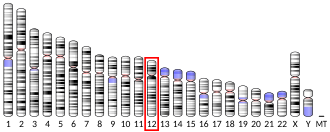
Oxidized low-density lipoprotein receptor 1 (Ox-LDL receptor 1) also known as lectin-type oxidized LDL receptor 1 (LOX-1) is a protein that in humans is encoded by the OLR1 gene.5
LOX-1 is the main receptor for oxidized LDL on endothelial cells, macrophages, smooth muscle cells,6 and other cell types.7 But minimally oxidized LDL is more readily recognized by the TLR4 receptor, and highly oxidized LDL is more readily recognized by the CD36 receptor.8
Function
LOX-1 is a receptor protein which belongs to the C-type lectin superfamily. Its gene is regulated through the cyclic AMP signaling pathway. The protein binds, internalizes and degrades oxidized low-density lipoprotein.
Normally, LOX-1 expression on endothelial cells is low, but tumor necrosis factor alpha, oxidized LDL, blood vessel shear stress, and other atherosclerotic stimuli substantially increase LOX-1 expression.79
LOX-1 may be involved in the regulation of Fas-induced apoptosis. Oxidized LDL induces endothelial cell apoptosis through LOX-1 binding.6 Other ligands for LOX-1 include oxidized high-density lipoprotein, advanced glycation end-products, platelets, and apoptotic cells.69
The binding of platelets to LOX-1 causes a release of vasoconstrictive endothelin, which induces endothelial dysfunction.9
Clinical significance
Binding of oxidized LDL to LOX-1 activates NF-κB, leading to monocyte adhesion to enthothelial cells (a pre-requisite for the macrophage foam cell formation of atherosclerosis).7 Macrophage affinity for unmodified LDL particles is low, but is greatly increased when the LDL particles are oxidized.10 LDL oxidation occurs in the sub-endothelial space, rather than in the circulation.10 But oxidized cholesterol from foods cooked at high temperature can also be a source of oxysterols.8
OLR1 gene polymorphisms have been associated with coronary artery disease.11
References
References
- GRCh38: Ensembl release 89: ENSG00000173391 – Ensembl, May 2017
- GRCm38: Ensembl release 89: ENSMUSG00000030162 – Ensembl, May 2017
- "Human PubMed Reference:". National Center for Biotechnology Information, U.S. National Library of Medicine.
- "Mouse PubMed Reference:". National Center for Biotechnology Information, U.S. National Library of Medicine.
- Li X, Bouzyk MM, Wang X (Nov 1998). "Assignment of the human oxidized low-density lipoprotein receptor gene (OLR1) to chromosome 12p13.1→p12.3, and identification of a polymorphic CA-repeat marker in the OLR1 gene". Cytogenet Cell Genet. 82 (1–2): 34–6. doi:10.1159/000015059. PMID 9763655. S2CID 46772688.
- Pirillo A, Norata GD, Catapano AL (2013). "LOX-1, OxLDL, and atherosclerosis". Mediators of Inflammation. 2013: 1–12. doi:10.1155/2013/152786. PMC 3723318. PMID 23935243.
- Xu S, Ogura S, Chen J, Little PJ, Moss J, Liu P (2013). "LOX-1 in atherosclerosis: biological functions and pharmacological modifiers". Cellular and Molecular Life Sciences. 70 (16): 2859–2872. doi:10.1007/s00018-012-1194-z. PMC 4142049. PMID 23124189.
- Zmysłowski A, Szterk A (2017). "Current knowledge on the mechanism of atherosclerosis and pro-atherosclerotic properties of oxysterols". Lipids in Health and Disease. 16 (1): 188. doi:10.1186/s12944-017-0579-2. PMC 5625595. PMID 28969682.
- Kakutani M, Masaki T, Sawamura T (2000). "A platelet-endothelium interaction mediated by lectin-like oxidized low-density lipoprotein receptor-1". Proceedings of the National Academy of Sciences of the United States of America. 97 (1): 360–364. Bibcode:2000PNAS...97..360K. doi:10.1016/j.biochi.2016.10.010. PMC 26668. PMID 10618423.
- Brites F, Martin M, Guillas I, Kontush A (2017). "Antioxidative activity of high-density lipoprotein (HDL): Mechanistic insights into potential clinical benefit". BBA Clinical. 8: 66–77. doi:10.1016/j.bbacli.2017.07.002. PMC 5597817. PMID 28936395.
- Salehipour P, Rezagholizadeh F, Mahdiannasser M, Kazerani R, Modarressi MH (2021). "Association of OLR1 gene polymorphisms with the risk of coronary artery disease: A systematic review and meta-analysis". Heart Lung. 50 (2): 334–343. doi:10.1016/j.hrtlng.2021.01.015. PMID 33524863.
Further reading
Further reading
- Sawamura T (2002). "[Molecular identification of LOX-1 and analysis of its pathophysiological role]". Nippon Yakurigaku Zasshi. 119 (3): 145–54. doi:10.1254/fpj.119.145. PMID 11915516.
- Mehta JL, Li D (2002). "Identification, regulation and function of a novel lectin-like oxidized low-density lipoprotein receptor". J. Am. Coll. Cardiol. 39 (9): 1429–35. doi:10.1016/S0735-1097(02)01803-X. PMID 11985903.
- Sawamura T (2002). "[LOX-1: the oxidized LDL receptor expressed in vascular endothelial cells]". Seikagaku. 74 (5): 365–76. PMID 12073608.
- Ando K, Fujita T (2005). "Role of lectin-like oxidized low-density lipoprotein receptor-1 (LOX-1) in the development of hypertensive organ damage". Clin. Exp. Nephrol. 8 (3): 178–82. doi:10.1007/s10157-004-0288-9. PMID 15480893. S2CID 24851728.
- Sawamura T, Kume N, Aoyama T, et al. (1997). "An endothelial receptor for oxidized low-density lipoprotein". Nature. 386 (6620): 73–7. Bibcode:1997Natur.386...73S. doi:10.1038/386073a0. PMID 9052782. S2CID 4321933.
- Yoshida H, Kondratenko N, Green S, et al. (1998). "Identification of the lectin-like receptor for oxidized low-density lipoprotein in human macrophages and its potential role as a scavenger receptor". Biochem. J. 334 (Pt 1) (Pt 1): 9–13. doi:10.1042/bj3340009. PMC 1219654. PMID 9693095.
- Mehta JL, Li DY (1998). "Identification and autoregulation of receptor for OX-LDL in cultured human coronary artery endothelial cells". Biochem. Biophys. Res. Commun. 248 (3): 511–4. doi:10.1006/bbrc.1998.9004. PMID 9703956.
- Yamanaka S, Zhang XY, Miura K, et al. (1999). "The human gene encoding the lectin-type oxidized LDL receptor (OLR1) is a novel member of the natural killer gene complex with a unique expression profile". Genomics. 54 (2): 191–9. doi:10.1006/geno.1998.5561. PMID 9828121.
- Nagase M, Abe J, Takahashi K, et al. (1999). "Genomic organization and regulation of expression of the lectin-like oxidized low-density lipoprotein receptor (LOX-1) gene". J. Biol. Chem. 273 (50): 33702–7. doi:10.1074/jbc.273.50.33702. PMID 9837956.
- Draude G, Hrboticky N, Lorenz RL (1999). "The expression of the lectin-like oxidized low-density lipoprotein receptor (LOX-1) on human vascular smooth muscle cells and monocytes and its down-regulation by lovastatin". Biochem. Pharmacol. 57 (4): 383–6. doi:10.1016/S0006-2952(98)00313-X. PMID 9933026.
- Aoyama T, Sawamura T, Furutani Y, et al. (1999). "Structure and chromosomal assignment of the human lectin-like oxidized low-density-lipoprotein receptor-1 (LOX-1) gene". Biochem. J. 339 (Pt 1) (Pt 1): 177–84. doi:10.1042/0264-6021:3390177. PMC 1220142. PMID 10085242.
- Li DY, Zhang YC, Philips MI, et al. (1999). "Upregulation of endothelial receptor for oxidized low-density lipoprotein (LOX-1) in cultured human coronary artery endothelial cells by angiotensin II type 1 receptor activation". Circ. Res. 84 (9): 1043–9. doi:10.1161/01.res.84.9.1043. PMID 10325241.
- Kataoka H, Kume N, Miyamoto S, et al. (1999). "Expression of lectinlike oxidized low-density lipoprotein receptor-1 in human atherosclerotic lesions". Circulation. 99 (24): 3110–7. doi:10.1161/01.cir.99.24.3110. PMID 10377073.
- Li D, Saldeen T, Romeo F, Mehta JL (2000). "Oxidized LDL upregulates angiotensin II type 1 receptor expression in cultured human coronary artery endothelial cells: the potential role of transcription factor NF-kappaB". Circulation. 102 (16): 1970–6. doi:10.1161/01.cir.102.16.1970. PMID 11034947.
- Bull C, Sobanov Y, Röhrdanz B, et al. (2001). "The centromeric part of the human NK gene complex: linkage of LOX-1 and LY49L with the CD94/NKG2 region". Genes Immun. 1 (4): 280–7. doi:10.1038/sj.gene.6363678. PMID 11196705. S2CID 21961232.
- Shi X, Niimi S, Ohtani T, Machida S (2001). "Characterization of residues and sequences of the carbohydrate recognition domain required for cell surface localization and ligand binding of human lectin-like oxidized LDL receptor". J. Cell Sci. 114 (Pt 7): 1273–82. doi:10.1242/jcs.114.7.1273. PMID 11256994.
- Chen M, Narumiya S, Masaki T, Sawamura T (2001). "Conserved C-terminal residues within the lectin-like domain of LOX-1 are essential for oxidized low-density-lipoprotein binding". Biochem. J. 355 (Pt 2): 289–96. doi:10.1042/0264-6021:3550289. PMC 1221738. PMID 11284714.
- Tanimoto A, Murata Y, Nomaguchi M, et al. (2001). "Histamine increases the expression of LOX-1 via H2 receptor in human monocytic THP-1 cells". FEBS Lett. 508 (3): 345–9. doi:10.1016/S0014-5793(01)03073-3. PMID 11728449. S2CID 7257298.
- Sobanov Y, Bernreiter A, Derdak S, et al. (2002). "A novel cluster of lectin-like receptor genes expressed in monocytic, dendritic and endothelial cells maps close to the NK receptor genes in the human NK gene complex". Eur. J. Immunol. 31 (12): 3493–503. doi:10.1002/1521-4141(200112)31:12<3493::AID-IMMU3493>3.0.CO;2-9. PMID 11745369. S2CID 42415487.