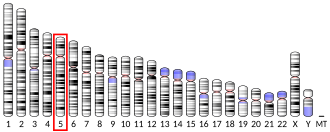
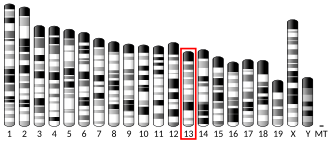
Methylcrotonoyl-CoA carboxylase subunit beta is an enzyme that in humans is encoded by the MCCC2 gene.5
Function
MCCC2 encodes the β-subunit of the mitochondrial enzyme methylcrotonoyl-CoA carboxylase (MCC), which catalyzes the biotin-dependent carboxylation of 3-methylcrotonoyl-CoA to 3-methylglutaconyl-CoA in the catabolic pathway of the branched-chain amino acid leucine. The β-subunit encoded by MCCC2 contains the carboxyltransferase domain that forms active sites at the interface of β-subunit dimers within the MCC α6β6 holoenzyme.6
Clinical significance
Pathogenic variants in MCCC2 cause 3-methylcrotonyl-CoA carboxylase deficiency, an autosomal recessive inborn error of leucine metabolism that can manifest with metabolic acidosis, developmental delay, or remain clinically asymptomatic.78910 Beyond its metabolic role, MCCC2 has been implicated in tumorigenesis through modulation of mitochondrial dynamics, apoptosis, and energy metabolism, promoting cell proliferation and migration in prostate and colorectal cancers11 via pathways such as GLUD1–p38 MAPK signaling.12
References
References
- ENSG00000281742, ENSG00000275300 GRCh38: Ensembl release 89: ENSG00000131844, ENSG00000281742, ENSG00000275300 – Ensembl, May 2017
- GRCm38: Ensembl release 89: ENSMUSG00000021646 – Ensembl, May 2017
- "Human PubMed Reference:". National Center for Biotechnology Information, U.S. National Library of Medicine.
- "Mouse PubMed Reference:". National Center for Biotechnology Information, U.S. National Library of Medicine.
- "MCCC2 gene: MedlinePlus Genetics". MedlinePlus Genetics. U.S. National Library of Medicine, National Institutes of Health. Retrieved October 20, 2025.
- Plaza-Pegueroles A, Aphasizheva I, Aphasizhev R, Fernández-Tornero C, Ruiz FM (July 2024). "The cryo-EM structure of trypanosome 3-methylcrotonyl-CoA carboxylase provides mechanistic and dynamic insights into its enzymatic function". Structure. 32 (7): 930–940.e3. doi:10.1016/j.str.2024.03.010. PMC 11246232. PMID 38593794.
- Grünert SC, Stucki M, Morscher RJ, Suormala T, Bürer C, Burda P, et al. (May 2012). "3-methylcrotonyl-CoA carboxylase deficiency: clinical, biochemical, enzymatic and molecular studies in 88 individuals". Orphanet Journal of Rare Diseases. 7 31. doi:10.1186/1750-1172-7-31. PMC 3495011. PMID 22642865.
- "3-methylcrotonyl-CoA carboxylase deficiency". Orphanet. INSERM US14, Université de Lyon, France. Retrieved October 20, 2025.
- "3-methylcrotonyl-CoA carboxylase deficiency – MedlinePlus Genetics". MedlinePlus Genetics. U.S. National Library of Medicine, National Institutes of Health. October 1, 2008. Retrieved October 20, 2025.
- Baumgartner MR, Almashanu S, Suormala T, Obie C, Cole RN, Packman S, et al. (February 2001). "The molecular basis of human 3-methylcrotonyl-CoA carboxylase deficiency". The Journal of Clinical Investigation. 107 (4): 495–504. doi:10.1172/JCI11948. PMC 199271. PMID 11181649.
- Liu W, Chen S, Xie W, Wang Q, Luo Q, Huang M, et al. (October 2023). "MCCC2 is a novel mediator between mitochondria and telomere and functions as an oncogene in colorectal cancer". Cellular & Molecular Biology Letters. 28 (1) 80. doi:10.1186/s11658-023-00487-0. PMC 10571261. PMID 37828426.
- He J, Mao Y, Huang W, Li M, Zhang H, Qing Y, et al. (2020). "Methylcrotonoyl-CoA Carboxylase 2 Promotes Proliferation, Migration and Invasion and Inhibits Apoptosis of Prostate Cancer Cells Through Regulating GLUD1-P38 MAPK Signaling Pathway". OncoTargets and Therapy. 13: 7317–7327. doi:10.2147/OTT.S249906. PMC 7395692. PMID 32801758.