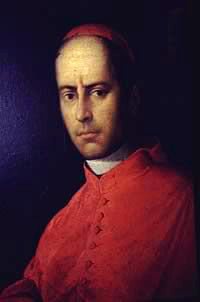
In the historical practice of the Catholic Church, a lay cardinal was a man whom the Pope appointed to the College of Cardinals while still a layman. This appointment carried with it the obligation to be ordained to a clerical order,1 meaning that "lay cardinal" was not a permanent state, but a term in reference to a man who was appointed cardinal prior to taking on the clerical state corresponding to that appointment.2
The current law of the Catholic Church is that a man must be first ordained at least a priest in order to be considered for appointment as a cardinal.3
List of laymen who were created cardinals
| Name | Year created cardinal | Highest clerical order received |
|---|---|---|
| Pope Paul III | 1493 | Pope |
| Pope Leo X | 1489 | Pope |
| Charles Borromeo | 1560 | Archbishop |
| Ferdinando I de' Medici | 1562 | Minor orders4 |
| Maurice of Savoy | 1607 | Minor orders4 |
| Francisco Gómez Rojas de Sandoval | 16185 | Priest6 |
| Ferdinand of Austria | 1620 | Minor orders7 |
| Giulio Raimondo Mazzarino | 1641 | Minor orders |
| Marino Carafa di Belvedere | 1801 | Resigned before being ordained89 |
| Teodolfo Mertel | 1858 | Deacon10 |
Discontinuation
In 1917, Pope Benedict XV promulgated the first edition of the Code of Canon Law, which included a provision that a man must be first ordained a priest prior to being considered for appointment as a cardinal.11
According to The New York Times, Pope Paul VI considered making the French Catholic philosopher Jacques Maritain a cardinal in 1965.12
See also
See also
References
References
- Cartwright, William Cornwallis (1868). On Papal Conclaves. Edinburgh: Edmonston and Douglas. p. 123.
Laymen were named Cardinals only for twelve months, being bound within that period to take Deacon's orders
- Cartwright, William Cornwallis (1868). On Papal Conclaves. Edinburgh: Edmonston and Douglas. pp. 121–122.
In all these cases, however, it is clear that some orders had been taken; and therefore, in the strict sense of the term, these Cardinals were no longer laymen.
- Code of Canon Law. 1983. Canon 351 §1.
- Cartwright, William Cornwallis (1868). On Papal Conclaves. Edinburgh: Edmonston and Douglas. pp. 120–122.
- Feros, Antonio (2006). Kingship and Favoritism in the Spain of Philip III. Cambridge University Press. p. 241.
- "Francisco Gómez Cardinal Rojas de Sandoval". Catholic Hierarchy.
- Miranda, Salvador. "Consistory of July 29, 1619". The Cardinals of the Holy Roman Church. Florida International University.
- Miranda, Salvador. "Consistory of February 23, 1801". The Cardinals of the Holy Roman Church. Florida International University.
- "Mister Marino Carafa di Belvedere". Catholic Hierarchy.
- "Teodolfo Cardinal Mertel". Catholic Hierarchy.
- Code of Canon Law. 1917. Canon 232 §1.
- "Jacques Maritain Dies at 90". The New York Times. April 29, 1973. Retrieved April 27, 2022.