A laboratory earthquake, commonly referred to as a labquake, is a small-scale failure event in rock (or other experimental materials) generated and studied within controlled environments. These non-hazardous events are engineered to mimic the physical conditions of the Earth's crust, allowing experimentalists to directly observe fault nucleation, rupture propagation, and friction dynamics that are observationally inaccessible at natural seismogenic depths. Labquakes occur with low magnitudes, sometimes measuring as low as -7.9.1
Motivation
Scaling and geophysical significance
Laboratory experiments facilitate the downscaling of vast geophysical processes into controlled environments, allowing for the isolation of the fundamental physics governing earthquake rupture.23 Since natural seismic events occur at depths that often preclude direct observation, labquakes provide a primary methodology for obtaining high-resolution, direct constraints on dynamic processes that are otherwise inaccessible in the field. This downscaling enables the systematic measurement and manipulation of critical variables, such as fracture energy, pore pressure, and asperity tracking across repeatable seismic cycles. Furthermore, these experiments provide an empirical foundation for testing conceptual models and material-science-based theories regarding fault zone behavior.456
Key observed phenomena
Nucleation
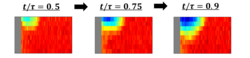
Laboratory experiments utilize dense sensor arrays7 and high-resolution optical imaging89 to monitor earthquake nucleation, tracking the expansion of slip patches and the transition to accelerating rupture. Such observations are rarely possible in natural settings due to the depth and unpredictability of seismic events.105 Furthermore, laboratory instrumentation provides significantly higher resolution and sensitivity than field-based tools, such as borehole strainmeters, which often fail to detect the early, small-scale slow slip preceding a major event.79
Rupture propagation
Laboratory experiments facilitate the high-resolution observation of complex rupture dynamics, including the transition from subsonic to supershear velocities, by tracking the evolution of the real contact area during failure.1112 These setups provide empirical validation for fracture mechanics models that predict rupture speeds based on the interplay between driving stress and frictional interface properties. Furthermore, labquakes enable the identification of critical rupture lengths required for sustained propagation and the study of mechanisms governing rupture arrest and daughter-crack nucleation within nonuniform systems.511
Experimental setups
Experiment type
Translational loading apparatuses
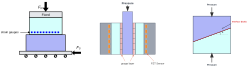
Translational loading apparatuses apply normal and shear stresses to planar interfaces or gouge layers to monitor slip under controlled conditions. While direct shear2 and biaxial systems13 utilize independent mechanisms for each stress component, uniaxial setups3 resolve a single compressive load into both components by using an inclined fault plane. Experimental configurations range from two-block single interfaces to three-block double-direct shear assemblies. These systems are instrumented with high-resolution stress, displacement, and acoustic sensors, occasionally optical imaging, to track variables such as stress drops, dilation, and the spatiotemporal evolution of the real area of contact throughout the experiment.2
Rotary shear
Rotary shear apparatuses utilize cylindrical or annular rock specimens to achieve high slip velocities and unlimited slip distances, facilitating the study of frictional behavior at co-seismic rates.1415 These configurations typically feature a rotating block driven by a high-torque motor and a stationary block, often employing flywheels and electromagnetic clutches to simulate rapid earthquake acceleration. This type of apparatus allows for the systematic observation of high-velocity phenomena such as friction-induced melting.15
Materials and fault anatomy
The choice of experimental materials and fault properties depends on the specific experiment objective. Bulk material will vary whether the goal is to mimic complex, uneven surfaces of tectonic faults or if to image the interface and track ruptures as they happen.6212
Host rocks
Natural rocks such as granite, marble, sandstone, metagabbro, and diabase are selected as host materials to replicate the high stiffness and multi-scale roughness characteristic of natural faults in the brittle crust.61617 Additionally using natural rock specimens allows researchers to study the spontaneous production of granular gouge from surface wear, providing a direct physical analogue for the dynamic weakening mechanisms observed in geological earthquakes.15
Analogue materials
Glassy polymers such as PMMA, polycarbonate, and Homalite-100, are frequently used as host materials because their low stiffness relative to natural rock increases critical nucleation lengths and slows down propagation velocities, making rupture processes easier to observe. Their transparency allows researchers to utilize high-speed imaging to directly visualize the fault interface and surrounding stress dynamics.12297
Interface properties
By directly modifying and investigating the fault surface, researchers can use these laboratory apparatuses to isolate specific frictional phenomena and localized interface processes within a highly controlled environment. For instance, simulating induced seismicity via rapid fluid injection allows for the observation of swarm triggering,7 while tracking the evolution of slow nucleation fronts helps establish the stress thresholds required to initiate dynamic frictional motion.9 Additionally, experimental oiling of the interface reveals complex boundary-lubricated regimes where the lubricant counterintuitively reduces static friction while increasing the fracture energy required to break contacts.18 Finally, embedding granular patches into the interface demonstrates how uncoupled, slowly slipping zones interact with locked regions to act as nucleation centers for seismic events.19
References
References
- Shi, Peidong; Meier, Men‐Andrin; Villiger, Linus; Tuinstra, Katinka; Selvadurai, Paul Antony; Lanza, Federica; Yuan, Sanyi; Obermann, Anne; Mesimeri, Maria; Münchmeyer, Jannes; Bianchi, Patrick; Wiemer, Stefan (December 2024). "From Labquakes to Megathrusts: Scaling Deep Learning Based Pickers Over 15 Orders of Magnitude". Journal of Geophysical Research: Machine Learning and Computation. 1 (4). doi:10.1029/2024JH000220. ISSN 2993-5210.
- Rubinstein, Shmuel M.; Cohen, Gil; Fineberg, Jay (August 2004). "Detachment fronts and the onset of dynamic friction". Nature. 430 (7003): 1005–1009. doi:10.1038/nature02830. ISSN 0028-0836.
- Xia, Kaiwen; Rosakis, Ares J.; Kanamori, Hiroo (2004-03-19). "Laboratory Earthquakes: The Sub-Rayleigh-to-Supershear Rupture Transition". Science. 303 (5665): 1859–1861. doi:10.1126/science.1094022. ISSN 0036-8075.
- Cebry, Sara Beth L.; McLaskey, Gregory C. (2021-03-01). "Seismic swarms produced by rapid fluid injection into a low permeability laboratory fault". Earth and Planetary Science Letters. 557 116726. doi:10.1016/j.epsl.2020.116726. ISSN 0012-821X.
- Reches, Ze'ev; Fineberg, Jay (March 2023). "Earthquakes as Dynamic Fracture Phenomena". Journal of Geophysical Research: Solid Earth. 128 (3). doi:10.1029/2022JB026295. ISSN 2169-9313.
- Morad, Doron; Sagy, Amir; Tal, Yuval; Hatzor, Yossef H. (2022-02-01). "Fault roughness controls sliding instability". Earth and Planetary Science Letters. 579 117365. doi:10.1016/j.epsl.2022.117365. ISSN 0012-821X.
- McLaskey, Gregory C. (December 2019). "Earthquake Initiation From Laboratory Observations and Implications for Foreshocks". Journal of Geophysical Research: Solid Earth. 124 (12): 12882–12904. doi:10.1029/2019JB018363. ISSN 2169-9313.
- Latour, S.; Schubnel, A.; Nielsen, S.; Madariaga, R.; Vinciguerra, S. (2013-10-16). "Characterization of nucleation during laboratory earthquakes". Geophysical Research Letters. 40 (19): 5064–5069. doi:10.1002/grl.50974. ISSN 0094-8276.
- Gvirtzman, Shahar; Kammer, David S.; Adda-Bedia, Mokhtar; Fineberg, Jay (2025-01-09). "How frictional ruptures and earthquakes nucleate and evolve". Nature. 637 (8045): 369–374. doi:10.1038/s41586-024-08287-y. ISSN 0028-0836.
- Bakun, W. H.; Aagaard, B.; Dost, B.; Ellsworth, W. L.; Hardebeck, J. L.; Harris, R. A.; Ji, C.; Johnston, M. J. S.; Langbein, J.; Lienkaemper, J. J.; Michael, A. J.; Murray, J. R.; Nadeau, R. M.; Reasenberg, P. A.; Reichle, M. S. (October 2005). "Implications for prediction and hazard assessment from the 2004 Parkfield earthquake". Nature. 437 (7061): 969–974. doi:10.1038/nature04067. ISSN 0028-0836.
- Kammer, David S.; Svetlizky, Ilya; Cohen, Gil; Fineberg, Jay (2018-07-06). "The equation of motion for supershear frictional rupture fronts". Science Advances. 4 (7). doi:10.1126/sciadv.aat5622. ISSN 2375-2548.
- Samudrala, O.; Huang, Y.; Rosakis, A. J. (August 2002). "Subsonic and intersonic shear rupture of weak planes with a velocity weakening cohesive zone". Journal of Geophysical Research: Solid Earth. 107 (B8). doi:10.1029/2001JB000460. ISSN 0148-0227.
- Bolton, David C.; Shokouhi, Parisa; Rouet‐Leduc, Bertrand; Hulbert, Claudia; Rivière, Jacques; Marone, Chris; Johnson, Paul A. (May 2019). "Characterizing Acoustic Signals and Searching for Precursors during the Laboratory Seismic Cycle Using Unsupervised Machine Learning". Seismological Research Letters. 90 (3): 1088–1098. doi:10.1785/0220180367. ISSN 0895-0695.
- Chen, Xiaofeng; Madden, Andrew S. Elwood; Reches, Ze'ev (2017-06-30), "Powder Rolling as a Mechanism of Dynamic Fault Weakening", in Thomas, Marion Y.; Mitchell, Thomas M.; Bhat, Harsha S. (eds.), Geophysical Monograph Series (1 ed.), Wiley, pp. 133–150, doi:10.1002/9781119156895.ch7, ISBN 978-1-119-15688-8, retrieved 2026-05-14
- Reches, Ze'ev; Lockner, David A. (September 2010). "Fault weakening and earthquake instability by powder lubrication". Nature. 467 (7314): 452–455. doi:10.1038/nature09348. ISSN 0028-0836.
- Clerc, A.; Mollon, G.; Ferrieux, A.; Lafarge, L.; Saulot, A.; Deldique, D.; Schubnel, A.; Vieille, L. (July 2025). "Single‐Asperity Friction and Wear in Seismic Faults: 1. Experiments on Marble". Journal of Geophysical Research: Solid Earth. 130 (7). doi:10.1029/2025JB031344. ISSN 2169-9313.
- Ji, Yuntao; Niemeijer, André; Baden, Dawin; Yamashita, Futoshi; Xu, Shiqing; Hunfeld, Luuk; Pijnenburg, Ronald P. J.; Fukuyama, Eiichi; Spiers, Christopher (2022-06-17). "Friction law for earthquake nucleation: size doesn't matter". doi:10.31223/X51H0W.
- Bayart, E.; Svetlizky, I.; Fineberg, J. (2016-05-10). "Slippery but Tough: The Rapid Fracture of Lubricated Frictional Interfaces". Physical Review Letters. 116 (19). doi:10.1103/PhysRevLett.116.194301. ISSN 0031-9007.
- Faure, Yohann; Bayart, Elsa (2024-09-19). "Experimental evidence of seismic ruptures initiated by aseismic slip". Nature Communications. 15 (1): 8217. doi:10.1038/s41467-024-52492-2. ISSN 2041-1723. PMC 11410818. PMID 39294157.