Labor mobility or worker mobility is the geographical and occupational movement of workers.1 Impediments to mobility are easily divided into two distinct classes with one being personal and the other being systemic. Personal impediments include physical location, and physical and mental ability. The systemic impediments include educational opportunities as well as various laws and political contrivances and even barriers and hurdles arising from historical happenstance.
Increasing and maintaining a high level of labor mobility allows a more efficient allocation of resources and greater productivity.
International labor mobility
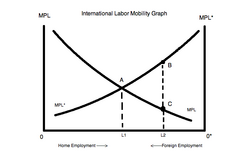
International labor mobility is the movement of workers between countries.2 It is an example of an international factor movement. The movement of laborers is based on a difference in resources between countries.2 According to economists, over time the migration of labor should have an equalizing effect on wages, with workers in the same industries garnering the same wage.
Displaced labor mobility
In recent years, labor mobility pathways have been explored as a complementary solution for displaced populations3. International organisations such as the International Organization for Migration (IOM) and the United Nations High Commissioner for Refugees (UNHCR) have examined how displaced people's skills can be matched with labor shortages in destination countries through regulated migration channels. Displaced Labor Mobility is often discussed within the broader framework of complementary pathways for refugee admission to destination countries4.
References
References
- Long, Jason. "Labour Mobility" (PDF). Oxford Encyclopedia of Economic History. Archived from the original (PDF) on 6 July 2008. Retrieved 24 February 2011.
- Krugman, Paul (2005). International Economics: Theory and Policy. Daryl Fox. ISBN 0-201-77037-7.
- "Labour mobility for displaced people". International Organization for Migration. Retrieved 2026-03-11.
- "2. Definitions and types of complementary pathways". UNHCR Operational Guidance on Complementary Pathways for Admission. Retrieved 2026-03-11.