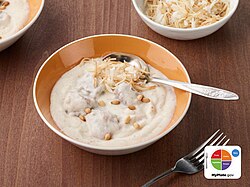
 Shakriyeh with vermicelli rice | |
| Alternative names | Laban emmo |
|---|---|
| Type | Stew |
| Course | Main |
| Place of origin | Levant |
| Associated cuisine | Levantine cuisine |
| Main ingredients | Lamb, yogurt |
Shakriyeh (Arabic: شاكرية, also known as "laban emmo") is a traditional Levantine stew of lamb cooked in yogurt, often served with Arabic rice.12
Etymology
The origin of the name shakriyeh is disputed, the word shakriyeh itself is derived from the Arabic word for "to thank" (ushkur, أشكر).23 The name shakriyeh is believed to have been derived from the first name "shakir" (شاكر), with the person it was named after remaining unknown.34 Other sources disregard this theory and attribute an Aramaic origin to the word.5 Common spellings include shakriyyeh and shakriya.67
The name laban emmo (Arabic: لبن امه, also spelled laban ummo) is common in some regions, such as Lebanon,843 the name translates to "his mother's milk", implying that the lamb meat is to be cooked in the lambs own mothers milk,910 according to Syrian historian Khayr al-Din al-Asadi, it is a reference to the 10 commandments in Jewish doctrine.4 The name may laban emmo may refer to shakriyeh or a specific variety of it.10
Preparation and varieties
The dish is traditionally prepared by cooking lamb meat in laban rayeb with aromatics and spices, often topped with garlic, and served with vermicelli rice.11112213 Some varieties use chicken in place of lamb.146 Despite the similarity to mansaf, it does not use jameed.1516
Arman (أرمان) is a Syrian dish similar to shakriyeh made by cooking the meat in a pan before adding it to the stew.41718
History
Recipes for meat cooked in yogurt can be found in medieval Arabic cookbooks, according to author Claudia Roden, 10th century poet Badi' al-Zaman al-Hamadani wrote a story about such a dish called madira (مضيرة).919
Shakriyeh is attested as early as the 19th century; Lebanese scholar Butrus al-Bustani defined shakriyeh in his 1867 dictionary titled Kitāb Muḥīṭ al-muḥīṭ as "a dish of meat cooked in yogurt".20
Culture
Shakriyeh is typically cooked to celebrate special occasions.221 Muslims traditionally cook shakriyeh on Eid al-Fitr as well as Eid al-Adha,2122 and on the first day of Ramadan,231211 and Christians prepare it on Christmas.21 Shakriyeh and similar Levantine yogurt stews are most common during spring.8 The availability of the ingredients, mainly meat and dairy, was impacted negatively by the Syrian civil war.12
Shakriyeh features in several traditional Syrian proverbs and poems.411 It is associated with other Levantine festive yogurt dishes, like shishbarak, kibbeh labaniyyeh, sheikh al-mahshi, among others.242311
References
References
- "How to make a creamy lamb stew from Syria". Middle East Eye. 24 May 2019. Retrieved 22 February 2026.
- Assil, Reem (19 April 2022). Arabiyya: Recipes from the Life of an Arab in Diaspora [A Cookbook]. Clarkson Potter/Ten Speed. pp. 188–189. ISBN 978-1-9848-5908-2. Retrieved 22 February 2026.
- "الشاكرية باللحم على الطريقة السورية... وسبب اسمها الطريف" [Shakriyeh with meat, Syrian style... and the reason behind its amusing name]. An-Nahar (in Arabic). 2024. Retrieved 22 February 2026.
- Khayr al-Din al-Asadi (1981). موسوعة حلب المقارنة [Comparative Encyclopedia of Aleppo] (in Arabic). Vol. 5. p. 16. Retrieved 25 December 2025.
- "وصفة الشاكرية الأقدم والأشهى... وأصل طبيخ اللحم باللبن في بلاد الشام" [The oldest and most delicious recipe for Shakriya... and the origin of meat stew with yogurt in the Levant.]. Raseef22 (in Arabic). 8 December 2022. Retrieved 23 February 2026.
- Mortada, Dalia (7 May 2021). "Recipe: Shakriyyeh, Chicken and Yogurt Stew". Culinary Backstreets. Retrieved 22 February 2026.
- "Syrian Piccata Stew (Shakriya)". PaperCity Magazine. Retrieved 23 February 2026.
- El-Haddad, Laila M.; Schmitt, Maggie (2016). The Gaza Kitchen: A Palestinian Culinary Journey. Just World Books. ISBN 978-1-68257-008-1. Retrieved 21 February 2026.
- Roden, Claudia (24 December 2008). The New Book of Middle Eastern Food. Knopf Doubleday Publishing Group. p. 243. ISBN 978-0-307-55856-5. Retrieved 22 February 2026.
- Nadia al-Ghazzi (2001). حضارة الطعام في بلاد الرافدين والشام [Food culture in Mesopotamia and the Levant] (in Arabic). دار الفكر المعاصر ؛. p. 141,296. ISBN 978-1-57547-890-6. Retrieved 22 February 2026.
- "عن الحراق إصبعه والباشا وعساكره وكشك الفقراء... من أين يأتي السوريون بأسماء أطباقهم؟" [From Harraq Isba'o, Pasha and his soldiers, and Poorman's Kishk... Where do Syrians get the names of their dishes from?]. Raseef22 (in Arabic). 25 June 2017. Retrieved 22 February 2026.
- ""السكبة" وغيرها.. طقوس رمضانية تقاوم الأزمات في سوريا" ["Al-Sakba" and other Ramadan traditions resist crises in Syria]. Sky News Arabia (in Arabic). 2023. Retrieved 22 February 2026.
- "طريقة عمل الشاكرية باللحم على الطريقة السورية" [How to make Shakriyeh with meat, Syrian style]. Al-Gomhuria (in Arabic). 3 September 2023. Retrieved 22 February 2026.
- Meyer, Kimberly (26 March 2024). Accidental Sisters: Refugee Women Struggling Together for a New American Dream. Univ of California Press. ISBN 978-0-520-38468-2. Retrieved 22 February 2026.
- "«الشاكرية» طبق غنيّ بالبروتين والكالسيوم" ["Shakriya" is a dish rich in protein and calcium.]. Al-Ittihad (Emirati newspaper) (in Arabic). 28 December 2013. Retrieved 22 February 2026.
- "الشاكرية" [Shakriyeh]. Al-Ghad (in Arabic). 2015. Retrieved 22 February 2026.
- "طبخة الأرمان.. من أبسط الأطباق الشعبية وألذها في سورية" [Arman dish... one of the simplest and most delicious traditional dishes in Syria]. Hibr Press (in Arabic). 26 April 2021. Retrieved 22 February 2026.
- "Shakriyeh | Traditional Stew From". Taste Atlas. Retrieved 22 February 2026.
- Nasrallah, Nawal (31 December 2007). Annals of the Caliphs' Kitchens: Ibn Sayyār al-Warrāq's Tenth-Century Baghdadi Cookbook. BRILL. p. 588. ISBN 978-90-474-2305-8. Retrieved 22 February 2026.
- Bustānī, Buṭrus al- (1867). Kitāb Muḥīṭ al-muḥīṭ: ay qāmūs muṭawwal li-al-luġa al-ʻArabiyya (in Arabic). p. 1110. Retrieved 22 February 2026.
- Jazmati, Malakeh (6 July 2017). Malakeh: Sehnsuchtsrezepte aus meiner syrischen Heimat (in German). ZS - ein Verlag der Edel Verlagsgruppe. p. 273. ISBN 978-3-89883-736-1. Retrieved 22 February 2026.
- The Cuisine of LIFE: Recipes and Stories of the New Food Entrepreneurs of Turkey. Center for International Private Enterprise. 31 December 2019. ISBN 978-0-578-61307-9. Retrieved 22 February 2026.
- "دليلك الشامل عن أهم الوصفات السورية لإفطار رمضان 2025" [Your comprehensive guide to the most important Syrian recipes for Ramadan breakfast 2025]. Arab 48 (in Arabic). 2025. Retrieved 22 February 2026.
- "في الأيام الأولى من رمضان.. لماذا يسيطر اللون الأبيض على المائدة السورية؟" [In the first days of Ramadan... why does the color white dominate the Syrian table?]. 24.ae (in Arabic). 2024. Retrieved 22 February 2026.
External links
External links
- How to make a creamy lamb stew from Syria, on Middle East Eye
- Shakriyeh, on MyPlate