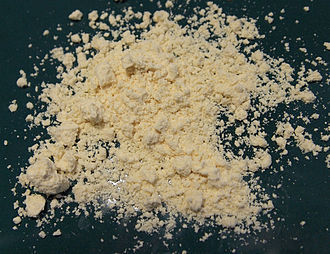
 Kinako, or roasted soybean flour | |
| Place of origin | Japan |
|---|---|
| Main ingredients | Soybeans |
Kinako (黄粉 or きなこ "yellow flour") is roasted soybean flour, used in Japanese cuisine.1 In English, it is usually called "roasted soy flour". Kinako is mostly used as a topping to flavor rice cakes like mochi.2
History
Usage of the word kinako appeared in Japanese cookbooks from the late Muromachi period (1336–1573).3
An early record of the word comes from the text Sōtan Chakai Kondate Nikki (Sōtan's Tea Ceremony Cookery Menu Diary), written in 1587 by Sen no Sōtan, a tea ceremony master.4
Production
Kinako is produced by finely grinding roasted soybeans into powder.35 The skin of the soybean is typically removed before pulverizing the beans, but some varieties of kinako retain the roasted skin.5 Yellow soybeans produce a yellow kinako, and green soybeans produce a light-green product.5
Usage
Kinako is widely used in Japanese cooking, but is strongly associated with dango and wagashi. Dango, dumplings made from mochiko (rice flour), are commonly coated with kinako.6 Examples include ohagi and Abekawa-mochi. Kinako, when combined with milk or soy milk, can also be made into a drink. One example of its use in popular foods is warabimochi, which is a famous kinako-covered sweet.
-
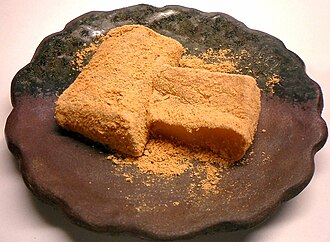 Kurumimochi (rice cake) covered in kinako
 -
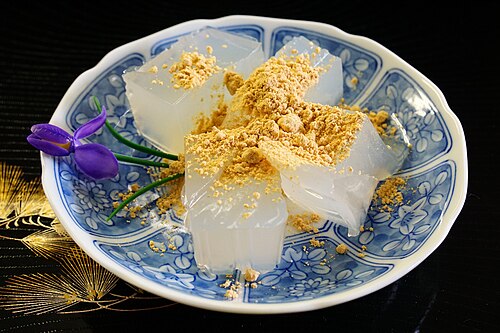 Kuzumochi with kinako
 -
 Kusa mochi covered in kinako
 -
 Dango (rice flour dumplings) covered in kinako
 -
 Dango with kinako
Nutrition
Being composed of soybeans, kinako is a nutritious topping and source of flavor, containing B vitamins and protein.5 Compared to boiled soybeans, however, the protein in kinako is not easily digested.5
See also
See also
- List of soy-based foods
- Pinole
- Besan
- Matcha, green tea powder
- Gofio, almost identical elaboration from other staple food.
References
References
- "Kinako" [Progressive Japanese-English Dictionary]. Puroguresshibu Waei Chūjiten [プログレッシブ和英中辞典]. Tokyo: Shogakukan. 2012. Archived from the original on 2007-08-25. Retrieved 2012-06-26.
- Ishige, Naomichi (2011). History Of Japanese Food. Routledge. p. 257. ISBN 9781136602559.
- "Kinako". Nihon Kokugo Daijiten (日本国語大辞典) (in Japanese). Tokyo: Shogakukan. 2012. Archived from the original on 2007-08-25. Retrieved 2012-05-26.
- Clarkson, Janet (2014). Food History Almanac: Over 1,300 Years of World Culinary History, Culture, and Social Influence. Rowman & Littlefield. p. 585. ISBN 9781442227149.
- "Kinako". Nihon Daihyakka Zensho (Nipponika) (in Japanese). Tokyo: Shogakukan. 2012. Archived from the original on 2007-08-25. Retrieved 2012-05-26.
- Wagashi, traditional Japanese confections, also make extensive use of a mixture of kinako and sugar."Kinako". Dijitaru daijisen (in Japanese). Tokyo: Shogakukan. 2012. Archived from the original on 2007-08-25. Retrieved 2012-05-26.