| Ipomoea | |
|---|---|
| |
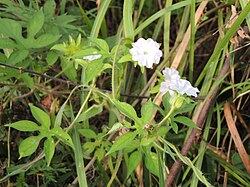
| Ipomoea pes-tigridis, the type species of the genus3 | |
Scientific classification 
| |
| Kingdom: | Plantae |
| Clade: | Tracheophytes |
| Clade: | Angiosperms |
| Clade: | Eudicots |
| Clade: | Asterids |
| Order: | Solanales |
| Family: | Convolvulaceae |
| Tribe: | Ipomoeeae |
| Genus: | Ipomoea L.1 |
| Type species | |
| Ipomoea pes-tigridis L.2 | |
| Species | |
|
More than 600, see list | |
| Synonyms4 | |
|
List
| |


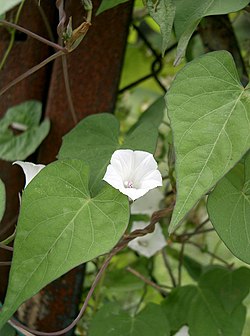


Ipomoea (/ˌɪpəˈmiː.ə, -oʊ-/)56 is the largest genus in the plant family Convolvulaceae, with over 600 species. It is a large and diverse group, with common names including morning glory, water Convolvulus or water spinach, sweet potato, bindweed, moonflower, etc.7 The genus occurs throughout the tropical and subtropical regions of the world, and comprises annual and perennial herbaceous plants, lianas, shrubs, and small trees; most of the species are twining climbing plants.
Description
Vegetative characteristics
Ipomoea are annual or perennial8 twining, prostrate or erect,9 herbs,10 shrubs, lianas,11 or trees8 usually with twining or trailing stems bearing simple, or rarely compound leaves.12
Generative characteristics
The few- to many-flowered,11 axillary, solitary or cymose inflorescences12 bear small to large,9 blue, red, pink, purple, white, orange, or yellow,8 pentamerous flowers.11
Taxonomy
The genus Ipomoea L. was described by Carl Linnaeus in 1753.134 It has 642 accepted species.4 The type species is Ipomoea pes-tigridis L.23 Within the family Convolvulaceae, it is placed in the tribe Ipomoeeae.1
Common names
Their most widespread common name is morning glory, but some species in related genera bear that same common name and some Ipomoea species are known by different common names. Those formerly separated in Calonyction14 (Greek καλός kalós "good" and νύξ, νυκτός núx, nuktós, "night") are called moonflowers.7
Etymology
The name Ipomoea is derived from the Ancient Greek ἴψ, meaning 'woodworm', and ὅμοιος (hómoios), meaning "resembling". It refers to their twining habit.15
Ecology
Pollination
The species of Ipomoea interfere with each other's pollination. Pollen from different species compete in each other's reproductive processes, imposing a fitness cost.16
Uses
Ipomoea sepiaria is part of the Dashapushpam (Ten sacred flowers) in Kerala and is known as "Thiruthali" in Malayalam.1718
Moon vine (I. alba) sap was used for vulcanization of the latex of Castilla elastica (Panama rubber tree, Nahuatl: olicuáhuitl) to rubber; as it happens, the rubber tree seems well-suited for the vine to twine upon, and the two species are often found together. As early as 1600 BCE, the Olmecs produced the balls used in the Mesoamerican ballgame.19
As medicine and entheogen

Humans use Ipomoea spp. for their content of medical and psychoactive compounds, mainly alkaloids.20 Some species are renowned for their properties in folk medicine and herbalism; for example, Vera Cruz jalap (I. jalapa) and Tampico jalap (I. simulans) are used to produce jalap, a cathartic preparation accelerating the passage of stool.21 Kiribadu ala (giant potato, I. mauritiana) is one of the many ingredients of chyawanprash, the ancient Ayurvedic tonic called "the elixir of life"22 for its wide-ranging properties.
The leaves of I. batatas are eaten as a vegetable, and have been shown to slow oxygenation of LDLs, with some similar potential health benefits to green tea and grape polyphenols.23
Other species were and still are used as potentially potent entheogens. Seeds of Mexican morning glory (tlitliltzin, I. tricolor) were thus used by Aztecs and Zapotecs in shamanistic and priestly divination rituals, and at least by the former also as a poison, to give the victim a "horror trip"2425 (see also Aztec entheogenic complex). Beach moonflower (I. violacea) was also used thusly, and the cultivars called 'Heavenly Blue', touted today for their psychoactive properties, seem to represent an indeterminable assembly of hybrids of these two species.
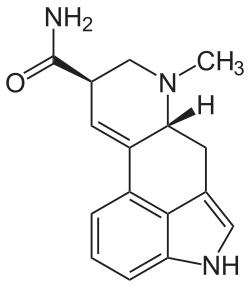
Ergoline alkaloids occur in several Ipomoea species whose seeds host heritable Periglandula fungi. Seeds of I. tricolour and I. purpurea commonly contain lysergamides such as ergine (D- lysergic acid amide, LSA) and its epimer isoergine; other reported alkaloids include lysergol, lysergic acid hydroxyethylamide (LSH), and ergometrine (ergonovine)26
Human data indicate that LSA produces comparatively mild psychedelic effects with prominent sedation; adverse effects frequently include nausea and vasoconstriction.27
Albert Hofmann and colleagues first isolated lysergamides from I. corymbosa and I. violacea seeds and reported early human observations.28
Analytical studies of Ipomoea seeds have generally found ergometrine at lower concentrations than LSA, and note that LSH is labile and can rearrange to LSA during extraction or storage.29
The subjective effects of morning glory seeds vary with species, alkaloid profile, preparation and dose.27
Though most often noted as "recreational" drugs, the lysergamides30 are also of medical importance.

Gallery
-
 Whitestar potato (I. lacunosa)
 -
 Ipomoea carnea in Brazil
 -
-
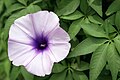
 Ipomoea purpurea, Eastern Siberia
 -
 Ipomoea campanulata, India.
References
References
- "Genus: Ipomoea L." Germplasm Resources Information Network. United States Department of Agriculture. 5 October 2007. Archived from the original on 28 May 2010. Retrieved 10 November 2010.
- Ipomoea L. (n.d.). International Plant Names Index. Retrieved March 21, 2026, from https://www.ipni.org/n/325789-2
- Missouri Botanical Garden. (n.d.). Ipomoea L. Tropicos. Retrieved March 21, 2026, from https://www.tropicos.org/name/40031392
- "Ipomoea L." Plants of the World Online. Board of Trustees of the Royal Botanic Gardens, Kew. 2017. Retrieved 15 July 2020.
- "Ipomoea". Lexico UK English Dictionary. Oxford University Press. Archived from the original on 22 March 2020.
- Sunset Western Garden Book. Sunset Publishing Corporation. 1995. pp. 606–07. ISBN 9780376038500.
- Gunn, Charles R. (1972). "moonflower". Brittonia. 24 (2): 150–168. doi:10.2307/2805866. JSTOR 2805866. S2CID 44714712.
- Ipomoea in Flora of North America @ efloras.org. (n.d.). Retrieved March 21, 2026, from http://www.efloras.org/florataxon.aspx?flora_id=1&taxon_id=116482
- Ipomoea in Flora of China @ efloras.org. (n.d.). Retrieved March 21, 2026, from http://www.efloras.org/florataxon.aspx?flora_id=2&taxon_id=116482
- Ipomoea Linnaeus. (n.d.). Database of Vascular Plants of Canada (VASCAN). Retrieved March 21, 2026, from https://data.canadensys.net/vascan/taxon/1287
- Western Australian Herbarium & Department of Biodiversity, Conservation and Attractions. (n.d.). Ipomoea L. Florabase—the Western Australian Flora. Retrieved March 21, 2026, from https://florabase.dbca.wa.gov.au/browse/profile/21958
- Royal Botanic Gardens Victoria. (n.d.). Ipomoea. VicFlora Flora of Victoria. Retrieved March 21, 2026, from https://vicflora.rbg.vic.gov.au/flora/taxon/aeb2e53b-1878-4e33-ad72-6b01b459221b
- Linné, Carl von, Salvius, Lars (1753). Caroli Linnaei ... Species plantarum :exhibentes plantas rite cognitas, ad genera relatas, cum differentiis specificis, nominibus trivialibus, synonymis selectis, locis natalibus, secundum systema sexuale digestas... Vol. 1. Impensis Laurentii Salvii.
- Gunn, Charles R. (1972). "Calonyction". Brittonia. 24 (2): 150–168. doi:10.2307/2805866. JSTOR 2805866. S2CID 44714712.
- Austin, Daniel F. (2004). Florida Ethnobotany. CRC Press. p. 365. ISBN 978-0-8493-2332-4.
- Weber, Marjorie G.; Strauss, Sharon Y. (2016). "Coexistence in Close Relatives: Beyond Competition and Reproductive Isolation in Sister Taxa". Annual Review of Ecology, Evolution, and Systematics. 47 (1). Annual Reviews: 359–381. doi:10.1146/annurev-ecolsys-112414-054048. ISSN 1543-592X.
- Vijayan Namboothiri, Mini. 'Dashapushpam'- through the looking glasses of Science and Religion. ISBN 978-620-0-31860-2. OCLC 1197284682.
- Uthaman, Ashly; Nair, Sreesha N (2017). "A Review on Ten Sacred Flowers in Kerala: Dasapushpam". Research Journal of Pharmacy and Technology. 10 (5): 1555. doi:10.5958/0974-360x.2017.00274.8. ISSN 0974-3618.
- Massachusetts Institute of Technology Summer Institute in Materials Science and Material Culture: Rubber Processing in Ancient Mesoamerica. Retrieved 2007-NOV-22.
- Nowak, Julia; Woźniakiewicz, Michał; Klepacki, Piotr; Sowa, Anna; Kościelniak, Paweł (2016). "Identification and determination of ergot alkaloids in Morning Glory cultivars". Analytical and Bioanalytical Chemistry. 408 (12): 3093–3102. doi:10.1007/s00216-016-9322-5. ISSN 1618-2642. PMC 4830885. PMID 26873205.
- "JALAP: Overview, Uses, Side Effects, Precautions, Interactions, Dosing and Reviews". www.webmd.com. Retrieved 30 May 2024.
- "CHYAWANPRASH – Ancient Elixir of Life". Everest Ayurveda. 23 August 2022. Retrieved 30 May 2024.
- Nagai, Miu; Tani, Mariko; Kishimoto, Yoshimi; Iizuka, Maki; Saita, Emi; Toyozaki, Miku; Kamiya, Tomoyasu; Ikeguchi, Motoya; Kondo, Kazuo (2011). "Sweet potato (Ipomoea batatas L.) leaves suppressed oxidation of low density lipoprotein (LDL) in vitro and in human subjects". J Clin Biochem Nutr. 48 (3): 203–8. doi:10.3164/jcbn.10-84. PMC 3082074. PMID 21562639.
- "Ipomoea coccinea (Mexican Morning Glory, Red Morning Glory, Redstar, Scarlet Creeper) | North Carolina Extension Gardener Plant Toolbox". plants.ces.ncsu.edu. Retrieved 28 March 2025.
- "Morning Glory". Pflanzenkunst. 6 April 2016. Retrieved 28 March 2025.
- Beaulieu, Wesley T.; Panaccione, Daniel G.; Quach, Quynh N.; Smoot, Katy L.; Clay, Keith (6 December 2021). "Diversification of ergot alkaloids and heritable fungal symbionts in morning glories". Communications Biology. 4 (1): 1362. doi:10.1038/s42003-021-02870-z. ISSN 2399-3642. PMC 8648897. PMID 34873267.
- Castro, Paula S. C. C.; Leopoldo, Kae; Pedro, Maria Olivia Pozzolo; Takitane, Juliana; Bombana, Henrique Silva; Negrão, André Brooking; Scholz, Jaqueline R.; Castaldelli-Maia, João Maurício (21 July 2025). "Lysergic Acid Amide (LSA), an LSD Analog: Systematic Review of Pharmacological Effects, Adverse Outcomes, and Therapeutic Potentials". Pharmacy. 13 (4): 98. doi:10.3390/pharmacy13040098. ISSN 2226-4787. PMC 12286086. PMID 40700269.
- Hofmann, Albert (22 November 1963). "The Active Principles of the Seeds of Rivea corymbosa and Ipomoea violacea". Botanical Museum Leaflets, Harvard University. 20 (6): 194–212. doi:10.5962/p.168542. ISSN 0006-8098.
- Nowak, Julia; Woźniakiewicz, Michał; Klepacki, Piotr; Sowa, Anna; Kościelniak, Paweł (May 2016). "Identification and determination of ergot alkaloids in Morning Glory cultivars". Analytical and Bioanalytical Chemistry. 408 (12): 3093–3102. doi:10.1007/s00216-016-9322-5. ISSN 1618-2650. PMC 4830885. PMID 26873205.
- PubChem. "Lysergamide". pubchem.ncbi.nlm.nih.gov. Retrieved 30 May 2024.
External links
External links
- Dressler, S.; Schmidt, M. & Zizka, G. (2014). "Ipomoea". African plants – a Photo Guide. Frankfurt/Main: Forschungsinstitut Senckenberg.