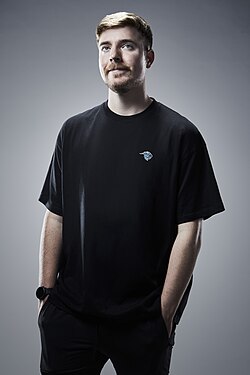
An influencer is an individual who has the capacity to shape the attitudes, behavior, or decisions of others through authority, knowledge, position, or the nature of the relationship with the audience.1 The term is used in various fields such as media, business, politics, religion, and communication, referring to influencers such as social media influencers, podcasters, public speakers, religious influencers, writers, and newsletter writers etc who have dedicated followings in various areas.23
One writer defines influencers as "a range of third parties who exercise influence over the organization and its potential customers."4 Another writer defines an influencer as a "third party who significantly shapes the customer's purchasing decision but may never be accountable for it."5 According to another writer, influencers are "well-connected, create an impact, have active minds, and are trendsetters".6 Just because a person has many followers does not necessarily mean they have much influence over those people.78
In contemporary usage, the term frequently refers to a social media influencer,91011 (also known as an online influencer121314 or simply influencer151617) a person who builds a grassroots online presence through engaging content such as photos, videos, and updates. This is done by using direct audience interaction to establish authenticity, expertise, and appeal, and by standing apart from traditional celebrities by growing their platform through social media rather than pre-existing fame.1819 The modern referent of the term is commonly a paid role in which a business entity pays for the social media influence-for-hire activity to promote its products and services, known as influencer marketing.20 A 1% increase in spending on influencer marketing can lead to a 0.5% increase in audience engagement.21 As such, an influencer effectively acts as a modern salesperson or a marketer. Types of influencers include fashion influencer, travel influencer, and virtual influencer, and they involve content creators222324 and streamers.252627
Some influencers are associated primarily with specific social media apps such as TikTok,28 Instagram,2930 or Pinterest; many influencers are also considered internet celebrities. As of 2023, Instagram is the social media platform businesses spend the most advertising money towards marketing with influencers. However, influencers can have an impact on any social media network.31
History
Origins
The word influencer in its general sense of a person or thing that exerts influence, is attested in historical sources at least since the 17th century. The Oxford English Dictionary (OED) gives 1664 as the earliest example of usage and cites a sentence from Henry More's A Modest Enquiry into the Mystery of Iniquity: "The head and influencer of the whole Church".32
The origins of online influencing can be traced back to the emergence of digital blogs and platforms in the early 2000s. Nevertheless, recent studies demonstrate that Instagram, an application with more than one billion users, harbors the majority of the influencer demographic.33 These individuals are sometimes referred to as "Instagrammers" or "Instafamous". A crucial aspect of influencing is their association with sponsors. The 2015 debut of Vamp, a company that links influencers with sponsorships, transformed the landscape of influencing.3435
There is much debate about whether social media influencers can be considered celebrities, as their path to fame is often less traditional and arguably easier. Melody Nouri addressed the differences between the two types in her article "The Power of Influence: Traditional Celebrities vs Social Media Influencer".36 Nouri asserts that social media platforms have a greater negative impact on young, impressionable audiences in comparison with traditional media such as magazines, billboards, advertisements, and tabloids featuring celebrities. Online, it is thought to be simpler to manipulate an image and lifestyle in such a way that viewers are more susceptible to believing it.36
One theory considers the former American First Lady Eleanor Roosevelt (1884–1962) to be the "original media influencer." While she achieved celebrity in her role as First Lady, she built a global personal brand as a wise, informative, trustworthy American woman. Her voice was her own, unrestricted by political advisors and powerful men, and with it, Roosevelt exerted unprecedented social and cultural influence in radio, print, public speaking, film, and television until she died.373839 In one notable example, it may have been Roosevelt's television support of John F. Kennedy which nudged his "hairline victory" during the 1960 Presidential campaign.4041 In another example, David Ogilvy paid Roosevelt more than a quarter of a million dollars in today's currency to make a TV commercial for Good Luck margarine (1959), in which Roosevelt also managed to mention world hunger.42 As a content creator, she wrote My Day, a popular daily newspaper column that ran nationwide for twenty-six years. Like a social media post, My Day covered all aspects of her life, and in it Roosevelt often recommended movies, books, and products that she admired.434445 Roosevelt also had a hand in designing all three of her public affairs television shows.46 Unlike contemporary influencers, she was less motivated by a pay-to-play situation than by a desire to educate and inspire; but she did use her influence to benefit the entertainment industry careers of her children,474849 and she welcomed the revenue that her influence bought, most of which was donated to charity.4450
2000s
The early 2000s showed corporate endeavors to leverage the internet for influence, with some companies participating in forums for promotions or providing bloggers with complimentary products in return for favorable reviews. A few of these practices were viewed as unethical for taking advantage of the labor of young individuals without providing remuneration. In 2004, The Blogstar Network was established by Ted Murphy of MindComet. Bloggers were encouraged to join an email list and receive remunerated offers from corporations in exchange for creating specific posts. For instance, bloggers were compensated for writing reviews of fast-food meals on their blogs. Blogstar is widely regarded as the first influencer marketing network.51
Murphy succeeded Blogstar with PayPerPost, which was introduced in 2006. This platform compensated significant posters on prominent forums and social media platforms for every post made about a corporate product. Payment rates were determined by the influencer's status.51 Though very popular, PayPerPost, received a great deal of criticism as these influencers were not required to disclose their involvement with PayPerPost as traditional journalism would have.52 With the success of PayPerPost, the public became aware that there was a drive for corporate interests to influence what some people were posting to these sites.51 The platform also incentivized other firms to establish comparable programs.53
Despite concerns, marketing networks with influencers continued to grow throughout the 2000s and into the 2010s. The influencer marketing industry was worth as much as $8 billion in 2019, according to estimates from Business Insider Intelligence, which are based on Mediakix data.53 Evan Asano, the Former CEO and founder of the agency Mediakix, previously spoke with Business Insider and said he believed influencer marketing on Instagram would continue to grow despite likes being hidden.54
2010s
By the 2010s, the term "influencer" described digital content creators with a large following, distinctive brand persona, and a patterned relationship with commercial sponsors.55 By this period, influencer marketing had become a widely researched field globally, with systematic reviews drawing on hundreds of studies that documented the growing role of authenticity, audience engagement, and parasocial relationships in shaping how consumers responded to influencer content across different markets.18
During this period, influencer culture also developed through distinct channels outside Western markets. In South Korea, the global spread of Korean pop culture, also called K-Pop, through platforms such as YouTube, Facebook, and Twitter gave rise to what scholars have called 'Hallyu 2.0' or the 'New Korean Wave', where fans throughout Southeast Asia, North America, Latin America, and Europe shared, subtitled, and redistributed Korean music and film content on a large scale. This helped Korean entertainers to build substantial followings internationally.56
Consumers often mistakenly view celebrities as reliable, leading to trust and confidence in the products being promoted.57 A 2001 study from Rutgers University discovered that individuals were using "internet forums as influential sources of consumer information." The study proposes that consumers preferred internet forums and social media when making purchasing decisions over conventional advertising and print sources. An influencer's personality strongly impacts their audience's purchasing decision, with those who engage with their audience being more persuasive in encouraging product purchases. Companies today place great importance on feedback and comments received through social media platforms as consumers trust other consumers. Reviews are often relied on to persuade consumers to make a purchase, highlighting the impact of a negative review on a business's revenue.58
2020s
Influencer marketing saw significant changes in the 2020s due to changes in platform usage and content consumption. By 2020, TikTok was available in over 150 countries and 39 languages, with influencer marketing expanding worldwide, across Asia-Pacific markets, the United States, and Europe, as creators built large audiences through the platform's content recommendation algorithm.5960 With over a billion active users by 2021,61 TikTok introduced an algorithm-driven model that enables creators to reach large audiences regardless of the number of followers. Short-form video became the most popular format for influencer content when Instagram and YouTube responded with Reels and Shorts, respectively.62 Marketers quickly changed their tactics to put short, powerful content ahead of conventional long-form sponsorships.
Compared to celebrity endorsers, brands are increasingly focusing their resources on micro-influencers (10,000–100,000 followers) and nano-influencers (1,000–10,000 followers). Over the course of the decade, research revealed that these smaller creators had higher engagement rates63 and were perceived by their audiences as more relatable and credible.64 To assist brands in effectively managing vast networks of niche creators, specialized platforms like AspireIQ and Grin have emerged.65
Increased regulatory scrutiny of influencer advertising transparency was another development of the decade. In 2022 and 2023, the FTC updated its endorsement guidelines,6667 requiring creators involved in gifted arrangements and paid promotions to disclose more information.68
Influencer marketing
A typical method of marketing between the influencer and the audience is "B2C marketing". B2C marketing, meaning Business-to-Consumer marketing, entails the strategies which a business would undertake to promote themselves and their services directly to their target audiences. This is typically through advertising and creating content through the influencer themselves. The intention is that their followers, who relate or look up to certain influencers, will be more inclined to purchase an item because their favorite "Internet celebrity" recommended it.69 Social media influencers typically promote a lifestyle of beauty and luxury fashion and foster consumer–brand relationships, while selling their own lines of merchandise.70
David Rowles explains the methods online influencers employ to increase their audience and brand visibility. Digital branding encompasses all online experiences and necessitates value provision."71
Influencer marketing is a form of marketing in which advertisers or brand representatives collaborate with influencers and, through them, promote their services on social media. Influencer marketing differs from the classic advertising strategy, in which a well-known person endorses a product or service, in the way the message is communicated. In influencer marketing, product advertising is embedded in materials created by the influencer and often does not differ from the content they regularly produce.72
However, many influencer-brand partnerships complicate how authentic an influencer appears to their followers. When influencers gained followers, they were perceived as "regular" consumers who posted content that was not commercial in nature, which results in their content being more reliable than traditional advertising. Brand partnerships may pose a threat to the authenticity of the influencer's content because the audience may begin to perceive the content as either a reflection of the influencer's true opinion or as it being a commercial obligation. According to the research available, influencers deal with this issue in one of two ways: by either working with brands whose values are consistent with theirs (passionate authenticity) or by being transparent about the commercial nature of the content they post to their followers (transparent authenticity).73
One of the earliest definitions of a social media influencer was proposed by Karen Freberg as "representing a new type of independent third-party endorser who shapes audience attitudes through blogs, tweets, and the use of other social media".74 Campbell and Grimm supplemented this definition with the element of "publishing content in exchange for compensation".75
Currently, two main categories of influencers are distinguished:76
- human influencers (HI)
- virtual influencers (VI). In relation to virtual influencers, the abbreviation AIIs (artificially intelligent influencers) is also used.
Self-branding
Self-branding, also known as personal branding, describes the development of a public image for commercial gain or social or cultural capital.77 The rise of social media has been exploited by individuals seeking personal fame and product sales. Platforms such as Instagram, Twitch, Snapchat, VSCO, YouTube, and TikTok, are the most common social media outlets on which online influencers attempt to build a following. Fame can be attained through different avenues and media forms, including art, humor, modeling, books and podcasts. Marketing experts have concluded that anyone can build websites easily without any technical knowledge or complex coding languages. They can upload text, pictures, and videos instantly from personal computers or phones. With technological barriers diminishing, the web has become a platform for personal branding.78
Types of Influencers
Market research techniques can be used to identify influencers, using predefined criteria to determine the extent and type of influence.6 "Activists" get involved with organizations, for example, their communities, political movements, and charities. Especially in the West, social media allows marginalized influencers to promote legal changes through their creations. In countries where there is less legal representation for marginalized communities, influencers that are a part of these communities are more likely to use their platform to work through and survive discrimination.[1] "Connected influencers" have large social networks. "Authoritative influencers" are trusted by others. "Active minds" have a diverse range of interests. "Trendsetters" are the early adopters (or leavers) of markets. According to Malcolm Gladwell, "The success of any kind of social epidemic is heavily dependent on the involvement of people with a particular and rare set of social gifts".79 He has identified types of influencers who are responsible for the "generation, communication, and adoption" of messages; connectors network with a variety of people, have a wide reach, and are essential to word-of-mouth communication;80 mavens use information, share it with others, and are insightful about trends.8180
Student athletes


Following the National Collegiate Athletic Association v. Alston ruling by the Supreme Court of the United States in 2021, pre-college and college athletes became eligible for student athlete compensation for use of their personality rights without loss of athletic eligibility and education-related benefits, which broadened the influencer landscape to people who might not yet be celebrities;82 subsequently, it became common for amateur athletes to use the name, image and likeness of their personal brand as influencers for hire outside of the field of play.8384858687
LGBTQ+
In countries where LGBTQ+ people are discriminated against, influencing can be an opportunity to make money through personalized content and express identities. For example, in Thailand, transgender women are less likely to receive a job and more likely to drop out of school than other Thais. These transgender women who have become influencers have reported that the job has allowed them to take control of their lives and the narratives around them. They rely on themselves and their brand and content, rather than the economic or legal systems of their country. Influencing can increase stereotypes, though, and requires resources that can be hard for marginalized communities to obtain.88
Income
Influencers can make money in various ways, but most of them earn money from endorsements or sponsorships. Social media influencers can use their fame to promote products or experiences to their followers, as a method of providing credibility to products.57
Influencers can also expand their source of revenue by creating their own products or merchandise to sell.89 In recent years, influencers have also begun monetizing their audiences through educational platforms such as RJPL Academy and Graphy, which allows creators to sell online courses and host live masterclasses for their followers.90 By doing this, and by using their platform to promote their products to an established audience, influencers can earn money by developing their own reputable brands. Bloggers can feature sponsored posts in social media to make profits.91 For instance, fashion blogger Chiara Ferragni started as an online blogger, and then gained millions of followers on Instagram. She later created her brand, the Chiara Ferragni Collection. Like many other Instagram celebrities, Ferragni started by charging money per post for promoting brands. She earns revenue from promotional Instagram posts and the sale of her own products.92 In 2020, a report by venture-capital firm SignalFire stated that the economy spawned by internet creators was the "fastest-growing type of small business".93
Additionally, marginalized communities are able to pursue influencing as a profession if they live in countries where it is harder to get a job or achieve higher education because of their backgrounds.94
Regulations
Despite the recent emergence of influencer culture, influencer marketing and advertising is left highly unregulated by existing legislation. This became a prevalent concern when users on social media platforms were finding it difficult to distinguish between advertisements, sponsorships and personal posts. This was evident with the mismanagement of Fyre Festival, where numerous Instagram influencers were sanctioned for their lack of transparency.95 This led to a massive backlash from the public, who felt the promotion of the event deliberately misled and confused target audiences. As a result, numerous advertising bodies sought to introduce strict regulations and guidelines around influencer marketing. This includes the Australian Association of National Advertisers (AANA), which states that influencer advertising must be "clearly distinguishable".96
In August 2024, the Federal Trade Commission voted unanimously to ban marketers from using fake user reviews created by generative artificial intelligence chatbots (such as ChatGPT) and influencers paying for bots to increase follower counts.97
Payments
Most influencers are paid before the start of a marketing campaign, and others are paid after it ends.98 Consensus exists about how much an influencer should be paid. Compensation may vary by how many people an influencer can reach, the extent to which they will endorse the product (a deliverable), and the success of their past endorsements have performed.99100
Top-tier influencers and celebrities may receive a six- or seven-figure fee for a single social-media post.101 In addition to (or in lieu of) a fee, payment may include free products or services.100102 While top-tier influencers generate attention, only 4% of all influencers make more than $100,000 a year.103 For influencers with smaller followings, free products or services may be the only form of compensation.104 Advertisers are increasingly inclined to see influencers with a small but dedicated follower base as a more efficient use of marketing dollars.103
Forrester Research analyst Michael Speyer notes that for small and medium-sized businesses, "IT sales are influenced by several parties, including peers, consultants, bloggers, and technology resellers."105 According to Speyer, "Vendors need to identify and characterize influencers inside their market. This requires a comprehensive influencer identification program and the establishment of criteria for ranking influencer impact on the decision process."106
| Follower Count | Percent of total US Marketing Expenditure in 2024 |
|---|---|
| >100,000 | 30% |
| 20,000–100,000 | 25% |
| < 20,000 | 45% |
Categorization
Influencers are categorized by the number of followers they have on social media. They include celebrity endorsements from those with large followings, to niche content creators with a loyal following on social-media platforms such as YouTube, Instagram, Facebook, and Twitter.77107 Their followers range in number from hundreds of millions to 1,000.104
- Nano-influencers – These are influencers that have a followers ranging from less than 10k.
- Micro-influencers – These are the influencers with followers in the range of 10K to 100k108
- Macro-influencers – These are the influencers with followers from the range of 100K to 500k
- Mega/Celeb-influencers – These are the influencers with more than 500k followers109104107110111112
Categorization by the monetization model of an influencer’s activities (J. Kotarbiński’s categorization)113:
- Influencer 1.0 is a creator who primarily functions as a vehicle for one-off (or short-term) promotional messages on social media. In this model, cooperation with a brand may be limited to a single publication (e.g., a sponsored post), and its effects are assessed mainly through simple metrics (likes, comments, shares). Compensation is usually agreed in advance and tied primarily to follower scale, with less emphasis on deeper engagement, message personalization, or a long-term relationship with the brand.
- Influencer 2.0 is a creator who goes beyond the promoter role and, in addition to advertising brands, actively co-creates products and develops their activity in an entrepreneurial direction, often transforming a personal brand into a more complex market venture. This model more often relies on long-term, partnership-based collaboration with brands rather than solely on one-off advertising exposures.
- Influencer 3.0 is a creator combining creativity, entrepreneurship, and advanced technologies, whose activity is aimed at building multi-dimensional relationships with the community and scaling beyond the classic confines of social media platforms. In this view, Influencers 3.0 not only develop their own personal brands and co-create products, but also create more “immersive” experiences and use technology as a significant component of their activity.
Businesses pursue people who aim to lessen their consumption of advertisements, and are willing to pay their influencers more. Targeting influencers is seen as increasing marketing's reach, counteracting a growing tendency by prospective customers to ignore marketing.6114
Marketing researchers Kapitan and Silvera find that influencer selection extends into product personality. This product and benefit matching is key. For a shampoo, it should use an influencer with good hair. Likewise, a flashy product may use bold colors to convey its brand. If an influencer is not flashy, they will clash with the brand. Matching an influencer with the product's purpose and mood is important.115
Influencer as an entrepreneur
According to J. Kotarbiński, an influencer can be described as an entrepreneur who monetizes their personal brand across several categories of business activity116:
- 'Influencer as a personal brand. A model in which the basis of an influencer’s market activity is their personal brand, understood as the way the creator is perceived by their community. In this formula, monetization results, among other things, from advertising and collaborations with brands, content monetization (e.g., paid materials, subscriptions, webinars, premium content), and the implementation of the influencer’s own ventures (e.g., marketing projects and events).
- 'Influencer as a strategic brand ambassador. A cooperation model in which an influencer integrates their personal brand with external brands, creating value for both parties through various forms of collaboration. Typical activities include, among others, product placement, a long-term role as a brand ambassador, and participation in multi-channel advertising campaigns.
- 'Personal Private Label (PPL). A business model in which an influencer creates and manages their own product brands, basing their development on the equity of the personal brand. Kotarbiński defines PPL as a formula that provides the influencer with independence in design, production, distribution, and promotion, as well as the possibility of expanding the offering across different types: physical brands, semi-digital brands, digital brands, and services.
Controversies and problems
Legal controversies
In 2015, influencer Kim Kardashian reviewed the pregnancy sickness drug Diclegis, which she had promoted after entering a partnership with Merrill Dow Pharmaceuticals. The FDA flagged the post and then ordered her to take it down and repost it listing the drug's known side effects.117
By the mid-2020s, controversies surrounding influencers had expanded beyond undisclosed pharmaceutical endorsements to include hidden advertising and the promotion of regulated financial products. In 2026, the Australian Competition and Consumer Commission (ACCC) fined PhotobookShop A$39,600 after alleging that it posted misleading influencer reviews on Instagram, including by failing to disclose that influencers had been compensated and by editing one review to remove negative comments.118
In another 2026 case, the United Kingdom's Financial Conduct Authority said that seven social media influencers were sentenced for issuing unauthorised financial promotions related to a foreign exchange trading scheme, reflecting increasing regulatory scrutiny of so-called "influencers".119
Health problems
Influencers can develop social media fatigue, harming their physical health. This can include decreased sleep, headaches, eye strain, and skeletal and muscular issues. Due to these effects, influencers can lose motivation and begin to find less value and meaning from their work.[2]120
Oversaturation
In a 2024 survey, 57% of Gen Z said that they would like to be a social media influencer. Another 53% considered it a credible career pathway. However, social media influencing as a career is extremely volatile. Half of all social media influencers make less than $15k a year, while only 4% of social media influencers make more than $100k a year. The situation is expected to worsen with the rise of artificial intelligence. Many influencers in the 2020s are expected to engage with more narrow audiences than influencers before as businesses seek influencers with more niche interests for advertising. This has drawn more money to hobbyists, but not enough to go full-time. Those who desire to enter social media influencing as a career are likely to be disappointed.103
References
References
- Brown, Duncan; Hayes, Nick (2008). Influencer Marketing: Who Really Influences Your Customers?. Oxford: Butterworth-Heinemann. ISBN 978-0-7506-8600-6.
- Sokolova, Katerina; Kefi, Hajer (2020). "Instagram and YouTube bloggers promote it, why should I buy? How credibility and parasocial interaction influence purchase intentions". Journal of Retailing and Consumer Services. 53 101742: 182–192. doi:10.1016/j.jretconser.2019.01.011.
- Mitchell, Amy (November 18, 2024). "Influencers Who Often Post About News, and Who Sees Their Content". Pew Research Center. Retrieved March 31, 2026.
- Peck, Helen; Payne, Adrian; Christopher, Martin; Clark, Moira. Relationship Marketing: Strategy and Implementation, Butterworth-Heinemann, 1999.
- Brown, Duncan and Hayes, Nick. Influencer Marketing: Who really influences your customers?, Butterworth-Heinemann, 2008.
- Keller, Ed and Berry, Jon. The Influentials, Free Press, 2003
- Cha, Meeyoung; Haddadi, Hamed; Benevenuto, Fabrício; Gummadi, Krishna P. (2010). "Measuring User Influence in Twitter: The Million Follower Fallacy". Proceedings of the Fourth International AAAI Conference on Weblogs and Social Media. Association for the Advancement of Artificial Intelligence. pp. 10–17. ISBN 9780688041076. OCLC 780600252. Archived from the original on February 4, 2020. Retrieved January 20, 2020.
- Berinato, Scott (May 7, 2010). "On Twitter, Followers Don't Equal Influence". Harvard Business Review. Archived from the original on May 3, 2024. Retrieved January 20, 2020.
- Reilly, Liam (November 26, 2024). "Majority of social media influencers don't verify information before sharing it, study finds". CNN. Archived from the original on November 26, 2024. Retrieved January 10, 2025.
- Tolentino, Daysia (November 18, 2024). "1 in 5 U.S. adults get their news from social media influencers, according to Pew report". NBC News. Archived from the original on November 18, 2024. Retrieved January 10, 2025.
- "Social media influencer guide". Adobe Express. October 18, 2023. Archived from the original on May 9, 2021. Retrieved January 10, 2025.
- Brown, Matt; Kinnard, Meg; Hadero, Haleluya (August 22, 2024). "Live from the DNC, it could be one of your favorite online influencers". Associated Press. Archived from the original on August 22, 2024. Retrieved January 10, 2025.
- Tait, Amelia (May 14, 2019). "TikTok Has Created a Whole New Class of Influencer". Vice. Archived from the original on January 10, 2025. Retrieved January 10, 2025.
- "FTC Releases Advertising Disclosures Guidance for Online Influencers". Federal Trade Commission. November 5, 2019. Retrieved January 10, 2025.
- Lai, Stephanie (November 2, 2022). "Campaigns Pay Influencers to Carry Their Messages, Skirting Political Ad Rules". The New York Times. ISSN 0362-4331. Archived from the original on November 2, 2022. Retrieved January 10, 2025.
- Aratani, Lauren (August 6, 2024). "Influencer gives Trump a Tesla, a Rolex ... and a campaign finance violation?". The Guardian. ISSN 0261-3077. Archived from the original on August 6, 2024. Retrieved January 10, 2025.
- Swant, Marty (May 10, 2016). "Twitter Says Users Now Trust Influencers Nearly as Much as Their Friends". Adweek. Archived from the original on January 10, 2021. Retrieved January 10, 2025.
- Joshi, Yatish; Lim, Weng Marc; Jagani, Khyati; Kumar, Satish (June 25, 2023). "Social media influencer marketing: foundations, trends, and ways forward" (PDF). Electronic Commerce Research. 25 (2): 1199–1253. doi:10.1007/s10660-023-09719-z. ISSN 1389-5753.
- Pan, Meizhi; Blut, Markus; Ghiassaleh, Arezou; Lee, Zach W. Y. (October 12, 2024). "Influencer marketing effectiveness: A meta-analytic review". Journal of the Academy of Marketing Science. 53: 52–78. doi:10.1007/s11747-024-01052-7.
- "Influencer". Cambridge Dictionary. Archived from the original on October 22, 2023. Retrieved March 3, 2024.
- Kirschman, Lauren (October 19, 2022). "These factors have the biggest impact on influencer marketing effectiveness". Archived from the original on May 23, 2024. Retrieved December 3, 2024.
- Stokel-Walker, Chris (September 21, 2020). "Would you pay to follow an influencer?". BBC News. Archived from the original on September 23, 2020. Retrieved January 10, 2025.
- Cao, Steffi; Craig, Matt; Levine, Alexandra S. (September 26, 2023). Bertoni, Steven (ed.). "Forbes Top Creators 2023". Forbes. Archived from the original on September 26, 2023. Retrieved January 10, 2025.
- Rankin, Seija (October 10, 2024). "The Creator A-List: The 50 Most Influential Influencers". The Hollywood Reporter. Archived from the original on November 24, 2024. Retrieved January 10, 2025.
- D'Anastasio, Cecilia (January 9, 2025). "Twitch Streamers Come Home After Big-Money Contracts at Rivals Dried Up". Bloomberg News. Retrieved January 10, 2025.
{{cite news}}: CS1 maint: deprecated archival service (link) - Farokhmanesh, Megan (April 10, 2024). "Influencers Are Trying to Go Viral by Playing a Game About Going Viral". Wired. Archived from the original on April 10, 2024. Retrieved January 10, 2025.
- Perelli, Amanda; Webb, Kevin (March 25, 2020). "The top 16 managers and agents for gaming YouTubers, streamers, and esports competitors". Business Insider. Archived from the original on March 25, 2020. Retrieved January 10, 2025.
- Ohlheiser, A.W. (August 6, 2020). "A guide to the TikTokish apps that want to be the next TikTok". MIT Technology Review. Archived from the original on March 3, 2024. Retrieved March 3, 2024.
- "Video captures men spraying Instagram influencer's dog during alleged robbery". CNN. June 11, 2023. Archived from the original on March 3, 2024. Retrieved March 3, 2024.
- "Instagram Influencer Marketing: A Complete 2024 Guide". Shopify. Archived from the original on March 3, 2024. Retrieved March 3, 2024.
- Lepitak, Stephen (April 17, 2023). "Instagram Remains a Priority Platform for Marketers. Here's Why". Ad Week. Archived from the original on March 3, 2024. Retrieved March 3, 2024.
- Oxford English Dictionary
- "A Comprehensive Guide to Instagram Influencer Marketing | Social Media Marketing". Content Marketing Consulting and Social Media Strategy. January 17, 2018. Archived from the original on November 8, 2020. Retrieved November 9, 2020.
- Chen, Li; Yan, Yajie; Smith, Andrew N. (July 2, 2022). "What drives digital engagement with sponsored videos? An investigation of video influencers' authenticity management strategies". Journal of the Academy of Marketing Science. 51: 198–221. doi:10.1007/s11747-022-00887-2. ISSN 1552-7824. S2CID 250251697. Archived from the original on January 22, 2023. Retrieved August 26, 2022.
- "[Timeline] A Brief History of Influencers". Social Media Today. Archived from the original on August 26, 2022. Retrieved August 26, 2022.
- Nouri, Melody (September 12, 2018). "The Power of Influence: Traditional Celebrity vs Social Media Influencer". Pop Culture Intersections. Archived from the original on August 6, 2020. Retrieved August 23, 2020.
- Cynthia Bemis Abrams (2025). "Original Media Influencer: Eleanor Roosevelt". Advanced TV Herstory (Podcast).
- Beauchamp, Angela S. (2020). "I will not Be Your Little China Doll". Americana: The Journal of American Popular Culture. 19 (1). AmericanPopularCulture.com.
- Smith, Stephen (November 10, 2014). "Eleanor Roosevelt:First Lady of Radio". APMreports.org. American Public Media.
- Beauchamp, Angela S. (2024). Eleanor Roosevelt on Screen. McFarland and Company, Inc. p. 145. ISBN 978-1-4766-9302-6.
- "Eleanor Roosevelt, John Kennedy and the Election of 1960". Eleanor Roosevelt Papers Project. George Washington University.
- Stix, Thomas Louis (November 1963). "Mrs Roosevelt Does a Commercial". Harper's. Harper's Magazine Foundation.
- Abrams 2025.
- Smith 2014.
- Roosevelt, Eleanor (2001). My Day: The Best Of Eleanor Roosevelt's Acclaimed Newspaper Columns, 1936–1962. Grand Central Publishing. ISBN 978-0-306-81010-7.
- Beauchamp 2024, pp. 95–126, 199–215.
- "Elliott Roosevelt (1910–1990)". Eleanor Roosevelt Papers Project. Columbian School of Arts and Sciences, George Washington University.
- "The Eleanor and Anna Roosevelt Program". Eleanor Roosevelt Papers Project. Columbian School of Arts and Sciences, George Washington University.
- Beauchamp 2024, p. 26.
- Stix 1963.
- Martinue, Paris (December 6, 2019). "The WIRED Guide to Influencers". Wired. Archived from the original on September 6, 2022. Retrieved December 6, 2019.
- Fine, Jon (July 10, 2006). "Polluting The Blogosphere". Archived from the original on August 6, 2006.
- Schomer, Audrey (December 17, 2019). "Influencer Marketing: State of the social media influencer market in 2020". Business Insider. Archived from the original on December 2, 2020. Retrieved March 13, 2020.
- "Instagram is testing hiding 'likes' and some influencers are angry. Industry execs told us how the change will affect their business". Business Insider. Archived from the original on November 30, 2024. Retrieved August 30, 2023.
- Duffy, Brooke Erin (2020). "Social Media Influencers". The International Encyclopedia of Gender, Media, and Communication. pp. 1–4. doi:10.1002/9781119429128.iegmc219. ISBN 9781119429104. S2CID 225776342. Archived from the original on April 2, 2022. Retrieved April 2, 2022.
- Jin, Dal Yong; Yoon, Kyong (2016). "The social mediascape of transnational Korean pop culture: Hallyu 2.0 as spreadable media practice". New Media & Society. 18 (7): 1277–1292. doi:10.1177/1461444814554895.
- Juntiwasarakij, Suwan (September 1, 2018). "Framing emerging behaviors influenced by internet celebrity". Kasetsart Journal of Social Sciences. 39 (3): 550–555. doi:10.1016/j.kjss.2018.06.014. ISSN 2452-3151. S2CID 158069963.
- Bickart, Barbara; Schindler, Robert M. (2001). "Internet Forums As Influential Sources Of Consumer Information". Journal of Interactive Marketing. 15 (3): 31–40. doi:10.1002/dir.1014. S2CID 168114871. Archived from the original on December 6, 2019. Retrieved December 6, 2019.
- Abidin, Crystal (2021). "Mapping Internet Celebrity on TikTok: Exploring Attention Economies and Visibility Labours". Cultural Science Journal. 12 (1): 77–103. doi:10.5334/csci.140.
- Barta, Sergio; Belanche, Daniel; Fernández, Ana; Flavián, Marta (2023). "Influencer marketing on TikTok: The effectiveness of humor and followers' hedonic experience". Journal of Retailing and Consumer Services. 70 103149. doi:10.1016/j.jretconser.2022.103149.
- "TikTok Reaches 1 Billion Monthly Active Users". Guinness World Records. February 28, 2022. Retrieved March 31, 2026.
- "TikTok Claims the App Now Tops 1 Billion Monthly Active Users". Variety. September 28, 2021. Retrieved March 31, 2026.
- "The Rising Power of Nano and Micro-Influencers in Marketing Campaigns". HeyList. April 18, 2024. Retrieved March 31, 2026.
- "The Rise of Micro Influencers". New Target. July 30, 2024. Retrieved March 31, 2026.
- "Guides Concerning the Use of Endorsements and Testimonials in Advertising". Federal Register. July 26, 2023. Retrieved March 31, 2026.
- "Advertisement Endorsements". Federal Trade Commission. 2023. Retrieved March 31, 2026.
- "FTC Updates Endorsement Guides, Proposes Endorsement-Related Rule". Morgan Lewis. July 10, 2023. Retrieved March 31, 2026.
- Lake, Laura (December 26, 2020). "Understanding the Differences Between B2B and B2C Marketing". the balance small business. Archived from the original on February 25, 2021. Retrieved April 1, 2021.
- Britt, Rebecca K.; Hayes, Jameson L.; Britt, Brian C.; Park, Haseon (May 3, 2020). "Too Big to Sell? A Computational Analysis of Network and Content Characteristics among Mega and Micro Beauty and Fashion Social Media Influencers". Journal of Interactive Advertising. 20 (2): 111–118. doi:10.1080/15252019.2020.1763873. ISSN 1525-2019. S2CID 219433187.
- Rowels, David (2014). Digital Branding: A Complete Step-by-Step Guide to Strategy, Tactics and Measurement. Kogan Page.
- "Influencer marketing". Retrieved December 26, 2020.
- Audrezet, Alice; de Kerviler, Gwarlann; Moulard, Julie Guidry (2020). "Authenticity under threat: When social media influencers need to go beyond self-presentation". Journal of Business Research. 117: 557–569. doi:10.1016/j.jbusres.2018.07.008.
- Karen Freberg; Karen McGaughey; Laura A. Freberg (March 1, 2011). "Who are the social media influencers? A study of public perceptions of personality". Public Relations Review. 37: 90–92. doi:10.1016/j.pubrev.2010.11.001. Retrieved January 1, 2026.
{{cite journal}}: CS1 maint: multiple names: authors list (link) - Colin Campbell; Pamela E. Grimm (December 19, 2018). "The Challenges Native Advertising Poses: Exploring Potential Federal Trade Commission Responses and Identifying Research Needs". Journal of Public Policy & Marketing. 38: 110–123. doi:10.1177/0743915618818576.
{{cite journal}}: CS1 maint: multiple names: authors list (link) - Kotarbiński, Jacek (2025). Influencer marketing, czyli Ekonomia twórców XXI wieku (Wydanie I ed.). Warszawa: PWN. pp. 60–63. ISBN 978-83-01-24246-6.
- Khamis, Susie; Ang, Lawrence; Welling, Raymond (April 3, 2017). "Self-branding, 'micro-celebrity' and the rise of Social Media Influencers". Celebrity Studies. 8 (2). Taylor & Francis: 191–208. doi:10.1080/19392397.2016.1218292. hdl:10453/98736. ISSN 1939-2397. S2CID 59289264.
- Labrecque, Lauren I.; Markos, Ereni; Milne, George R. (February 2011). "Online Personal Branding: Processes, Challenges, and Implications". Journal of Interactive Marketing. 25 (1): 37–50. doi:10.1016/j.intmar.2010.09.002. hdl:20.500.12010/9095. S2CID 167381412.
- Gladwell, Malcolm (2000). The Tipping Point: How Little Things Can Make A Big Difference. United States: Little Brown. ISBN 0-316-31696-2.
- Brown, Duncan; Hayes, Nick (January 1, 2008). Influencer Marketing: Who Really Influences Your Customers?. Elsevier/Butterworth-Heinemann. ISBN 9780750686006.
- Chowdhury, Manas (October 14, 2023). "Top 17 Influencer Marketing Trends To Master In 2023". www.seohorizon.com. Archived from the original on December 7, 2024. Retrieved December 28, 2023.
- Murphy, Dan (June 21, 2021). "Supreme Court unanimously sides with former college players in dispute with NCAA about compensation". ESPN. Archived from the original on February 26, 2024. Retrieved March 3, 2024.
- Niesen, Joan (September 2, 2021). "Why women and social media stars are becoming college sports' big winners". The Guardian. p. B1. ProQuest 2568400404. Retrieved April 19, 2023.
- Schafer, Josh (April 2, 2022). "NIL: Michigan basketball player explains how he built a lucrative TikTok empire". Yahoo! Finance. Retrieved November 26, 2024.
- Kahn, Andrew (March 3, 2022). "Michigan's Adrien Nuñez ready for Senior Night, social media influencer career". MLive.com. Retrieved November 27, 2024.
- HensleyClancy, Molly (June 29, 2021). "Some college stars already have plans to profit". The Washington Post. p. D.1. ProQuest 2545825826. Retrieved April 18, 2023.
- Grammer, Geoff (June 30, 2021). "NIL arrives Thursday: At long last, show athletes the money". Albuquerque Journal. ProQuest 2546792798. Retrieved April 18, 2023.
- Kirdnark, Treepon (April 29, 2025). "Paid to live my own life: Trans women influencers, self-governance, and platformization of creative works in Thailand". Sage Journals. 28 (6). doi:10.1177/13678779251336476. Retrieved April 21, 2026.
- Robehmed, Natalie. "Highest-Paid YouTube Stars 2018: Markiplier, Jake Paul, PewDiePie And More". Forbes. Archived from the original on April 21, 2019. Retrieved March 29, 2019.
- "How Influencers Can Monetize Their Followers Through RJPL Academy - RJPL Academy". November 10, 2025. Retrieved November 10, 2025.
- "How Online Celebrities Make Money Via Advertising and Endorsements". Reynolds Center. November 8, 2016. Archived from the original on March 29, 2019. Retrieved March 29, 2019.
- Cochrane, Lauren (November 29, 2016). "Chiara Ferragni – how a 'crazy blogger' turned her life into a shop window". The Guardian. ISSN 0261-3077. Retrieved April 7, 2019.
{{cite news}}: CS1 maint: deprecated archival service (link) - "What is the creator economy? Influencer tools and trends". SignalFire. November 29, 2020. Archived from the original on May 5, 2021. Retrieved May 5, 2021.
- Kirdnark, Treepon (November 2025). "Paid to live my own life: Trans women influencers, self-governance, and platformization of creative works in Thailand". International Journal of Cultural Studies. 28 (6): 1103–1119. doi:10.1177/13678779251336476. ISSN 1367-8779.
- Gillil, Nikki (February 19, 2019). "What impact has Fyre Festival had on influencer marketing?". Econsultancy. Archived from the original on October 29, 2020. Retrieved September 2, 2020.
- "Ads must clearly be ads". Ad Standards. September 20, 2018. Archived from the original on August 7, 2020. Retrieved September 2, 2020.
- Picciotto, Rebecca (August 14, 2024). "FTC bans fake online reviews, inflated social media influence; rule takes effect in October". CNBC. Archived from the original on August 14, 2024. Retrieved August 15, 2024.
- Wiley, Danielle (December 12, 2018). "How to Craft an Influencer Marketing Strategy That Will Outperform Traditional Advertising". Adweek. Archived from the original on December 3, 2024. Retrieved December 3, 2024.
- "'It's still very much the Wild West': Influencer marketing deals are now focused on performance". Digiday. October 31, 2019. Archived from the original on December 4, 2024. Retrieved December 2, 2019.
- "5 Influencers Share How Much They Get Paid Per #Ad Post". HuffPost. October 21, 2019. Archived from the original on December 7, 2024. Retrieved December 1, 2019.
- "The 75 celebrities and influencers who make the most money per Instagram post, ranked". Business Insider. September 28, 2018. Archived from the original on December 5, 2024. Retrieved May 7, 2019.
- Landsverk, K.H. (2014). The Instagram Handbook. London: Prime Head. p. 105.
- "Too many people want to be social-media influencers". The Economist. October 29, 2024. Archived from the original on December 4, 2024. Retrieved October 30, 2024.
- Maheshwari, Sapna (November 11, 2018). "Are You Ready for the Nanoinfluencers?". The New York Times. ISSN 0362-4331. Archived from the original on December 6, 2024. Retrieved December 2, 2019.
- Speyer, Michael. Identifying IT Buyers' Hidden Influencers: Finding And Nurturing Your Brand Presence Beyond Your Formal Channels, Forrester Research, 2007.
- Brown, Duncan; Hayes, Nick (2008). Influencer Marketing: Who Really Influences Your Customers?. Routledge. ISBN 978-0-7506-8600-6.
- Kadekova, Zdenka; Holiencinova, Maria (September 24, 2018). "Influencer Marketing as a Modern Phenomenon Creating a New Frontier of Virtual Opportunities". Communication Today. 9 (2): 92 – via scribd.com.
- GOVIRAL GLOBAL (April 27, 2025). "The Rise of the Micro Creator: Why Small Creators Are Winning Big with UGC in 2025". GOVIRAL GLOBAL.
- Hosie, Rachel (April 9, 2019). "Why brands are turning away from big Instagram influencers to work with people who have small followings instead". Business Insider. Archived from the original on July 8, 2023. Retrieved December 2, 2019.
- "What is Influencer Marketing and why it is important for Brands?". August 26, 2022. Archived from the original on March 13, 2023. Retrieved December 3, 2024.
- Neff, Jack (October 1, 2018). "Clean Break: J&J departs from conventional influencer marketing by signing on teens with small followings". Advertising Age. 89.
- "Types of Influencers You Need to Know". Viralmango. March 13, 2024. Archived from the original on July 21, 2024. Retrieved December 3, 2024.
- Kotarbiński, Jacek (2025). Influencer marketing, czyli Ekonomia twórców XXI wieku (Wydanie I ed.). Warszawa: PWN. pp. 60–63. ISBN 978-83-01-24246-6.
- "How Social Media Is Changing Advertising--for Better and Worse". Ad Week. December 12, 2016. Archived from the original on November 8, 2020. Retrieved December 2, 2019.
- Kapitan, Sommer; Silvera, David H. (March 27, 2015). "From digital media influencers to celebrity endorsers: attributions drive endorser effectiveness". Marketing Letters. 27 (3): 553–567. doi:10.1007/s11002-015-9363-0. ISSN 0923-0645. S2CID 143916226.
- Kotarbiński, Jacek (2025). Influencer marketing, czyli Ekonomia twórców XXI wieku (Wydanie I ed.). Warszawa: PWN. pp. 60–63. ISBN 978-83-01-24246-6.
- Haenlein, Michael; Anadol, Ertan; Farnsworth, Tyler; Hugo, Harry; Hunichen, Jess; Welte, Diana (October 13, 2020). "Navigating the New Era of Influencer Marketing: How to be Successful on Instagram, TikTok, & Co". California Management Review. 63 (1): 5–25. doi:10.1177/0008125620958166. ISSN 0008-1256.
- "PhotobookShop pays penalties for influencer reviews". Australian Competition and Consumer Commission. March 24, 2026. Retrieved March 29, 2026.
- "Influencers fined for issuing unauthorised financial promotions". Financial Conduct Authority. February 20, 2026. Retrieved March 29, 2026.
- Kumar, Babita (December 2025). "From Enjoyment to Exhaustion: A Thematic Analysis of the Effects of Social Media Fatigue on Content Creators' Well-being". Indian Journal of Health & Wellbeing. 16 (4–II): 893–897 – via EBSCOhost.
External links
External links
- Walsh, Shelley (January 31, 2025). "The Top 30 Social Media Influencers Worldwide". Search Engine Journal. Retrieved July 26, 2025.