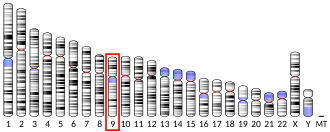



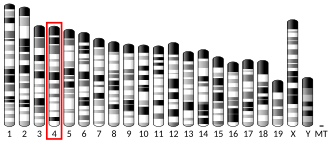

Intraflagellar transport protein 74 homolog (IFT74), also known as coiled-coil domain-containing protein 2 (CCDC2) and capillary morphogenesis gene 1 protein (CMG1), is a protein that in humans is encoded by the IFT74 gene.56
BCMG1 is upregulated by umbilical vein endothelial cells during capillary morphogenesis.6
References
References
- GRCh38: Ensembl release 89: ENSG00000096872 – Ensembl, May 2017
- GRCm38: Ensembl release 89: ENSMUSG00000028576 – Ensembl, May 2017
- "Human PubMed Reference:". National Center for Biotechnology Information, U.S. National Library of Medicine.
- "Mouse PubMed Reference:". National Center for Biotechnology Information, U.S. National Library of Medicine.
- "Entrez Gene: intraflagellar transport 74 homolog (Chlamydomonas)".
- Bell SE, Mavila A, Salazar R, Bayless KJ, Kanagala S, Maxwell SA, Davis GE (August 2001). "Differential gene expression during capillary morphogenesis in 3D collagen matrices: regulated expression of genes involved in basement membrane matrix assembly, cell cycle progression, cellular differentiation and G-protein signaling". J. Cell Sci. 114 (Pt 15): 2755–73. doi:10.1242/jcs.114.15.2755. PMID 11683410.
Further reading
Further reading
- Ota T, Suzuki Y, Nishikawa T, et al. (2004). "Complete sequencing and characterization of 21,243 full-length human cDNAs". Nat. Genet. 36 (1): 40–5. doi:10.1038/ng1285. PMID 14702039.
- Xiao S, Sato C, Kawarai T, et al. (2008). "Genetic studies of GRN and IFT74 in amyotrophic lateral sclerosis". Neurobiol. Aging. 29 (8): 1279–82. doi:10.1016/j.neurobiolaging.2007.02.022. PMID 17383054. S2CID 10392826.
- Maruyama K, Sugano S (1994). "Oligo-capping: a simple method to replace the cap structure of eukaryotic mRNAs with oligoribonucleotides". Gene. 138 (1–2): 171–4. doi:10.1016/0378-1119(94)90802-8. PMID 8125298.
- Kimura K, Wakamatsu A, Suzuki Y, et al. (2006). "Diversification of transcriptional modulation: Large-scale identification and characterization of putative alternative promoters of human genes". Genome Res. 16 (1): 55–65. doi:10.1101/gr.4039406. PMC 1356129. PMID 16344560.