Human microbiota are microorganisms (bacteria, viruses, fungi and archaea) found in a specific environment. They can be found in the stomach, intestines, skin, genitals and other parts of the body.1 Various body parts have diverse microorganisms. Some microbes are specific to certain body parts and others are associated with many microbiomes. This article lists some of the species recognized as belonging to the human microbiome and focuses on the oral, vaginal, ovarian follicle, uterus and the male reproductive tract microbiota.
Categories of bacteria
The "reference" 70 kg human body is estimated to have around 39 trillion bacteria with a mass of about 0.2 kg.2345 These can be separated into about 10,000 microbial species, about 180 of the most studied is listed below here. However, these can broadly be put into three categories:6
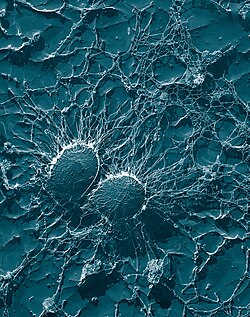
Spheres or ball-shaped (cocci bacteria)
Cocci are usually round or spherical in shape. They can form clusters and are non-motile.7 Examples include Staphylococcus aureus, Streptococcus pyogenes, and Neisseria gonorrhea.
Rod-shaped bacteria (bacilli)
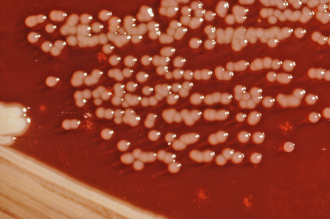
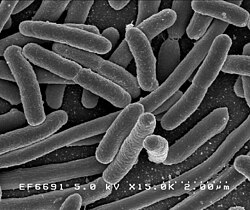
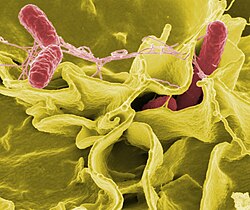
Bacilli usually have a rod or cylinder shape. Examples include Listeria, Salmonella typhimurium, Yersinia enterocolitica, and Escherichia coli.
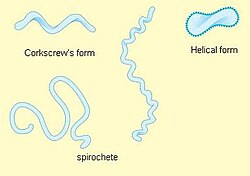
Spirals or helixes (spirochetes)
Spirochetes are usually spiral or corkscrew shaped and move using axial filament. Examples include Treponema pallidum and Leptospira borgpetersenii.8
Eye
| Binomial Name | Phylum | Location | Pathogenicity | Frequency/Abundance |
|---|---|---|---|---|
| Chlamydia pneumoniae | Chlamydiota | Eye | Yes | |
| Chlamydia trachomatis | Chlamydiota | Eye | Yes | |
| Haemophilus aegyptius | Proteobacteria | Eye | ||
| Haemophilus influenzae | Proteobacteria | Eye | Sometimes | |
| Moraxella spp | Proteobacteria | Eye | Sometimes | |
| Neisseria spp | Proteobacteria | Eye | Only N. gonorrheae and N. meningitidis | |
| Staphylococcus aureus | Firmicutes | Eye | Sometimes | |
| Staphylococcus epidermidis | Firmicutes | Eye | ||
| Streptococcus viridans | Firmicutes | Eye |
Mouth
The oral microbiota consists of all the microorganisms that exist in the mouth. It is the second largest of the human body and made of various bacteria, viruses, fungi and protozoa.10 These organisms play an important role in oral and overall health. Anthony Van Leeuwenhoek was the first to view these organisms using a microscope he created.10 The temperature and pH of saliva makes it conducive for bacteria to survive in the oral cavity. Bacteria in the oral cavity include Streptococcus mutans, Porphyromonas gingivalis, and Staphylococcus.11 S. mutans is the main component of the oral microbiota.11
A healthy oral microbiome decreases oral infections and promotes a healthy gut microbiome. However, when disturbed, it can lead to gum inflammations and bad breath.12 Dental plaque is formed when oral microorganisms form biofilms on the surfaces of teeth. Recommended practices to maintain a healthy oral microbiome include practicing good oral hygiene (brushing twice and flossing, replacing toothbrush often), eating healthy diet (food with little or no added sugars and ultra processed foods), drinking lots of water and taking probiotics.
| Binomial Name | Phylum | Location | Pathogenicity | Frequency/Abundance |
|---|---|---|---|---|
| Abiotrophia spp10 | Mouth | |||
| Actinomyces spp10 | Actinomycetota | Mouth | ||
| Actinomyces viscosus | Actinomycetota | Mouth | ||
| Actinomyces naeslundii | Actinomycetota | Mouth | ||
| Aggregatibacter actinomycetemcomitans | Mouth | |||
| Arachnia propionica | Mouth | |||
| Aspergillus spp13 | Ascomycota (fungi) | Mouth | Sometimes | |
| Atopobium spp13 | Actinomycetota | Mouth | ||
| Aureobasidium spp13 | fungi | Mouth | ||
| Bacterionema matruchotii
(Corynebacterium matruchotii) |
Actinomycetota | Gingiva | ||
| Bacteroides spp13 | Bacteroidota | Mouth | ||
| Bacteroides gingivalis | Bacteroidota | Mouth | ||
| Bacteroides melaninogenicus | Bacteroidota | Mouth | ||
| Bergeyella spp13 | Bacteroidota | Mouth | ||
| Bifidobacterium spp10 | Actinomycetota | Mouth | ||
| Buchnera aphidicola | Mouth | |||
| Bulleidia spp13 | Firmicutes | Mouth | ||
| Campylobacter spp10 | Campylobacterota | Mouth | ||
| Candida spp14 | Ascomycota (fungi) | Mouth | ||
| Candida albicans10 | Ascomycota (fungi) | Mouth | Sometimes | |
| Capnocytophaga spp10 | Bacteroidota | Mouth | ||
| Cardiobacterium spp13 | Proteobacteria | Mouth | ||
| Catonella spp13 | Firmicutes | Hard palate | ||
| Citrobacter freundii | Throat | |||
| Cladosporium spp10 | fungi | Mouth | ||
| Corynebacterium spp10 | Actinomycetota | Mouth | Only C. diphtheriae | |
| Cryptococcus spp13 | fungi | Mouth | ||
| Desulfobacter spp10 | Mouth | |||
| Desulfovibrio spp10 | Mouth | |||
| Dialister spp13 | Firmicutes | Mouth | ||
| Eikenella corrodens10 | Proteobacteria | Mouth | Sometimes | |
| Entamoeba gingivalis10 | Amoebozoa (eukaryote) | Mouth | ||
| Enterococcus spp | Firmicutes | Mouth | Sometimes | |
| Enterococcus faecium13 | Firmicutes | Mouth | ||
| Eubacterium spp10 | Firmicutes | Mouth | ||
| Fusarium spp13 | fungi | Mouth | ||
| Fusobacterium spp10 | Fusobacteriota | Mouth | ||
| Fusobacterium necrophorum | Fusobacteriota | Oropharynx | ||
| Fusobacterium nucleatum | Fusobacteriota | Mouth | Sometimes | |
| Gemella spp13 | Firmicutes | Mouth | ||
| Gordonia spp | Sputum | |||
| Granulicatella spp13 | Firmicutes | Mouth | ||
| Haemophilus spp10 | Proteobacteria | Mouth | ||
| Kingella spp13 | Proteobacteria | Mouth | ||
| Lactobacillus spp10 | Firmicutes | Mouth, Saliva | No | |
| Lautropia spp13 | Proteobacteria | Mouth | ||
| Leptotrichia buccalis10 | Fusobacteriota | Mouth | ||
| Methanobrevibacter oralis13 | Methanobacteriota (archaea) | Mouth | ||
| Methanosarcina mazeii13 | Methanobacteriota (archaea) | Mouth | ||
| Micrococcus spp | Mouth | |||
| Mogibacterium spp13 | Firmicutes | Mouth | ||
| Mycoplasma spp | Mouth | |||
| Mycoplasma orale | Oropharynx | |||
| Mycobacterium chelonae | Sputum | |||
| Candidatus Nanosynbacter lyticus15 | Candidatus Saccaribacteria | Mouth | ||
| Neisseria spp10 | Proteobacteria | Mouth | Only N. gonorrheae and N. meningitidis | |
| Oribacterium spp13 | Firmicutes | Mouth | ||
| Parvimonas spp13 | Firmicutes | Mouth | ||
| Peptococcus spp | Mouth | |||
| Peptostreptococcus spp10 | Firmicutes | Mouth | ||
| Phocoenobacter spp13 | Proteobacteria | Mouth | ||
| Porphyromonas gingivalis1 | Bacteroidota | Mouth | Sometimes | |
| Prevotella spp10 | Bacteroidota | Mouth | Sometimes | |
| Propionibacterium spp10 | Actinomycetota | Mouth | ||
| Pseudoramibacter spp10 | Mouth | |||
| Rothia dentocariosa10 | Actinomycetota | Mouth | Occasionally | |
| Selenomonas spp10 | Firmicutes | Mouth | ||
| Simonsiella spp10 | Mouth | |||
| Staphylococcus aureus | Firmicutes | Mouth | Sometimes | |
| Staphylococcus epidermidis | Firmicutes | Mouth | ||
| Streptococcus spp13 | Firmicutes | Mouth | ||
| Streptococcus anginosus10 | Firmicutes | Oropharynx | ||
| Streptococcus mitis13 | Firmicutes | Mouth | ||
| Streptococcus mutans13 | Firmicutes | Teeth: dental plaque | ||
| Streptococcus oralis | Firmicutes | Teeth: dental plaque | ||
| Streptococcus sobrinus | Firmicutes | Teeth: dental plaque | ||
| Streptococcus constellatus | Firmicutes | Oropharynx | ||
| Streptococcus intermedius | Firmicutes | Oropharynx | ||
| Tannerella forsythia1 | Bacteroidota | Mouth | Sometimes | |
| Torulopsis glabrata | Mouth | |||
| Treponema denticola10 | Spirochetota | Mouth | ||
| Trichomonas tenax13 | eukaryote | Mouth | ||
| Veillonella spp10 | Firmicutes | Mouth | ||
| Vibrio sputorum | Mouth | |||
| Wolinella spp10 | Campylobacterota | Mouth |
Respiratory System
| Binomial Name | Phylum | Location | Pathogenicity | Frequency/Abundance |
|---|---|---|---|---|
| Acinetobacter spp | Nasopharynx | |||
| Citrobacter freundii | Sputum | |||
| Burkholderia cepacia complex | Proteobacteria | Lung | ||
| Campylobacter sputorum | Nasopharynx | |||
| Candida albicans | Ascomycota (fungi) | Pharynx | ||
| Cardiobacterium spp | Nose | |||
| Chlamydophila pneumoniae | Chlamydiota | Lung | ||
| Fusobacterium spp | Fusobacteriota | Lung | ||
| Haemophilus spp | Proteobacteria | Nasopharynx, lung | ||
| Hemophilus influenzae | Proteobacteria | Mucous membranes | Sometimes | |
| Haemophilus parainfluenzae | Proteobacteria | Pharynx | ||
| Haemophilus paraphrophilus | Proteobacteria | Pharynx | ||
| Kingella spp | Proteobacteria | Upper respiratory tract | ||
| Kingella kingae | Proteobacteria | Upper respiratory tract | ||
| Moraxella spp | Proteobacteria | Nasopharynx | ||
| Moraxella catarrhalis | Proteobacteria | Nasopharynx | ||
| Mycoplasma pneumoniae | Respiratory epithelium | |||
| Neisseria spp | Proteobacteria | Nasopharynx | ||
| Neisseria cinerea | Proteobacteria | Nasopharynx | ||
| Neisseria elongata | Proteobacteria | Pharynx | ||
| Neisseria gonorrhoeae | Proteobacteria | Pharynx | Yes | |
| Neisseria lactamica | Proteobacteria | Nasopharynx | ||
| Neisseria meningitidis | Proteobacteria | Nasopharynx | Yes | |
| Neisseria mucosa | Proteobacteria | Nasopharynx | ||
| Neisseria sicca | Proteobacteria | Nasopharynx | ||
| Peptococcus spp | Upper respiratory tract | |||
| Peptostreptococcus spp | Firmicutes | Pharynx | ||
| Pseudomonas spp | Proteobacteria | Lung | ||
| Pseudomonas aeruginosa | Proteobacteria | Lung | Yes | |
| Selenomonas sputigena | Firmicutes | Nasopharynx | ||
| Staphylococcus aureus | Firmicutes | Nose | Sometimes | |
| Streptobacillus spp | Throat, nasopharynx | |||
| Streptococcus spp | Firmicutes | Lung | ||
| Streptococcus pyogenes | Firmicutes | Upper respiratory tract | ||
| Streptococcus pneumoniae13 | Firmicutes | Nasopharynx | Sometimes | |
Gastrointestinal Tract
| Binomial Name | Phylum | Location | Pathogenicity | Frequency/Abundance |
|---|---|---|---|---|
| Achromobacter spp | Intestines | |||
| Acidaminococcus fermentans16 | Firmicutes | Large intestine | ||
| Acinetobacter calcoaceticus | Large intestine | |||
| Actinomyces spp17 | Actinomycetota | Small and large intestine | ||
| Adlercreutzia spp18 | Actinomycetota | Large intestine | ||
| Aeromonas spp | Intestines | |||
| Aflipia spp16 | GI tract | |||
| Aggregatibacter spp16 | GI tract | |||
| Akkermansia muciniphilia1 | Verrucomicrobia | Large intestine | ||
| Alistripes spp17 | GI tract | |||
| Alternaria spp14 | Ascomycota (fungi) | GI tract | ||
| Anaerobiospirillum spp | Large intestine | |||
| Anaerostipes spp19 | GI tract | |||
| Anaerotruncus spp19 | Firmicutes | Large intestine | ||
| Alcaligenes faecalis | Intestines | |||
| Asaccharobacter spp16 | GI tract | |||
| Aspergillus spp14 | Ascomycota (fungi) | GI tract | Sometimes | 58.3% |
| Aspergillus versicolor14 | Ascomycota (fungi) | GI tract | 5% | |
| Asteroleplasma20 | GI tract | |||
| Bacillus spp | Firmicutes | Large intestine | ||
| Bacteroides spp1 | Bacteroidota | Esophagus, intestines | ||
| Bacteroides fragilis19 | Bacteroidota | Large intestine | ||
| Bacteroides melaninogenicus | Bacteroidota | Large intestine | ||
| Barnesiella spp16 | Bacteroidota | GI tract | ||
| Bifidobacterium spp1 | Actinomycetota | Large intestine | No | |
| Bifidobacterium longum17 | Actinomycetota | Large intestine | ||
| Bilophilia wadsworthia17 | Proteobacteria | Large intestine | ||
| Blautia spp17 | Firmicutes | Large intestine | ||
| Brachybacterium spp16 | GI tract | |||
| Butyricimonas spp16 | GI tract | |||
| Butyrivibrio crossotus19 | Large intestine | |||
| Campylobacter spp | Campylobacterota | Large intestine | ||
| Candida spp14 | Ascomycota (fungi) | GI tract | 2.5 - 59.7% | |
| Candida albicans14 | Ascomycota (fungi) | GI tract | 5.8 - 80.8% | |
| Catenibacterium spp17 | GI tract | |||
| Christensenella minuta17 | Firmicutes | GI tract | ||
| Citrobacter spp17 | Proteobacteria | GI tract | ||
| Clostridium spp1 | Firmicutes | Intestines | ||
| Clostridium sordellii | Firmicutes | Stomach, small intestine, large intestine | ||
| Collinsella aerofaciens17 | Actinomycetota | Large intestine | ||
| Coprobacter spp16 | GI tract | |||
| Coprobacillus spp16 | GI tract | |||
| Coprococcus comes17 | Firmicutes | Large intestine | ||
| Cladosporium cladosporoides14 | Ascomycota (fungi) | GI tract | ||
| Cryptococcus spp14 | Basidomycota (fungi) | GI tract | 4.7% | |
| Debaryomyces spp14 | Ascomycota (fungi) | GI tract | ||
| Desulfovibrio spp17 | Proteobacteria | Large intestine | ||
| Dialister20 | Firmicutes | Large intestine | ||
| Dorea spp16 | Firmicutes | Large intestine | ||
| Eggerthella spp17 | Actinomycetota | Large intestine | ||
| Escherichia coli1 | Proteobacteria | GI tract | Sometimes | |
| Enhydrobacter spp16 | GI tract | |||
| Enterococcus spp1 | Firmicutes | Stomach, intestines | Sometimes | |
| Enterobacter spp19 | Proteobacteria | Large intestine | ||
| Enterobacter cloacae17 | Proteobacteria | Large intestine | ||
| Epulopiscium spp18 | Firmicutes | Large intestine | ||
| Eubacterium spp21 | Firmicutes | Colon | ||
| Exophiala spp14 | Ascomycota (fungi) | GI tract | ||
| Faecalibacterium spp1 | Firmicutes | Large intestine | ||
| Faecalibacterium prausnitzii17 | Firmicutes | Large intestine | No | |
| Ferrimonas spp18 | Proteobacteria | Intestines | ||
| Flavobacterium spp | Intestines | |||
| Fusobacterium spp19 | Fusobacteriota | Large intestine | ||
| Galactomyces spp14 | Ascomycota (fungi) | GI tract | 0.8 - 46% | |
| Gemella spp19 | Firmicutes | Esophagus, intestines | ||
| Geotrichium silvicola14 | Ascomycota (fungi) | GI tract | 9.7% | |
| Helicobacter pylori1 | Campylobacterota | Stomach | Yes | |
| Hemophilus spp18 | Proteobacteria | Intestines | ||
| Holdemania spp16 | GI tract | |||
| Holdemanella spp16 | GI tract | |||
| Howardella spp16 | GI tract | |||
| Hungatella spp16 | GI tract | |||
| Intestinibacter bartlettii16 | GI tract | |||
| Lachnobacterium spp18 | Firmicutes | Large intestine | ||
| Lachnospira spp19 | Firmicutes | Intestines | ||
| Joetgalicoccus spp16 | GI tract | |||
| Klesbiella spp18 | Proteobacteria | Intestines | ||
| Kocuria spp16 | GI tract | |||
| Lactobacillus spp21 | Firmicutes | Stomach, intestines | ||
| Lactococcus lactis17 | Firmicutes | Intestines | ||
| Leuconostoc spp17 | GI tract | |||
| Malessezia spp14 | Basidomycota (fungi) | GI tract | 88.3% | |
| Megasphera20 | Firmicutes | Esophagus | ||
| Mesorhizobium spp16 | GI tract | |||
| Methanobrevibacter smithii1 | Methanobacteriota (archaea) | Intestines | No | |
| Methylobacterium spp16 | GI tract | |||
| Microbacterium spp16 | GI tract | |||
| Morganella morganii | Intestines | |||
| Mycobacteria spp | Actinomycetota | Intestines | ||
| Mycoplasma spp | Intestines | |||
| Ochrobactrum spp16 | GI tract | |||
| Oscillospira spp18 | Firmicutes | Large intestine | ||
| Oxalobacter spp16 | GI tract | |||
| Parabacteroides spp17 | Bacteroidota | Large intestine | ||
| Paraprevotella20 | Bacteroidota | Large intestine | ||
| Parasutterella spp17 | GI tract | |||
| Pediococcus spp18 | Firmicutes | Intestines | ||
| Pelomonas spp16 | GI tract | |||
| Peptococcus spp | Large intestine | |||
| Peptostreptococcus spp19 | Firmicutes | Colon | ||
| Penicillium spp14 | Ascomycota (fungi) | GI tract | 7 - 65.3% | |
| Penicillium brevicompactum14 | Ascomycota (fungi) | GI tract | ||
| Phascolarctobacterium20 | GI tract | |||
| Pichia spp14 | Ascomycota (fungi) | GI tract | ||
| Planomicrobium spp16 | GI tract | |||
| Prevotella spp17 | Bacteroidota | Esophagus, stomach, intestines | ||
| Propionibacterium spp | Actinomycetota | Large intestine | ||
| Providencia spp | Large intestine | |||
| Pseudochrobactrum spp16 | GI tract | |||
| Pseudomonas spp19 | Proteobacteria | Esophagus | ||
| Pseudomonas aeruginosa | Proteobacteria | Intestines | Sometimes | |
| Porphyromonas spp19 | Large intestine | |||
| Pyramidobacter spp16 | GI tract | |||
| Rheinheimera spp17 | GI tract | |||
| Rhodoturula spp14 | Basidiomycota (fungi) | GI tract | 7 - 15.3% | |
| Rhomboutsia spp16 | GI tract | |||
| Roseburia spp17 | Firmicutes | Large intestine | ||
| Rothia spp19 | Actinomycetota | Esophagus | ||
| Ruminococcus spp21 | Firmicutes | Large intestine | ||
| Ruminococcus gnavus17 | Firmicutes | Large intestine | ||
| Rummeliibacillus spp18 | Firmicutes | Intestines | ||
| Saccharomyces spp14 | Ascomycota (fungi) | GI tract | 1.1 - 100% | |
| Saccharomyces cerevisiae14 | Ascomycota (fungi) | GI tract | ||
| Sarcina spp | Large intestine | |||
| Sellimonas spp16 | GI tract | |||
| Senegalimassilia spp16 | GI tract | |||
| Serratia spp16 | GI tract | |||
| Slackia spp17 | GI tract | |||
| Sphingobacterium spiritivorum17 | GI tract | |||
| Sphingomonas spp16 | GI tract | |||
| Streptococcus spp21 | Firmicutes | Esophagus, stomach, intestines | ||
| Streptococcus anginosus | Firmicutes | GI tract | ||
| Subdoligranulum spp16 | GI tract | |||
| Succinatomonas spp16 | GI tract | |||
| Succinovibrio spp20 | GI tract | |||
| Sutterella spp20 | Proteobacteria | Large intestine | ||
| Taonella spp16 | GI tract | |||
| Trabulsiella spp18 | Proteobacteria | Intestines | ||
| Trichosporon spp14 | Basidiomycota (fungi) | GI tract | 30.6% | |
| Tsukamurella spp16 | GI tract | |||
| Turicibacter spp18 | Firmicutes | Intestines | ||
| Veillonella spp1 | Firmicutes | Esophagus, intestines | ||
| Vibrio spp | Intestines | |||
| Weissella spp16 | GI tract | |||
| Yersinia enterocolitica | Large intestine | |||
Skin
| Binomial Name | Phylum | Location | Pathogenicity | Frequency/Abundance |
|---|---|---|---|---|
| Acinetobacter spp | Skin | |||
| Bacillus spp | Firmicutes | Skin | ||
| Candida albicans | Ascomycota (fungi) | Skin | ||
| Candida parapsilosis | Ascomycota (fungi) | Skin | ||
| Corynebacterium spp | Actinomycetota | Skin | ||
| Corynebacterium parvum | Actinomycetota | Skin | ||
| Cutibacterium acnes | Actinomycetota | Skin | ||
| Demodex folliculorum | Skin | |||
| Enterobacter cloacae | Skin | |||
| Epidermophyton floccosum | Skin | |||
| Malassezia ovale | Skin | |||
| Micrococcus luteus | Skin | |||
| Micrococcus spp | Skin | |||
| Mycobacterium spp | Actinomycetota | Skin | ||
| Neisseria spp | Proteobacteria | Skin | ||
| Peptostreptococcus spp | Firmicutes | Skin | ||
| Propionibacterium spp | Actinomycetota | Skin | ||
| Pseudomonas aeruginosa | Proteobacteria | Skin | Mostly | |
| Sarcina spp | Skin | |||
| Staphylococcus aureus | Firmicutes | Skin | Sometimes | |
| Staphylococcus epidermidis | Firmicutes | Skin | Sometimes, mostly not | |
| Staphylococcus haemolyticus | Firmicutes | Skin | ||
| Streptococcus viridans | Firmicutes | Skin | ||
| Trichophyton spp | Skin | |||
Female Reproductive Tract
The vaginal microbiota is shaped by puberty, pregnancy and menopause. Vaginal microbiota including some Lactobacillus species protect the vagina from harmful pathogens.22 They convert glucose to lactic acid and this acidic environment kills harmful pathogens. The vaginal microbiota in pregnancy varies markedly during the entire time of gestation. The species and diversity of the
microorganisms may be related to the various levels of hormones during pregnancy. Vaginal flora can be transmitted to babies during birth. Vaginal dysbiosis can lead to vaginal infections like bacterial vaginosis which makes one relatively susceptible to sexually transmitted diseases. Good personal hygiene and probiotics promote a healthy vaginal microbiota.23
The healthy uterine microbiome has been identified and over 278 genera have been sequenced. Bacteria species like Fusobacterium are typically found in the uterus.24 Although Lactobacillus may be beneficial in the vagina, "increased levels in the uterus through a breach in the cervical barrier" may be harmful to the uterus.25
The ovarian follicle microbiome has been studied using standard culturing techniques. It has been associated with the outcomes of assisted reproductive technologies and birth outcomes. Positive outcomes are related to the presence of Lactobacillus spp while the presence of Propionibacterium and Actinomyces were related to negative outcomes. The microbiome can vary from one ovary to the other. Studies are ongoing in the further identification of those bacteria present.25
| Binomial Name | Phylum | Location | Pathogenicity | Frequency/Abundance |
|---|---|---|---|---|
| Acinetobacter spp | Anterior urethra | |||
| Bacteroides spp | Bacteroidota | External genitalia | ||
| Candida albicans | Ascomycota (fungi) | Anterior urethra, external genitalia | Sometimes | |
| Enterobacteriaceae | Anterior urethra, external genitalia | |||
| Gardnerella vaginalis1 | Vagina | |||
| Lactobacillus spp.1 | Firmicutes | Vagina | ||
| Mycoplasma hominis1 | Vagina | |||
| Prevotella spp.1 | Bacteroidota | Vagina | ||
| Streptococcus viridans | Firmicutes | Anterior urethra, external genitalia |
Male reproductive tract
The microbiome present in seminal fluid has been evaluated. Using traditional culturing techniques the microbiome differs between men who have acute prostatitis and those who have chronic prostatitis. Identification of the seminal fluid microbiome has become one of the diagnostic tools used in treating infertility in men that do not display symptoms of infection or disease. The taxa Pseudomonas, Lactobacillus, and Prevotella display a negative effect on the quality of sperm. The presence of Lactobacillus spp in semen samples is associated with a very high normal sperm count.25
| Binomial Name | Phylum | Location | Pathogenicity | Frequency/Abundance |
|---|---|---|---|---|
| Acinetobacter spp | Anterior urethra | |||
| Bacteroides spp | Bacteroidota | External genitalia | ||
| Candida albicans | Ascomycota (fungi) | Anterior urethra, external genitalia | Sometimes | |
| Enterobacteriaceae | Anterior urethra, external genitalia | |||
| Streptococcus viridans | Firmicutes | Anterior urethra, external genitalia |
See also
See also
Other lists of the human body's contents and building bricks
- List of skeletal muscles of the human body
- List of organs of the human body
- List of distinct cell types in the adult human body
References
References
- Hou K, Wu ZX, Chen XY, Wang JQ, Zhang D, Xiao C, et al. (April 2022). "Microbiota in health and diseases". Signal Transduction and Targeted Therapy. 7 (1) 135. doi:10.1038/s41392-022-00974-4. PMC 9034083. PMID 35461318.
- Sender R, Fuchs S, Milo R (August 2016). "Revised Estimates for the Number of Human and Bacteria Cells in the Body". PLOS Biology. 14 (8) e1002533. doi:10.1371/journal.pbio.1002533. PMC 4991899. PMID 27541692.
- Abbott A (2016-01-08). "Scientists bust myth that our bodies have more bacteria than human cells". Nature. doi:10.1038/nature.2016.19136. ISSN 1476-4687.
- "Do our bodies contain far more bacteria than human cells?". handling-solutions.eppendorf.com. 2022-01-10. Retrieved 2023-07-16.
- "NIH Human Microbiome Project defines normal bacterial makeup of the body". National Institutes of Health (NIH). 2015-08-31. Archived from the original on November 5, 2015. Retrieved 2023-07-16.
- "Bacteria: Definition, Types, Benefits, Risks & Examples". Cleveland Clinic. Retrieved 2023-07-16.
- "Cocci or Cocus Bacteria: Structure, Types and Examples". Toppr-guides. 2019-10-31. Retrieved 2024-05-04.
- Krieg NR, Padgett PJ (2011), "Phenotypic and Physiological Characterization Methods", Taxonomy of Prokaryotes, Methods in Microbiology, vol. 38, Elsevier, pp. 15–60, doi:10.1016/b978-0-12-387730-7.00003-6, ISBN 978-0-12-387730-7
- "File:Arrangement of spiral bacteria.JPG - Wikipedia". commons.wikimedia.org. 2015-06-19. Retrieved 2024-05-06.
- Deo PN, Deshmukh R (2019). "Oral microbiome: Unveiling the fundamentals". Journal of Oral and Maxillofacial Pathology. 23 (1): 122–128. doi:10.4103/jomfp.JOMFP_304_18. PMC 6503789. PMID 31110428.
- Lu M, Xuan S, Wang Z (March 2019). "Oral microbiota: A new view of body health". Food Science and Human Wellness. 8 (1): 8–15. doi:10.1016/j.fshw.2018.12.001.
- Strużycka I (2014). "The Oral Microbiome in Dental Caries". Polish Journal of Microbiology. 63 (2) 10.33073/pjm-2014-018: 127–135. doi:10.33073/pjm-2014-018. ISSN 2544-4646. PMID 25115106.
- Sharma N, Bhatia S, Sodhi AS, Batra N (2018). "Oral microbiome and health". AIMS Microbiology. 4 (1): 42–66. doi:10.3934/microbiol.2018.1.42. ISSN 2471-1888. PMC 6605021. PMID 31294203.
- Belvoncikova P, Splichalova P, Videnska P, Gardlik R (2022-10-04). "The Human Mycobiome: Colonization, Composition and the Role in Health and Disease". Journal of Fungi. 8 (10): 1046. doi:10.3390/jof8101046. ISSN 2309-608X. PMC 9605233. PMID 36294611.
- Bor B, Bedree JK, Shi W, McLean JS, He X (May 2019). "Saccharibacteria (TM7) in the Human Oral Microbiome". Journal of Dental Research. 98 (5): 500–509. doi:10.1177/0022034519831671. ISSN 1544-0591. PMC 6481004. PMID 30894042.
- Yang J, Pu J, Lu S, Bai X, Wu Y, Jin D, et al. (2020-08-26). "Species-Level Analysis of Human Gut Microbiota With Metataxonomics". Frontiers in Microbiology. 11 2029. doi:10.3389/fmicb.2020.02029. ISSN 1664-302X. PMC 7479098. PMID 32983030.
- Olsson LM, Boulund F, Nilsson S, Khan MT, Gummesson A, Fagerberg L, et al. (2022-05-11). "Dynamics of the normal gut microbiota: A longitudinal one-year population study in Sweden". Cell Host & Microbe. 30 (5): 726–739.e3. doi:10.1016/j.chom.2022.03.002. ISSN 1931-3128. PMID 35349787.
- Yilmaz B, Fuhrer T, Morgenthaler D, Krupka N, Wang D, Spari D, et al. (2022-12-14). "Plasticity of the adult human small intestinal stoma microbiota". Cell Host & Microbe. 30 (12): 1773–1787.e6. doi:10.1016/j.chom.2022.10.002. hdl:11370/dc9e10f4-0e38-427e-8dfa-29ec5dca1057. ISSN 1931-3128. PMID 36318918.
- Jandhyala SM, Talukdar R, Subramanyam C, Vuyyuru H, Sasikala M, Nageshwar Reddy D (2015-08-07). "Role of the normal gut microbiota". World Journal of Gastroenterology. 21 (29): 8787–8803. doi:10.3748/wjg.v21.i29.8787. ISSN 2219-2840. PMC 4528021. PMID 26269668.
- Krych L, Hansen CH, Hansen AK, van den Berg FW, Nielsen DS (2013). "Quantitatively different, yet qualitatively alike: a meta-analysis of the mouse core gut microbiome with a view towards the human gut microbiome". PLOS ONE. 8 (5) e62578. Bibcode:2013PLoSO...862578K. doi:10.1371/journal.pone.0062578. ISSN 1932-6203. PMC 3641060. PMID 23658749.
- Salvadori M, Rosso G (2024-03-20). "Update on the gut microbiome in health and diseases". World Journal of Methodology. 14 (1) 89196. doi:10.5662/wjm.v14.i1.89196. ISSN 2222-0682. PMC 10989414. PMID 38577200.
- Kovachev S (February 2018). "Defence factors of vaginal lactobacilli". Critical Reviews in Microbiology. 44 (1): 31–39. doi:10.1080/1040841X.2017.1306688. PMID 28418713.
- Fox C, Eichelberger K (December 2015). "Maternal microbiome and pregnancy outcomes". Fertility and Sterility. 104 (6): 1358–1363. doi:10.1016/j.fertnstert.2015.09.037. PMID 26493119.
- Baker JM, Chase DM, Herbst-Kralovetz MM (2018-03-02). "Uterine Microbiota: Residents, Tourists, or Invaders?". Frontiers in Immunology. 9 208. doi:10.3389/fimmu.2018.00208. PMC 5840171. PMID 29552006.
- Franasiak JM, Scott RT (December 2015). "Reproductive tract microbiome in assisted reproductive technologies". Fertility and Sterility. 104 (6): 1364–1371. doi:10.1016/j.fertnstert.2015.10.012. PMID 26597628.