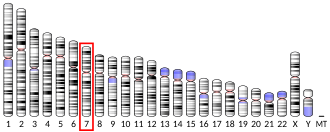
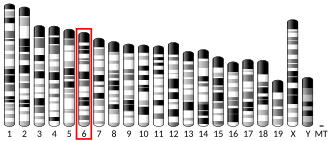
In enzymology, a 3-hydroxyisobutyrate dehydrogenase (EC 1.1.1.31) also known as β-hydroxyisobutyrate dehydrogenase or 3-hydroxyisobutyrate dehydrogenase, mitochondrial (HIBADH) is an enzyme5 that in humans is encoded by the HIBADH gene.6
3-Hydroxyisobutyrate dehydrogenase catalyzes the chemical reaction:
The two substrates of this enzyme are 3-hydroxyisobutyric acid and oxidised nicotinamide adenine dinucleotide (NAD+). Its products are methylmalonic acid semialdehyde, reduced NADH, and a proton.7
This enzyme belongs to the family of oxidoreductases, specifically those acting on the CH-OH group of donor with NAD+ or NADP+ as acceptor. The systematic name of this enzyme class is 3-hydroxy-2-methylpropanoate:NAD+ oxidoreductase. This enzyme participates in valine, leucine and isoleucine degradation.
Function
3-hydroxyisobutyrate dehydrogenase is a tetrameric mitochondrial enzyme that catalyzes the NAD+-dependent, reversible oxidation of 3-hydroxyisobutyrate, an intermediate of valine catabolism, to methylmalonate semialdehyde.6
Structural studies
As of late 2007, five structures have been solved for this class of enzymes, with PDB accession codes PDB: 1WP4, PDB: 2CVZ, PDB: 2GF2, PDB: 2H78, and PDB: 2I9P.
References
References
Further reading
Further reading
- Sanger Centre T, Washington University Genome Sequencing Cente T (November 1998). "Toward a complete human genome sequence". Genome Research. 8 (11): 1097–1108. doi:10.1101/gr.8.11.1097. PMID 9847074.
- Hughes GJ, Frutiger S, Paquet N, Pasquali C, Sanchez JC, Tissot JD, et al. (November 1993). "Human liver protein map: update 1993". Electrophoresis. 14 (11): 1216–1222. doi:10.1002/elps.11501401181. PMID 8313870. S2CID 33424554.
- Rougraff PM, Paxton R, Kuntz MJ, Crabb DW, Harris RA (January 1988). "Purification and characterization of 3-hydroxyisobutyrate dehydrogenase from rabbit liver". The Journal of Biological Chemistry. 263 (1): 327–331. doi:10.1016/S0021-9258(19)57396-3. PMID 3335502.
- Rougraff PM, Zhang B, Kuntz MJ, Harris RA, Crabb DW (April 1989). "Cloning and sequence analysis of a cDNA for 3-hydroxyisobutyrate dehydrogenase. Evidence for its evolutionary relationship to other pyridine nucleotide-dependent dehydrogenases". The Journal of Biological Chemistry. 264 (10): 5899–5903. doi:10.1016/S0021-9258(18)83634-1. PMID 2647728.
External links
External links
- Human HIBADH genome location and HIBADH gene details page in the UCSC Genome Browser.
- PDBe-KB provides an overview of all the structure information available in the PDB for Human 3-hydroxyisobutyrate dehydrogenase, mitochondrial