Gonnesa | |
|---|---|
| Comune di Gonnesa | |
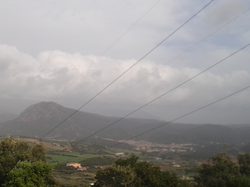 View of Gonnesa | |
 Coat of arms | |
Gonnesa Location of Gonnesa in Sardinia | |
| Coordinates: 39°16′N 8°28′E / 39.267°N 8.467°E / 39.267; 8.467 | |
| Country | Italy |
| Region | Sardinia |
| Province | Sulcis Iglesiente |
| Frazioni | Normann, Nuraxi Figus |
| Government | |
| • Mayor | Hansel Cabiddu |
| Area | |
• Total | 48.06 km2 (18.56 sq mi) |
| Elevation | 40 m (130 ft) |
| Population (2026)2 | |
• Total | 4,456 |
| • Density | 92.72/km2 (240.1/sq mi) |
| Demonym | Gonnesini |
| Time zone | UTC+1 (CET) |
| • Summer (DST) | UTC+2 (CEST) |
| Postal code | 09010 |
| Dialing code | 0781 |
| Patron saint | St. Andrew |
| Saint day | 30 November |
| Website | Official website |
Gonnesa is a town and comune (municipality) in the Province of Sulcis Iglesiente in the autonomous island region of Sardinia in Italy, located about 60 kilometres (37 mi) west of Cagliari and about 14 kilometres (9 mi) northwest of Carbonia, in the Iglesiente subregion. It has 4,456 inhabitants.2
In the Municipality of Gonnesa is located the mine of Nuraxi Figus, the last active coal mine in Italy today.
In its territory there is an important archaeological site, the Nuraghe Seruci, and beach of almost 4 kilometres (2 mi) along which it is possible to surf, especially in a spot called Funtanamare. The other two spots are called Plag' 'e Mesu ("Middle Beach" in Sardinian language, and Porto Paglia. Gonnesa borders the municipalities of Carbonia, Iglesias, and Portoscuso.

History
The town was refounded in the late 18th century by the local feudatory. During the 19th century its territory was affected by the resumption of mining which contributed significantly to its population growth.
Demographics
As of 2026, the population is 4,456, of which 49.7% are male, and 50.3% are female. Minors make up 10.5% of the population, and seniors make up 32.9%.2
Historical population | |||||||||||||||||||||||||||||||||||||||||||||||||||||||
|
| ||||||||||||||||||||||||||||||||||||||||||||||||||||||
| Source: ISTAT34 | |||||||||||||||||||||||||||||||||||||||||||||||||||||||
Immigration
As of 2025, immigrants make up 2.5% of the total population. The 5 largest foreign countries of birth are Germany, Romania, Morocco, Russia, and China.5
References
References
- "Superficie di Comuni Province e Regioni italiane al 9 ottobre 2011" (in Italian). ISTAT.
- "Resident population". ISTAT.
- "Popolazione residente dei comuni. Censimenti dal 1861 al 1991" [Resident population of the municipalities. Censuses from 1861 to 1991] (PDF) (in Italian). ISTAT. Archived from the original (PDF) on 2025-11-12.
- "Resident population - Time series". ISTAT.
- "Resident population by sex, municipality and citizenship". ISTAT.