Mundo Livre S/A | |
|---|---|
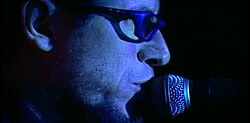 Fred Zero Quatro (Jaboatão dos Guararapes, July 11, 1965) is a Brazilian composer and singer. He is the vocalist and main composer of the Pernambuco group Mundo Livre S | |
| Background information | |
| Origin | Recife, Pernambuco, Brazil |
| Genres | Manguebeat |
| Years active | 1994-present |
| Members | Fred 04 P3dr0 Diniz Xef Tony Léo D. Pedro Santana |
| Website | www.mundolivresa.com |
Mundo Livre S/A is a Brazilian mangue bit band, formed in 1984 in Jaboatão dos Guararapes, Pernambuco. It is also one of the pioneers of that musical style,123 which became popular in the 1990s.
Their name translates as "Free World" and was based on speeches by former US president Ronald Reagan.4
Mundo Livre S/A was founded at the Candeias neighborhood of Jaboatão dos Guararapes,5 the same place where the Caranguejos com Cérebro manifesto was written, which is considered a milestone of the Manguebeat movement.6 which advocates for the music of Pernambuco, their state of origin.78 Fred 04, the vocalist, authored the manifesto, along with Renato L. and Chico Science.9
Members
- Fred Zero Quatro, lead singer, guitar and cavaquinho
- P3dr0 Diniz, bass
- Xef Tony, drums
- Léo D., keyboard
- Pedro Santana, percussion
Former Members
- Otto, percussion
- Bactéria, Keyboards and Guitar
- Areia, bass
- Tom Rocha, percussion
Discography
- 1994 - Samba Esquema Noise
- 1996 - Guentando a Ôia
- 1998 - Carnaval Na Obra
- 2000 - Por Pouco
- 2004 - O Outro Mundo de Manuela Rosário
- 2005 - Bebadogroove
- 2008 - Combat Samba - E se a gente sequestrasse o trem das 11?
- 2011 - Novas Lendas da Etnia Toshi Babaa
- 2017 - A Dança dos Não Famosos
- 2022 - Walking Dead Folia
References
References
- Brêda, Lucas (2022-11-13). "Entenda como o manguebeat chacoalhou toda a música brasileira há três décadas". Folha de S.Paulo (in Brazilian Portuguese). Retrieved 2022-11-17.
- SA, Trip Editora e Propaganda (July 1999). Trip (in Portuguese). São Paulo: Trip Editora e Propaganda SA. p. 108. ISSN 1414-350X. OCLC 1165620939.
- Galinsky, Philip (2013). Maracatu Atomico : Tradition, Modernity, and Postmodernity in the Mangue Movement and the ""New Music Scene"" of Recife, Pernambuco, Brazil. Hoboken: Taylor and Francis. ISSN 1414-350X. OCLC 1165620939.
- Carlos Freitas (July 1999). Revista Trip - O Som do Mangue. Trip Editora e Propaganda SA. pp. 108 ISSN 1414-350X.
- José Teles (2000). Do frevo ao manguebeat. Editora 34. 9788573261899.
- Lima, Tatiana (2008-12-09). "A Emergência do Manguebeat e as Classificações de Gênero". Ícone. 10 (2). doi:10.34176/icone.v10i2.230133. ISSN 2175-215X. Retrieved 2022-11-17.
- Katia Lessa (March 2000). Revista Trip - O Rock Errou?. Trip Editora e Propaganda SA. pp. 97 ISSN 1414-350X.
- de, Azambuja, Luciano (2007). "Leitura, canção e história: Mundo Livre S/A contra o "Império do mal"". UFSC. Retrieved 2022-11-17.
{{cite journal}}: CS1 maint: multiple names: authors list (link) - Galinsky, Philip (2013). Maracatu Atomico : Tradition, Modernity, and Postmodernity in the Mangue Movement and the ""New Music Scene"" of Recife, Pernambuco, Brazil. Hoboken: Taylor and Francis. OCLC 866446413.