Flayat | |
|---|---|
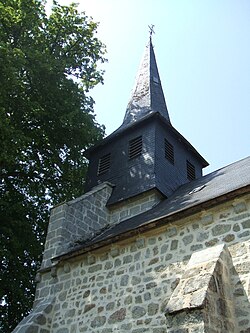 The parish church of Saint-Martin, in Flayat | |
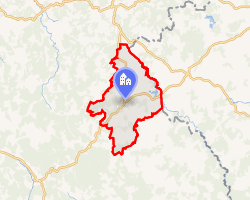 Location of Flayat | |
Flayat Flayat | |
| Coordinates: 45°46′39″N 2°22′59″E / 45.7775°N 2.3831°E / 45.7775; 2.3831 | |
| Country | France |
| Region | Nouvelle-Aquitaine |
| Department | Creuse |
| Arrondissement | Aubusson |
| Canton | Auzances |
| Intercommunality | CC Marche et Combraille en Aquitaine |
| Government | |
| • Mayor (2021–2026) | Patrick Mounaud1 |
Area 1 | 43.53 km2 (16.81 sq mi) |
| Population (2023)2 | 296 |
| • Density | 6.80/km2 (17.6/sq mi) |
| Time zone | UTC+01:00 (CET) |
| • Summer (DST) | UTC+02:00 (CEST) |
| INSEE/Postal code | 23081 /23260 |
| Elevation | 735–827 m (2,411–2,713 ft) |
| 1 French Land Register data, which excludes lakes, ponds, glaciers > 1 km2 (0.386 sq mi or 247 acres) and river estuaries. | |
Flayat (French pronunciation: [flaja]; Occitan: Flaiac) is a commune in the Creuse department in the Nouvelle-Aquitaine region in central France.
Geography
An area of lakes and streams, forestry and farming, comprising the village and several hamlets situated in the upper valley of the river Méouzette some 17 miles (27 km) southeast of Aubusson, at the junction of the D21, D30 and the D996 roads. The commune has an eastern border with the department of Allier and is within the national park of the Millevaches (not 1000 cows, but lakes).
The Chavanon (locally called la Ramade) forms most of the commune's eastern border.
Population
| Year | Pop. | ±% |
|---|---|---|
| 1962 | 622 | — |
| 1968 | 533 | −14.3% |
| 1975 | 489 | −8.3% |
| 1982 | 447 | −8.6% |
| 1990 | 364 | −18.6% |
| 1999 | 380 | +4.4% |
| 2008 | 339 | −10.8% |
Sights
- The sixteenth-century church of St. Martin.
- The chapel of Salesses, dating from the thirteenth century.
- The chapel of St. Clair, from the eighteenth century.
- A chateau.
References
References
- "Répertoire national des élus: les maires" (in French). data.gouv.fr, Plateforme ouverte des données publiques françaises. 4 May 2022.
- "Populations de référence 2023" (in French). National Institute of Statistics and Economic Studies. 18 December 2025.