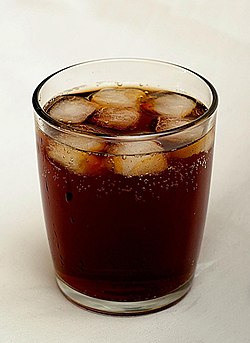
A soft drink (see § Terminology for other names) is a class of beverage containing no alcohol, usually (but not necessarily) carbonated, and typically including added sweetener. Flavors can be natural, artificial or a mixture of the two. The sweetener may be a sugar, high-fructose corn syrup, fruit juice, a sugar substitute (in the case of diet sodas), or some combination of these. Soft drinks may also contain caffeine, colorings, preservatives and other ingredients.
Soft drinks are called "soft" in contrast with "hard" alcoholic drinks and non-alcoholic drinks. Small amounts of alcohol may be present in a soft drink, but the alcohol content must be less than 0.5% of the total volume of the drink (ABV) in many countries and localities12 if the drink is to not be considered alcoholic.3 Examples of soft drinks include lemon-lime drinks, orange soda, cola, grape soda, cream soda, ginger ale and root beer.
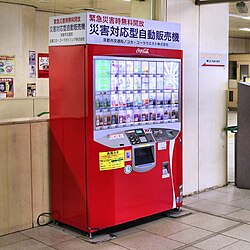
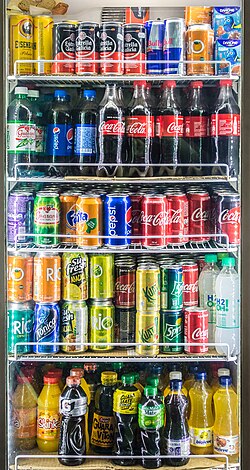
Soft drinks may be served cold, over ice cubes, or at room temperature. They are available in many container formats, including cans, glass bottles, and plastic bottles. Containers come in a variety of sizes, ranging from small bottles to large multi-liter containers. Soft drinks are widely available at fast food restaurants, movie theaters, convenience stores, casual-dining restaurants, dedicated soda stores, vending machines and bars from soda fountain machines.
Within a decade of the invention of carbonated water by Joseph Priestley in 1767, inventors in Europe had used his concept to produce the drink in greater quantities. One such inventor, J. J. Schweppe, formed Schweppes in 1783 and began selling the world's first bottled soft drink.45 Soft drink brands founded in the 19th century include R. White's Lemonade in 1845, Moxie in 1876, Dr Pepper in 1885 and Coca-Cola in 1886. Subsequent brands include Pepsi, Irn-Bru, Sprite, Fanta, 7 Up and RC Cola.
Terminology
The term soft drink is a category in the beverage industry, and is broadly used in product labeling and on restaurant menus, the term being here a euphemism for a non-alcoholic drink, as against a hard drink. However, in many countries such drinks are more commonly referred to by regional names, including pop, cool drink, fizzy drink, cola, soda, or soda pop.67 Other less-used terms include carbonated drink, fizzy juice, lolly water, seltzer, coke, tonic, and mineral.8 Due to the high sugar content in typical soft drinks, they may also be called sugary drinks.9
In the United States, the 2003 Harvard Dialect Survey6 tracked the usage of the nine most common names. Over half of the survey respondents preferred the term "soda", which was dominant in the Northeastern United States, California, and the areas surrounding Milwaukee and St. Louis. The term "pop", which was preferred by 25% of the respondents, was most popular in the Midwest and Pacific Northwest, while the genericized trademark "coke", used by 12% of the respondents, was most popular in the Southern United States.6 The term "tonic" is distinctive to eastern Massachusetts, although its use is declining.10
In the English-speaking parts of Canada, the term "pop" is prevalent, but "soft drink" is the most common English term used in Montreal.11
In the United Kingdom, the term "fizzy drink" is common, while in Ireland "mineral" is. "Pop" and "fizzy pop" are used in Northern England, South Wales, and the Midlands12 while "fizzy drink" is used in Ireland. In Scotland, "fizzy juice" or even simply "juice" is colloquially encountered, as is "ginger".13 In Australia and New Zealand, "soft drink"14 or "fizzy drink" is typically used.15 In South African English, "cool drink" is any soft drink.16
In other languages, various names are used: descriptive names as "non-alcoholic beverages", equivalents of "soda water", or generalized names. For example, the Bohemian variant of the Czech language (but not Moravian dialects) uses "limonáda" for all such beverages, not only those made from lemons.17 Similarly, the Slovak language uses "malinovka" ("raspberry water") for all such beverages, not only for raspberry ones.18
History
The origins of soft drinks lie in the development of fruit-flavored drinks. In the medieval Middle East, a variety of fruit-flavored soft drinks were widely drunk, such as sharbat, and were often sweetened with ingredients such as sugar, syrup and honey. Other common ingredients included lemon, apple, pomegranate, tamarind, jujube, sumac, musk, mint and ice. Middle Eastern drinks later became popular in medieval Europe, where the word "syrup" was derived from Arabic.19 In Tudor England, 'water imperial' was widely drunk; it was a sweetened drink with lemon flavor and containing cream of tartar. 'Manays Cryste' was a sweetened cordial flavored with rosewater, violets or cinnamon.20
Another early type of soft drink was lemonade, made of water and lemon juice sweetened with honey, but without carbonated water. The Compagnie des Limonadiers of Paris was granted a monopoly for the sale of lemonade soft drinks in 1676, making it the first marketed soft drink. Vendors carried tanks of lemonade on their backs and dispensed cups of the soft drink to Parisians.18
Carbonated drinks
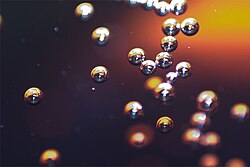
Carbonated drinks or fizzy drinks are beverages that consist mainly of carbonated water. The dissolution of carbon dioxide (CO2) in a liquid, gives rise to effervescence or fizz. Carbon dioxide is only weakly soluble in water; therefore, it separates into a gas when the pressure is released. The process usually involves injecting carbon dioxide under high pressure. When the pressure is removed, the carbon dioxide is released from the solution as small bubbles, which causes the solution to become effervescent, or fizzy.
Carbonated beverages are prepared by mixing flavored syrup with carbonated water. Carbonation levels range up to 5 volumes of CO2 per liquid volume. Ginger ale, colas, and related drinks are carbonated with 3.5 volumes. Other drinks, often fruity ones, are carbonated less.21
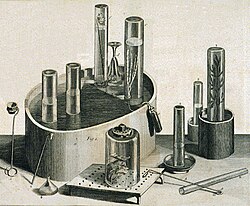
In the late 18th century, scientists made important progress in replicating naturally carbonated mineral waters. In 1767, Englishman Joseph Priestley first discovered a method of infusing water with carbon dioxide to make carbonated water22 when he suspended a bowl of distilled water above a beer vat at a local brewery in Leeds, England. His invention of carbonated water (later known as soda water, for the use of soda powders in its commercial manufacture) is the major and defining component of most soft drinks.23
Priestley found that water treated in this manner had a pleasant taste, and he offered it to his friends as a refreshing drink. In 1772, Priestley published a paper entitled Impregnating Water with Fixed Air in which he describes dripping oil of vitriol (or sulfuric acid as it is now called) onto chalk to produce carbon dioxide gas and encouraging the gas to dissolve into an agitated bowl of water.23
"Within a decade, inventors in Britain and in Europe had taken Priestley's basic idea—get some "fixed air," mix it with water, shake—and created contraptions that could make carbonated water more quickly, in greater quantities. One of those inventors was named Johann Jacob Schweppe, who sold bottled soda water and whose business is still around today."
Another Englishman, John Mervin Nooth, improved Priestley's design and sold his apparatus for commercial use in pharmacies. Swedish chemist Torbern Bergman invented a generating apparatus that made carbonated water from chalk by the use of sulfuric acid. Bergman's apparatus allowed imitation mineral water to be produced in large amounts. Thomas Henry, an apothecary from Manchester, was the first to sell artificial mineral water to the general public for medicinal purposes, beginning in the 1770s. His recipe for 'Bewley's Mephitic Julep' consisted of 3 drachms of fossil alkali to a quart of water, and the manufacture had to 'throw in streams of fixed air until all the alkaline taste is destroyed'.20
Johann Jacob Schweppe developed a process to manufacture bottled carbonated mineral water.5 He founded the Schweppes Company in Geneva in 1783 to sell carbonated water,24 and relocated his business to London in 1792. His drink soon gained in popularity; among his newfound patrons was Erasmus Darwin. In 1843, the Schweppes company commercialized Malvern Water at the Holywell Spring in the Malvern Hills, and received a royal warrant from King William IV.25
It was not long before flavoring was combined with carbonated water. The earliest reference to carbonated ginger beer is in a Practical Treatise on Brewing. published in 1809. The drinking of either natural or artificial mineral water was considered at the time to be a healthy practice, and was promoted by advocates of temperance. Pharmacists selling mineral waters began to add herbs and chemicals to unflavored mineral water. They used birch bark (see birch beer), dandelion, sarsaparilla root, fruit extracts, and other substances.
Phosphate soda
A variant of soda in the United States called "phosphate soda" appeared in the late 1870s. It became one of the most popular soda fountain drinks from 1900 until the 1930s, with the lemon or orange phosphate being the most basic. The drink consists of 1 US fl oz (30 mL) fruit syrup, 1/2 tsp (3 mL) of phosphoric acid, and enough carbonated water and ice to fill a glass. This drink was commonly served in pharmacies.26
Mass market and industrialization

Soft drinks soon outgrew their origins in the medical world and became a widely consumed product, available cheaply for the masses. By the 1840s, there were more than fifty soft drink manufacturers in London, an increase from just ten in the 1820s.27 Carbonated lemonade was widely available in British refreshment stalls in 1833,27 and in 1845, R. White's Lemonade went on sale in the UK.28 For the Great Exhibition of 1851 held at Hyde Park in London, Schweppes was designated the official drink supplier and sold over a million bottles of lemonade, ginger beer, Seltzer water and soda-water.27 There was a Schweppes soda water fountain, situated directly at the entrance to the exhibition.20
Mixer drinks became popular in the second half of the century. Tonic water was originally quinine added to water as a prophylactic against malaria and was consumed by British officials stationed in the tropical areas of South Asia and Africa. As the quinine powder was so bitter people began mixing the powder with soda and sugar, and a basic tonic water was created. The first commercial tonic water was produced in 1858.29 The mixed drink gin and tonic also originated in British colonial India, when the British population would mix their medicinal quinine tonic with gin.20
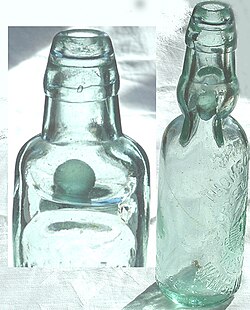
A persistent problem in the soft drinks industry was the lack of an effective sealing of the bottles. Carbonated drink bottles are under great pressure from the gas, so inventors tried to find the best way to prevent the carbon dioxide or bubbles from escaping. The bottles could also explode if the pressure was too great. Hiram Codd devised a patented bottling machine while working at a small mineral water works in the Caledonian Road, Islington, in London in 1870. His Codd-neck bottle was designed to enclose a marble and a rubber washer in the neck. The bottles were filled upside down, and pressure of the gas in the bottle forced the marble against the washer, sealing in the carbonation. The bottle was pinched into a special shape to provide a chamber into which the marble was pushed to open the bottle. This prevented the marble from blocking the neck as the drink was poured.20 R. White's, by now the biggest soft drinks company in London and south-east England, featured a wide range of drinks on their price list in 1887, all of which were sold in Codd's glass bottles, with choices including strawberry soda, raspberry soda, cherryade and cream soda.30
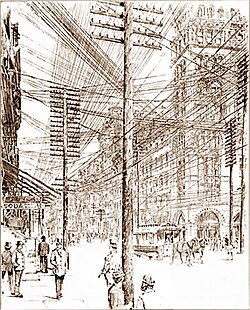
In 1892, the "Crown Cork Bottle Seal" was patented by William Painter, a Baltimore, Maryland machine shop operator. It was the first bottle top to successfully keep the bubbles in the bottle. In 1899, the first patent was issued for a glass-blowing machine for the automatic production of glass bottles. Earlier glass bottles had all been hand-blown. Four years later, the new bottle-blowing machine was in operation. It was first operated by Michael Owens, an employee of Libby Glass Company. Within a few years, glass bottle production increased from 1,400 bottles a day to about 58,000 bottles a day.
In America, soda fountains were initially more popular, and many Americans would frequent the soda fountain daily. Beginning in 1806, Yale University chemistry professor Benjamin Silliman sold soda waters in New Haven, Connecticut. He used a Nooth apparatus to produce his waters. Businessmen in Philadelphia and New York City also began selling soda water in the early 19th century. In the 1830s, John Matthews of New York City and John Lippincott of Philadelphia began manufacturing soda fountains. Both men were successful and built large factories for fabricating fountains. Due to problems in the U.S. glass industry, bottled drinks remained a small portion of the market throughout much of the 19th century. (However, they were known in England. In The Tenant of Wildfell Hall, published in 1848, the caddish Huntingdon, recovering from months of debauchery, wakes at noon and gulps a bottle of soda-water.31)
In the early 20th century, sales of bottled soda increased greatly around the world, and in the second half of the 20th century, canned soft drinks became an important share of the market. During the 1920s, "Home-Paks" were invented. "Home-Paks" are the familiar six-pack cartons made from cardboard. Vending machines also began to appear in the 1920s. Since then, soft drink vending machines have become increasingly popular. Both hot and cold drinks are sold in these self-service machines throughout the world.
Consumption
Per capita consumption of soda varies considerably around the world. As of 2014, the top consuming countries per capita were Argentina, the United States, Chile, and Mexico. Developed countries in Europe and elsewhere in the Americas had considerably lower consumption. Annual average consumption in the United States, at 153.5 liters, was about twice that in the United Kingdom (77.7) or Canada (85.3).32
In recent years, soda consumption has generally declined in the West. According to one estimate, per capita consumption in the United States reached its peak in 1998 and has continually fallen since.33 A study in the journal Obesity found that from 2003 to 2014 the proportion of Americans who drank a sugary beverage on a given day fell from approximately 62% to 50% for adults, and from 80% to 61% for children.34 The decrease has been attributed to, among other factors, an increased awareness of the dangers of obesity, and government efforts to improve diets.
At the same time, soda consumption has increased in some low- or middle-income countries such as Cameroon, Georgia, India and Vietnam as soda manufacturers increasingly target these markets and consumers have increasing discretionary income.32
Production
Carbonated soft drinks result from the dilution of flavored syrups with carbonated water, typically at a 1:5 ratio.3536 The process of mixing the two ingredients may occur at bottling plants, soda fountains, or manually at soda shops and households. Food-grade carbon dioxide used in carbonation often comes from ammonia plants.37
Production of syrups
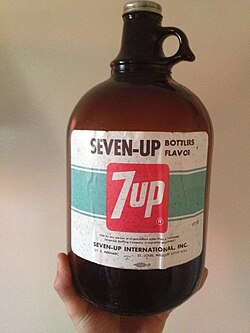
Commercially produced soft drink syrups derive their flavors from a mixture of food-grade essential oils blended with an emulsifier such as alcohol or gum arabic, extracts, citric acid or phosphoric acid, food coloring, and a sweetener.3839404142 Regular versions use sugars, while diet versions utilize artificial sweeteners or natural low glycemic alternatives such as aspartame, saccharin, sucralose, cyclamates, acesulfame potassium ("Ace K"), sugar alcohols, stevia, and monk fruit extract. However, most sugar substitutes carry a marked aftertaste often described as "bitter" or "metallic," preventing diet soft drinks from offering a palatably identical substitute.4344
The ingredients in multinational soft drinks may vary by region according to cost, health concerns, and cultural preferences. The sweetener in mainstream soft drinks varies between high fructose corn syrup, cane sugar, and beet sugar based on regional availability.45 However, Coca-Cola has replaced its high fructose corn syrup with cane sugar in its American product at the request of the second Trump administration, which claims that cane sugar provides a healthier alternative.46 The ingredients in Fanta Orange also greatly differ between its American, British, and Italian versions.47 The American version does not have orange juice and contains high fructose corn syrup, Yellow 6, and Red 40, while the British and Italian versions use sugar and orange juice; the British version only uses natural food extracts as coloring, while the Italian version does not use any added food coloring.4849
In contrast, small-scale soft drink production typically utilizes ingredients typically found within grocery stores, such as fresh fruit, juices, herbs, and spices.50 Soft drink recipes designed for home kitchens often substitute essential oils and acids for the raw ingredients that these additives derive from.51 Small-scale soft drink production may use fermentation derived from yeast, kombucha, and kefir grains to induce carbonation as an alternative to adding carbonated water.5253
Some soft drinks contain measurable amounts of alcohol from natural fermentation, extracts containing alcohol, and the use of alcohol as an emulsifier.404154 In the United States, soft drinks and other products not subject to alcohol regulations such as non-alcoholic beer may legally contain up to 0.5% alcohol by volume.55
Distribution
Soft drinks sold in aluminum cans and plastic bottles originate from bottling plants where bottling lines carbonate water, mix the carbonated water with premade syrup, fill cans or bottles with the drink, and package them for commercial distribution.56
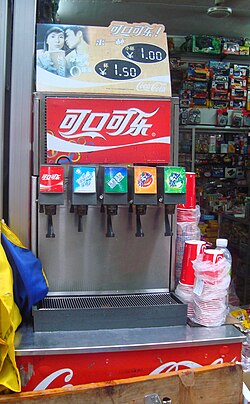
Soda fountains dispense soft drinks by mixing syrups pumped from disposable and interchangeable receptacles known as bag-in-box containers, which simulates the bottling process on a much smaller scale.57 Prior to the widespread adoption of automated soda fountains in the 1960s, restaurants employed a worker known as a soda jerk or soda clerk who manually mixed pumped syrup with carbonated water with an iced tea spoon in each glass served.58
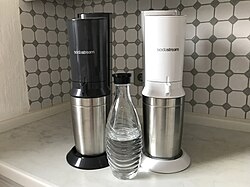
Soda machines such as SodaStream carbonate water on a much smaller scale than soda fountains.59 During the 19th century, the gasogene produced carbonated water by mixing tartaric acid and sodium bicarbonate, but it had a tendency to explode and utilized a surrounding mesh to protect consumers.60 A machine known as Keurig Kold that mixed carbonated water with flavor pods containing syrup from Coca-Cola Company and Dr Pepper Snapple Group brands existed from 2015 to 2016, but ended production following poor sales.61 Small scale soft drink production may also utilize premade carbonated water, which may be stored in soda siphons.62
Producers
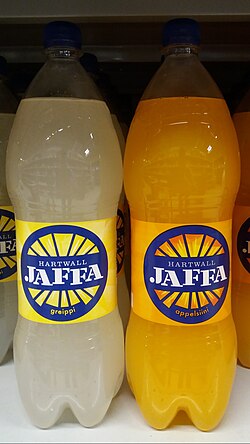
Market control of the soft drink industry varies on a country-by-country basis. However, PepsiCo and the Coca-Cola Company remain the two largest producers of soft drinks in most regions of the world. In North America, Keurig Dr Pepper and Jones Soda also hold a significant amount of market share.
Health concerns
The over-consumption of sugar-sweetened soft drinks is associated with obesity,63646566 hypertension,67 type 2 diabetes,68 dental caries, and low nutrient levels.65 A few experimental studies reported the role sugar-sweetened soft drinks potentially contribute to these ailments,6465 though other studies show conflicting information.697071 According to a 2013 systematic review of systematic reviews, 83.3% of the systematic reviews without reported conflict of interest concluded that sugar-sweetened soft drinks consumption could be a potential risk factor for weight gain.72
Obesity and weight-related diseases
From 1977 to 2002, Americans doubled their consumption of sweetened beverages73—a trend that was paralleled by doubling the prevalence of obesity.74 The consumption of sugar-sweetened beverages is associated with weight and obesity, and changes in consumption can help predict changes in weight.75
The consumption of sugar-sweetened soft drinks can also be associated with many weight-related diseases, including diabetes,68 metabolic syndrome, and cardiovascular risk factors.76
Dental decay
Most soft drinks contain high concentrations of simple carbohydrates: glucose, fructose, sucrose and other simple sugars. If oral bacteria ferment carbohydrates and produce acids that may dissolve tooth enamel and induce dental decay, then sweetened drinks may increase the risk of dental caries. The risk would be greater if the frequency of consumption is high.77
A large number of soda pops are acidic as are many fruits, sauces, and other foods. Drinking acidic drinks over a long period and continuous sipping may erode the tooth enamel. A 2007 study determined that some flavored sparkling waters are as erosive or more so than orange juice.78
Using a drinking straw is often advised by dentists as the drink does not come into as much contact with the teeth. It has also been suggested that brushing teeth right after drinking soft drinks should be avoided as this can result in additional erosion to the teeth due to mechanical action of the toothbrush on weakened enamel.79
Bone density and bone loss
A 2006 study of several thousand men and women, found that women who regularly drank cola-based sodas (three or more a day) had significantly lower bone mineral density (BMD) of about 4% in the hip compared to women who did not consume colas.80 The study found that the effect of regular consumption of cola sodas was not significant on men's BMD.80
Benzene
In 2006, the United Kingdom Food Standards Agency published the results of its survey of benzene levels in soft drinks,81 which tested 150 products and found that four contained benzene levels above the World Health Organization (WHO) guidelines for drinking water.
The United States Food and Drug Administration released its own test results of several soft drinks containing benzoates and ascorbic or erythorbic acid. Five tested drinks contained benzene levels above the Environmental Protection Agency's recommended standard of 5 ppb. As of 2006, the FDA stated its belief that "the levels of benzene found in soft drinks and other beverages to date do not pose a safety concern for consumers".82
Kidney stones
A study published in the Clinical Journal of the American Society of Nephrology in 2013 concluded that consumption of soft drinks was associated with a 23% higher risk of developing kidney stones.83
Mortality, circulatory and digestive diseases
In a 2019 study of 451,743 Europeans, those who had a consumption of soft drinks of two or more a day,84 had a greater chance of all-cause mortality than those who drank less than one per month. People who drank artificially sweetened drinks had a higher risk of cardiovascular diseases, and people who drank sugar-sweetened drinks with digestive diseases.8586
Government regulation
Schools
Since at least 2006, debate on whether high-calorie soft drink vending machines should be allowed in schools has been on the rise. Opponents of the soft drink vending machines believe that soft drinks are a significant contributor to childhood obesity and tooth decay, and that allowing soft drink sales in schools encourages children to believe they are safe to consume in moderate to large quantities.87 Opponents also argue that schools have a responsibility to look after the health of the children in their care, and that allowing children easy access to soft drinks violates that responsibility.88 Vending machine proponents believe that obesity is a complex issue and soft drinks are not the only cause.89 A 2011 bill to tax soft drinks in California failed, with some opposing lawmakers arguing that parents—not the government—should be responsible for children's drink choices.90
On May 3, 2006, the Alliance for a Healthier Generation,91 Cadbury Schweppes, the Coca-Cola Company, PepsiCo, and the American Beverage Association announced new guidelines92 that will voluntarily remove high-calorie soft drinks from all U.S. schools.
On May 19, 2006, the British education secretary, Alan Johnson, announced new minimum nutrition standards for school food. Among a wide range of measures, from September 2006, school lunches will be free from carbonated drinks. Schools will also end the sale of junk food (including carbonated drinks) in vending machines and tuck shops.
In 2008, Samantha K Graff published an article in the Annals of the American Academy of Political and Social Science regarding the "First Amendment Implications of Restricting Food and Beverages Marketing in Schools". The article examines a school district's policy regarding limiting the sale and marketing of soda in public schools, and how certain policies can invoke a violation of the First Amendment. Due to district budget cuts and loss in state funding, many school districts allow commercial businesses to market and advertise their product (including junk food and soda) to public school students for additional revenue. Junk food and soda companies have acquired exclusive rights to vending machines throughout many public school campuses. Opponents of corporate marketing and advertising on school grounds urge school officials to restrict or limit a corporation's power to promote, market, and sell their product to school students. In the 1970s, the Supreme Court ruled that advertising was not a form of free expression, but a form of business practices which should be regulated by the government. In the 1976 case of Virginia State Board of Pharmacy v. Virginia Citizens Consumer Council,93 the Supreme Court ruled that advertising, or "commercial speech", to some degree is protected under the First Amendment. To avoid a First Amendment challenge by corporations, public schools could create contracts that restrict the sale of certain product and advertising. Public schools can also ban the selling of all food and drink products on campus, while not infringing on a corporation's right to free speech.94
On December 13, 2010, President Obama signed the Healthy Hunger Free Kids Act of 201095 (effective in 2014) that mandates schools that receive federal funding must offer healthy snacks and drinks to students. The act bans the selling of soft drinks to students and requires schools to provide healthier options such as water, unflavored low-fat milk, 100% fruit and vegetable drinks or sugar-free carbonated drinks. The portion sizes available to students will be based on age: eight ounces for elementary schools, twelve ounces for middle and high schools. Proponents of the act predict the new mandate it will make it easier for students to make healthy drink choices while at school.95
In 2015, Terry-McElarth and colleagues published a study in the American Journal of Preventive Medicine on regular soda policies and their effect on school drink availability and student consumption. The purpose of the study was to determine the effectiveness of a program beginning in the 2014–2015 school year that requires schools participating in federally reimbursable meal programs to remove all competitive venues (a la carte cafeteria sales, vending machines, and stores/snack bars/carts), on the availability of unhealthy drinks at schools and student consumption. The study analyzed state- and school district-level policies mandating soda bans and found that state bans were associated with significantly lower school soda availability but district bans showed no significant associations. In addition, no significant correlation was observed between state policies and student consumption. Among student populations, state policy was directly associated with significantly lower school soda availability and indirectly associated with lower student consumption. The same was not observed for other student populations.96
Taxation
In the United States, soft drinks are considered "food" items and can be purchased using federal Supplemental Nutrition Assistance Program (SNAP) benefits, formerly known as food stamps. Federal law prohibits the collection of sales tax on purchases made with SNAP benefits.
For other consumers, legislators, health experts and consumer advocates are considering levying higher taxes on the sale of soft drinks and other sweetened products to help curb the epidemic of obesity among Americans, and its harmful impact on overall health. Some speculate that higher taxes could help reduce soda consumption.97 Others say that taxes should help fund education to increase consumer awareness of the unhealthy effects of excessive soft drink consumption, and also help cover costs of caring for conditions resulting from overconsumption.98 The food and drink industry holds considerable clout in Washington, DC, as it has contributed more than $50 million to legislators since 2000.99
In January 2013, a British lobby group called for the price of sugary fizzy drinks to be increased, with the money raised (an estimated £1 billion at 20p per litre) to be put towards a "Children's Future Fund", overseen by an independent body, which would encourage children to eat healthily in school.100
In 2017, Saudi Arabia, the United Arab Emirates and Bahrain imposed a 50% tax on soft drinks and a 100% tax on energy drinks to curb excess consumption of the commodity and for additional revenue.101
Attempted ban
In March 2013, New York City's mayor Michael Bloomberg proposed to ban the sale of non-diet soft drinks larger than 16 ounces, except in convenience stores and supermarkets. A lawsuit against the ban was upheld by a state judge, who voiced concerns that the ban was "fraught with arbitrary and capricious consequences". Bloomberg announced that he would be appealing the verdict.102 The state appellate courts upheld the trial court decision, and the ban remains unenforceable as of 2021.103104
In 2022, amidst soaring rates of obesity and diabetes, the Mexican state of Oaxaca enacted a ban on sugary drinks, including notably Coca-Cola, but it was poorly enforced.105
See also
See also
- Ade
- Craft soda
- Diet soda
- Energy drink
- Phosphate soda
- Fizz-Keeper
- Hard soda
- Industrial gas
- Kombucha
- List of brand name soft drink products
- List of soft drink flavors
- List of soft drinks by country
- List of drinks
- Low-alcohol beer
- Nitrogenation
- Nucleation
- Premix and postmix
- Soda fountain
- Squash (drink)
References
References
- "Electronic Code of Federal Regulations". United States Government. Archived from the original on June 13, 2011. Retrieved February 25, 2011. See §7.71, paragraphs (e) and (f).
- "What Is Meant By Alcohol-Free? | The Alcohol-Free Community". Alcoholfree.co.uk. January 8, 2012. Archived from the original on March 26, 2021. Retrieved March 26, 2013.
- Bangor Daily News, April 8, 2010
- "Schweppes Holdings Limited". Royalwarrant.org. Archived from the original on October 29, 2021. Retrieved October 13, 2021.
Schweppes was founded in 1783 [..] the world's first ever soft drink, Schweppes soda water, was born.
- "The great soda-water shake up". The Atlantic. October 2014. Archived from the original on June 24, 2022. Retrieved October 13, 2021.
- Vaux, Bert (2003). "105. What is your generic term for a sweetened carbonated beverage?". Harvard Dialect Survey. Archived from the original on May 24, 2011. Retrieved June 3, 2011.
- "Funny Irish Words and Phrases". Grammar YourDictionary. Archived from the original on April 3, 2013. Retrieved March 26, 2013.
- Kregiel, Dorota (January 28, 2015). "Health Safety of Soft Drinks: Contents, Containers, and Microorganisms". BioMed Research International. 2015 e128697. doi:10.1155/2015/128697. ISSN 2314-6133. PMC 4324883. PMID 25695045.
- "Sugary Drinks". Harvard T.H. Chan School of Public Health. September 4, 2013. Archived from the original on July 10, 2022. Retrieved July 10, 2022.
- "In Boston, the word 'tonic' gives way to 'soda'". BostonGlobe.com. March 25, 2012. Archived from the original on August 1, 2015. Retrieved September 8, 2015.
- Hannay, Chris (May 18, 2012). "Why do some places say 'pop' and others say 'soda'? Your questions answered". The Globe and Mail. Archived from the original on October 16, 2015. Retrieved September 8, 2015.
- "The Best of British". effingpot.com. Archived from the original on August 29, 2015. Retrieved September 8, 2015.
- "Dictionaries of the Scots Language:: SND :: sndns1727". Retrieved October 14, 2022.
- For example, in "Coca-Cola Amatil admits cutting back on sugar as attitudes change on health and investment" Archived October 16, 2015, at the Wayback Machine – The Sydney Morning Herald, September 11, 2015. Retrieved September 12, 2015.
- "Fizzy Drinks: Everything you need to know". www.lifeeducation.org.au. Archived from the original on September 11, 2021. Retrieved September 11, 2021.
- "Definition of "cool drink"". Collins English Dictionary. Archived from the original on October 1, 2015. Retrieved March 28, 2026.
- "The Interesting History of Soft Drinks". ThoughtCo. Archived from the original on April 20, 2021. Retrieved July 10, 2022.
- "soft drink | Definition, History, Production, & Health Issues". Britannica. Archived from the original on June 2, 2021. Retrieved July 10, 2022.
- Meri, Josef W. (2005). Medieval Islamic Civilization: An Encyclopedia. Routledge. p. 106. ISBN 1-135-45596-1. Archived from the original on November 13, 2021. Retrieved March 1, 2018.
- Colin Emmins. "SOFT DRINKS Their origins and history" (PDF). Archived (PDF) from the original on March 4, 2016. Retrieved July 6, 2015.
- Crandall, Philip; Chen, Chin Shu; Nagy, Steven; Perras, Georges; Buchel, Johannes A.; Riha, William (2000). "Beverages, nonalcoholic". Ullmann's Encyclopedia of Industrial Chemistry. doi:10.1002/14356007.a04_035. ISBN 3-527-30673-0.
- Bellis, Mary (March 6, 2009). "The discovery of oxygen and Joseph Priestley". Thoughtco.com. Archived from the original on March 28, 2020. Retrieved June 8, 2009.
- "Priestley 1772: Impregnating water with fixed air" (PDF). truetex.com. Archived from the original (PDF) on April 21, 2017. Retrieved May 8, 2013.
- Morgenthaler, Jeffrey (2014). Bar Book: Elements of cocktail technique. Chronicle Books. p. 54. ISBN 978-1-4521-3027-9. Archived from the original on May 13, 2022. Retrieved November 21, 2020.
- "Heritage: Meet Jacob Schweppe". Archived from the original on October 12, 2018. Retrieved July 6, 2015.
- Phosphates, in Smith, Andrew. The Oxford companion to American food and drink. Oxford University Press US, 2007, ISBN 0-19-530796-8, p.451
- Emmins, Colin (1991). SOFT DRINKS – Their origins and history (PDF). Great Britain: Shire Publications Ltd. p. 8 and 11. ISBN 0-7478-0125-8. Archived (PDF) from the original on March 4, 2016. Retrieved July 6, 2015.
- "Chester homeless charity teams up with lemonade brand". Cheshire Live. October 8, 2017. Archived from the original on October 8, 2017. Retrieved October 8, 2017.
- Raustiala, Kal (August 28, 2013). "The Imperial Cocktail". Slate. The Slate Group. Archived from the original on August 28, 2013. Retrieved August 30, 2013.
- ""Secret lemonade drinker": the story of R White's and successors in Barking and Essex". Barking and District Historical Society. Archived from the original on October 26, 2021. Retrieved October 14, 2021.
- Brontë, Anne (1922). Wildfell Hall, ch. 30. Archived from the original on April 15, 2021. Retrieved March 26, 2013.
- Silver, Marc (June 19, 2015). "Guess Which Country Has The Biggest Increase In Soda Drinking". National Public Radio. Archived from the original on April 27, 2019. Retrieved March 2, 2019.
- Holodny, Elena. "The epic collapse of American soda consumption in one chart". Business Insider. Archived from the original on April 16, 2021. Retrieved May 13, 2021.
- Bakalar, Nicholas (November 14, 2017). "Americans Are Putting Down the Soda Pop". The New York Times. ISSN 0362-4331. Archived from the original on March 26, 2021. Retrieved May 13, 2021.
- "How Is Soda Made: Water, Syrup, and Carbonation". ScienceInsights. March 4, 2026. Retrieved May 16, 2026.
- "How to Make the Best Tasting Fountain Soda: Ratio, Temperature & Maintenance". Bernick's. Retrieved May 26, 2026.
- "CO2 shortage: Food industry calls for government action". BBC. June 21, 2018. Archived from the original on May 23, 2021. Retrieved June 24, 2018.
- "(PDF) Essential Oils as Flavors in Carbonated Cola and Citrus Soft Drinks". ResearchGate. Archived from the original on March 7, 2023. Retrieved May 16, 2026.
- "Lab-Cola". zephyrsai.github.io. Retrieved May 16, 2026.
- Pendergrast, pp. 456–57 Archived April 8, 2023, at the Wayback Machine.
- The Recipe Archived February 17, 2011, at the Wayback Machine and image Archived December 30, 2021, at the Wayback Machine (pdf), This American Life. See Radio episode and notes Archived October 5, 2011, at the Wayback Machine.
- Luca, Martina De (November 8, 2023). "Gum arabic: the secret emulsifier behind soft drinks". essedielle. Retrieved May 16, 2026.
- Kowitt B (February 22, 2017). "The Hunt for the Perfect Sugar". Fortune. Retrieved November 7, 2019.
- Stanford D (March 19, 2015). "Scientists Are Racing to Build a Better Diet Soda". Bloomberg Businessweek. Retrieved November 7, 2019.
- Harris, Molly (May 15, 2020). "Why Coke Tastes Different In Other Countries". Mashed. Retrieved May 29, 2026.
- Compton, Sophia (October 22, 2025). "Coca-Cola officially rolls out cane sugar soda across US markets following Trump's urging: report". FOXBusiness. Retrieved May 16, 2026.
- "People can't believe the difference between American and European Fanta". TODAY.com. September 19, 2023. Retrieved May 29, 2026.
- "Fanta Flavors and Products | Coca-Cola US". Coca-Cola. Retrieved May 29, 2026.
- "Fanta - Fruit Flavours & Ingredients | Coca-Cola GB". Coca-Cola. Retrieved May 29, 2026.
- Hoeffner, Melissa Kravitz (September 6, 2025). "How to Make Homemade Soda That's Tastier and Better for You Than Store-Bought".
- Russock, Caroline (January 11, 2026). "Natural Cola Soda".
- "Marge's Homemade Pepsi". Cartoon Cuisine. May 31, 2017. Retrieved May 23, 2026.
- Parrish, Emillie (December 30, 2021). "A Guide To Fermented Soda Pop". Fermenting for Foodies. Retrieved May 23, 2026.
- "[myMasjid.com.my] Alcohol: In soft drinks". Mail-archive.com. November 8, 2004. Archived from the original on April 28, 2021. Retrieved June 8, 2009.
- "Legal Definition of Intoxicating Liquor: The 0.5% Rule". LegalClarity. May 18, 2026. Retrieved May 23, 2026.
- luye (August 13, 2024). "Coca-cola Production Process Steps - Luye Packaging". Water Filling Machine | Juice, Tea, Milk Filling Equipment | Carbonated Drink Filling Machine | Beer, Wine Beverage Filling Equipment | Luye Machinery is a Manufacturer and Supplier of High Quality Packing Machine and Production Line. Retrieved May 26, 2026.
- "Bag in Box Soda". WebstaurantStore. Retrieved May 29, 2026.
- "Soda Jerks: The Forgotten Art of Serving Drinks and Delish Soda Flavors". September 4, 2023. Retrieved May 29, 2026.
- "The Best, Bubbliest Soda Makers for On-Demand Sparkling Water". Serious Eats. Archived from the original on September 2, 2025. Retrieved May 29, 2026.
- "Mixing it up: A Look at the Evolution of the Siphon-Bottle". Archived from the original on August 22, 2018. Retrieved January 6, 2006.
- "The Rise and Fall of Keurig Kold: When Was It Discontinued? - HomeDiningKitchen". homediningkitchen.com. February 23, 2025. Retrieved May 29, 2026.
- Corey Kilgannon (2009). "Seltzer Man Is Out of Action, and Brooklyn Thirsts". The New York Times. Retrieved September 26, 2009.
- Bes-Rastrollo, M; Sayon-Orea, C; Ruiz-Canela, M; Martinez-Gonzalez, MA (July 2016). "Impact of sugars and sugar taxation on body weight control: A comprehensive literature review". Obesity. 24 (7): 1410–26. doi:10.1002/oby.21535. ISSN 1930-7381. PMID 27273733.
- Malik VS, Schulze MB, Hu FB (2006). "Intake of sugar-sweetened beverages and weight gain: a systematic review". The American Journal of Clinical Nutrition. 84 (2): 274–88. doi:10.1093/ajcn/84.2.274. PMC 3210834. PMID 16895873.
- Vartanian LR, Schwartz MB, Brownell KD (2007). "Effects of soft drink consumption on nutrition and health: a systematic review and meta-analysis". American Journal of Public Health. 97 (4): 667–75. doi:10.2105/AJPH.2005.083782. PMC 1829363. PMID 17329656.
- Woodward-Lopez G, Kao J, Ritchie L (2011). "To what extent have sweetened beverages contributed to the obesity epidemic?". Public Health Nutrition. 14 (3): 499–509. doi:10.1017/S1368980010002375. PMID 20860886.
- Kim, Y; Je, Y (April 2016). "Prospective association of sugar-sweetened and artificially sweetened beverage intake with risk of hypertension". Archives of Cardiovascular Diseases. 109 (4): 242–53. doi:10.1016/j.acvd.2015.10.005. PMID 26869455.
- Imamura F, O'Connor L, Ye Z, Mursu J, Hayashino Y, Bhupathiraju SN, Forouhi NG (2015). "Consumption of sugar sweetened beverages, artificially sweetened beverages, and fruit juice and incidence of type 2 diabetes: systematic review, meta-analysis, and estimation of population attributable fraction". BMJ. 351 h3576. doi:10.1136/bmj.h3576. PMC 4510779. PMID 26199070.
- Gibson S (2008). "Sugar-sweetened soft drinks and obesity: a systematic review of the evidence from observational studies and interventions". Nutrition Research Reviews. 21 (2): 134–47. doi:10.1017/S0954422408110976. PMID 19087367.
- Wolff E, Dansinger ML (2008). "Soft drinks and weight gain: how strong is the link?". Medscape Journal of Medicine. 10 (8): 189. PMC 2562148. PMID 18924641.
- Trumbo PR, Rivers CR (2014). "Systematic review of the evidence for an association between sugar-sweetened beverage consumption and risk of obesity". Nutrition Reviews. 72 (9): 566–74. doi:10.1111/nure.12128. PMID 25091794. Archived from the original on April 16, 2021. Retrieved September 29, 2020.
- Bes-Rastrollo, Maira; Schulze, Matthias B.; Ruiz-Canela, Miguel; Martinez-Gonzalez, Miguel A. (December 31, 2013). "Financial Conflicts of Interest and Reporting Bias Regarding the Association between Sugar-Sweetened Beverages and Weight Gain: A Systematic Review of Systematic Reviews". PLOS Medicine. 10 (12) e1001578. doi:10.1371/journal.pmed.1001578. ISSN 1549-1676. PMC 3876974. PMID 24391479.
- Nielsen, S.; Popkin, B. (2004). "Changes in beverage intake between 1977 and 2001". American Journal of Preventive Medicine. 27 (3): 205–210. doi:10.1016/j.amepre.2004.05.005. PMID 15450632. Archived from the original on September 26, 2022. Retrieved September 29, 2020.
- Flegal, K.M.; Carroll, M.D.; Ogden, C.L.; Johnson, C.L. (2002). "Prevalence and trends in overweight among US adults, 1999–2000". Journal of the American Medical Association. 288 (14): 1723–1727. doi:10.1001/jama.288.14.1723. PMID 12365955.
- "Get the Facts: Sugar-Sweetened Beverages and Consumption". Centers for Disease Control and Prevention. February 27, 2017. Archived from the original on June 23, 2021. Retrieved September 11, 2020.
- Yoo S, Nicklas T, Baranowski T, Zakeri IF, Yang SJ, Srinivasan SR, Berenson GS (2004). "Comparison of dietary intakes associated with metabolic syndrome risk factors in young adults: the Bogalusa Heart Study". The American Journal of Clinical Nutrition. 80 (4): 841–8. doi:10.1093/ajcn/80.4.841. PMID 15447888.
- Marshall TA, Levy SM, Broffitt B, Warren JJ, Eichenberger-Gilmore JM, Burns TL, Stumbo PJ (2003). "Dental caries and beverage consumption in young children". Pediatrics. 112 (3 Pt 1): e184–91. doi:10.1542/peds.112.3.e184. PMID 12949310. S2CID 2444019.
- Brown, Catronia J.; Smith, Gay; Shaw, Linda; Parry, Jason; Smith, Anthony J. (March 2007). "The erosive potential of flavoured sparkling water drinks". International Journal of Paediatric Dentistry. 17 (2). British Paedodontic Society and the International Association of Dentistry for Children: 86–91. doi:10.1111/j.1365-263X.2006.00784.x. PMID 17263857.
- Bassiouny MA, Yang J (2005). "Influence of drinking patterns of carbonated beverages on dental erosion". General Dentistry. 53 (3): 205–10. PMID 15960479.
- "Saved By A Straw? Sipping Soft Drinks And Other Beverages Reduces Risk Of Decay". ScienceDaily (Press release). June 17, 2005. Archived from the original on December 1, 2017. Retrieved February 28, 2018.
- Tucker KL, Morita K, Qiao N, Hannan MT, Cupples LA, Kiel DP (2006). "Colas, but not other carbonated beverages, are associated with low bone mineral density in older women: The Framingham Osteoporosis Study". The American Journal of Clinical Nutrition. 84 (4): 936–42. doi:10.1093/ajcn/84.4.936. PMID 17023723.
- "of benzene levels in soft drinks". Food.gov.uk. March 31, 2006. Archived from the original on October 6, 2008. Retrieved June 8, 2009.
- "US FDA/CFSAN – Questions and Answers on the Occurrence of Benzene in Soft Drinks and Other Beverages". Archived from the original on March 26, 2008. Retrieved March 26, 2008.
- Ferraro PM, Taylor EN, Gambaro G, Curhan GC (2013). "Soda and other beverages and the risk of kidney stones". Clinical Journal of the American Society of Nephrology. 8 (8): 1389–95. doi:10.2215/CJN.11661112. PMC 3731916. PMID 23676355.
- Laura, Reiley (September 4, 2019). "It doesn't matter if it's sugary or diet: New study links all soda to an early death". The Washington Post.
- Mullee, Amy; Romaguera, Dora; Pearson-Stuttard, Jonathan; et al. (September 3, 2019). "Association Between Soft Drink Consumption and Mortality in 10 European Countries". JAMA Internal Medicine. 179 (11): 1479–1490. doi:10.1001/jamainternmed.2019.2478. hdl:2445/168063. PMC 6724165. PMID 31479109.
- Inserro, Allison (September 3, 2019). "Large European Study Links Soda Consumption to Greater Risk of Mortality, Including From Parkinson". The American Journal of Managed Care. Retrieved April 29, 2024.
- "Non-diet sodas to be pulled from schools". Associated Press. May 5, 2006. Archived from the original on September 15, 2020. Retrieved November 10, 2019.
- "Issue 17: Debates from four states over selling soda in schools". Berkeley Media Studies Group. November 1, 2008. Archived from the original on October 12, 2013. Retrieved January 4, 2019.
- "State's soda tax plan falls flat". Daily Democrat. California, United States. Daily Democrat. May 29, 2013. Archived from the original on July 28, 2020. Retrieved July 20, 2013.
- "Soda tax nixed in state assembly committee". ABC News Los Angeles. April 25, 2011. Archived from the original on October 10, 2012.
- "Alliance for a Healthier Generation". HealthierGeneration.org. Archived from the original on September 1, 2010. Retrieved February 13, 2017.
- Clockwork.net. "Schools". HealthierGeneration.org. Archived from the original on September 1, 2010. Retrieved February 13, 2017.
- "Va. Pharmacy Bd. v. Va. Consumer Council 425 U.S. 748 (1976)". Justia.com. Archived from the original on January 31, 2017. Retrieved February 13, 2017.
- Graff, S. K. (2008). "First Amendment Implications of Restricting Food and Beverage Marketing in Schools". The Annals of the American Academy of Political and Social Science. 615 (1): 157–77. doi:10.1177/0002716207308398. JSTOR 25097981. S2CID 154286599.
- "Healthy Hunger-Free Kids Act – Food and Nutrition Service". USDA.gov. Archived from the original on February 15, 2017. Retrieved February 13, 2017.
- Terry-McElrath YM, Chriqui JF, O'Malley PM, Chaloupka FJ, Johnston LD (2015). "Regular soda policies, school availability, and high school student consumption". American Journal of Preventive Medicine. 48 (4): 436–44. doi:10.1016/j.amepre.2014.10.022. PMC 4380673. PMID 25576493.
- Duffey KJ, Gordon-Larsen P, Shikany JM, Guilkey D, Jacobs DR, Popkin BM (2010). "Food price and diet and health outcomes: 20 years of the CARDIA Study". Archives of Internal Medicine. 170 (5): 420–6. doi:10.1001/archinternmed.2009.545. PMC 3154748. PMID 20212177.
- "USA Today, Experts: penny per ounce to fight obesity, health costs. Sept 18 2009". September 18, 2009. Archived from the original on October 17, 2009. Retrieved April 11, 2010.
- "Food and Beverage industry profile". OpenSecrets. February 18, 2013. Archived from the original on August 8, 2009. Retrieved November 19, 2009.
- "61 organisations call for a sugary drinks duty". Govtoday.co.uk. January 29, 2013. Archived from the original on February 16, 2013. Retrieved March 26, 2013.
- Backholer K, Blake M, Vandevijvere S (2017). "Sugar-sweetened beverage taxation: An update on the year that was 2017". Public Health Nutrition. 20 (18): 3219–3224. doi:10.1017/s1368980017003329. hdl:10536/DRO/DU:30105615. PMC 10261626. PMID 29160766.
- "New York Soda Ban Struck Down, Bloomberg Promises Appeal – U.S. News & World Report". USNews.com. March 11, 2013. Archived from the original on March 27, 2013. Retrieved March 26, 2013.
- "NYC's Super-size Soda Ban declared Unconstitutional | O'Neill Institute". July 31, 2013. Archived from the original on July 22, 2021. Retrieved July 22, 2021.
- "A Look Back at Mike Bloomberg's Failed New York City Soda Ban". February 19, 2020. Archived from the original on July 22, 2021. Retrieved July 22, 2021.
- Busby, Mattha (November 4, 2022). "Sugar rush: how Mexico's addiction to fizzy drinks fuelled its health crisis". The Guardian.
Further reading
Further reading
- "Beverage group: Pull soda from primary schools", USA Today, August 17, 2005
- "After soda ban nutritionists say more can be done", The Boston Globe, May 4, 2006
- "Critics Say Soda Policy for Schools Lacks Teeth", The New York Times, August 22, 2006
External links
External links
- The dictionary definition of soft drink at Wiktionary
- Quotations related to Soft drink at Wikiquote
- Soft drink travel guide from Wikivoyage
- Media related to Soft drinks at Wikimedia Commons