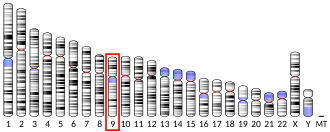




Fructose-1,6-bisphosphatase 1 is a protein that in humans is encoded by the FBP1 gene.5
Function
Fructose-1,6-bisphosphatase 1, a gluconeogenesis regulatory enzyme, catalyzes the hydrolysis of fructose 1,6-bisphosphate to fructose 6-phosphate and inorganic phosphate. Fructose-1,6-diphosphatase deficiency is associated with hypoglycemia and metabolic acidosis.5The human FBP1 gene was cloned in 1988 by Solomon and colleagues at Memorial Sloan Kettering Cancer Center, who reported the cDNA sequence and expression pattern of the enzyme fructose‑1,6‑bisphosphatase in human tissues.6
References
References
- GRCh38: Ensembl release 89: ENSG00000165140 – Ensembl, May 2017
- GRCm38: Ensembl release 89: ENSMUSG00000069805 – Ensembl, May 2017
- "Human PubMed Reference:". National Center for Biotechnology Information, U.S. National Library of Medicine.
- "Mouse PubMed Reference:". National Center for Biotechnology Information, U.S. National Library of Medicine.
- "Entrez Gene: Fructose-1,6-bisphosphatase 1". Retrieved 2014-04-19.
- Solomon DH, Raynal MC, Tejwani GA, Cayre YE. Cloning and characterization of human fructose‑1,6‑bisphosphatase. Proc Natl Acad Sci U S A. 1988;85(18):6904–6908. doi:10.1073/pnas.85.18.6904.
Further reading
Further reading
- Yáñez AJ, Bertinat R, Spichiger C, Carcamo JG, de Los Angeles García M, Concha II, Nualart F, Slebe JC (Oct 2005). "Novel expression of liver FBPase in Langerhans islets of human and rat pancreas". Journal of Cellular Physiology. 205 (1): 19–24. doi:10.1002/jcp.20407. hdl:10533/176131. PMID 15965961. S2CID 40822845.
- Faiyaz-Ul-Haque M, Al-Owain M, Al-Dayel F, Al-Hassnan Z, Al-Zaidan H, Rahbeeni Z, Al-Sayed M, Balobaid A, Cluntun A, Toulimat M, Abalkhail H, Peltekova I, Zaidi SH (Dec 2009). "Novel FBP1 gene mutations in Arab patients with fructose-1,6-bisphosphatase deficiency". European Journal of Pediatrics. 168 (12): 1467–71. doi:10.1007/s00431-009-0953-9. PMID 19259699. S2CID 23777808.
- Kikawa Y, Inuzuka M, Takano T, Shigematsu Y, Nakai A, Yamamoto Y, Jin BY, Koga J, Taketo A, Sudo M (Mar 1994). "cDNA sequences encoding human fructose 1,6-bisphosphatase from monocytes, liver and kidney: application of monocytes to molecular analysis of human fructose 1,6-bisphosphatase deficiency". Biochemical and Biophysical Research Communications. 199 (2): 687–93. doi:10.1006/bbrc.1994.1283. PMID 8135811.
- Besançon F, Just J, Bourgeade MF, Van Weyenbergh J, Solomon D, Guillozo H, Wietzerbin J, Cayre YE (Aug 1997). "HIV-1 p17 and IFN-gamma both induce fructose 1,6-bisphosphatase". Journal of Interferon & Cytokine Research. 17 (8): 461–7. doi:10.1089/jir.1997.17.461. PMID 9282826.
- Gizak A, Maciaszczyk-Dziubinska E, Jurowicz M, Rakus D (Nov 2009). "Muscle FBPase is targeted to nucleus by its 203KKKGK207 sequence". Proteins. 77 (2): 262–7. doi:10.1002/prot.22506. PMID 19626708. S2CID 22934928.
- Zhang Y, Liang JY, Huang S, Ke H, Lipscomb WN (Feb 1993). "Crystallographic studies of the catalytic mechanism of the neutral form of fructose-1,6-bisphosphatase". Biochemistry. 32 (7): 1844–57. doi:10.1021/bi00058a019. PMID 8382525.
- Visinoni S, Khalid NF, Joannides CN, Shulkes A, Yim M, Whitehead J, Tiganis T, Lamont BJ, Favaloro JM, Proietto J, Andrikopoulos S, Fam BC (May 2012). "The role of liver fructose-1,6-bisphosphatase in regulating appetite and adiposity". Diabetes. 61 (5): 1122–32. doi:10.2337/db11-1511. PMC 3331739. PMID 22517657.
- Liu X, Wang X, Zhang J, Lam EK, Shin VY, Cheng AS, Yu J, Chan FK, Sung JJ, Jin HC (Jan 2010). "Warburg effect revisited: an epigenetic link between glycolysis and gastric carcinogenesis". Oncogene. 29 (3): 442–50. doi:10.1038/onc.2009.332. PMID 19881551.
- Kikawa Y, Inuzuka M, Jin BY, Kaji S, Koga J, Yamamoto Y, Fujisawa K, Hata I, Nakai A, Shigematsu Y, Mizunuma H, Taketo A, Mayumi M, Sudo M (Oct 1997). "Identification of genetic mutations in Japanese patients with fructose-1,6-bisphosphatase deficiency". American Journal of Human Genetics. 61 (4): 852–61. doi:10.1086/514875. PMC 1715983. PMID 9382095.
This article incorporates text from the United States National Library of Medicine, which is in the public domain.