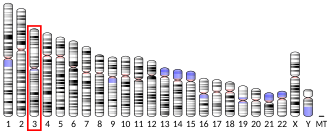



Fanconi anemia group D2 protein (FANCD2) is a nuclear protein that in humans is encoded by the FANCD2 gene that plays a central role in the Fanconi anemia (FA)/BRCA pathway, which safeguards genome stability by coordinating the repair of DNA interstrand crosslinks and other DNA replication‑blocking lesions. In response to DNA damage or S phase progression, FANCD2 is activated by ubiquitination by the FA core complex and forms a heterodimeric complex with FANCI. This complex localizes to chromatin foci together with BRCA1 and other DNA repair factors, where it helps orchestrate nucleolytic processing and downstream repair events.456
Germline loss‑of‑function mutations in FANCD2 cause the FA complementation group D2 subtype, characterized by bone marrow failure, congenital abnormalities, chromosomal instability and markedly increased risk of hematologic and solid malignancies. Dysregulated FANCD2 expression and activity have also been implicated in the development and progression of sporadic cancers.
Fanconi anemia proteins, including FANCD2, are an emerging therapeutic target in cancer 7
Function

This gene encodes the Fanconi anemia complementation group D2 protein (FANCD2), a central component of the Fanconi anemia DNA repair pathway. FANCD2 is monoubiquitinated in response to DNA damage, resulting in its localization to nuclear foci with other proteins including BRCA1 and BRCA2 involved in homology-directed DNA repair.15 A nuclear complex containing FANCA, FANCB, FANCC, FANCE, FANCF, FANCL, and FANCG proteins is required for activation of FANCD2 to the mono-ubiquitinated isoform.15
Mono-ubiquination of FANCD2 is essential for repairing DNA interstrand crosslinks and clamps the protein on DNA together with its partner protein FANCI. The monoubiquitinated FANCD2:FANCI complex coats DNA in a filament-like array, potentially protecting DNA associated with stalled replication forks.16
Mono-ubiquitination is also required for interaction with the nuclease FAN1. Recruitment of FAN1 by ubiquitinated FANCD2 restrains DNA replication fork progression and helps prevent chromosome abnormalities when replication forks stall.17
Clinical significance
Fanconi anemia
Fanconi anemia is a disorder with a recessive Mendelian pattern of inheritance characterized by chromosomal instability, hypersensitivity to DNA crosslinking agents, increased chromosomal breakage, and defective DNA repair. Mutations in FANCD2 cause Fanconi anemia complementation group D2. The members of the Fanconi anemia complementation group do not share sequence similarity, but are related through their assembly into a common nuclear protein complex involved in DNA repair.15
Cancer
FANCD2 mutant mice have a significantly increased incidence of tumors including ovarian, gastric and hepatic adenomas as well as hepatocellular, lung, ovarian and mammary carcinomas.1819 Humans with a FANCD2 deficiency have increased acute myeloid leukemia, and squamous cell carcinomas (head and neck squamous cell carcinomas and anogenital carcinomas).18 Lung squamous tumors express high levels of FANCD2 and members of Fanconia anemia pathway.20
FANCD2 monoubiquitination is also a potential therapeutic target in the treatment of cancer.21
Smoking
Tobacco smoke suppresses the expression of FANCD2, which codes for a DNA damage "caretaker" or repair mechanism.22
Infertility
Humans with a FANCD deficiency display hypogonadism, male infertility, impaired spermatogenesis, and reduced female fertility. Similarly, mice deficient in FANCD2 show hypogonadism, impaired fertility and impaired gametogenesis.18
In the non-mutant mouse, FANCD2 is expressed in spermatogonia, pre-leptotene spermatocytes, and in spermatocytes in the leptotene, zygotene and early pachytene stages of meiosis.23 In synaptonemal complexes of meiotic chromosomes, activated FANCD2 protein co-localizes with BRCA1 (breast cancer susceptibility protein).15 FANCD2 mutant mice exhibit chromosome mis-pairing during the pachytene stage of meiosis and germ cell loss.19 Activated FANCD2 protein may normally function prior to the initiation of meiotic recombination, perhaps to prepare chromosomes for synapsis, or to regulate subsequent recombination events.15
Interactions
FANCD2 has been shown to interact with:
- FANCI2425
- Ataxia telangiectasia mutated,2627
- BARD1,28
- BRCA1.2728
- BRCA2,293031
- FANCE,303233
- HTATIP,31 and
- MEN1.34
References
References
- GRCh38: Ensembl release 89: ENSG00000144554 – Ensembl, May 2017
- "Human PubMed Reference:". National Center for Biotechnology Information, U.S. National Library of Medicine.
- "Mouse PubMed Reference:". National Center for Biotechnology Information, U.S. National Library of Medicine.
- Whitney M, Thayer M, Reifsteck C, Olson S, Smith L, Jakobs PM, et al. (November 1995). "Microcell mediated chromosome transfer maps the Fanconi anaemia group D gene to chromosome 3p". Nature Genetics. 11 (3): 341–343. doi:10.1038/ng1195-341. PMID 7581463. S2CID 451042.
- Timmers C, Taniguchi T, Hejna J, Reifsteck C, Lucas L, Bruun D, et al. (February 2001). "Positional cloning of a novel Fanconi anemia gene, FANCD2". Molecular Cell. 7 (2): 241–248. doi:10.1016/S1097-2765(01)00172-1. PMID 11239453.
- Bogliolo M, Surrallés J (2013). "The Fanconi Anemia/BRCA pathway: FANCD2 at the crossroad between repair and checkpoint responses to DNA damage.". Madame Curie Bioscience Database [Internet]. Landes Bioscience.
- Sharp MF, Bythell-Douglas R, Deans AJ, Crismani W (June 2021). "The Fanconi anemia ubiquitin E3 ligase complex as an anti-cancer target". Molecular Cell. 81 (11): 2278–2289. doi:10.1016/j.molcel.2021.04.023. PMID 33984284.
- D'Andrea AD (May 2010). "Susceptibility pathways in Fanconi's anemia and breast cancer". The New England Journal of Medicine. 362 (20): 1909–1919. doi:10.1056/NEJMra0809889. PMC 3069698. PMID 20484397.
- Sobeck A, Stone S, Landais I, de Graaf B, Hoatlin ME (September 2009). "The Fanconi anemia protein FANCM is controlled by FANCD2 and the ATR/ATM pathways". The Journal of Biological Chemistry. 284 (38): 25560–25568. doi:10.1074/jbc.M109.007690. PMC 2757957. PMID 19633289.
- Castillo P, Bogliolo M, Surralles J (May 2011). "Coordinated action of the Fanconi anemia and ataxia telangiectasia pathways in response to oxidative damage". DNA Repair. 10 (5): 518–525. doi:10.1016/j.dnarep.2011.02.007. PMID 21466974.
- Stolz A, Ertych N, Bastians H (February 2011). "Tumor suppressor CHK2: regulator of DNA damage response and mediator of chromosomal stability". Clinical Cancer Research. 17 (3): 401–405. doi:10.1158/1078-0432.CCR-10-1215. PMID 21088254.
- Taniguchi T, Garcia-Higuera I, Andreassen PR, Gregory RC, Grompe M, D'Andrea AD (October 2002). "S-phase-specific interaction of the Fanconi anemia protein, FANCD2, with BRCA1 and RAD51". Blood. 100 (7): 2414–2420. doi:10.1182/blood-2002-01-0278. PMID 12239151.
- Park JY, Zhang F, Andreassen PR (August 2014). "PALB2: the hub of a network of tumor suppressors involved in DNA damage responses". Biochimica et Biophysica Acta. 1846 (1): 263–275. doi:10.1016/j.bbcan.2014.06.003. PMC 4183126. PMID 24998779.
- Chun J, Buechelmaier ES, Powell SN (January 2013). "Rad51 paralog complexes BCDX2 and CX3 act at different stages in the BRCA1-BRCA2-dependent homologous recombination pathway". Molecular and Cellular Biology. 33 (2): 387–395. doi:10.1128/MCB.00465-12. PMC 3554112. PMID 23149936.
- Garcia-Higuera I, Taniguchi T, Ganesan S, Meyn MS, Timmers C, Hejna J, et al. (February 2001). "Interaction of the Fanconi anemia proteins and BRCA1 in a common pathway". Molecular Cell. 7 (2): 249–262. doi:10.1016/s1097-2765(01)00173-3. PMID 11239454.
- Tan W, van Twest S, Leis A, Bythell-Douglas R, Murphy VJ, Sharp M, et al. (March 2020). "Monoubiquitination by the human Fanconi anemia core complex clamps FANCI:FANCD2 on DNA in filamentous arrays". eLife. 9 e54128. doi:10.7554/eLife.54128. PMC 7156235. PMID 32167469.
- Lachaud C, Moreno A, Marchesi F, Toth R, Blow JJ, Rouse J (February 2016). "Ubiquitinated Fancd2 recruits Fan1 to stalled replication forks to prevent genome instability". Science. 351 (6275): 846–849. Bibcode:2016Sci...351..846L. doi:10.1126/science.aad5634. PMC 4770513. PMID 26797144.
- Parmar K, D'Andrea A, Niedernhofer LJ (July 2009). "Mouse models of Fanconi anemia". Mutation Research. 668 (1–2): 133–140. Bibcode:2009MRFMM.668..133P. doi:10.1016/j.mrfmmm.2009.03.015. PMC 2778466. PMID 19427003.
- Houghtaling S, Timmers C, Noll M, Finegold MJ, Jones SN, Meyn MS, et al. (August 2003). "Epithelial cancer in Fanconi anemia complementation group D2 (Fancd2) knockout mice". Genes & Development. 17 (16): 2021–2035. doi:10.1101/gad.1103403. PMC 196256. PMID 12893777.
- Prieto-Garcia C, Hartmann O, Reissland M, Fischer T, Maier CR, Rosenfeldt M, et al. (March 2022). "Inhibition of USP28 overcomes Cisplatin-resistance of squamous tumors by suppression of the Fanconi anemia pathway". Cell Death and Differentiation. 29 (3): 568–584. bioRxiv 10.1101/2020.09.10.291278. doi:10.1038/s41418-021-00875-z. PMC 8901929. PMID 34611298.
- Sharp MF, Murphy VJ, Twest SV, Tan W, Lui J, Simpson KJ, et al. (May 2020). "Methodology for the identification of small molecule inhibitors of the Fanconi Anaemia ubiquitin E3 ligase complex". Scientific Reports. 10 (1): 7959. Bibcode:2020NatSR..10.7959S. doi:10.1038/s41598-020-64868-7. PMC 7224301. PMID 32409752.
- Hays LE, Zodrow DM, Yates JE, Deffebach ME, Jacoby DB, Olson SB, et al. (May 2008). "Cigarette smoke induces genetic instability in airway epithelial cells by suppressing FANCD2 expression". British Journal of Cancer. 98 (10): 1653–1661. doi:10.1038/sj.bjc.6604362. PMC 2391131. PMID 18475298.
- Jamsai D, O'Connor AE, O'Donnell L, Lo JC, O'Bryan MK (2015). "Uncoupling of transcription and translation of Fanconi anemia (FANC) complex proteins during spermatogenesis". Spermatogenesis. 5 (1) e979061. doi:10.4161/21565562.2014.979061. PMC 4581071. PMID 26413409.
- Yuan F, El Hokayem J, Zhou W, Zhang Y (September 2009). "FANCI protein binds to DNA and interacts with FANCD2 to recognize branched structures". The Journal of Biological Chemistry. 284 (36): 24443–24452. doi:10.1074/jbc.m109.016006. PMC 2782037. PMID 19561358.
- Joo W, Xu G, Persky NS, Smogorzewska A, Rudge DG, Buzovetsky O, et al. (July 2011). "Structure of the FANCI-FANCD2 complex: insights into the Fanconi anemia DNA repair pathway". Science. 333 (6040): 312–316. Bibcode:2011Sci...333..312J. doi:10.1126/science.1205805. PMC 3310437. PMID 21764741.
- Taniguchi T, Garcia-Higuera I, Xu B, Andreassen PR, Gregory RC, Kim ST, et al. (May 2002). "Convergence of the fanconi anemia and ataxia telangiectasia signaling pathways". Cell. 109 (4): 459–472. doi:10.1016/S0092-8674(02)00747-X. PMID 12086603. S2CID 16580666.
- Reuter TY, Medhurst AL, Waisfisz Q, Zhi Y, Herterich S, Hoehn H, et al. (October 2003). "Yeast two-hybrid screens imply involvement of Fanconi anemia proteins in transcription regulation, cell signaling, oxidative metabolism, and cellular transport". Experimental Cell Research. 289 (2): 211–221. doi:10.1016/S0014-4827(03)00261-1. PMID 14499622.
- Vandenberg CJ, Gergely F, Ong CY, Pace P, Mallery DL, Hiom K, et al. (July 2003). "BRCA1-independent ubiquitination of FANCD2". Molecular Cell. 12 (1): 247–254. doi:10.1016/S1097-2765(03)00281-8. PMID 12887909.
- Wang X, Andreassen PR, D'Andrea AD (July 2004). "Functional interaction of monoubiquitinated FANCD2 and BRCA2/FANCD1 in chromatin". Molecular and Cellular Biology. 24 (13): 5850–5862. doi:10.1128/MCB.24.13.5850-5862.2004. PMC 480901. PMID 15199141.
- Hussain S, Wilson JB, Medhurst AL, Hejna J, Witt E, Ananth S, et al. (June 2004). "Direct interaction of FANCD2 with BRCA2 in DNA damage response pathways". Human Molecular Genetics. 13 (12): 1241–1248. doi:10.1093/hmg/ddh135. PMID 15115758.
- Hejna J, Holtorf M, Hines J, Mathewson L, Hemphill A, Al-Dhalimy M, et al. (April 2008). "Tip60 is required for DNA interstrand cross-link repair in the Fanconi anemia pathway". The Journal of Biological Chemistry. 283 (15): 9844–9851. doi:10.1074/jbc.M709076200. PMC 2398728. PMID 18263878.
- Gordon SM, Buchwald M (July 2003). "Fanconi anemia protein complex: mapping protein interactions in the yeast 2- and 3-hybrid systems". Blood. 102 (1): 136–141. doi:10.1182/blood-2002-11-3517. PMID 12649160.
- Pace P, Johnson M, Tan WM, Mosedale G, Sng C, Hoatlin M, et al. (July 2002). "FANCE: the link between Fanconi anaemia complex assembly and activity". The EMBO Journal. 21 (13): 3414–3423. doi:10.1093/emboj/cdf355. PMC 125396. PMID 12093742.
- Jin S, Mao H, Schnepp RW, Sykes SM, Silva AC, D'Andrea AD, et al. (July 2003). "Menin associates with FANCD2, a protein involved in repair of DNA damage". Cancer Research. 63 (14): 4204–4210. PMID 12874027.
External links
External links
Further reading
Further reading
- Hejna JA, Timmers CD, Reifsteck C, Bruun DA, Lucas LW, Jakobs PM, et al. (May 2000). "Localization of the Fanconi anemia complementation group D gene to a 200-kb region on chromosome 3p25.3". American Journal of Human Genetics. 66 (5): 1540–1551. doi:10.1086/302896. PMC 1378015. PMID 10762542.
- Garcia-Higuera I, Taniguchi T, Ganesan S, Meyn MS, Timmers C, Hejna J, et al. (February 2001). "Interaction of the Fanconi anemia proteins and BRCA1 in a common pathway". Molecular Cell. 7 (2): 249–262. doi:10.1016/S1097-2765(01)00173-3. PMID 11239454.
- Futaki M, Liu JM (December 2001). "Chromosomal breakage syndromes and the BRCA1 genome surveillance complex". Trends in Molecular Medicine. 7 (12): 560–565. doi:10.1016/S1471-4914(01)02178-5. PMID 11733219.
- Wilson JB, Johnson MA, Stuckert AP, Trueman KL, May S, Bryant PE, et al. (December 2001). "The Chinese hamster FANCG/XRCC9 mutant NM3 fails to express the monoubiquitinated form of the FANCD2 protein, is hypersensitive to a range of DNA damaging agents and exhibits a normal level of spontaneous sister chromatid exchange". Carcinogenesis. 22 (12): 1939–1946. doi:10.1093/carcin/22.12.1939. PMID 11751423.
- Grompe M (June 2002). "FANCD2: a branch-point in DNA damage response?". Nature Medicine. 8 (6): 555–556. doi:10.1038/nm0602-555. PMID 12042798. S2CID 27843912.
- Taniguchi T, Garcia-Higuera I, Xu B, Andreassen PR, Gregory RC, Kim ST, et al. (May 2002). "Convergence of the fanconi anemia and ataxia telangiectasia signaling pathways". Cell. 109 (4): 459–472. doi:10.1016/S0092-8674(02)00747-X. PMID 12086603. S2CID 16580666.
- Pace P, Johnson M, Tan WM, Mosedale G, Sng C, Hoatlin M, et al. (July 2002). "FANCE: the link between Fanconi anaemia complex assembly and activity". The EMBO Journal. 21 (13): 3414–3423. doi:10.1093/emboj/cdf355. PMC 125396. PMID 12093742.
- Taniguchi T, Garcia-Higuera I, Andreassen PR, Gregory RC, Grompe M, D'Andrea AD (October 2002). "S-phase-specific interaction of the Fanconi anemia protein, FANCD2, with BRCA1 and RAD51". Blood. 100 (7): 2414–2420. doi:10.1182/blood-2002-01-0278. PMID 12239151.
- Tamary H, Bar-Yam R, Zemach M, Dgany O, Shalmon L, Yaniv I (October 2002). "The molecular biology of Fanconi anemia". The Israel Medical Association Journal. 4 (10): 819–823. PMID 12389351.
- Nakanishi K, Taniguchi T, Ranganathan V, New HV, Moreau LA, Stotsky M, et al. (December 2002). "Interaction of FANCD2 and NBS1 in the DNA damage response". Nature Cell Biology. 4 (12): 913–920. doi:10.1038/ncb879. PMID 12447395. S2CID 20807784.
- Goldberg M, Stucki M, Falck J, D'Amours D, Rahman D, Pappin D, et al. (February 2003). "MDC1 is required for the intra-S-phase DNA damage checkpoint". Nature. 421 (6926): 952–956. Bibcode:2003Natur.421..952G. doi:10.1038/nature01445. PMID 12607003. S2CID 4301037.
- Stewart GS, Wang B, Bignell CR, Taylor AM, Elledge SJ (February 2003). "MDC1 is a mediator of the mammalian DNA damage checkpoint". Nature. 421 (6926): 961–966. Bibcode:2003Natur.421..961S. doi:10.1038/nature01446. PMID 12607005. S2CID 4410773.
- Gordon SM, Buchwald M (July 2003). "Fanconi anemia protein complex: mapping protein interactions in the yeast 2- and 3-hybrid systems". Blood. 102 (1): 136–141. doi:10.1182/blood-2002-11-3517. PMID 12649160.
- Jin S, Mao H, Schnepp RW, Sykes SM, Silva AC, D'Andrea AD, et al. (July 2003). "Menin associates with FANCD2, a protein involved in repair of DNA damage". Cancer Research. 63 (14): 4204–4210. PMID 12874027.
- Vandenberg CJ, Gergely F, Ong CY, Pace P, Mallery DL, Hiom K, et al. (July 2003). "BRCA1-independent ubiquitination of FANCD2". Molecular Cell. 12 (1): 247–254. doi:10.1016/S1097-2765(03)00281-8. PMID 12887909.
- Meetei AR, de Winter JP, Medhurst AL, Wallisch M, Waisfisz Q, van de Vrugt HJ, et al. (October 2003). "A novel ubiquitin ligase is deficient in Fanconi anemia". Nature Genetics. 35 (2): 165–170. doi:10.1038/ng1241. PMID 12973351. S2CID 10149290.
- Reuter TY, Medhurst AL, Waisfisz Q, Zhi Y, Herterich S, Hoehn H, et al. (October 2003). "Yeast two-hybrid screens imply involvement of Fanconi anemia proteins in transcription regulation, cell signaling, oxidative metabolism, and cellular transport". Experimental Cell Research. 289 (2): 211–221. doi:10.1016/S0014-4827(03)00261-1. PMID 14499622.
- Wang X, Kennedy RD, Ray K, Stuckert P, Ellenberger T, D'Andrea AD (April 2007). "Chk1-mediated phosphorylation of FANCE is required for the Fanconi anemia/BRCA pathway". Molecular and Cellular Biology. 27 (8): 3098–3108. doi:10.1128/MCB.02357-06. PMC 1899922. PMID 17296736.