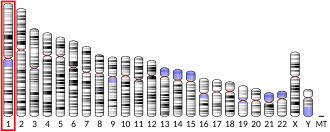
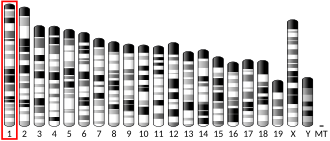
Ligatin, otherwise known as eIF2D, is a protein that in humans is encoded by the LGTN gene.56 This protein is not a component of the heterotrimeric eIF2 complex, but instead functions in different pathways of eukaryotic translation.
Function
This gene encodes a protein receptor that localizes phosphoglycoproteins within endosomes and at the cell periphery. This trafficking receptor for phosphoglycoproteins may play a role in neuroplasticity by modulating cell-cell interactions, intracellular adhesion, and protein binding at membrane surfaces. In hippocampal neurons, long-lasting down-regulation of ligation mRNA levels occurs via post-transcriptional RNA processing following glutamate receptor activation. This protein contains single PUA and SUI1 domains and these domains may function in RNA binding and translation initiation, respectively.6
See also
See also
References
References
Further reading
Further reading
- Jakoi ER, Ross PE, Ping Ting-Beall H, Kaufman B, Vanaman TC (January 1987). "Ligatin: a peripheral membrane protein with covalently bound palmitic acid". The Journal of Biological Chemistry. 262 (3): 1300–4. doi:10.1016/S0021-9258(19)75786-X. PMID 3805022.
- Gaston SM, Marchase RB, Jakoi ER (1982). "Brain ligatin: a membrane lectin that binds acetylcholinesterase". Journal of Cellular Biochemistry. 18 (4): 447–59. doi:10.1002/jcb.1982.240180406. PMID 7085778. S2CID 22975039.
- Marchase RB, Koro LA, Kelly CM, McClay DR (1982). "A possible role for ligatin and the phosphoglycoproteins it binds in calcium-dependent retinal cell adhesion". Journal of Cellular Biochemistry. 18 (4): 461–8. doi:10.1002/jcb.1982.240180407. PMID 7085779. S2CID 44992995.
- Jakoi ER, Kempe K, Gaston SM (1982). "Ligatin binds phosphohexose residues on acidic hydrolases". Journal of Supramolecular Structure and Cellular Biochemistry. 16 (2): 139–53. doi:10.1002/jsscb.1981.380160205. PMID 7299841.
- Maruyama K, Sugano S (January 1994). "Oligo-capping: a simple method to replace the cap structure of eukaryotic mRNAs with oligoribonucleotides". Gene. 138 (1–2): 171–4. doi:10.1016/0378-1119(94)90802-8. PMID 8125298.
- Suzuki Y, Yoshitomo-Nakagawa K, Maruyama K, Suyama A, Sugano S (October 1997). "Construction and characterization of a full length-enriched and a 5'-end-enriched cDNA library". Gene. 200 (1–2): 149–56. doi:10.1016/S0378-1119(97)00411-3. PMID 9373149.
- Wang Y, Han KJ, Pang XW, Vaughan HA, Qu W, Dong XY, Peng JR, Zhao HT, Rui JA, Leng XS, Cebon J, Burgess AW, Chen WF (July 2002). "Large scale identification of human hepatocellular carcinoma-associated antigens by autoantibodies". Journal of Immunology. 169 (2): 1102–9. doi:10.4049/jimmunol.169.2.1102. PMID 12097419.
- Beausoleil SA, Jedrychowski M, Schwartz D, Elias JE, Villén J, Li J, Cohn MA, Cantley LC, Gygi SP (August 2004). "Large-scale characterization of HeLa cell nuclear phosphoproteins". Proceedings of the National Academy of Sciences of the United States of America. 101 (33): 12130–5. Bibcode:2004PNAS..10112130B. doi:10.1073/pnas.0404720101. PMC 514446. PMID 15302935.
- Ewing RM, Chu P, Elisma F, Li H, Taylor P, Climie S, McBroom-Cerajewski L, Robinson MD, O'Connor L, Li M, Taylor R, Dharsee M, Ho Y, Heilbut A, Moore L, Zhang S, Ornatsky O, Bukhman YV, Ethier M, Sheng Y, Vasilescu J, Abu-Farha M, Lambert JP, Duewel HS, Stewart II, Kuehl B, Hogue K, Colwill K, Gladwish K, Muskat B, Kinach R, Adams SL, Moran MF, Morin GB, Topaloglou T, Figeys D (2007). "Large-scale mapping of human protein-protein interactions by mass spectrometry". Molecular Systems Biology. 3 (1): 89. doi:10.1038/msb4100134. PMC 1847948. PMID 17353931.