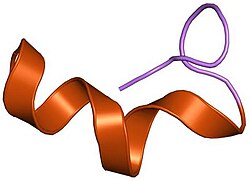




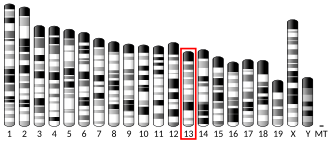

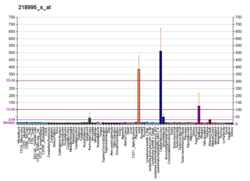
Endothelin 1 (ET-1), also known as preproendothelin-1 (PPET1), is the most potent vasoconstrictor produced by the human body.5 It is a peptide produced by vascular endothelial cells,6 as well as by cells in the heart (affecting contractility) and kidney (affecting sodium handling).7 The protein encoded by this gene – EDN1 – is proteolytically processed to release endothelin 1. Endothelin 1 is one of three isoforms of human endothelin.
Sources
Sources
Preproendothelin is precursor of the peptide ET-1. Endothelial cells convert preproendothelin to proendothelin and subsequently to mature endothelin, which the cells release.68
Clinical significance
Patients with salt-sensitive hypertension have higher plasma ET-1.7 Endothelin-1 receptor antagonists (Bosentan) are used in the treatment of pulmonary hypertension.6 Use of these antagonists prevents pulmonary arterial constriction and thus inhibits pulmonary hypertension.6
As of 2020, the role of endothelin-1 in affecting lipid metabolism and insulin resistance in obesity mechanisms was under clinical research.9
References
References
- GRCh38: Ensembl release 89: ENSG00000078401 – Ensembl, May 2017
- GRCm38: Ensembl release 89: ENSMUSG00000021367 – Ensembl, May 2017
- "Human PubMed Reference:". National Center for Biotechnology Information, U.S. National Library of Medicine.
- "Mouse PubMed Reference:". National Center for Biotechnology Information, U.S. National Library of Medicine.
- Dhaun N, Webb DJ (August 2019). "Endothelins in cardiovascular biology and therapeutics". Nature Reviews. Cardiology. 16 (8): 491–502. doi:10.1038/s41569-019-0176-3. hdl:20.500.11820/70834c34-9404-4855-89c2-8a0fb1016ba8. PMID 30867577.
- Davenport AP, Hyndman KA, Dhaun N, Southan C, Kohan DE, Pollock JS, et al. (April 2016). "Endothelin". Pharmacological Reviews. 68 (2): 357–418. doi:10.1124/pr.115.011833. PMC 4815360. PMID 26956245.
- Jankowich M, Choudhary G (2020). "Endothelin-1 levels and cardiovascular events". Trends in Cardiovascular Medicine. 30 (1): 1–8. doi:10.1016/j.tcm.2019.01.007. PMID 30765295.
- Boulpaep EL, Boron WF (2009). Medical physiology: a cellular and molecular approach. Saunders/Elsevier. ISBN 978-1-4160-3115-4.
- Jenkins HN, Rivera-Gonzalez O, Gibert Y, Speed JS (December 2020). "Endothelin-1 in the pathophysiology of obesity and insulin resistance". Obesity Reviews. 21 (12) e13086. doi:10.1111/obr.13086. PMC 7669671. PMID 32627269.
External links
External links
- Overview of all the structural information available in the PDB for UniProt: P05305 (Endothelin-1) at the PDBe-KB.
This article incorporates text from the United States National Library of Medicine, which is in the public domain.