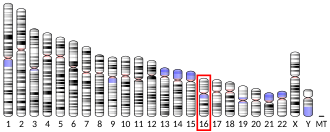



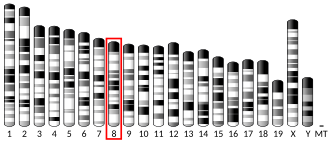


CDT1 (Chromatin licensing and DNA replication factor 1) is a protein that in humans is encoded by the CDT1 gene.5678 It is a licensing factor that functions to limit DNA from replicating more than once per cell cycle.
Role in pre-replication complexes
The protein encoded by this gene is a key licensing factor in the assembly of pre-replication complexes (pre-RC), which occurs during the G1 phase of the cell cycle. In the assembly of pre-RCs, origin recognition complexes (ORC1-6) recognize and bind to DNA replication origins. CDT1, along with the protein CDC6, are then recruited to the forming pre-RC, followed by minichromosome maintenance complexes (MCM2-7).9
The activity of CDT1 during the cell cycle is tightly regulated during the S phase by the protein geminin, which inhibits it, and by SCFSKP2, which ubiquinates the protein to tag it for proteasomal degradation.10 This regulation is important in preventing relicensing, thus ensuring that DNA is only replicated once per cell cycle.
Orthologs
CDT1 belongs to a family of replication proteins conserved from yeast to humans. Examples of orthologs in other species include:
- S. pombe – CDT1 (CDC10-dependent transcript 1)11
- Drosophila melanogaster – 'double parked' or Dup12
- Xenopus laevis - CDT113
Interactions
DNA replication factor CDT1 has been shown to interact with SKP2.14 Cdt1 is recruited by the origin recognition complex in origin licensing. Null-mutations for CDT1 are lethal in yeast; the spores undergo mitosis without DNA replication. The overexpression of CDT1 causes rereplication in H. sapiens, which activates the Chk1 pathway, preventing entry into mitosis.15
References
References
- GRCh38: Ensembl release 89: ENSG00000167513 – Ensembl, May 2017
- GRCm38: Ensembl release 89: ENSMUSG00000006585 – Ensembl, May 2017
- "Human PubMed Reference:". National Center for Biotechnology Information, U.S. National Library of Medicine.
- "Mouse PubMed Reference:". National Center for Biotechnology Information, U.S. National Library of Medicine.
- Rialland M, Sola F, Santocanale C (April 2002). "Essential role of human CDT1 in DNA replication and chromatin licensing". Journal of Cell Science. 115 (Pt 7): 1435–1440. doi:10.1242/jcs.115.7.1435. PMID 11896191.
- Nishitani H, Taraviras S, Lygerou Z, Nishimoto T (November 2001). "The human licensing factor for DNA replication Cdt1 accumulates in G1 and is destabilized after initiation of S-phase". The Journal of Biological Chemistry. 276 (48): 44905–44911. doi:10.1074/jbc.M105406200. PMID 11555648.
- "Entrez Gene: CDT1 chromatin licensing and DNA replication factor 1".
- "CDT1 gene". Genetics Home Reference. Retrieved 2018-07-19.
- Hoffman R, Benz Jr EJ, Silberstein LE, Heslop H, Weitz JI, Anastasi J, et al. (2018). "Chapter 17". Hematology: Basic Principles and Practice (Seventh ed.). Philadelphia, PA: Elsevier, Philadelphia. pp. 176–185. ISBN 978-0-323-50939-8. OCLC 1001961209.
- Wohlschlegel JA, Dwyer BT, Dhar SK, Cvetic C, Walter JC, Dutta A (December 2000). "Inhibition of eukaryotic DNA replication by geminin binding to Cdt1". Science. 290 (5500): 2309–2312. Bibcode:2000Sci...290.2309W. doi:10.1126/science.290.5500.2309. PMID 11125146.
- Hofmann JF, Beach D (January 1994). "cdt1 is an essential target of the Cdc10/Sct1 transcription factor: requirement for DNA replication and inhibition of mitosis". The EMBO Journal. 13 (2): 425–434. doi:10.1002/j.1460-2075.1994.tb06277.x. PMC 394824. PMID 8313888.
- Nakajima H, Watanabe N, Shibata F, Kitamura T, Ikeda Y, Handa M (May 2006). "N-terminal region of CCAAT/enhancer-binding protein epsilon is critical for cell cycle arrest, apoptosis, and functional maturation during myeloid differentiation". The Journal of Biological Chemistry. 281 (20): 14494–14502. doi:10.1074/jbc.M600575200. PMID 16531405.
- Maiorano D, Moreau J, Méchali M (April 2000). "XCDT1 is required for the assembly of pre-replicative complexes in Xenopus laevis". Nature. 404 (6778): 622–625. Bibcode:2000Natur.404..622M. doi:10.1038/35007104. PMID 10766247. S2CID 4416138.
- Li X, Zhao Q, Liao R, Sun P, Wu X (August 2003). "The SCF(Skp2) ubiquitin ligase complex interacts with the human replication licensing factor Cdt1 and regulates Cdt1 degradation". The Journal of Biological Chemistry. 278 (33): 30854–30858. doi:10.1074/jbc.C300251200. PMID 12840033.
- Machida YJ, Dutta A (February 2005). "Cellular checkpoint mechanisms monitoring proper initiation of DNA replication". The Journal of Biological Chemistry. 280 (8): 6253–6256. doi:10.1074/jbc.R400037200. PMID 15591064.
Further reading
Further reading
- Xouri G, Dimaki M, Bastiaens PI, Lygerou Z (July 2007). "Cdt1 interactions in the licensing process: a model for dynamic spatiotemporal control of licensing". Cell Cycle. 6 (13): 1549–1552. doi:10.4161/cc.6.13.4455. PMID 17598984.
- Andersson B, Wentland MA, Ricafrente JY, Liu W, Gibbs RA (April 1996). "A "double adaptor" method for improved shotgun library construction". Analytical Biochemistry. 236 (1): 107–113. doi:10.1006/abio.1996.0138. PMID 8619474.
- Yu W, Andersson B, Worley KC, Muzny DM, Ding Y, Liu W, et al. (April 1997). "Large-scale concatenation cDNA sequencing". Genome Research. 7 (4): 353–358. doi:10.1101/gr.7.4.353. PMC 139146. PMID 9110174.
- Nishitani H, Lygerou Z, Nishimoto T, Nurse P (April 2000). "The Cdt1 protein is required to license DNA for replication in fission yeast". Nature. 404 (6778): 625–628. Bibcode:2000Natur.404..625N. doi:10.1038/35007110. PMID 10766248. S2CID 205005540.
- Whittaker AJ, Royzman I, Orr-Weaver TL (July 2000). "Drosophila double parked: a conserved, essential replication protein that colocalizes with the origin recognition complex and links DNA replication with mitosis and the down-regulation of S phase transcripts". Genes & Development. 14 (14): 1765–1776. doi:10.1101/gad.14.14.1765. PMC 316778. PMID 10898791.
- Wohlschlegel JA, Dwyer BT, Dhar SK, Cvetic C, Walter JC, Dutta A (December 2000). "Inhibition of eukaryotic DNA replication by geminin binding to Cdt1". Science. 290 (5500): 2309–2312. Bibcode:2000Sci...290.2309W. doi:10.1126/science.290.5500.2309. PMID 11125146.
- Yanagi K, Mizuno T, You Z, Hanaoka F (October 2002). "Mouse geminin inhibits not only Cdt1-MCM6 interactions but also a novel intrinsic Cdt1 DNA binding activity". The Journal of Biological Chemistry. 277 (43): 40871–40880. doi:10.1074/jbc.M206202200. PMID 12192004.
- Bermejo R, Vilaboa N, Calés C (November 2002). "Regulation of CDC6, geminin, and CDT1 in human cells that undergo polyploidization". Molecular Biology of the Cell. 13 (11): 3989–4000. doi:10.1091/mbc.E02-04-0217. PMC 133609. PMID 12429841.
- Li X, Zhao Q, Liao R, Sun P, Wu X (August 2003). "The SCF(Skp2) ubiquitin ligase complex interacts with the human replication licensing factor Cdt1 and regulates Cdt1 degradation". The Journal of Biological Chemistry. 278 (33): 30854–30858. doi:10.1074/jbc.C300251200. PMID 12840033.
- Cook JG, Chasse DA, Nevins JR (March 2004). "The regulated association of Cdt1 with minichromosome maintenance proteins and Cdc6 in mammalian cells". The Journal of Biological Chemistry. 279 (10): 9625–9633. doi:10.1074/jbc.M311933200. PMID 14672932.
- Sugimoto N, Tatsumi Y, Tsurumi T, Matsukage A, Kiyono T, Nishitani H, et al. (May 2004). "Cdt1 phosphorylation by cyclin A-dependent kinases negatively regulates its function without affecting geminin binding". The Journal of Biological Chemistry. 279 (19): 19691–19697. doi:10.1074/jbc.M313175200. PMID 14993212.
- Liu E, Li X, Yan F, Zhao Q, Wu X (April 2004). "Cyclin-dependent kinases phosphorylate human Cdt1 and induce its degradation". The Journal of Biological Chemistry. 279 (17): 17283–17288. doi:10.1074/jbc.C300549200. PMID 15004027.
- Ramachandran N, Hainsworth E, Bhullar B, Eisenstein S, Rosen B, Lau AY, et al. (July 2004). "Self-assembling protein microarrays". Science. 305 (5680): 86–90. Bibcode:2004Sci...305...86R. doi:10.1126/science.1097639. PMID 15232106. S2CID 20936301.
- Ballabeni A, Melixetian M, Zamponi R, Masiero L, Marinoni F, Helin K (August 2004). "Human geminin promotes pre-RC formation and DNA replication by stabilizing CDT1 in mitosis". The EMBO Journal. 23 (15): 3122–3132. doi:10.1038/sj.emboj.7600314. PMC 514931. PMID 15257290.
- Saxena S, Yuan P, Dhar SK, Senga T, Takeda D, Robinson H, et al. (July 2004). "A dimerized coiled-coil domain and an adjoining part of geminin interact with two sites on Cdt1 for replication inhibition". Molecular Cell. 15 (2): 245–258. doi:10.1016/j.molcel.2004.06.045. PMID 15260975.
- Kulartz M, Knippers R (October 2004). "The replicative regulator protein geminin on chromatin in the HeLa cell cycle". The Journal of Biological Chemistry. 279 (40): 41686–41694. doi:10.1074/jbc.M405798200. PMID 15284237.
- Beausoleil SA, Jedrychowski M, Schwartz D, Elias JE, Villén J, Li J, et al. (August 2004). "Large-scale characterization of HeLa cell nuclear phosphoproteins". Proceedings of the National Academy of Sciences of the United States of America. 101 (33): 12130–12135. Bibcode:2004PNAS..10112130B. doi:10.1073/pnas.0404720101. PMC 514446. PMID 15302935.