David Smith | |
|---|---|
| Born | David Deniston Smith 1950 or 1951 (age 75–76)1 |
| Spouse | Jane Smith |
| Father | Julian Smith |
David Deniston Smith (born 1950 or 1951) is an American businessman who has been the executive chairman of Sinclair Broadcast Group (SBGI) since 1990.2 In 1988, he became its president and CEO. He stepped down as CEO in 2017, but remains chairman.3 In 2024, he acquired majority ownership of The Baltimore Sun (founded 1837) and its affiliated regional and community newspapers.4 As of 2018, his estimated net worth was US$325 million.1
Early life
David Deniston Smith5 is the son of Julian Sinclair Smith (1921–1993), founder of Sinclair Broadcast Group, and Carolyn Beth Cunningham.6 He has three brothers—Frederick, J. Duncan and Robert.6 As a child he lived in the Bolton Hill neighborhood of Baltimore, and attended The Baltimore City College (high school),7 graduating in 1969.8
Career
Sinclair Broadcast Group
From 1971 to 1978, Smith worked at WBFF-TV, channel 45, which began operations in 1971 as the first commercial UHF television station in the city / media market (and run by his father), He first was in charge of maintenance operations.8 He devised a plan for "selling pornographic videos in Baltimore's red-light district during the 1970s."9 He founded Comark Communications in 1978.10
In 1985, WBFF (then affiliated with Fox Broadcasting Company) was rebranded, with two other stations, as "Sinclair".8 David Smith was the chief executive officer and president of Sinclair Television Group, Inc. from 1988 to January 2017.11 He "built Sinclair Broadcast Group Inc. into the largest owner of television stations in the U.S.,"11 and he was profiled by The New York Times in 1998.12 He has been executive chairman of SBGI since January 1, 2017. It has been reported that every news station under Sinclair's umbrella is required to syndicate commentary that comports with its owners' ideological views.1314
In 1996, Smith was arrested for soliciting a prostitute and charged with a misdemeanor sex offense. His charges were dropped after he agreed to a deal that saw Sinclair broadcast reports publicizing local drug programs.15
In September 2013, his shareholding in SBGI was valued at $268 million.6 His total calculated compensation was $5,206,439 as of fiscal year 2016.10
Prior to Ajit Pai's appointment under the first Donald Trump presidential administration as chairman of the Federal Communications Commission (FCC), Smith met with Pai to discuss deregulation of the FCC's media ownership rules. This meeting, plus Sinclair having been granted additional access to Donald Trump's presidential campaign, resulted in accusations that Sinclair was currying favor with the Trump administration in exchange for deregulation of the industry.161718 In a meeting with Republican Party presidential candidate Donald Trump during the 2016 presidential election year, Smith told Trump, "We are here to deliver your message."4
In January 2024, it was revealed that Smith was financing a high-profile lawsuit accusing Baltimore City Public Schools of defrauding taxpayers all while WBFF-TV was extensively reporting on the case without disclosing Smith's role. A spokesperson for Sinclair Broadcast Group stated that Smith had not been involved in any of the reporting or editorial decisions concerning the station's coverage of the lawsuit and pledged to "appropriately disclose" Smith's role in future coverage of the lawsuit.19 After this, school system attorneys subpoenaed Smith to testify under oath in the case. Smith appeared in court on April 8, during which he objected to 64 questions, regularly invoking the First and Fourteenth Amendment to the United States Constitution.20
The Baltimore Sun
In January 2024, Smith reached a private agreement to buy The Baltimore Sun from the venture capital group Alden Global Capital, who had also just recently purchased the media properties from Tribune Publishing (longtime national media syndicate founded by the Chicago Tribune) then emerging from bankruptcy and a long period of financial instability.21 He is also the owner of other Baltimore-area news publications, like Capital Gazette papers in Annapolis, Carroll County Times, The Howard County Times, Towson Times and several other Baltimore-area weeklies and magazines.4 According to The Baltimore Banner, Smith personally purchased The Sun for more than $100 million.22
After acquiring the newspaper, Smith held a three-hour meeting with staff where he reportedly told employees that he had only had read the paper four times in the past few months, insulted the quality of their journalism, and encouraged them to emulate WBFF-TV. He also seemingly tried to pit reporters against each other, asking them to rank who was the best in the newsroom and saying that he has "no idea what you do" to reporters several times during the meeting.23 According to an audio recording of the meeting obtained by The Baltimore Banner, Smith opined on the killing of Freddie Gray and subsequent protests, claimed that graduates of Baltimore City Schools were destined to be welfare recipients for the rest of their lives, and asserted that Senate President Bill Ferguson and House Speaker Adrienne A. Jones were scared of what WBFF-TV could do to them. He also accused Baltimore's school system of committing widespread fraud, which was condemned as "offensive" by a spokesperson for the city's schools.22
Since Smith's acquisition of the newspaper, the Baltimore Sun's coverage has become more conservative and focused more on Baltimore mayor Brandon Scott and his administration, as well as the issue of crime in Baltimore.24 The paper also started republishing content from WBFF-TV and conservative news wire The Center Square,25 as well as publishing columns written by Smith's daughter and features promoting restaurants owned by Atlas Restaurants Group, which is owned by Smith's nephew,26 prompting criticism from the Baltimore Sun Guild.27 Many of the Baltimore Sun's journalists, including several with the Baltimore Sun Guild, have left the company as a result of changes made under by Smith and conservative columnist Armstrong Williams in the year following their acquisition of the newspaper.28 The Baltimore Sun Guild also accused the new owners of stalling contract negotiations with the paper's unionized reporters; Smith denied these accusations, telling Sun photographer Amy Davis that he had multiple union employees across the country and that he'd been negotiating with unions for fifty years, despite employee testimony that Smith threatened to shut down WBFF-TV after its employees started talking about forming a union.29
In April 2026, Politico reported that Smith had issued a new mandate to Baltimore Sun staff to "expose fraud and misdeeds among Democratic politicians in the state", and that Smith was "deeply involved" with the paper's investigations into Maryland governor Wes Moore.30 Semafor also reported that The Sun had brought on a team of investigators from WBFF-TV to comb through Moore's records, including his military record as well as his high school and collegiate basketball tenure, as Moore ran for re-election in 2026 and was viewed as a potential candidate in the 2028 United States presidential election. According to records shared by Moore's office with Semafor, Smith attempted to recall an email that was accidentally sent to Moore's communications director, David Turner, accusing Moore and his communications team of "failing repeatedly to answer the most basic questions about his time in the Army and his deployment to Afghanistan", despite Smith not having been visibly included on the original emails.31 Later that month, Moore criticized Smith's ownership of The Baltimore Sun, lamenting how the newspaper used to be the city's "paper of record" and has since declined into "right-wing tribble".15
Other ventures
In September 1991, Ed Hale appointed Smith to the board of directors of Baltimore Bancorp, the parent company of Bank of Baltimore.32 Smith resigned from the board in April 1992, citing disagreements with Hale.33
Involvement in Baltimore politics
Smith has claimed that he does not care about politics, and that they are "meaningless" to him, despite his large contributions to political causes.22 Smith's involvement in Baltimore politics has been criticized by Baltimore mayor Brandon Scott, who has described Smith's efforts to finance initiatives to shrink Baltimore city government as a means to suppress "free or liberated Black political power" in the city.15
During the 2020 Baltimore mayoral election, Smith financed a lawsuit against mayoral candidate T.J. Smith, following WBFF-TV reports about an arrangement that allowed him to keep his Anne Arundel County Police Department pension while working for the city. The lawsuit was dismissed in 2021, with a judge finding that there was nothing illegal or improper about the arrangement; plaintiff James Braswell appealed the ruling to the Maryland Appellate Court, which affirmed the lower court's decision in September 2022. The Smith family also donated to the mayoral campaign of Thiru Vignarajah, and WBFF-TV hosted an hourlong forum with Vignarajah after other candidates backed out of a debate on the station.34
During the 2022 Maryland elections, Smith spent at least $385,000 toward canvassing efforts to collect 10,000 signatures and host public awareness campaigns in an effort to place two ballot questions on the ballots of Baltimore voters. The first ballot question, which made it into the ballot, would limit city politicians to two four-year terms in each office, while the second ballot question, which did not gather enough signatures to gain ballot access, would have created a process to allow for elected officials to be recalled.35 The term limits ballot initiative passed with 71 percent of city residents approving.36 Smith later characterized the ballot initiative as "a test, because I was curious".22
During the 2024 Baltimore mayoral election, Smith sought to recruit candidates to run against Baltimore mayor Brandon Scott in the Democratic primary.37 That year, Smith and real estate developer John Luetkemeyer Jr. formed a super PAC to support the mayoral campaign of former Baltimore mayor Sheila Dixon, with Smith and members of his family repeatedly donating thousands of dollars to the political action committee throughout the primary.38 He also donated to the re-election campaign of Baltimore city council member Eric Costello. Both Costello and Dixon were defeated in the Democratic primary election on May 14, 2024.39
2024 Baltimore Question H
- 50–60%
- 60–70%
- 70–80%
- 80–90%
- 50–60%
- 60–70%
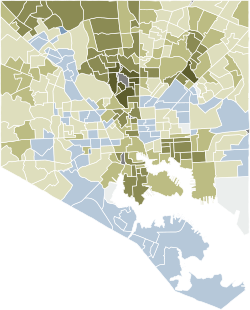
During the 2024 Maryland elections, Smith spent $415,000 financing another petitioning effort for Question H, a ballot initiative to shrink the size of the Baltimore City Council from 14 districts to 8 districts.404142 During the campaign, WBFF-TV aired a 22-minute program called "In Depth with Mikenzie Frost" to discuss ballot questions on the city and Baltimore County ballots as well as one statewide question; the program dedicated four times as much coverage to the city council ballot question as it did other city ballot questions.43
Following their victories in the Democratic primary, Scott, Zeke Cohen, and numerous members of the city council campaigned against the ballot initiative, organizing a "Baltimore City Is Not for Sale" campaign and establishing a fundraising committee with the name "Stop Sinclair". In an interview, Scott argued that Smith's political efforts in Baltimore were about returning control of the majority-Black Baltimore to a group of wealthy white men. In an op-ed published in The Baltimore Sun in August 2024, Smith said he wasn't backing the measure out of some desire to "consolidate political power" and accused Scott of lying about Sinclair's involvement as part of his campaign to protect the status quo in Baltimore's government.42 In October 2024, Sinclair Broadcast Group attorneys called on Stop Sinclair to cease and desist publishing claims that the media company was involved in the initiative, saying that the claims "jeopardizes our position of trust in the community". Stop Sinclair refused to comply with the cease and desist.43
On November 5, 2024, Baltimore voters rejected Question H, with more than 62% of residents voting against it.44 According to a precinct-level analysis by The Baltimore Banner, support for the ballot question came from Baltimore's most impoverished communities, while opposition came from nearly three-fourths of the city's majority-Black neighborhoods and most strongly from Baltimore's majority-white neighborhoods.45
References
References
- Berg, Madeline (May 2, 2018). "Meet The Billionaire Clan Behind The Media Outlet Liberals Love To Hate". Forbes. Retrieved September 22, 2025.
- Brown, Sloane (January 22, 2011). "Closet Secrets". The Baltimore Sun. Archived from the original on April 4, 2018. Retrieved April 4, 2018.
- "David D. Smith". Sinclair Broadcast Group, Inc. Archived from the original on August 18, 2017. Retrieved August 18, 2017.
- Bowie, Liz; Sullivan, Emily; Boteler, Cody (January 16, 2024). "The Baltimore Sun media group sold to local businessman David Smith". The Baltimore Banner. Retrieved May 15, 2024.
- "SBGI Company Profile & Executives – Sinclair Broadcast Group Inc. Cl A". The Wall Street Journal. Retrieved May 27, 2018.
- Morrell, Alex (September 28, 2013). "Who Got Rich This Week: The Owners Of Two Family-Run Businesses With Decades Of Broadcasting And Retail Experience". Forbes. Retrieved August 18, 2017.
- Ellison, Sarah (February 16, 2024). "Sinclair's Recipe for TV News: Crime, Homelessness, Illegal Drugs". The Washington Post.
- Wofford, Ben (April 24, 2018). "Sinclair Broadcasting's Hostile Takeover". Rolling Stone. Retrieved March 26, 2024.
- Hylton, Wil S. (November 6, 2005). "Not Necessarily the News". GQ. Retrieved April 2, 2018.
- "David D. Smith: Executive Profile & Biography". Bloomberg. August 14, 2017. Archived from the original on August 15, 2017.
- Wilen, Holden (November 2, 2016). "Sinclair's David Smith to step down as CEO". Baltimore Business Journal. Archived from the original on March 30, 2017. Retrieved April 2, 2018.
- Carter, Bill (October 4, 1998). "Is Television's Future In This Man's Hands?". The New York Times. ISSN 0362-4331. Archived from the original on August 6, 2018. Retrieved April 2, 2018.
- Levitz, Eric (March 8, 2018). "Local News Anchors Are Being Forced to Deliver Pro-Trump Propaganda". Intelligencer. New York. Retrieved March 8, 2018.
- Domonoske, Camila (April 2, 2018). "Video Reveals Power Of Sinclair, As Local News Anchors Recite Script In Unison". The Two-Way. NPR. Retrieved August 29, 2024.
- Gaynor, Gerren Keith (April 10, 2026). "Is a historic newspaper and TV station owned by Trump ally racially targeting Maryland's Black leadership?". TheGrio. Retrieved April 15, 2026.
- Battaglio, Stephen (May 8, 2017). "Sinclair Broadcast Group to buy Tribune Media for $3.9 billion plus debt". Los Angeles Times. Retrieved May 10, 2017.
- Littleton, Cynthia (May 8, 2017). "Sinclair Broadcast Group Sets $3.9 Billion Deal to Acquire Tribune Media". Variety. Retrieved May 10, 2017.
- Johnson, Ted (May 8, 2017). "Sinclair Will Come Under Scrutiny as It Seeks Approval for Tribune Merger". Variety. Retrieved May 10, 2017.
- Sanderlin, Lee O. (January 26, 2024). "Sun owner David Smith behind lawsuit against Baltimore schools". The Baltimore Banner. Retrieved April 14, 2026.
- Sanderlin, Lee O. (May 29, 2024). "The many objections of Sinclair's David Smith". The Baltimore Banner. Retrieved April 14, 2026.
- Mirabella, Lorraine (January 15, 2024). "The Baltimore Sun purchased by Sinclair's David D. Smith". The Baltimore Sun. Retrieved January 15, 2024.
- Bologna, Giacomo; Boteler, Cody; Sanderlin, Lee O. (January 18, 2024). "New Baltimore Sun owner on tape bashing city schools, local politicians and more". The Baltimore Banner. Retrieved April 14, 2026.
- Bologna, Giacomo; Boteler, Cody; Sanderlin, Lee O. (January 17, 2024). "New Baltimore Sun owner insults staff, says paper should mimic Fox45". The Baltimore Banner. Retrieved April 14, 2026.
- Folkenflik, David (February 26, 2024). "More crime and conservatism: How new owners are changing 'The Baltimore Sun'". NPR. Retrieved January 25, 2025.
- West, Walinda (August 14, 2024). "Baltimore Sun staff push back against quotas as they seek new union contract". Baltimore Fishbowl. Retrieved January 25, 2025.
- Fisher, Marc (November 25, 2024). "Sunset in Baltimore". Nieman Foundation for Journalism. Retrieved January 25, 2025.
- Boteler, Cody (June 10, 2024). "Sun union says ethics 'tossed aside' after sale, demands end to Fox45 stories". The Baltimore Banner. Retrieved January 25, 2025.
- Shen, Fern (January 15, 2025). "One year after Sinclair's David Smith bought Baltimore Sun, union looks back". Baltimore Brew. Retrieved January 25, 2025.
- Shen, Fern (December 21, 2024). "Brandishing fliers that call David Smith a union buster, a Baltimore Sun journalist confronts newspaper owner". Baltimore Brew. Retrieved January 25, 2025.
- Blanchard, Jack; Burns, Dasha (April 6, 2026). "The two sides of American power". Politico. Retrieved April 6, 2026.
- Tani, Max (April 6, 2026). "Maryland's biggest newspaper is going after the governor's 2028 campaign". Semafor. Retrieved April 6, 2026.
- Hetrick, Ross (September 10, 1991). "Hale victory in bank fight is official". The Baltimore Sun. p. 22. Retrieved May 13, 2026 – via Newspapers.com.
- Mullaney, Timothy (April 14, 1992). "3 Baltimore Bancorp directors allege ouster". The Baltimore Sun. p. 19. Retrieved May 13, 2026.
- Sanderlin, Lee O.; Fenton, Justin (January 30, 2024). "Sinclair exec financed lawsuit against candidate during 2020 mayor's race". The Baltimore Banner. Retrieved April 14, 2026.
- Sullivan, Emily (October 6, 2022). "Opposition organizing against Baltimore term limit question funded by Sinclair chairman". The Baltimore Banner. Retrieved April 14, 2026.
- Sullivan, Emily (November 9, 2022). "Term limits measure passes, as do all other Baltimore ballot measures". The Baltimore Banner. Retrieved April 14, 2026.
- Sullivan, Emily (August 9, 2023). "Courted to run for Baltimore mayor, Comptroller Bill Henry chose reelection". The Baltimore Banner. Retrieved April 14, 2026.
- Sullivan, Emily (March 7, 2024). "Pro-Dixon super PAC fueled by David Smith starts targeting Scott in ads". The Baltimore Banner. Retrieved April 14, 2026.
- Willis, Adam; Miller, Hallie; Sanderlin, Lee O.; Opilo, Emily (November 7, 2024). "David Smith wanted to cut Baltimore City Council. He united it instead". The Baltimore Banner. Retrieved April 14, 2026.
- Sullivan, Emily (October 4, 2023). "Sinclair-backed ballot issue group seeks to reduce Baltimore City Council from 14 districts to 8". The Baltimore Banner. Retrieved April 14, 2026.
- Willis, Adam (January 19, 2024). "Ballot measure backed by Sinclair chair to shrink City Council has 25K+ signatures". The Baltimore Banner. Retrieved April 14, 2026.
- Sanderlin, Lee O.; Willis, Adam (September 11, 2024). "In quest to shrink Baltimore City Council, it's David Smith on the ballot". The Baltimore Banner. Retrieved April 14, 2026.
- Opilo, Emily (October 25, 2024). "Sinclair TV says stop to opponents of City Council size ballot measure". The Baltimore Banner. Retrieved April 14, 2026.
- Willis, Adam; Sanderlin, Lee O. (November 6, 2024). "Baltimore rejects smaller City Council — and Sinclair's David Smith". The Baltimore Banner. Retrieved April 15, 2026.
- Morton, Greg (November 24, 2024). "Baltimore rejected a plan to shrink the City Council. Some of its poorest residents disagreed". The Baltimore Banner. Retrieved April 15, 2026.