| Cuscomys | |
|---|---|
| |
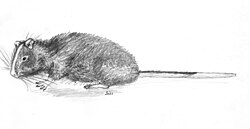
| Illustration of Cuscomys oblativus | |
Scientific classification 
| |
| Kingdom: | Animalia |
| Phylum: | Chordata |
| Class: | Mammalia |
| Infraclass: | Placentalia |
| Order: | Rodentia |
| Family: | Abrocomidae |
| Genus: | Cuscomys Emmons, 1999 |
| Type species | |
| Abrocoma oblativa Eaton, 1916
| |
| Species | |
| |
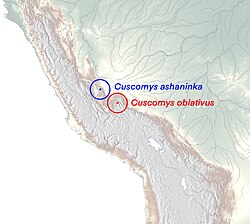
Cuscomys is a genus of rodents found in the Andes of Cusco in southern Peru. These relatively large chinchilla rats are dark grey with a distinct white line running from the crown to the nose. The genus was coined in 1999 when C. ashaninka was scientifically described,1 but later it was discovered that C. oblativus, a species traditionally placed in the genus Abrocoma, actually belonged in Cuscomys. They are very poorly known, as C. ashaninka only is known from the holotype,2 while C. oblativus usually has been considered extinct, as it was only known from remains found in 1912, buried alongside people in ancient Inca tombs at the Machu Picchu ruins.3 However, photos of a rodent taken at the ruins in late 2009 likely show this species.4 It is unclear if the Cuscomys truly are extremely rare, as they may be easily overlooked due to their remote distributions and arboreal habits.1
Species
- Cuscomys ashaninka – Asháninka Arboreal Chinchilla Rat
- Cuscomys oblativus – Machu Picchu Arboreal Chinchilla Rat
References
References
- Emmons, L. H. (1999). A new genus and species of abrocomid rodent from Peru (Rodentia: Abrocomidae). American Museum Novitates 3279: 1-14.
- Vivar, E. (2016). "Cuscomys ashaninka". IUCN Red List of Threatened Species. 2016 e.T136466A22182204. doi:10.2305/IUCN.UK.2016-2.RLTS.T136466A22182204.en. Retrieved 11 November 2021.
- Roach, N. (2016). "Cuscomys oblativa". IUCN Red List of Threatened Species. 2016 e.T136658A22182152. doi:10.2305/IUCN.UK.2016-2.RLTS.T136658A22182152.en. Retrieved 11 November 2021.
- Castillo, G. M. (2009). (in Spanish) Detectan en Cusco a roedor declarado extinto. El Comercio (Peru). 12 August 2009.