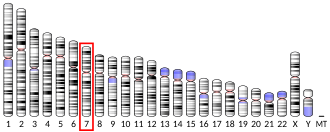
| CLDN3 |
|---|
|
| Identifiers |
|---|
| Aliases | CLDN3, C7orf1, CPE-R2, CPETR2, HRVP1, RVP1, claudin 3 |
|---|
| External IDs | OMIM: 602910; MGI: 1329044; HomoloGene: 1001; GeneCards: CLDN3; OMA:CLDN3 - orthologs |
|---|
|
| Gene location (Mouse) |
|---|
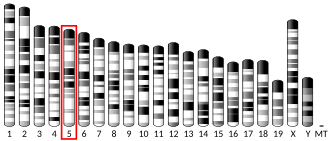 | | Chr. | Chromosome 5 (mouse)2 |
|---|
| | Band | 5 G2|5 74.93 cM | Start | 135,015,068 bp2 |
|---|
| End | 135,016,326 bp2 |
|---|
|
| RNA expression pattern |
|---|
| Bgee | | Human | Mouse (ortholog) |
|---|
| Top expressed in | - mucosa of transverse colon
- right uterine tube
- mucosa of sigmoid colon
- mucosa of ileum
- left lobe of thyroid gland
- bronchial epithelial cell
- right lobe of thyroid gland
- olfactory zone of nasal mucosa
- body of pancreas
- jejunal mucosa
|
| | Top expressed in | - large intestine
- left colon
- crypt of lieberkuhn of small intestine
- vestibular membrane of cochlear duct
- jejunum
- vestibular sensory epithelium
- seminal vesicula
- lacrimal gland
- duodenum
- left lung
|
| | More reference expression data |
|
|---|
| BioGPS | |
|---|
|
|
|
| Wikidata |
|
Claudin 3, also known as CLDN3, is a protein which in humans is encoded by the CLDN3 gene.5 It is a member of the claudin protein family.
Tight junctions represent one mode of cell-to-cell adhesion in epithelial or endothelial cell sheets, forming continuous seals around cells and serving as a physical barrier to prevent solutes and water from passing freely through the paracellular space. These junctions are composed of sets of continuous networking strands in the outwardly facing cytoplasmic leaflet, with complementary grooves in the inwardly facing extracytoplasmic leaflet. The protein encoded by this intron-less gene, a member of the claudin family, is an integral membrane protein and a component of tight junction strands. It is also a low-affinity receptor for Clostridium perfringens enterotoxin, and shares amino acid sequence similarity with a putative apoptosis-related protein found in rat.5
Interactions
CLDN3 has been shown to interact with CLDN16 and CLDN5.6
References
References
External links
External links
Further reading
Further reading
- Kniesel U, Wolburg H (2000). "Tight junctions of the blood-brain barrier". Cell. Mol. Neurobiol. 20 (1): 57–76. doi:10.1023/A:1006995910836. PMC 11537529. PMID 10690502. S2CID 26473781.
- Heiskala M, Peterson PA, Yang Y (2001). "The roles of claudin superfamily proteins in paracellular transport". Traffic. 2 (2): 93–8. doi:10.1034/j.1600-0854.2001.020203.x. PMID 11247307.
- Tsukita S, Furuse M, Itoh M (2001). "Multifunctional strands in tight junctions". Nat. Rev. Mol. Cell Biol. 2 (4): 285–93. doi:10.1038/35067088. PMID 11283726. S2CID 36524601.
- Tsukita S, Furuse M (2002). "Claudin-based barrier in simple and stratified cellular sheets". Curr. Opin. Cell Biol. 14 (5): 531–6. doi:10.1016/S0955-0674(02)00362-9. PMID 12231346.
- González-Mariscal L, Betanzos A, Nava P, Jaramillo BE (2003). "Tight junction proteins". Prog. Biophys. Mol. Biol. 81 (1): 1–44. doi:10.1016/S0079-6107(02)00037-8. PMID 12475568.
- Katahira J, Sugiyama H, Inoue N, Horiguchi Y, Matsuda M, Sugimoto N (1997). "Clostridium perfringens enterotoxin utilizes two structurally related membrane proteins as functional receptors in vivo". J. Biol. Chem. 272 (42): 26652–8. doi:10.1074/jbc.272.42.26652. PMID 9334247.
- Peacock RE, Keen TJ, Inglehearn CF (1997). "Analysis of a human gene homologous to rat ventral prostate.1 protein". Genomics. 46 (3): 443–9. doi:10.1006/geno.1997.5033. PMID 9441748.
- Morita K, Furuse M, Fujimoto K, Tsukita S (1999). "Claudin multigene family encoding four-transmembrane domain protein components of tight junction strands". Proc. Natl. Acad. Sci. U.S.A. 96 (2): 511–6. Bibcode:1999PNAS...96..511M. doi:10.1073/pnas.96.2.511. PMC 15167. PMID 9892664.
- Furuse M, Sasaki H, Tsukita S (1999). "Manner of interaction of heterogeneous claudin species within and between tight junction strands". J. Cell Biol. 147 (4): 891–903. doi:10.1083/jcb.147.4.891. PMC 2156154. PMID 10562289.
- Itoh M, Furuse M, Morita K, Kubota K, Saitou M, Tsukita S (1999). "Direct binding of three tight junction-associated MAGUKs, ZO-1, ZO-2, and ZO-3, with the COOH termini of claudins". J. Cell Biol. 147 (6): 1351–63. doi:10.1083/jcb.147.6.1351. PMC 2168087. PMID 10601346.
- Miyamori H, Takino T, Kobayashi Y, Tokai H, Itoh Y, Seiki M, Sato H (2001). "Claudin promotes activation of pro-matrix metalloproteinase-2 mediated by membrane-type matrix metalloproteinases". J. Biol. Chem. 276 (30): 28204–11. doi:10.1074/jbc.M103083200. hdl:2297/15688. PMID 11382769.
- Long H, Crean CD, Lee WH, Cummings OW, Gabig TG (2001). "Expression of Clostridium perfringens enterotoxin receptors claudin-3 and claudin-4 in prostate cancer epithelium". Cancer Res. 61 (21): 7878–81. PMID 11691807.
- Katoh M, Katoh M (2003). "CLDN23 gene, frequently down-regulated in intestinal-type gastric cancer, is a novel member of CLAUDIN gene family". Int. J. Mol. Med. 11 (6): 683–9. doi:10.3892/ijmm.11.6.683. PMID 12736707.
- Liu F, Koval M, Ranganathan S, Fanayan S, Hancock WS, Lundberg EK, Beavis RC, Lane L, Duek P, McQuade L, Kelleher NL, Baker MS (2015). "A systems proteomics view of the endogenous human claudin protein family". J Proteome Res. 15 (2): 339–359. doi:10.1021/acs.jproteome.5b00769. PMC 4777318. PMID 26680015.