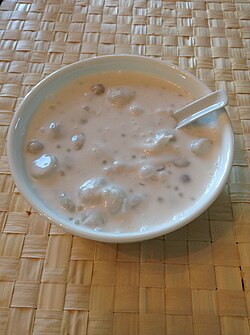
 Bilo-bilo | |
| Alternative names | bilu-bilo, pinaltok, binignit, paradusdos, pinindot, ginataang bilo-bilo, ginataang halo-halo, tambo-tambong |
|---|---|
| Course | Dessert |
| Place of origin | Philippines |
| Serving temperature | Hot or cold |
| Main ingredients | Sticky rice coconut milk, sugar, saba, taro, sweet potato, pearl sago, landang, pandan leaves |
Pinaltok or bilo-bilo is a Filipino dessert made of small glutinous balls (sweet sticky rice flour rounded up by adding water) in coconut milk1 and sugar. Then jackfruit, saba bananas, sweet potatoes, taro, and tapioca pearls or sago (regular and mini size pearls) are added. Bilo-bilo's origin is in Luzon.2 There are different recipe versions depending on what region in the Philippines it is from. Some recipes call for young coconut meat and some call for adding pandan leaves. This is usually and traditionally eaten hot while others prefer eating them cold after refrigeration.
References
References
- Fernando, Gilda Cordero-; Baldemor, Manuel D. (1992). Philippine food & life: Luzon. Anvil Pub. p. 17. ISBN 9789712702327. Retrieved January 10, 2019.
- "Luzon". Britannica. Retrieved April 22, 2019.