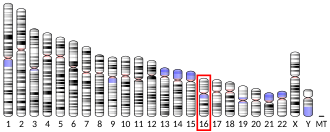



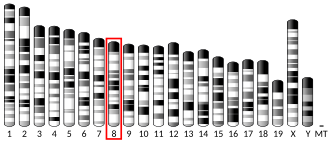

Protein BANP is a protein that can be found in humans, it is encoded by the BANP gene.567 It is a member of the human gene family, "BEN-domain containing", which includes eight other genes: BEND2, BEND3, BEND4, BEND5, BEND6, BEND7, NACC1 (BEND8), and NACC2 (BEND9). BANP is a protein coding gene that is located in the Nucleoplasm. Its official name is BTG3 associated with nuclear protein. It plays a role in DNA binding, chromatin regulation, repressor, transcription regulation and the cell cycle process.8 In recombination BANP protein represses T-cell receptors to control recombination during transcription.9 As a tumor suppressor BANP negatively regulates p53 transcription in recombination.10 It can be expressed in various tissues in the body including the testis, spleen, and the placenta.11
Function
This gene encodes a protein that binds to matrix attachment regions. The protein functions as a tumor suppressor and cell cycle regulator. Alternate transcriptional splice variants, encoding different isoforms, have been characterized.7
References
References
- GRCh38: Ensembl release 89: ENSG00000172530 – Ensembl, May 2017
- GRCm38: Ensembl release 89: ENSMUSG00000025316 – Ensembl, May 2017
- "Human PubMed Reference:". National Center for Biotechnology Information, U.S. National Library of Medicine.
- "Mouse PubMed Reference:". National Center for Biotechnology Information, U.S. National Library of Medicine.
- Birot A, Duret L, Bartholin L, Santalucia B, Tigaud I, Magaud J, Rouault J (Aug 2000). "Identification and molecular analysis of BANP". Gene. 253 (2): 189–96. doi:10.1016/S0378-1119(00)00244-4. PMID 10940556.
- Chattopadhyay S, Kaul R, Charest A, Housman D, Chen J (Aug 2000). "SMAR1, a novel, alternatively spliced gene product, binds the Scaffold/Matrix-associated region at the T cell receptor beta locus". Genomics. 68 (1): 93–6. doi:10.1006/geno.2000.6279. PMID 10950932.
- "Entrez Gene: BANP BTG3 associated nuclear protein".
- "National Center for Biotechnology Information". www.ncbi.nlm.nih.gov. Retrieved 2022-05-05.
- www.nextprot.org https://www.nextprot.org/entry/NX_Q8N9N5/#!. Retrieved 2022-05-05.
{{cite web}}: Missing or empty|title=(help) - "BANP BTG3 associated nuclear protein [Homo sapiens (human)] - Gene - NCBI". www.ncbi.nlm.nih.gov. Retrieved 2022-05-05.
- "BANP BTG3 associated nuclear protein [Homo sapiens (human)] - Gene - NCBI". www.ncbi.nlm.nih.gov. Retrieved 2022-05-05.
External links
External links
- Human BANP genome location and BANP gene details page in the UCSC Genome Browser.
Further reading
Further reading
- Hillier LD, Lennon G, Becker M, Bonaldo MF, Chiapelli B, Chissoe S, Dietrich N, DuBuque T, Favello A, Gish W, Hawkins M, Hultman M, Kucaba T, Lacy M, Le M, Le N, Mardis E, Moore B, Morris M, Parsons J, Prange C, Rifkin L, Rohlfing T, Schellenberg K, Bento Soares M, Tan F, Thierry-Meg J, Trevaskis E, Underwood K, Wohldman P, Waterston R, Wilson R, Marra M (Sep 1996). "Generation and analysis of 280,000 human expressed sequence tags". Genome Research. 6 (9): 807–28. doi:10.1101/gr.6.9.807. PMID 8889549.
- Kaul R, Mukherjee S, Ahmed F, Bhat MK, Chhipa R, Galande S, Chattopadhyay S (Feb 2003). "Direct interaction with and activation of p53 by SMAR1 retards cell-cycle progression at G2/M phase and delays tumor growth in mice". International Journal of Cancer. 103 (5): 606–15. doi:10.1002/ijc.10881. PMID 12494467. S2CID 22386279.
- Brandenberger R, Wei H, Zhang S, Lei S, Murage J, Fisk GJ, Li Y, Xu C, Fang R, Guegler K, Rao MS, Mandalam R, Lebkowski J, Stanton LW (Jun 2004). "Transcriptome characterization elucidates signaling networks that control human ES cell growth and differentiation". Nature Biotechnology. 22 (6): 707–16. doi:10.1038/nbt971. PMID 15146197. S2CID 27764390.
- Kaul-Ghanekar R, Jalota A, Pavithra L, Tucker P, Chattopadhyay S (2004). "SMAR1 and Cux/CDP modulate chromatin and act as negative regulators of the TCRbeta enhancer (Ebeta)". Nucleic Acids Research. 32 (16): 4862–75. doi:10.1093/nar/gkh807. PMC 519105. PMID 15371550.
- Kaul-Ghanekar R, Majumdar S, Jalota A, Gulati N, Dubey N, Saha B, Chattopadhyay S (Mar 2005). "Abnormal V(D)J recombination of T cell receptor beta locus in SMAR1 transgenic mice". The Journal of Biological Chemistry. 280 (10): 9450–9. doi:10.1074/jbc.M412206200. PMID 15623522.
- Rampalli S, Pavithra L, Bhatt A, Kundu TK, Chattopadhyay S (Oct 2005). "Tumor suppressor SMAR1 mediates cyclin D1 repression by recruitment of the SIN3/histone deacetylase 1 complex". Molecular and Cellular Biology. 25 (19): 8415–29. doi:10.1128/MCB.25.19.8415-8429.2005. PMC 1265755. PMID 16166625.
- Rual JF, Venkatesan K, Hao T, Hirozane-Kishikawa T, Dricot A, Li N, Berriz GF, Gibbons FD, Dreze M, Ayivi-Guedehoussou N, Klitgord N, Simon C, Boxem M, Milstein S, Rosenberg J, Goldberg DS, Zhang LV, Wong SL, Franklin G, Li S, Albala JS, Lim J, Fraughton C, Llamosas E, Cevik S, Bex C, Lamesch P, Sikorski RS, Vandenhaute J, Zoghbi HY, Smolyar A, Bosak S, Sequerra R, Doucette-Stamm L, Cusick ME, Hill DE, Roth FP, Vidal M (Oct 2005). "Towards a proteome-scale map of the human protein-protein interaction network". Nature. 437 (7062): 1173–8. Bibcode:2005Natur.437.1173R. doi:10.1038/nature04209. PMID 16189514. S2CID 4427026.
- Kimura K, Wakamatsu A, Suzuki Y, Ota T, Nishikawa T, Yamashita R, Yamamoto J, Sekine M, Tsuritani K, Wakaguri H, Ishii S, Sugiyama T, Saito K, Isono Y, Irie R, Kushida N, Yoneyama T, Otsuka R, Kanda K, Yokoi T, Kondo H, Wagatsuma M, Murakawa K, Ishida S, Ishibashi T, Takahashi-Fujii A, Tanase T, Nagai K, Kikuchi H, Nakai K, Isogai T, Sugano S (Jan 2006). "Diversification of transcriptional modulation: large-scale identification and characterization of putative alternative promoters of human genes". Genome Research. 16 (1): 55–65. doi:10.1101/gr.4039406. PMC 1356129. PMID 16344560.